 Lynden
 Fiber Cement Siding for Everson Homes
Everson sits in the Nooksack River lowlands, far enough inland that people don't usually think of it as a "marine climate" town the way Bellingham or Blaine are. But Whatcom County is small enough, and low enough, that the same wet air moving in off the Salish Sea reaches the valley floor around Everson too — it just arrives as steady drizzle and damp, still air rather than wind off open water. Add a river valley's tendency to hold moisture and shade, and you get siding conditions that are less dramatic than a bluff-top home closer to the water but arguably harder on a wall over time: rain that soaks in gradually, humidity that lingers instead of blowing through, and a moss season on north- and east-facing walls that can run most of the year.
Fiber cement siding earns its reputation in exactly this kind of climate. It doesn't swell, cup, or rot the way wood-based sidings can when they take on moisture slowly and repeatedly, and it doesn't need the periodic recaulking and repainting that keeps a lot of other materials looking presentable in a valley this damp. We install James Hardie fiber cement exclusively, and everything below is about what that actually means for a home in Everson specifically — not a generic siding pitch.
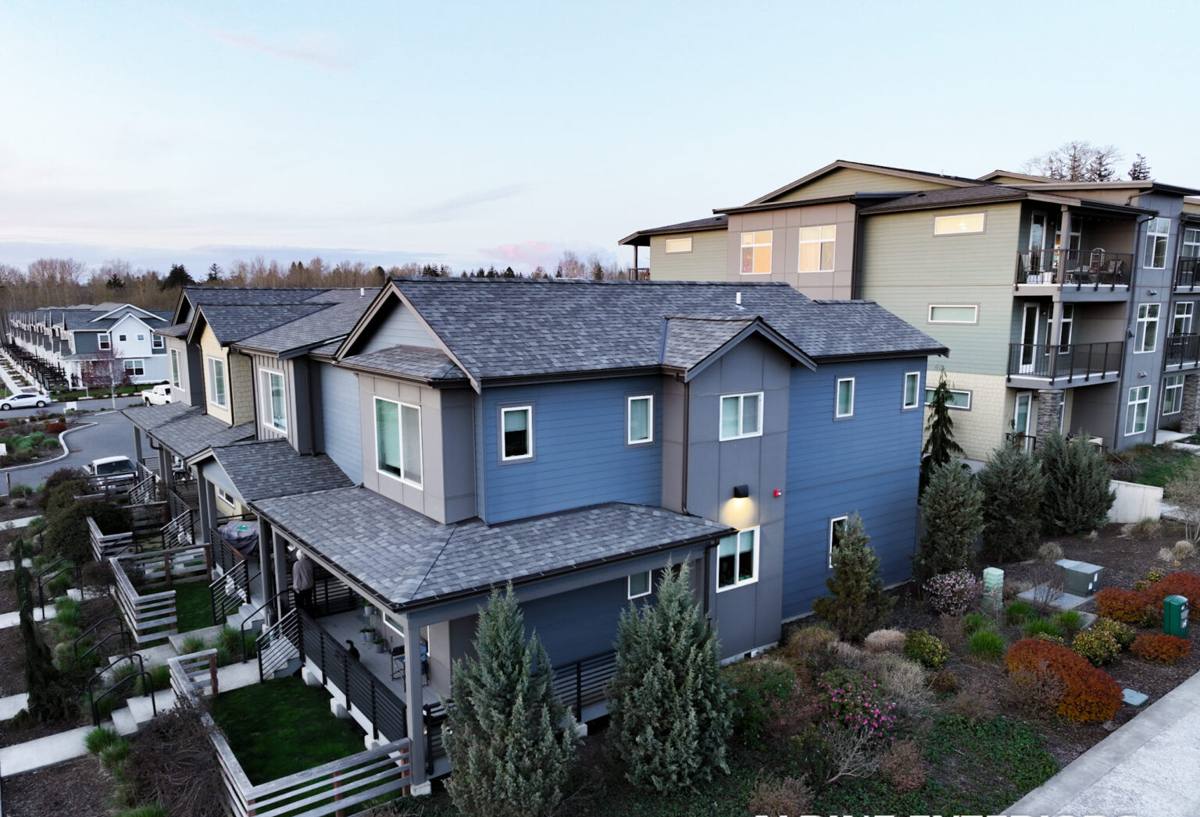
What Everson's Climate Actually Does to a Wall
Rain That Soaks In Rather Than Blows Through
Coastal Whatcom County towns deal with wind-driven rain hitting siding sideways. Everson deals with something quieter but just as demanding: long stretches of steady, low-intensity rain and drizzle that give water plenty of time to find its way into any gap, seam, or fastener hole that wasn't sealed correctly the first time. A siding material that's dimensionally stable under slow, repeated soaking matters more here than one built to shrug off a single hard storm.
Marine-Influenced Humidity Without the Wind to Dry Things Out
Everson doesn't get the same steady wind off open water that a bluff or shoreline home does, which means walls here often stay damp longer after a rain event simply because there's less air movement to help them dry. That works against any siding material sensitive to sustained moisture exposure, and it's a big part of why we don't recommend wood-based or moisture-sensitive alternatives for homes in this part of the county.
A Moss Season That Runs Long on Shaded Walls
Between tree cover, river-valley humidity, and Western Washington's long wet season, north-facing and shaded exterior walls around Everson can stay damp enough to support moss and mildew growth for much of the year. Moss holds moisture directly against a surface, which accelerates whatever weakness that surface already has — a factory-cured, moisture-resistant finish matters a lot more here than it would on a drier lot with full sun exposure.
Why Fiber Cement Is the Right Call for This Job
Fiber cement is a cement, sand, and cellulose fiber composite, engineered specifically to resist the kind of moisture cycling that causes wood-based and vinyl products to fail over time. It doesn't expand and contract with humidity the way wood does, and it's non-combustible, which matters in a region where wildfire smoke and dry-season fire risk have become a bigger part of the conversation in recent years. We only install James Hardie's fiber cement lines, not because other fiber cement brands are without merit, but because we standardized on one manufacturer's engineering, warranty structure, and factory finish system that we can stand behind completely.
| Material | Behavior in Sustained Damp Conditions | Maintenance Burden | Realistic Lifespan |
|---|---|---|---|
| James Hardie fiber cement | Dimensionally stable; resists moisture absorption at the core | Low; factory finish resists moss staining and fading | 30+ years with correct installation |
| Primed spruce / cedar | Absorbs moisture readily, especially at cut edges and seams | High; recurring painting or sealing on a fixed cycle | 15-25 years with consistent upkeep |
| Vinyl siding | Doesn't rot, but can warp, gap, or trap moisture behind panels | Low visible upkeep, but hidden moisture issues go unseen | 20-30 years, variable |
| LP SmartSide (engineered wood) | More sensitive to prolonged moisture at edges and fastener holes | Moderate; edge sealing needs regular attention | 15-25 years, climate-dependent |
The factory-applied ColorPlus finish on James Hardie's siding is baked on under controlled conditions before it ever reaches the job site, which is a different proposition than a field-painted product where the finish's performance depends entirely on paint quality, prep, and weather on the day it went on. In a valley that stays damp as long as Everson's does, that difference compounds year after year.
What a Correct Fiber Cement Install Actually Involves
Fiber cement siding performs the way it's supposed to only when the installation matches the material's engineering. A rushed or generic install can undercut even the best product. On every Everson project, a correct job includes:
- A properly lapped house wrap or weather-resistive barrier installed before any siding goes up
- A drainage gap behind the siding so moisture that does get past the surface has somewhere to go instead of sitting against the wall sheathing
- Corrosion-resistant fasteners set at the manufacturer's specified spacing and depth, not just "enough to hold the board"
- Properly flashed and lapped transitions at windows, doors, corners, and the base of the wall
- Correct minimum clearance from grade, decks, and roof lines so the siding never sits in standing water or constant splash-back
- Field-cut edges primed before installation to protect the one place the factory finish doesn't already cover
Skip any one of these and the wall can still look fine for a season or two. The problems that come from cutting these corners — soft spots at the base, staining at seams, paint or finish failure around fasteners — take a few wet seasons to surface, which is exactly why they're easy for a fast, corner-cutting install to get away with until the homeowner is the one who has to deal with it.
Our Process for an Everson Fiber Cement Siding Project
Walkthrough and Assessment
We start by walking the specific home — which walls face prevailing weather, which stay shaded and slower to dry, and whether the existing wall assembly already has moisture or rot issues that need to be addressed before new siding goes up. Installing new siding over a compromised wall just buries the same problem under new material.
Planning Before Any Material Gets Cut
We work out fastening pattern, flashing details, and how the siding will meet trim, windows, and rooflines before crews start installing. Deciding these details on paper first, rather than improvising them in the field, is where a lot of long-term problems get avoided.
Installation to Manufacturer Spec
Every fastener, gap, and flashing lap follows James Hardie's published installation requirements for this climate zone. That's what keeps the manufacturer's warranty intact, and it's also simply what makes the wall perform the way it's engineered to for decades rather than years.
Final Walkthrough
We walk the finished job with you, explain what little ongoing maintenance fiber cement actually needs, and make sure you know what a properly sealed seam or flashing detail looks like if you ever want to check the wall yourself down the road.
Why Hire a Crew That Already Works Everson
A lot of siding advice is written for coastal exposure or for drier climates altogether, and neither one quite fits a river-valley town like Everson. A crew that's worked this specific area has already seen which walls need extra drainage attention because of shade and tree cover, how long moisture actually lingers on a shaded wall here compared with a windier, more exposed lot, and where a rainscreen gap earns its keep versus where it's optional. That kind of judgment doesn't come from a spec sheet — it comes from having installed and later revisited siding on homes in this exact kind of setting, and it's the difference between a wall that still looks and performs the same in twenty years and one that's showing moss staining and soft trim by year five.
Cost Factors for Fiber Cement Siding in This Area
Fiber cement siding typically costs more upfront than vinyl and is competitive with or less than quality wood-based products once you account for the maintenance they require. Beyond base material and square footage, a few things move the price on a given Everson home:
| Factor | Why It Matters |
|---|---|
| Existing wall condition | Rot or moisture damage found during tear-off needs repair before new siding goes on |
| Wall height and complexity | More corners, dormers, and roof transitions mean more cutting and flashing detail |
| Siding profile chosen | Lap, board and batten, and panel systems differ in material use and labor time |
| Trim and window count | Each opening needs its own flashing and finish work |
| Site access | Tight lots, outbuildings, or limited equipment access can add labor time |
We'll walk your specific property and give you real numbers rather than a rough estimate based on square footage alone — two homes with similar footprints can land very differently depending on how many of these factors come into play.
What to Expect After Installation
One of the practical advantages of fiber cement in a climate like this is how little it asks of you afterward. There's no recurring repainting cycle the way there is with wood siding, and the factory finish is engineered to resist the moss and mildew staining that shows up on shaded walls throughout the county. An occasional rinse to clear off accumulated grime, and keeping gutters and downspouts directing water away from the wall base, covers most of what's needed to keep the siding performing the way it's supposed to for decades.
If you're planning a siding project for a home in Everson, we're happy to walk the property, talk through what your specific walls need given their sun exposure and shade, and put together a straightforward, no-pressure estimate. There's a form below — reach out and we'll set up a time to take a look.