 Lynden
 Exterior Work Built for Sumas Conditions
Sumas sits at the northern edge of Whatcom County, tucked against the border and the Nooksack River valley floor, with Sumas Mountain rising just to the south. It's a different pocket of climate than the coastal towns closer to the Salish Sea, but the underlying problem for homeowners is the same one every building in Western Washington deals with: long stretches of wet weather, heavy moisture in the air, and siding, roofing, and trim that are asked to shed water for months at a time without much of a break. Add in Sumas's low-lying valley position, and drainage and moisture management become even more important to get right the first time.
We're a Whatcom County exterior contractor working out of Lynden, and Sumas is well within our regular service area. We're not driving in from Seattle or subcontracting the job out to whoever's available that week — this is a community we already work in, and we know what the exterior of a house in this valley has to hold up against.
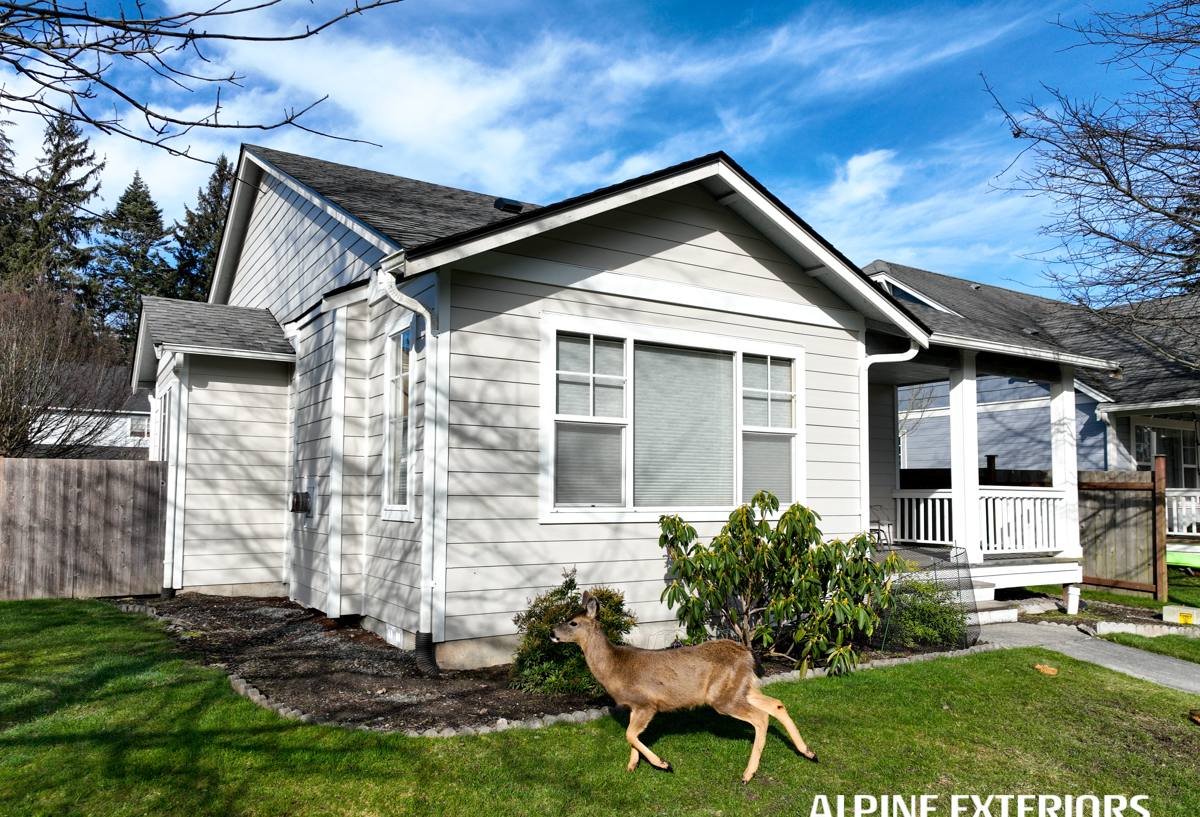
What the Local Climate Does to a House
Driving Rain and Saturated Ground
Sumas gets the same driving, sideways rain that moves through the rest of Whatcom County during fall and winter storm systems, and the valley floor around Sumas doesn't drain the way sloped ground does. Water sits longer near foundations, siding bases, and low trim details. Over years, siding that isn't properly flashed and gapped off the ground will wick moisture, swell, and eventually rot — long before the rest of the wall shows any sign of a problem.
Moss and Prolonged Humidity
Western Washington's moss season isn't a few weeks — it's most of the year. On north-facing walls, under eaves, and anywhere sun and airflow are limited, moss and algae get a foothold on siding and roofing that stays damp. Moss holds moisture against the surface it's growing on, which accelerates decay in wood-based products far faster than plain rain exposure alone.
Marine-Influenced Air Moving Inland
Even away from the immediate coastline, the marine air pattern that defines this whole region pushes humid, moisture-laden air up through the Nooksack corridor. It's part of why Whatcom County siding takes more of a beating than siding in drier parts of the state — the exterior of a house here rarely gets a long dry stretch to fully release moisture between rain events.
Freeze-Thaw Swings and Flood-Prone Low Ground
Sumas sits in a valley known for periodic flooding, and even short of a major flood event, the low, flat terrain means water tables run higher and drainage is slower than on a hillside lot. Combine that with occasional hard freezes, and any exterior material that absorbs water is working against two problems at once: standing moisture and freeze-thaw cycling that can crack, warp, or delaminate weaker products.
Why We Install James Hardie — and Nothing Else
We made a decision as a company to install only James Hardie fiber cement siding. Not vinyl, not LP SmartSide, not Cemplank or Allura, not primed spruce or cedar. That's a narrower lineup than most contractors offer, and we think it's the right call for this climate specifically.
Where the Alternatives Fall Short Here
Vinyl siding is affordable and low-maintenance in the sense that it doesn't need painting, but it's a thin plastic product that expands and contracts with temperature swings, can crack in a hard freeze, and doesn't hold up well to impact. It also doesn't offer the same fire resistance as fiber cement, which matters increasingly to insurers and homeowners alike.
LP SmartSide is an engineered wood product — it has real strengths, including impact resistance and a lighter installed weight, but it's still wood at its core, which means it's dependent on an intact factory coating and correct field sealing at every cut edge and seam. In a valley that stays damp as long as this one does, any lapse in that sealing becomes an entry point for moisture, and wood-based siding doesn't forgive that the way fiber cement does.
Cedar and primed spruce are beautiful materials, and we understand the appeal, but both require an ongoing maintenance commitment — re-staining or repainting on a cycle, careful caulking, and vigilance about moss and mildew — that most homeowners underestimate when they choose the product. In a climate with this much sustained moisture, that maintenance gap is where problems start.
Cemplank and Allura are also fiber cement, and fiber cement as a category is the right material family for this region. We simply have more confidence in James Hardie's engineering, factory finish process, and warranty backing after years of installing it, and we'd rather stand behind one system we know thoroughly than split our expertise across several.
What Hardie Gets Right for This Region
- Fiber cement composition that doesn't rot, doesn't feed moss the way wood fiber can, and isn't attractive to insects
- Non-combustible material — a real advantage as wildfire smoke seasons have become more common east of the Cascades and awareness has followed
- ColorPlus factory-applied finish, baked on and warranted separately from the panel, so the color coat isn't relying on field-applied paint holding up through years of rain
- HZ5 and climate-engineered product lines built specifically to handle Pacific Northwest moisture and freeze-thaw conditions
- A strong, transferable manufacturer warranty that holds real weight if you sell the home down the road
Siding Installation Details That Matter Here
Fiber cement siding is only as good as the installation behind it, and in a valley with this much sustained moisture, the details are what separate siding that lasts thirty-plus years from siding that fails at year twelve.
- Correct starter strip height and ground clearance so siding never sits in standing water or splashback
- Proper house wrap and drainage plane behind the panels, giving any moisture that does get behind the siding a path to escape
- Rain screen gapping where the wall assembly calls for it, so siding can dry on both faces instead of trapping moisture against the sheathing
- Correctly caulked and sealed joints, corners, and penetrations — not painted over, but actually sealed
- Fastener placement and nailing patterns that match Hardie's published specs, not generic siding practice
Roofing, Windows, and Decks
Siding doesn't work in isolation — the roof, windows, and any exterior decking on a Sumas home are all part of the same system managing the same water. We handle all four:
Roofing
A roof that's shedding water correctly, with intact flashing at every valley, wall intersection, and penetration, is what keeps water from ever reaching the siding and trim below it in the first place. In a valley climate like this one, roof flashing details deserve the same attention as the siding itself.
Windows
Window flashing and integration with the siding plane is one of the most common failure points on any home — a poorly flashed window can undermine an otherwise correctly installed wall. We integrate window replacement with siding work so the two are flashed as one system, not patched together separately.
Decks
Decks in this valley take on the same moisture and moss exposure as walls, but with the added stress of foot traffic and standing water on horizontal surfaces. Ledger board flashing, joist protection, and drainage away from the house are the details that keep a deck from becoming a rot and moisture problem tied directly back into the siding.
Material Comparison for Sumas Conditions
| Material | Moisture Resistance | Maintenance | Fire Resistance | Typical Longevity |
|---|---|---|---|---|
| James Hardie Fiber Cement | Excellent — does not rot or absorb like wood | Low — factory finish, occasional wash | Non-combustible | 30+ years |
| Vinyl | Good, but seams and edges can trap moisture | Low, but cracks/fades over time | Poor — melts/deforms in heat | 15-25 years |
| LP SmartSide (Engineered Wood) | Good if sealed and maintained correctly | Moderate — coating and seam upkeep | Combustible (treated core) | 20-30 years with upkeep |
| Cedar / Primed Spruce | Fair — absorbs moisture, prone to rot untreated | High — regular staining/painting | Combustible | 15-25 years with diligent upkeep |
Signs a Sumas Home Needs Exterior Attention
- Soft or spongy spots when you press on siding, especially near the bottom courses
- Persistent moss or dark staining on north-facing walls or under eaves that keeps returning after cleaning
- Peeling or bubbling paint on wood siding or trim
- Visible gaps, warping, or buckling panels
- Water stains or damp spots on interior walls near exterior corners or window headers
- Roof valleys or flashing showing granule loss, rust, or gaps
Why a Local Crew Matters
Sumas is a small community, and homes here range from older farmhouses on the valley floor to newer builds closer to town. A crew that works this area regularly understands which lots sit low and need extra attention to drainage and ground clearance, how the valley's humidity behaves differently than the coastal towns, and what local permitting and inspection expects. That's harder to get from a crew that's only passing through on a one-off job. We show up, do the work correctly the first time, and stand behind it because we're not going anywhere — this is our home region too.
If your siding, roof, windows, or deck are showing wear, or you're planning ahead for a project, we're glad to come take a look. We offer free, no-pressure estimates for homeowners in Sumas and throughout Whatcom County — fill out the form below and we'll get in touch.