 Lynden
 A Standard We're Willing to Explain, Not Just State
Most siding contractors install whatever a homeowner asks for. We don't. We install James Hardie fiber cement siding, full stop, and we think you deserve to know why before you hire anyone to touch the outside of your Lynden home. This isn't a marketing angle. It's a decision built from years of watching how different siding materials actually perform once they've spent a few winters absorbing Whatcom County's rain, humidity, and moss pressure.
That doesn't mean every other product on the market is bad. Vinyl, engineered wood, and other fiber cement brands all have legitimate uses and reasonable price points. But "reasonable for someone" isn't the same as "right for a home we're willing to put our name on." Here's the actual reasoning, laid out plainly.
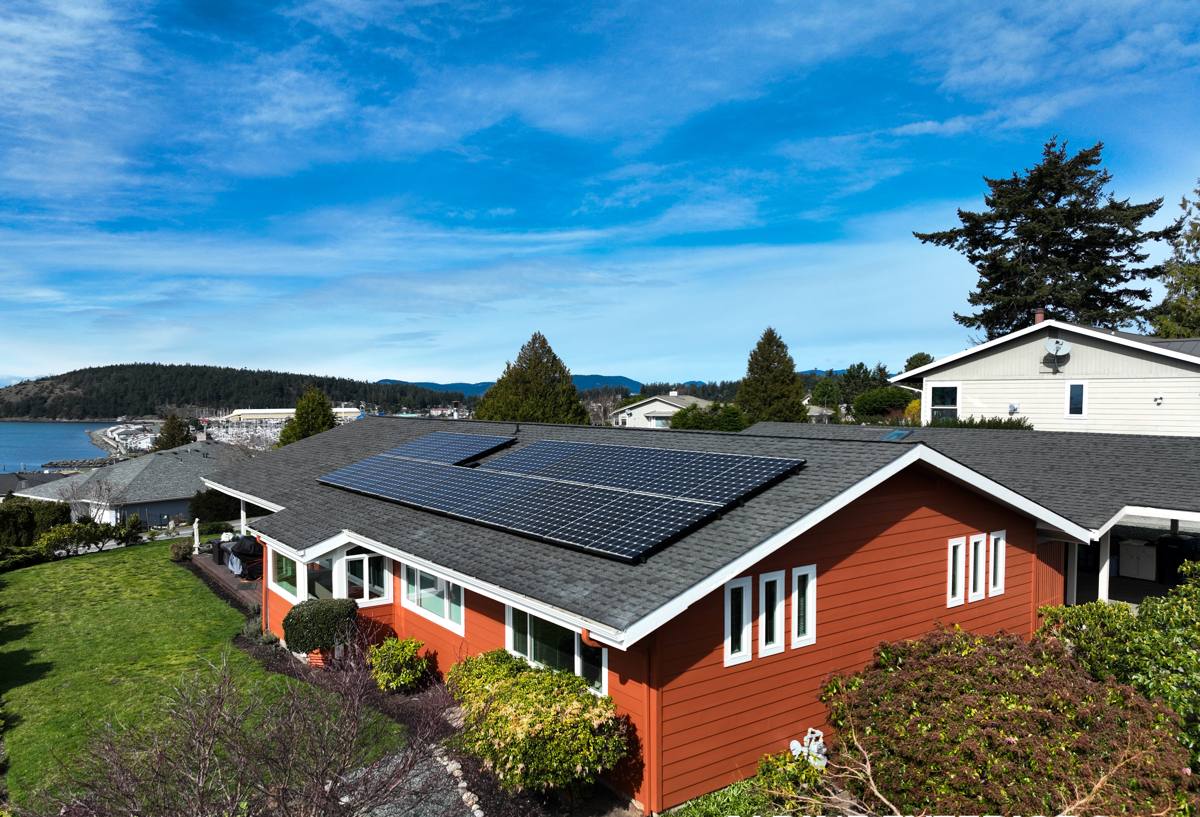
Why Whatcom County Siding Takes More Punishment Than People Expect
Lynden sits inland from the Salish Sea, but this part of Whatcom County still deals with the same weather pattern that grinds down siding all along the north Puget Sound: long stretches of low-intensity rain, damp air that doesn't fully dry out between storms, and moss and algae growth that gets a running start every fall and doesn't let up until late spring. Add in the salt-tinged marine air that rolls in off the Strait of Georgia and up through the valley, and you've got a climate that's less about single extreme events and more about slow, constant moisture exposure.
Siding here doesn't usually fail because of one bad storm. It fails because a product wasn't built to shed water and resist swelling, cracking, or fungal growth over years of that pattern. That's the lens we use when we evaluate any siding material, and it's the reason our answer keeps coming back to fiber cement engineered specifically for this kind of climate.
What "Long Moss Season" Actually Does to a Wall
Moss and algae need two things to establish on siding: moisture and a surface they can grip. Wood-based products and some composites give organic growth exactly that surface, especially in shaded, north-facing walls or under roof overhangs that don't get much sun exposure. Once moss takes hold, it holds moisture against the siding surface longer, which accelerates whatever underlying degradation is already happening. It's a compounding problem, not a cosmetic one.
The Products We Don't Install, and Why We Made That Call
We get asked fairly often why we don't offer LP SmartSide, vinyl, or other fiber cement brands like Cemplank or Allura. It's a fair question, and the honest answer is that each of these has a real trade-off that we decided wasn't worth carrying for our customers.
- Engineered wood siding (LP SmartSide and similar): These products use treated wood strand technology and have improved a lot over older OSB-based siding, but they're still wood at their core. Wood expands, contracts, and is vulnerable to moisture intrusion at cut edges and fastener penetrations if the factory sealant isn't maintained perfectly over the life of the product. In a climate with this much sustained dampness, that's a maintenance burden we don't think most homeowners want to sign up for.
- Vinyl siding: Vinyl is inexpensive and low-maintenance in the sense that it doesn't need painting, but it's a thin plastic product that can warp in temperature swings, crack on impact in colder weather, and fade unevenly over time. It also isn't a fire-resistant material, and it can telegraph every imperfection in the wall behind it rather than hiding it.
- Other fiber cement brands: This one's less about the base material — fiber cement as a category is sound — and more about the specific engineering, factory finish quality, and warranty backing behind James Hardie's version of it. We'll get into the specifics below.
None of this is us saying these products are junk. It's us saying that once you weigh moisture behavior, maintenance demands, and long-term appearance against what fiber cement from James Hardie delivers, the case for switching products every job just isn't there.
What Makes James Hardie's Fiber Cement Different
Fiber cement itself is a mix of cement, sand, and cellulose fibers, pressed and cured into planks, panels, and shingles. It's inherently more dimensionally stable than wood-based siding and doesn't burn, which matters both for fire safety and for insurance considerations in this region. But the raw material is only part of the story — how it's engineered and finished is where James Hardie separates itself.
Climate-Engineered HZ Product Lines
James Hardie manufactures its siding in different formulations tuned to regional climate zones — what they call HZ5 and HZ10 engineering. The Pacific Northwest formulation is built around resisting moisture-related freeze-thaw stress and sustained damp exposure, which is exactly the failure mode our climate produces. It's not a generic product shipped to every state with the same specs; it's built for what actually happens to siding here.
The ColorPlus Factory Finish
A lot of siding failure that looks like "material failure" is actually finish failure — paint that wasn't applied evenly, in the right conditions, at the right thickness. James Hardie's ColorPlus finish is baked on in a controlled factory environment, not brushed or sprayed on a jobsite at the mercy of weather and technique. That finish comes with a longer, more consistent warranty against fading and flaking than field-applied paint can realistically offer, and it holds a uniform look across an entire home instead of showing brush lines or lap marks.
James Hardie Product Lines We Install
| Product | Typical Use | What It's Good For |
|---|---|---|
| HardiePlank lap siding | Primary wall siding | Traditional lap look, most common choice on Lynden homes |
| HardiePanel vertical siding | Gables, modern facades, accent walls | Clean vertical lines, board-and-batten style |
| HardieShingle | Accent areas, gables, full shingle-style homes | Cedar-shingle appearance without the maintenance |
| HardieTrim | Corners, window and door trim, fascia | Matches the siding system, resists rot at high-exposure edges |
| HardieSoffit | Eaves and overhangs | Non-combustible, moisture-resistant overhead protection |
Installation Is Where Good Siding Actually Fails
Here's something we're upfront about: even the best siding material in the world will underperform if it's installed wrong. This is true of James Hardie products just as much as anything else, and it's a big part of why we're selective about the crews and methods we use.
Common Installation Mistakes That Undermine the Product
- Nailing too tight, which doesn't allow the panel to move naturally and can cause cracking
- Insufficient clearance between siding and roofing, decks, or grade, which traps moisture against the bottom edge
- Skipping or improperly lapping the water-resistive barrier behind the siding
- Butt joints that aren't properly sealed or flashed, creating a direct path for water intrusion
- Cutting panels without sealing exposed edges, which defeats part of the product's moisture resistance
James Hardie publishes detailed installation specifications for exactly this reason, and following them isn't optional if you want the product to perform — or if you want the warranty to actually be valid when you need it.
Warranty: What's Actually Backing the Product
James Hardie backs its siding products with a non-prorated limited warranty that's transferable to a new owner if you sell the home, which matters more than people expect — it's a real selling point when you eventually list the house. The ColorPlus finish carries its own separate finish warranty covering fading and chipping, since the paint system and the substrate are different things that can fail independently. Warranty terms vary by product line, so we walk through the specific coverage for your project rather than quoting a blanket number that may not apply.
The warranty is only as good as the installation behind it, though. Improper installation can void coverage, which is another reason installation quality isn't a corner we're willing to cut.
What Siding Actually Costs to Own Over Time
Upfront price is only part of the equation. The more useful comparison is what a siding choice costs you across the years you'll own the home.
| Factor | What to Consider |
|---|---|
| Upfront material and labor cost | Fiber cement typically costs more upfront than vinyl, less than some premium wood systems |
| Repainting or refinishing | ColorPlus factory finish extends the interval between repaints well beyond field-painted products |
| Moisture and rot repair | Non-combustible fiber cement resists the swelling and rot that drive repair costs in wood-based products |
| Moss and algae cleaning | Denser, more stable surface holds up better to periodic washing without degrading |
| Resale impact | Transferable warranty and consistent factory finish are tangible points in a home sale |
A Practical Checklist Before You Choose a Siding Product
- Ask what climate zone formulation the product is engineered for, and whether it's appropriate for Pacific Northwest moisture exposure
- Ask whether the finish is factory-applied or field-applied, and what that finish's warranty actually covers
- Ask to see the manufacturer's written installation specifications, and whether your contractor follows them exactly
- Ask what voids the warranty, and confirm your contractor's install method won't trigger it
- Ask how the product handles sustained dampness and shaded, moss-prone wall areas specifically
- Get the warranty terms in writing, not just a verbal assurance
Why We Landed Here
We didn't start out only installing one brand of siding. Over time, watching how different products aged on real homes in this climate, and dealing with the callbacks and repairs that came from moisture-sensitive materials, we narrowed our focus. James Hardie's climate-engineered fiber cement, factory-applied finish, and transferable warranty structure consistently held up better against Whatcom County's rain and moss than the alternatives we'd used before. Standardizing on one product line also means our crews install it correctly every time, instead of relearning a new manufacturer's specs on every job.
If you're weighing a siding replacement or new build in Lynden and want a straight answer about what will actually hold up on your home, we're glad to walk the exterior with you and put together a free, no-pressure estimate.