 Lynden
 Siding in Deming: A Different Kind of Weather Test
Deming sits back from the coast in the foothills of Whatcom County, and that location changes what a house has to deal with year-round. You're closer to the Cascade foothills and the Nooksack River valley than you are to the open water, which means the classic Whatcom County combination of persistent moisture, filtered light under tree cover, and a long moss-and-mildew season all show up on siding a little differently than they do out on the flats near Lynden or Ferndale. Homes here tend to sit closer to trees, closer to shade, and closer to damp ground-level air that doesn't burn off as quickly on a given morning.
We work on homes throughout this part of the county, and Deming properties are a regular part of our service area. The exterior problems we see out here aren't dramatic — they're slow. Paint that stays tacky a beat too long. A north wall that never quite dries between rains. Trim that starts showing dark streaking a few years before the rest of the house does. None of that is unusual for this climate; it's just what a wood or moisture-sensitive exterior does when it's asked to shed water in a place that doesn't give it much of a break.
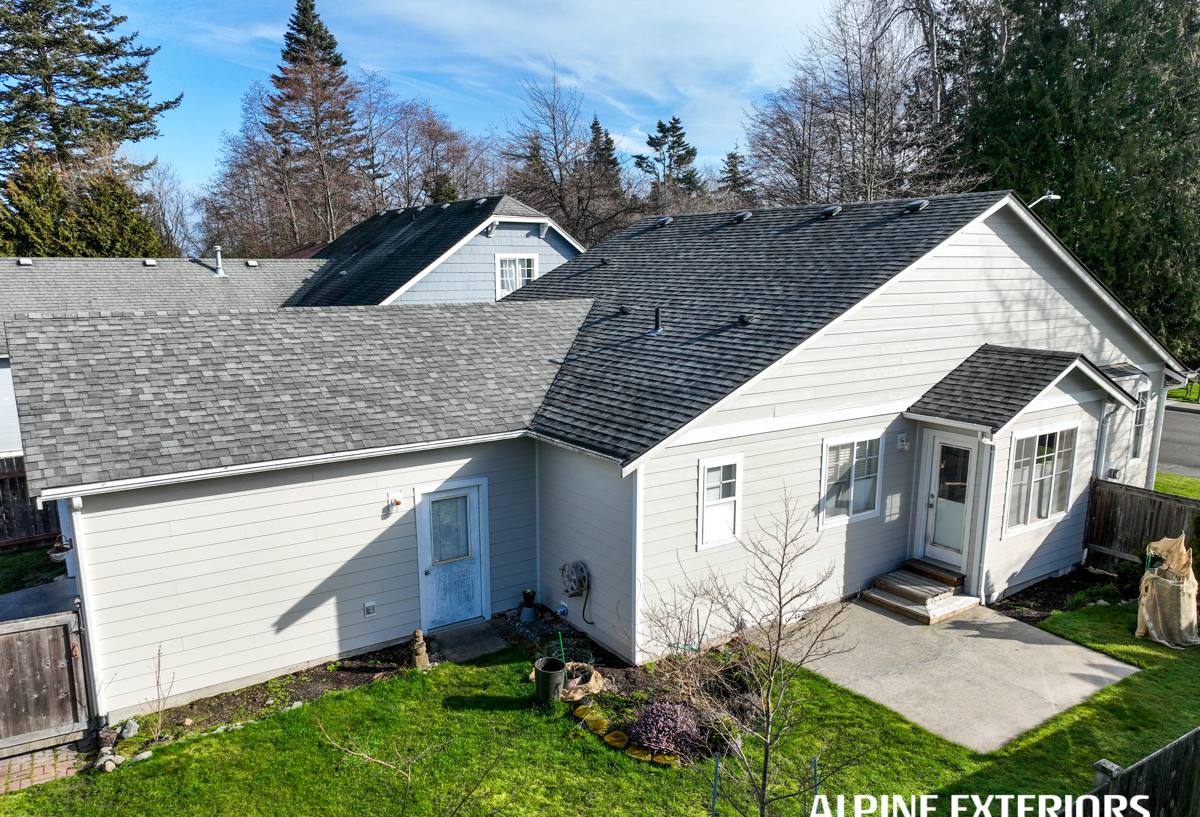
What the Deming Climate Actually Does to a House
Driving Rain and Saturated Ground
Whatcom County gets a lot of rain, and in the foothills near Deming that rain often comes with wind that pushes it sideways into walls rather than straight down onto roofs. Siding that isn't dimensionally stable — meaning it swells, shrinks, or warps as it takes on and releases moisture — opens up small gaps at seams and fastener points over time. Those gaps are where water gets behind the cladding, and that's where real damage (not cosmetic damage) starts.
Shade, Tree Cover, and a Long Moss Season
Homes tucked near trees or on shaded lots dry out slower after every rain event. That extended damp window is exactly what moss, algae, and mildew need to take hold, and once they're established on a wood-based or wood-adjacent siding product, they hold moisture against the surface even longer — a cycle that accelerates wear rather than just sitting on top of it cosmetically.
Salt Air, Even Inland
Whatcom County's coastal exposure reaches further inland than people expect, especially combined with wind patterns off the Sound. It's a slower factor than the rain and moss, but it plays into the same story: metal fasteners, paint film, and porous materials all age faster under a steady low-level dose of moist, salt-tinged air than they would in a drier interior climate.
Why We Only Install James Hardie Fiber Cement Siding
We made a deliberate decision as a company to install one siding system: James Hardie fiber cement. We don't install LP SmartSide, vinyl, Cemplank, Allura, primed spruce, or raw cedar. That's not a marketing position — it's a practical one, built around what actually holds up in this specific climate over decades, not just through the first few winters.
What We Ruled Out, and Why
| Material | What It Does Well | Why We Don't Install It Here |
|---|---|---|
| Vinyl siding | Low upfront cost, low maintenance in dry climates | Can warp or become brittle with temperature swings; seams and panel movement create long-term water-management questions in a wet climate |
| LP SmartSide (engineered wood) | Good workability, reasonable cost, better than raw wood | Still wood-based at its core — edges and cut ends need diligent sealing and ongoing maintenance to keep moisture out over the long run |
| Primed spruce / cedar | Natural look, traditional appeal | Organic wood products absorb and release moisture constantly; in a shaded, damp climate that means more frequent repainting, more rot risk, more moss |
| Cemplank / Allura (other fiber cement) | Similar core material to Hardie, fiber cement performance | We standardized on one manufacturer for consistency in warranty terms, factory finish quality, and product engineering specific to this region |
Fiber cement as a category resists moisture, doesn't feed mold or moss the way organic wood fiber can, and won't warp or swell the way vinyl or engineered wood can under repeated wet-dry cycling. James Hardie specifically engineers product lines for different climate zones — its HZ5 line is built for regions like ours that see freeze-thaw cycling alongside heavy moisture — and backs its ColorPlus factory-applied finish with a strong, transferable warranty. That combination is why it's the only system we put our name behind.
What Correct Installation Looks Like
- Proper rain-screen or drainage plane behind the siding so any moisture that does get past the cladding has somewhere to go
- Correct fastener spacing and type per Hardie's published installation specs — this is where a lot of shortcuts happen on rushed jobs
- Factory-cut and factory-primed edges used wherever possible, with field cuts properly sealed
- Flashing detail at every window, door, and roofline penetration — the single most common source of hidden water damage on any siding job
- Correct clearance from grade, decks, and roof lines so the bottom edge of the siding isn't sitting in standing moisture
Hardie siding installed against spec doesn't perform like Hardie siding installed to spec. The product is only as good as the installation, which is part of why we treat the process, not just the material, as the thing that actually protects a house.
Roofing, Windows, and Decks: The Rest of the Envelope
Siding doesn't work in isolation. A roof that's shedding water poorly will overwhelm even correctly installed siding at the eaves and gables. Windows with failed flashing or worn seals feed moisture directly into the wall assembly regardless of what cladding is on the outside. Decks that tie into the house create their own set of flashing and ledger-board vulnerabilities right at the exterior wall. We handle all four — siding, roofing, windows, and decks — because in a climate like this one, they're really one system, and gaps between trades are where the expensive problems start.
For a Deming property specifically, that often means looking at the whole exterior at once: how the roof drains toward walls, whether window flashing is doing its job, whether a deck ledger is creating a moisture trap against the siding. A siding-only fix on a house with a roof or window problem just moves the water somewhere else.
Signs a Deming Home's Siding Needs a Look
- Dark streaking, green tint, or fuzzy growth on north- or shade-facing walls
- Paint that's peeling, bubbling, or staying tacky longer than it used to
- Soft spots or visible warping, especially near the ground or around window trim
- Gaps opening up at seams, corners, or where trim meets siding
- Visible fastener corrosion or staining around nail heads
- A noticeable jump in how often the exterior needs repainting
None of these mean a house is in crisis. They mean it's time for someone to actually look, rather than wait for the next issue to show up as an interior stain or a soft spot in the sheathing.
What a Siding Project Actually Involves
Assessment First
We start by looking at the existing siding, the flashing details, and any moisture history on the house — not just guessing based on age. Some homes need a full re-side; others need targeted repair, better flashing, or attention to a specific wall that's taking more weather than the rest of the house.
Removal and Prep
Old siding comes off, and we check the sheathing underneath for any hidden rot or moisture damage before anything new goes up. This step matters more in a climate like Whatcom County's than in drier regions, because water damage that's been quietly developing behind old siding is common and easy to miss from the outside.
Weather Barrier and Drainage Plane
A correctly installed drainage plane behind the new siding gives any incidental moisture a path out instead of a place to sit. This is invisible once the job is done, but it's one of the details that separates a siding job that lasts decades from one that causes problems in year six or seven.
Installation to Spec
James Hardie siding goes up following manufacturer installation guidelines — fastener pattern, clearances, flashing at every penetration — because that's what the warranty is actually built on, and it's what keeps the product performing the way it's engineered to.
Cost Factors for a Deming Siding Project
| Factor | Why It Matters |
|---|---|
| Home size and wall complexity | More corners, dormers, and cutouts mean more material and labor time |
| Current siding condition | Hidden sheathing damage found during removal can add scope |
| Access and site conditions | Tree cover, slope, and staging space affect labor time |
| Product line and profile | Hardie offers several plank styles, textures, and the ColorPlus finish tier |
| Trim and detail work | Window and corner trim complexity adds to both material and labor |
We don't quote broad numbers without seeing a house, because the variables above genuinely move the cost — but we're always upfront about the range and what's driving it once we've actually looked at the property.
Why a Local Crew Matters for This Kind of Work
A crew that works this specific part of Whatcom County regularly knows what a shaded, damp foothill lot near Deming does to an exterior differently than a job out on open, windy ground near Lynden proper. That's not abstract knowledge — it shows up in where we pay extra attention to flashing, how we think about drainage planes, and which walls we flag for a closer look during assessment. It also means we're not learning the region on someone's house; we're applying what we've already seen repeatedly in these conditions.
If you're weighing a re-side, a repair, or just want an honest read on what your current exterior is telling you, we're glad to take a look. Reach out for a free, no-pressure estimate — the form below gets you started.