 Lynden
 What Ferndale's Climate Does to a House
Ferndale sits close enough to Bellingham Bay and the Strait of Georgia that homes here deal with a combination most inland Whatcom County towns don't see as intensely: salt-laden air moving in off the water, long stretches of driving rain pushed in by coastal weather systems, and a moss season that can run from October well into spring. None of these on their own is unusual for western Washington. Together, on the same wall assembly, year after year, they add up.
Salt air is corrosive to exposed metal fasteners and trim, and it accelerates the breakdown of paint films and lower-grade coatings. Driving rain — especially wind-driven rain hitting the west and south faces of a house — pushes water into laps, seams, and butt joints that a calm-weather product might tolerate for years before failing. And moss, which thrives in the shaded, damp conditions common under mature trees and on north-facing walls throughout this area, holds moisture against the surface of siding long after the rest of the house has dried out. That constant damp-dry-damp cycle is what actually damages most siding, more than any single storm.
Why This Matters for Siding Choice
Every siding material handles moisture differently, and the difference shows up fastest in areas like Ferndale. Wood-based products — including primed spruce and engineered wood siding — rely on an intact paint or factory coating to keep water out. Once that coating is compromised at a cut edge, a nail hole, or a seam that's opened up slightly, moisture gets into the wood fiber itself. In a climate with this much sustained dampness and moss cover, that failure point gets found quickly.
Vinyl siding doesn't absorb water the same way, but it has its own weak points here: it expands and contracts with temperature swings, it can warp or become brittle over time, and salt air combined with UV exposure tends to dull and chalk the surface faster than in drier climates. It also isn't a fire-resistant material, which matters increasingly to Washington homeowners and insurers.
This is the core reason we made the decision, as a company, to install James Hardie fiber cement siding exclusively. It's not a marketing position — it's a practical one, built around what actually holds up on homes in this specific climate.
Why We Standardized on James Hardie
James Hardie fiber cement is manufactured from cement, sand, and cellulose fiber, which makes it dimensionally stable and non-combustible. It doesn't rot, and it isn't a food source for the insects or the moss and mildew that thrive in our wet, mild winters. Hardie also makes a version of its product line — the HZ5 line — specifically engineered for the kind of wet, marine-influenced climate found throughout the Pacific Northwest, including areas like Ferndale that sit close to salt water.
The factory-applied ColorPlus finish is a big part of why we trust it here. Instead of a job-site paint job that depends entirely on weather conditions during installation, ColorPlus is baked on under controlled conditions with UV-cured resin coats, which gives it stronger fade and moisture resistance than field-applied paint — a real advantage in a climate that gets constant coastal sun-and-rain cycling. It also comes backed by a substantial, transferable limited warranty, which matters if you ever sell the home.
What This Looks Like in Practice
- Lap and panel siding options that give you a traditional Northwest look without the maintenance burden of real wood
- Trim, soffit, and fascia in the same system so the whole exterior weathers consistently
- Factory-finished color that doesn't need repainting on the schedule wood siding does
- A material rated for direct exposure to salt-influenced marine air
Beyond Siding: A Full Exterior Approach
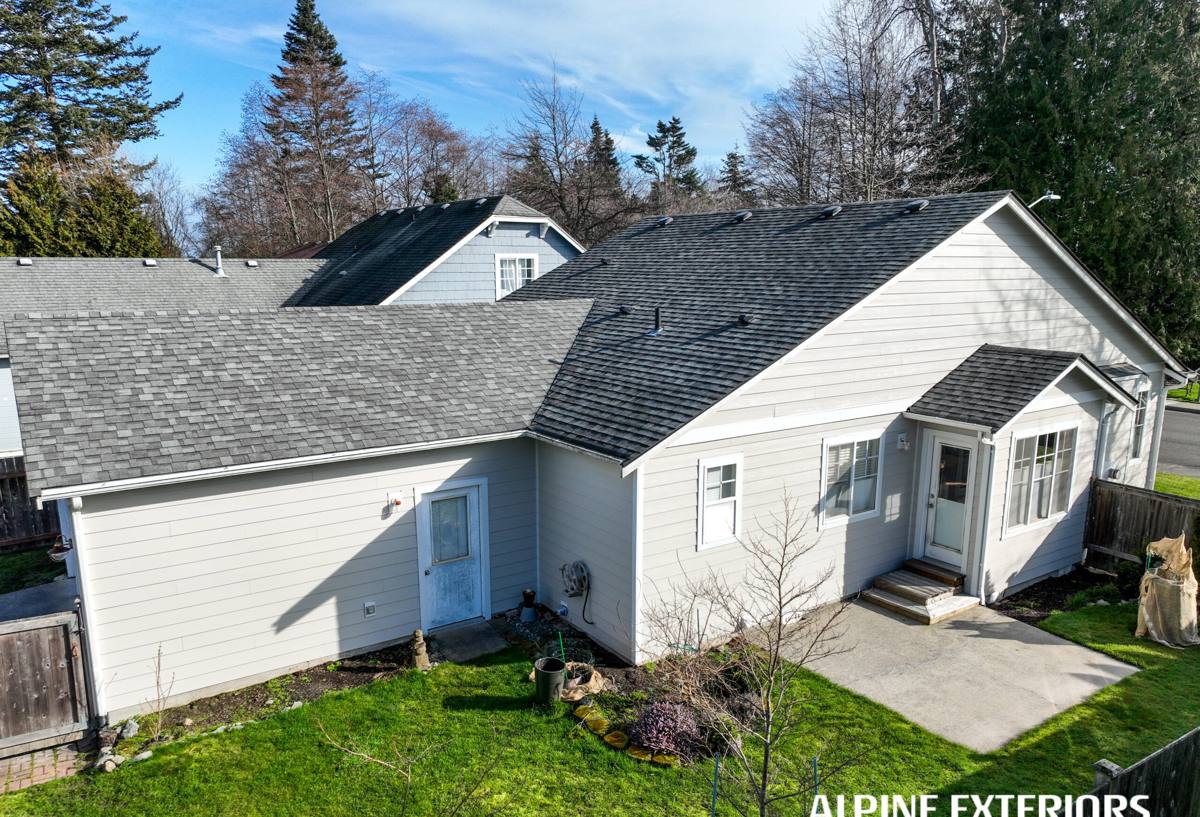
Siding is one piece of how a house handles Ferndale's weather, not the whole picture. We also handle roofing, windows, and decks, because the same moisture and salt-air conditions that wear down siding put pressure on every other exterior surface too. A roof with compromised flashing will feed water behind good siding just as fast as a siding failure will. Windows with failed seals let moisture into wall cavities from the inside out. Decks exposed to the same driving rain and moss growth need materials and fastening details that account for standing water and shaded, damp conditions.
Looking at the exterior as one connected system — rather than replacing siding while ignoring a roof that's fifteen years past its flashing life — is how you actually stop water intrusion instead of moving the problem from one surface to another.
Signs a Ferndale Home Needs Attention
Because moss and moisture damage build up gradually, a lot of homeowners don't notice a problem until it's already inside the wall. A few things worth checking, especially on north-facing walls and areas shaded by trees:
- Soft or spongy spots when you press on siding, especially near the bottom courses
- Visible moss or dark streaking that keeps returning after cleaning
- Paint that's peeling, bubbling, or chalking faster than the rest of the house
- Gaps opening up at butt joints, corners, or where siding meets trim
- Warping, cupping, or visible seams in older wood or composite siding
- Interior drywall or trim staining near exterior walls after heavy rain
Any one of these on its own might be minor. Several together, especially on a house more than fifteen or twenty years old, usually means it's worth a real inspection rather than a patch job.
How Siding Materials Actually Compare
| Material | Moisture Performance | Maintenance | Fire Resistance | Typical Lifespan |
|---|---|---|---|---|
| James Hardie Fiber Cement | Strong — engineered marine-climate line available | Low; factory finish, no repainting cycle | Non-combustible | 30+ years with proper install |
| Vinyl | Doesn't absorb water, but seams and expansion gaps can let it in | Low, but fades/chalks over time | Combustible | 20-30 years, variable |
| LP SmartSide / Engineered Wood | Coating-dependent; vulnerable once compromised | Moderate; coating upkeep matters | Combustible | 15-25 years, install-sensitive |
| Primed Spruce / Cedar | Coating-dependent; absorbs water at cuts and joints | High; regular repainting or resealing | Combustible | 10-20 years without diligent upkeep |
This isn't a claim that other products are unusable everywhere — plenty of homes across the country wear them fine. It's that in a climate stacking salt air, driving rain, and extended moss season on the same walls, the margin for coating failure or seam intrusion is thinner, and the maintenance commitment to keep those materials performing is real and ongoing.
What Correct Installation Involves
Fiber cement performs the way it's rated to only when it's installed to Hardie's published specifications — proper clearance from grade and roof lines, correct fastener type and spacing, weather-resistant barrier and flashing details behind every seam, and joints treated the way the manufacturer requires to keep the warranty intact. A lot of siding problems people blame on the product are actually installation shortcuts: nails driven too tight, missing kick-out flashing, siding installed too close to grade where it wicks up moisture. In a climate as unforgiving of gaps as this one, those details are what separate siding that lasts thirty years from siding that needs attention in eight.
Why a Local Crew Matters
A crew that works Whatcom County regularly knows which walls on a given lot are going to hold moss longest, which elevations take the worst of the wind-driven rain, and how local permitting and inspection actually works — not generic advice, just familiarity built from doing this work in this specific weather, on this specific coastline, repeatedly. That local knowledge shows up in small decisions during installation: flashing details at a deck ledger, extra attention on a shaded north wall, fastener choices that account for salt exposure. Those are the calls that determine how a house performs ten and twenty years down the road.
Maintaining Your Exterior in a Coastal-Influenced Climate
- Rinse siding and roof surfaces periodically to keep moss and organic buildup from taking hold, particularly on shaded or north-facing sections
- Keep gutters clear so water isn't overflowing onto siding below
- Trim back vegetation and tree canopy that keeps walls shaded and damp longer than necessary
- Have flashing and caulking at windows, doors, and deck ledgers checked every few years
- Address small gaps, cracks, or soft spots promptly rather than waiting for them to spread
If you're weighing options for a home in Ferndale — whether it's siding that's showing its age, a roof due for a closer look, windows that are letting in drafts, or a deck that needs rebuilding — we're happy to come take a look and talk through what we're actually seeing, no pressure and no obligation. A free estimate is a good way to get a clear, honest picture of where your home stands before you decide anything.