 Lynden
 Exterior Work Built for the Nooksack Climate
Nooksack sits in the shadow of the North Cascades foothills, close enough to the river bottomlands and the marine air moving in off Bellingham Bay and the Puget Sound lowlands that homes here deal with a particular combination of moisture problems most of the year. It isn't dramatic weather — no hurricanes, no hail the size of golf balls — it's the slow, steady kind of exposure that wears down the wrong exterior materials over a decade instead of a season. Long stretches of drizzle, heavy dew, fog that sits in the valley overnight, and a moss season that can run from October through May all add up to constant moisture contact on siding, roofing, and trim.
That combination is exactly why exterior material choice matters more here than it does in drier parts of the state. A product that performs fine in Spokane or Yakima can struggle in Whatcom County simply because it never gets a real chance to dry out between rain events. We built our business around materials and installation methods that hold up to that reality, not around whatever is cheapest to install.
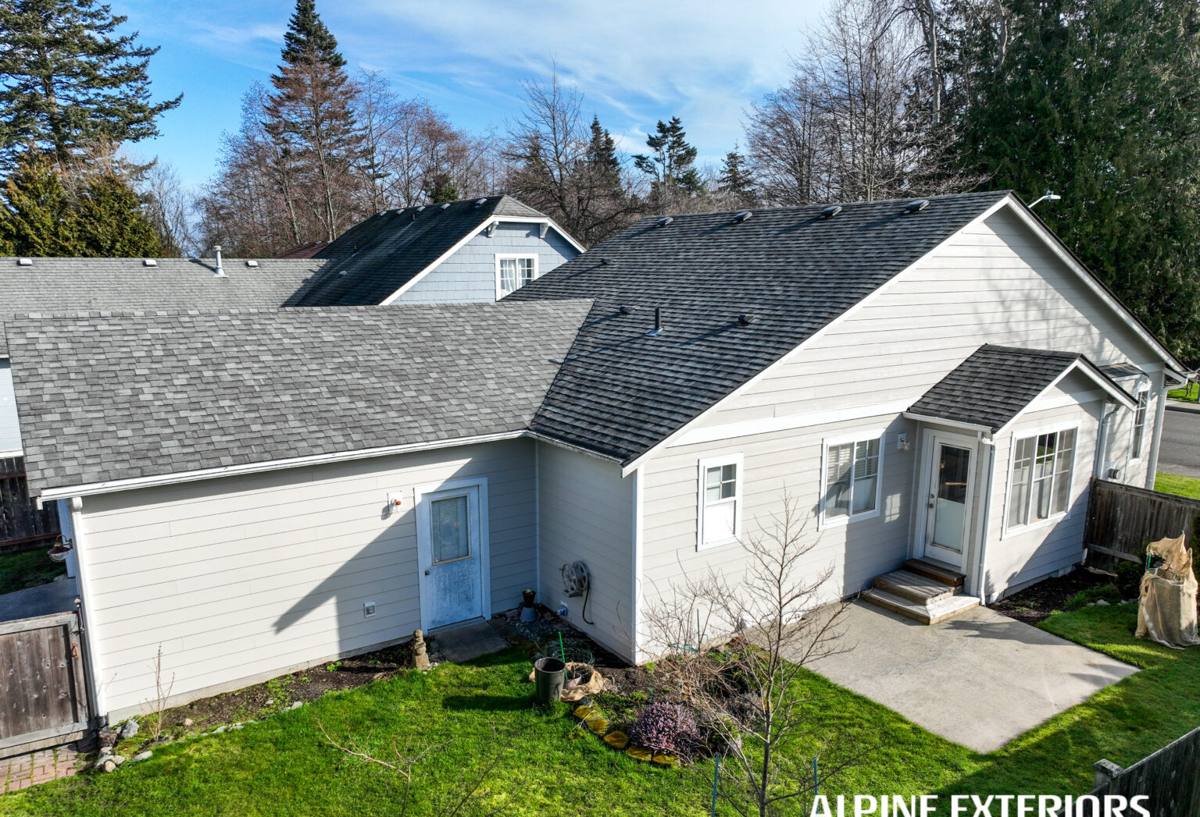
What Whatcom County Weather Does to a Home's Exterior
Moisture That Never Fully Lets Up
Rain in this part of the state tends to be light but persistent, and it's often accompanied by wind that drives moisture sideways into wall assemblies, window flanges, and roof-to-wall transitions. Add in low winter sun angles and shaded north- and east-facing walls that stay damp for days, and you get ideal conditions for wood rot, paint failure, and moss and algae growth on anything porous.
Moss and Organic Growth
Moss doesn't just grow on roofs — it colonizes siding laps, window sills, deck boards, and anywhere else organic debris and shade combine with standing moisture. On wood-based siding products, moss growth traps water directly against the substrate, which is one of the more common ways paint film fails and rot starts, usually from the inside out where you can't see it until it's advanced.
Temperature Swings and Foothill Proximity
Nooksack's proximity to the foothills means winter mornings can bring frost and the occasional freeze even when nearby lowland areas stay a few degrees warmer. Repeated freeze-thaw cycling on already-damp materials accelerates whatever damage the moisture already started — swelling wood fibers, cracking caulk joints, and loosening fastener holds over time.
Siding: Why We Only Install James Hardie
We install James Hardie fiber cement siding exclusively. We don't install vinyl, LP SmartSide, Cemplank, Allura, primed spruce, or cedar, and that's a deliberate standard, not a limitation of what we're capable of installing. Here's the honest reasoning behind it, product by product.
Wood-Based Products (LP SmartSide, Primed Spruce, Cedar)
Engineered wood and natural wood sidings have real strengths — cedar in particular has a look people love, and LP SmartSide is a reasonably engineered product. But both are organic materials at their core, and organic materials absorb moisture. In a climate where siding rarely gets a long dry stretch, that means more frequent recoating, more vigilance around caulking and end-cuts, and a real risk of hidden rot at seams, fastener points, and ground contact if maintenance slips even one season. In Whatcom County's moss and drizzle cycle, that maintenance burden is significant and ongoing, not a one-time task.
Vinyl Siding
Vinyl is inexpensive and low-maintenance in the sense that it doesn't need repainting, but it has its own trade-offs: it can warp or become brittle over time, it telegraphs an unavoidable "plastic" appearance up close, and seams and panels can allow water intrusion behind the cladding if not installed with real precision — something that matters even more in a wet climate where anything that gets behind the siding has little chance to dry out.
Cemplank and Allura
These are also fiber cement products, and fiber cement as a category is the right material for this climate — non-combustible, dimensionally stable, and resistant to moisture and pests in a way wood products aren't. Our standard isn't a knock on fiber cement generally; it's that we've settled on James Hardie specifically for its factory-applied ColorPlus finish, its HZ5 product engineering for the Pacific Northwest's wet-weather profile, and the strength of its transferable warranty — consistency we can stand behind on every job.
James Hardie: What You're Actually Getting
James Hardie fiber cement is a blend of cement, sand, and cellulose fiber, engineered to resist moisture, pests, and fire in ways wood-based products simply can't match. The HZ5 line is specifically formulated for regions like ours with high moisture exposure and freeze-thaw cycling. ColorPlus finish is baked on at the factory in a controlled environment, which gives more consistent, longer-lasting color than field-applied paint and eliminates one of the biggest maintenance items homeowners deal with on wood siding — repainting every five to seven years.
It's also a non-combustible material, which matters increasingly for wildfire-adjacent insurance considerations even this far from the dry side of the state, and it carries a strong transferable warranty that adds real value if you sell the home.
Roofing, Windows, and Decks — The Same Climate Logic Applies
Roofing
A roof in Nooksack does more work than a roof in a dry climate. Underlayment quality, proper ventilation, and moss-resistant materials and treatments matter more here because the roof rarely gets a real chance to dry out completely between weather systems. We pay close attention to ventilation and moisture management details, not just the shingle or panel on top.
Windows
Window flashing and sealing are where a lot of hidden water damage in this region actually starts — not from the glass, but from poorly integrated flashing letting driving rain behind the trim. Correct window installation is as much about the flashing and moisture barrier detail as it is about the window unit itself.
Decks
Decks take the most direct abuse from standing moisture and moss of anything on a property, since they're horizontal and exposed to sun, shade, and rain in the same footprint. Material choice, gap spacing for drainage, and proper ledger flashing all matter more here than in drier regions where a deck can dry out in an afternoon.
Siding Material Comparison for Whatcom County Conditions
| Material | Moisture Resistance | Maintenance | Typical Lifespan Here |
|---|---|---|---|
| James Hardie Fiber Cement | Excellent — engineered for wet climates | Low — factory finish, occasional wash | 30+ years |
| Cedar | Fair — needs consistent sealing | High — regular refinishing, moss checks | 15-25 years with upkeep |
| LP SmartSide / Primed Spruce | Fair — vulnerable at cuts and seams | Moderate to high — recoating, caulk checks | 15-25 years with upkeep |
| Vinyl | Good on the surface, weak at seams | Low, but limited repair options | 20-30 years, can fade/warp |
| Cemplank / Allura (Fiber Cement) | Excellent | Low | 25-30+ years |
The lifespan figures above are general ranges, not guarantees — actual performance depends heavily on installation quality, sun exposure, and how consistently a home gets basic upkeep. That said, the pattern holds across the industry: fiber cement, and James Hardie specifically, requires the least ongoing intervention to hit its full lifespan in a climate like ours.
Why a Local Crew Matters in Nooksack
Exterior work in a small community like Nooksack isn't the same job as the same product installed in a dry climate. A crew that works this region regularly understands where moss builds up fastest, which wall orientations stay damp longest, and how to detail flashing and caulking so it actually holds through a wet winter instead of failing in year three. That's knowledge that comes from doing the work here repeatedly, not from a general contracting background applied to whatever region happens to call.
Being local also means being reachable — for a warranty question, a follow-up look at a trim detail, or advice on when moss treatment is worth doing versus when it's cosmetic. That kind of accountability is harder to get from a crew that's just passing through the area for one job.
What to Ask Any Contractor Before You Hire
- Are they manufacturer-certified or specifically trained on the siding product they're proposing?
- Do they detail flashing and moisture barriers at every window, door, and roof transition, not just the field of the siding?
- Can they explain why they recommend a specific material for this climate, not just what's cheapest?
- What does the warranty actually cover — material only, or labor too, and is it transferable if you sell the home?
- Do they carry proper licensing and insurance for work in Washington State?
- Will they walk you through maintenance expectations honestly, including what happens if you skip it?
Maintenance That Actually Matters in This Climate
Whatever material ends up on your home, a few habits make the biggest difference in how long it lasts in Whatcom County conditions:
- Keep gutters clear so water isn't overflowing directly onto siding or foundation areas
- Trim back vegetation and tree cover that keeps walls shaded and slow to dry
- Rinse siding and decking periodically to knock back early moss and algae growth before it takes hold
- Inspect caulking around windows, doors, and trim annually, especially after the first hard freeze
- Address any soft spots, discoloration, or bubbling paint promptly rather than waiting a season
If you're weighing a siding replacement, a roof that's showing its age, windows that leak air or moisture, or a deck that needs more than a pressure wash, we're happy to take a look and walk you through honest options for your specific home. Reach out for a free, no-pressure estimate using the form below.