 Lynden
 Kendall Sits in a Demanding Corner of Whatcom County
Kendall is a quieter, more rural stretch of Whatcom County than the Lynden city core, tucked closer to the foothills and the Nooksack River drainage. That setting is part of what makes it a great place to live, but it also means homes here take on a specific set of exterior stresses: more tree cover and shade, more standing moisture in the yard and along the siding line, and a longer stretch of the year where surfaces just don't fully dry out between rain events. Add in the broader Pacific Northwest pattern of driving rain, seasonal wind, and a moss season that can run from fall through spring, and you've got a climate that is genuinely tough on exterior building materials, not just inconvenient.
None of this is unique to Kendall in isolation — it's the reality across most of Whatcom County — but homes further from town, with more tree canopy and less direct sun exposure, tend to feel it more acutely. Siding, trim, roofing, and deck surfaces in shaded, damp microclimates hold moisture longer, grow moss and algae faster, and show wear sooner if the material or the installation wasn't built for it.
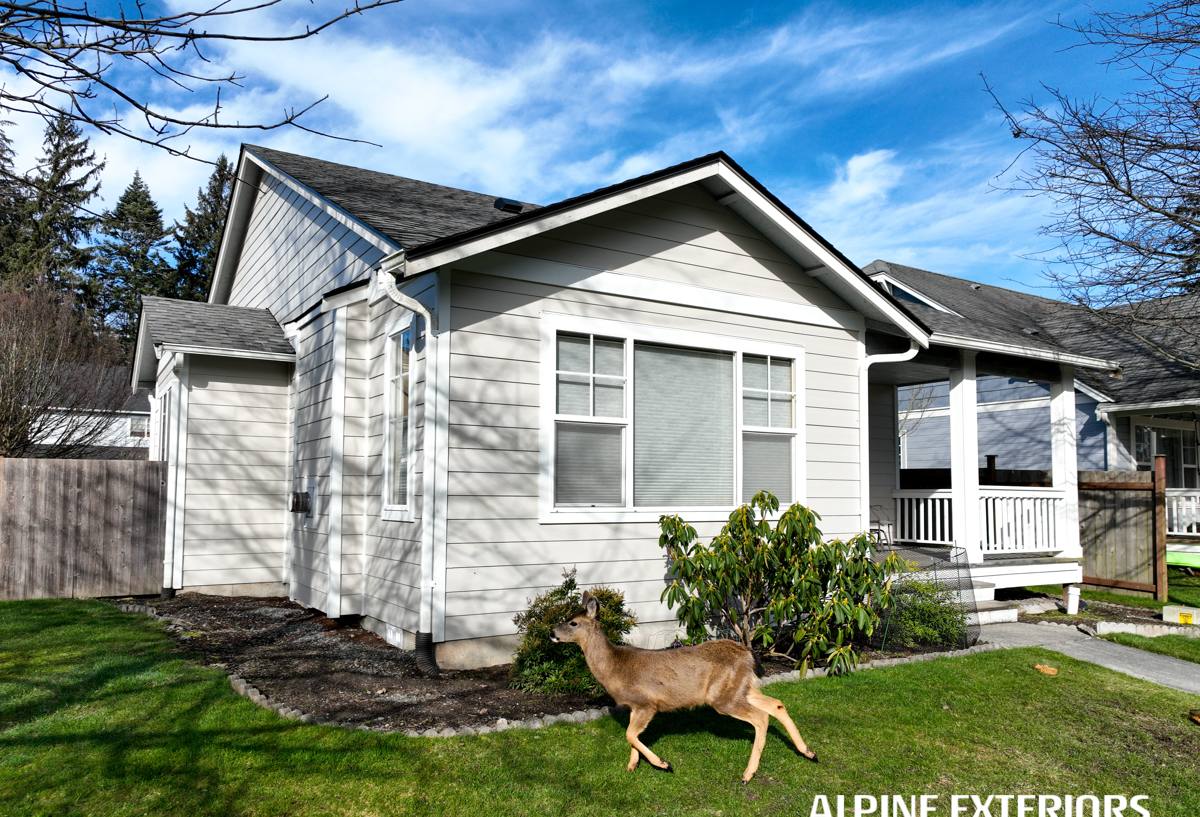
What This Climate Actually Does to a House
It's worth being specific about the mechanisms, because "wet climate" undersells what's really happening over years of exposure:
- Driving rain pushed by wind doesn't just run down a wall — it can work sideways and upward into seams, laps, and butt joints if flashing and caulking details aren't done correctly.
- Prolonged dampness in shaded areas keeps wood-based products (or products with wood fiber content) at a higher moisture level for longer stretches, which accelerates swelling, delamination, and rot at edges and cut ends.
- Moss and algae hold moisture directly against the siding surface and can trap it there even on days when it's not raining, extending the effective "wet season" well beyond what the calendar suggests.
- Freeze-thaw cycling, even mild versions of it, stresses any material that has absorbed water, since that water expands when it freezes.
Over ten or fifteen years, these forces separate materials that were engineered for this kind of exposure from materials that were engineered for a national market and happen to be sold here too.
Why We Install Only James Hardie Fiber Cement
We made a deliberate decision as a company to install James Hardie fiber cement siding exclusively — not vinyl, not LP SmartSide, not Cemplank or Allura, not primed spruce or cedar. That's not a marketing position; it's a standard we hold because of what we've seen these products do, or fail to do, over time in exactly this kind of climate.
The short version
Fiber cement is cement, sand, and cellulose fiber — it doesn't have the moisture-absorption behavior of wood-based siding, and it doesn't have the thermal expansion and impact sensitivity of vinyl. James Hardie's HZ5 product line is specifically formulated for climates like ours, with freeze-thaw and moisture cycling in mind. It's non-combustible, which matters more every year as wildfire smoke and ember exposure become a regional summer concern even outside the immediate fire zones. And it holds paint and factory finish (ColorPlus) in a way that's genuinely durable under UV and moisture stress, rather than needing repainting on a short cycle.
Why we don't install the alternatives
Vinyl is inexpensive and low-maintenance in dry climates, but it expands and contracts significantly with temperature swings, can crack under cold-weather impact, and its seams and J-channels are a common moisture entry point if not detailed carefully. LP SmartSide and other engineered-wood products perform reasonably well when installation and maintenance are followed to the letter, but they're wood-based, meaning cut edges and butt joints need diligent sealing and repainting on a schedule — skip a cycle in a damp, shaded lot and that's where problems start. Primed spruce and raw cedar require the most ongoing homeowner maintenance of any of these options and are the least forgiving of a missed repaint cycle in a climate that doesn't give siding much time to dry out.
We're not saying these products are junk — plenty of them perform fine in the right conditions with disciplined upkeep. We're saying that for the way homes actually get lived in and maintained here, we'd rather put our name on a product that tolerates a missed maintenance cycle without rotting, warping, or needing full repainting. That's Hardie.
How a Siding Project Runs, Start to Finish
A siding job on a Kendall property generally follows the same sequence, though the details shift based on how much of the old material has to come off and what we find underneath.
- On-site assessment. We look at the existing siding, trim, window flashing, and any visible moisture damage before quoting anything, since what's under the old siding often determines the real scope.
- Tear-off and inspection. Once the old material is off, we can see the sheathing and framing directly. Any soft or water-damaged wood gets replaced before new siding goes on — this is non-negotiable, since siding installed over compromised sheathing fails regardless of how good the siding itself is.
- Weather barrier and flashing. Correct house wrap, window and door flashing, and drainage plane details go in before a single piece of Hardie board is hung. This is the step that determines whether driving rain actually gets managed or just gets pushed somewhere it shouldn't go.
- Installation to manufacturer spec. James Hardie has specific requirements for fastening, gapping, caulking, and clearance from grade and roofline — these aren't optional details, they're what the warranty is actually contingent on.
- Trim, caulking, and final detail work. This is where a rushed job shows up years later — corners, butt joints, and penetrations around vents and fixtures are where moisture problems start if they're not done right.
Beyond Siding: The Rest of the Exterior Envelope
Siding doesn't work in isolation — it's one part of an exterior system that includes the roof, the windows, and any attached decks, and all of them are dealing with the same climate stresses. We handle all four, which matters for a property like a Kendall home where tree cover and moisture exposure hit the whole exterior, not just the walls.
Roofing
A roof that's shedding granules, holding moss, or has failing flashing at valleys and penetrations is sending water somewhere — often down behind siding and trim where it does damage you can't see from the ground. Roofing and siding condition are tied together more often than homeowners expect.
Windows
Window flashing integration is one of the most common failure points in any siding job, whether it's new construction or a re-side. Replacing siding without addressing tired window flashing or failing seals just repeats the same weak point under new material.
Decks
Decks in shaded, damp settings deal with the same moss, algae, and moisture-retention issues as siding, plus direct foot traffic and standing water on horizontal surfaces. Ledger board flashing where a deck meets the house is a frequent source of hidden rot if it wasn't detailed correctly.
Treating these as one connected system, rather than four separate projects, is how problems actually get solved instead of just relocated.
What Drives Cost on a Siding Project
Every property is different, but the major cost factors are consistent. This isn't a quote — it's meant to help you understand what you're actually paying for.
| Factor | Why It Matters |
|---|---|
| Tear-off scope | Full removal of old siding costs more than installing over sound sheathing, but skipping it hides problems instead of fixing them. |
| Sheathing/framing repair | Rot found underneath old siding has to be repaired before new siding goes on — this is the most common source of cost variance between the initial estimate and final price. |
| Home size and complexity | Number of corners, gables, dormers, and roof lines directly affects labor hours, cutting waste, and detail work. |
| Hardie product line and finish | Lap siding, shingle-style panels, and board-and-batten all price differently; factory ColorPlus finish costs more up front than primed-for-paint but eliminates repainting. |
| Site access | Tree cover, tight lot lines, and long driveways — common on more rural Kendall properties — affect staging, scaffolding, and material handling time. |
| Trim and detail work | Corner boards, window trim, and fascia detail are labor-intensive and are where quality differences between contractors show up most. |
Signs a Kendall Home May Need Exterior Attention
A quick walk-around can tell you a lot before you ever call a contractor. Look for:
- Moss or dark streaking concentrated on north-facing or shaded walls
- Soft spots or visible warping in siding, especially near ground level and under downspouts
- Peeling or bubbling paint, particularly at butt joints and corners
- Gaps or separation at caulked joints and window trim
- Visible sagging or discoloration on the roofline where it meets the siding
- Musty smell or discoloration on interior walls that back up to exterior siding
- Deck boards that stay damp or spongy longer than the rest of the yard after rain
None of these individually means a full replacement is needed, but they're worth having looked at before they become structural.
Living With Fiber Cement in a Moss-Prone Climate
One advantage of fiber cement that matters specifically in a setting like Kendall's: it doesn't feed moss and algae growth the way wood-based siding can, and it doesn't degrade structurally if moss does take hold on the surface. A gentle wash on a normal schedule keeps it looking clean, but a missed year of maintenance on Hardie siding doesn't turn into rot the way it can on wood-based products. That tolerance for a real-world maintenance schedule — not a perfect one — is a big part of why we standardized on it.
Why a Local Crew Is Worth the Difference
A crew that works Whatcom County regularly knows what a Kendall-area lot actually throws at a house — the shade patterns, the drainage quirks of a more rural setting, how differently a south-facing wall ages compared to a north-facing one under tree cover. That's the kind of judgment that doesn't come from a manufacturer's install manual alone; it comes from having done this work on homes with the same trees, the same rain patterns, and the same soil moisture as yours. It also means callbacks and warranty work don't involve waiting on a crew that has to drive in from out of the region.
If you're weighing a siding project — or thinking about the roof, windows, or deck at the same time — we're glad to walk your property and give you a straight, no-pressure assessment of what your home actually needs. There's a free estimate form below whenever you're ready.