 Lynden
 Working Just North of the Line
Abbotsford sits close enough to Whatcom County that a lot of the same weather that hits Lynden rolls straight through Abbotsford a few minutes later. We already spend most of our week on roofs and siding jobs in this corner of the Pacific Northwest, and the building problems we see are the same on either side of the border: siding that traps moisture, trim that rots from the bottom up, and roofs that hold onto moss because they never get enough sun or wind to dry out between storms.
This page is written for homeowners in Abbotsford who are weighing a siding, roofing, window, or deck project and want a straight answer about what actually holds up here, not a sales pitch. We'll walk through what the climate does to a house over time, what we install and why, and what a realistic project looks like from first call to final walkthrough.
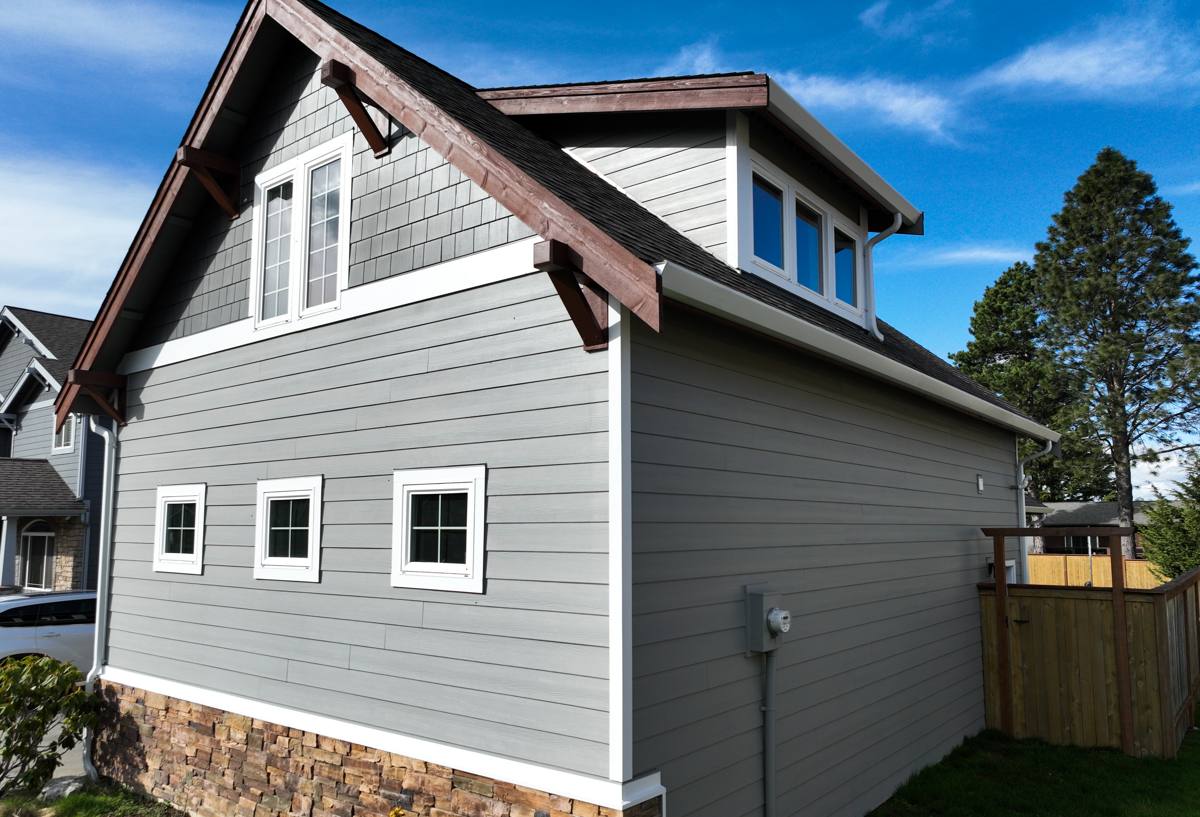
What This Climate Does to a House Over Time
Abbotsford and the surrounding Fraser Valley get a long wet season, a real amount of coastal humidity carried in on marine air, and enough overcast, low-sun stretches that anything shaded — a north wall, a fence line, a roof valley — stays damp far longer than homeowners expect. That combination of moisture and low drying time is the thing that ages exterior materials faster than the calendar would suggest.
The Three Things We See Most
- Moss and algae staining on roofs and north-facing siding that never gets a real drying window between rain events
- Swelling, delamination, or soft trim boards where wood-based siding or trim has taken on repeated moisture cycles
- Paint and caulk failure at seams and joints, which is usually the first visible sign that water is getting behind the cladding, not just sitting on top of it
None of this is unique to any one street or neighborhood — it's a function of the regional climate, and it affects nearly every house in the valley to some degree depending on orientation, tree cover, and how the original exterior was built and detailed.
Why We Only Install James Hardie Fiber Cement
We made a decision a while back to stop installing several common siding products, even though we get asked about them regularly. It wasn't about any one product being bad — it was about matching the material to what this climate actually demands over a 20, 30, or 40-year window, not just what looks good and costs less on installation day.
Where the Common Alternatives Fall Short Here
Vinyl siding is inexpensive and easy to install, but it's a thin plastic product that relies on lap joints and expands and contracts with temperature swings. In a climate with this much driving rain, those joints are a long-term weak point, and vinyl doesn't hold paint if a homeowner ever wants to change the color down the road.
LP SmartSide and similar engineered wood products perform reasonably well when installed and maintained exactly to spec, but they're wood-based at the core. Wood-based siding depends heavily on caulking, flashing, and paint maintenance staying perfect for decades — and in a wet climate like this one, any gap in that maintenance is where moisture gets a foothold.
Primed spruce and cedar are traditional, attractive options, but real wood siding in this climate needs the most upkeep of any category: repainting or restaining on a real schedule, careful caulking, and vigilant moisture management. Cedar in particular looks great new but requires an owner who's genuinely committed to the maintenance.
Cemplank and Allura are fiber cement products, same general category as what we install, and they're not bad materials. We simply standardized on one manufacturer so we can guarantee consistent factory finish quality, a warranty structure we trust, and installation crews who know one system inside and out rather than several.
What Hardie Gets Right for This Climate
James Hardie fiber cement is non-combustible, dimensionally stable in wet-dry cycling, and resists the swelling and softening that wood-based products are prone to. The ColorPlus factory finish is baked on under controlled conditions, which holds color and resists fading and moss staining far better than a field-applied paint job — important in a place where north walls and shaded elevations stay damp for extended stretches. Hardie's HZ product lines are engineered specifically for regions with heavy moisture exposure, which describes the Fraser Valley and Whatcom County about as well as any climate zone in North America.
What We Install
Siding is our specialty, but most homes need more than one exterior system addressed at the same time, and we handle the full envelope.
| Service | What We Focus On |
|---|---|
| Siding | James Hardie lap, board-and-batten, and panel systems, installed to manufacturer spec with correct flashing and clearances |
| Roofing | Roof replacement and repair with attention to ventilation and moisture control, since a poorly vented roof accelerates moss and shortens shingle life |
| Windows | Replacement windows integrated properly with new or existing siding so the flashing and water management actually work together |
| Decks | Deck rebuilds and repairs using materials and fastening methods suited to a wet climate, not just what's cheapest at the yard |
Tying these together matters more than most homeowners realize. A new roof with the wrong siding flashing, or new siding installed around old, failing windows, just moves the moisture problem instead of solving it. When we scope a project, we look at the whole exterior, not just the piece the homeowner called about.
What a Local Crew Actually Means
"Local" gets thrown around loosely in this industry, so here's what it means in practical terms for an Abbotsford project. We're not driving in from a metro area with a crew that's never worked this specific combination of coastal humidity, valley fog, and winter rain. We know how this climate behaves on a roof, on a north wall, and on ground-level trim, and we build our details — flashing laps, caulk joints, ventilation gaps — around that.
It also means we're not disappearing after the invoice clears. If something needs a look two years in — a caulk line that needs attention, a question about a warranty claim — we're a short drive away, not a call center in another region.
Cross-Border Projects: What to Know
Working near the border adds a few logistics — permitting, material delivery, and licensing all need to be handled correctly for a job on the Canadian side. We're upfront about this during the estimate process rather than after a contract is signed, so there are no surprises about scope, permitting, or scheduling once work starts.
Signs Your Siding or Roof Needs a Closer Look
Most exterior problems are visible well before they become structural. Here's what we tell homeowners to watch for between inspections:
- Dark green or black streaking on north-facing siding or roof planes that doesn't wash off
- Soft spots, bubbling, or visible swelling anywhere on wood-based or engineered wood siding
- Caulk that's cracked, shrunk, or pulled away from siding joints and window trim
- Paint that's peeling or bubbling rather than just fading evenly
- Visible gaps or daylight at trim boards, corner boards, or window flashing
- A musty smell in a room near an exterior wall, which can indicate moisture intrusion behind the cladding
Any one of these on its own isn't necessarily an emergency, but they're worth a professional look before the next wet season adds another cycle of damage.
How a Siding Project Actually Runs
1. Assessment and Estimate
We walk the exterior, check for existing moisture damage or rot behind the current siding, and talk through what the homeowner wants — full replacement, a specific elevation, or a combined project with roofing or windows.
2. Tear-Off and Inspection
Once the old siding comes off, we can actually see the sheathing and framing underneath. This is where hidden water damage from years of a failing exterior often shows up, and we flag it before covering anything back up.
3. Weather Barrier and Flashing
This step matters more than the siding itself for long-term performance. Correct house wrap, window and door flashing, and drainage planes are what keep water moving out and away from the wall assembly, rather than trapped behind the cladding.
4. Hardie Installation
Installed per manufacturer specification — correct fastener spacing and type, proper clearances from grade and roof lines, and factory-finished joints handled the way Hardie's warranty requires.
5. Final Walkthrough
We go over the finished work with the homeowner, including warranty paperwork and basic care guidance for the new exterior.
Living With Fiber Cement Siding in a Wet Climate
One of the practical advantages of switching to Hardie in this region is how little ongoing maintenance it asks for compared to wood-based alternatives. It won't rot, it resists moss and mildew staining far better than a painted wood surface, and the factory finish means homeowners aren't on a repainting schedule to keep the exterior protected. That said, a small amount of upkeep still matters everywhere in this climate:
- Rinse siding periodically, especially shaded or north-facing walls, to keep organic growth from taking hold
- Keep gutters clear so water isn't sheeting down the siding face during heavy rain
- Trim back vegetation and tree cover that keeps a wall shaded and damp longer than it needs to be
- Have caulk joints and trim checked periodically, since caulk is the one component in the system that does age faster than the siding itself
What Affects Project Cost
Every home is different, but these are the factors that move a siding, roofing, window, or deck estimate up or down:
| Factor | Why It Matters |
|---|---|
| Amount of existing damage found at tear-off | Rotted sheathing or framing found underneath old siding needs to be repaired before new siding goes on |
| Home size and wall complexity | More corners, dormers, and roof lines mean more flashing detail and labor time |
| Siding profile chosen | Lap, board-and-batten, and panel systems carry different material and labor costs |
| Combined scope | Bundling siding with roofing, windows, or a deck rebuild is usually more efficient than separate projects done years apart |
| Site access and logistics | Cross-border delivery and site conditions can affect scheduling and cost |
We give real numbers after an in-person look at the house, not a phone estimate — too much of the actual cost depends on what's found once the current siding comes off.
Getting Started
If your Abbotsford home is due for new siding, a roof, windows, or a deck rebuild, we're happy to come take a look and give you a straightforward, no-pressure estimate. Fill out the form below and we'll get in touch to schedule a time that works.