 Lynden
 Siding Built for Maple Falls' Wooded, Wet Foothill Climate
Maple Falls sits up in the foothills east of Lynden, closer to the Mt. Baker corridor than to the coastline, and that location shapes what a home's exterior deals with year-round. The tree cover is heavier here than in town, lots tend to be larger and more shaded, and the air holds onto moisture longer because sunlight and wind don't reach the siding the way they do on an open lot. Add in the elevation gain as you move up toward Kendall and the Mt. Baker highway, and you get a damp, cool microclimate that's tougher on exterior building materials than the Whatcom County average.
Across the broader county, Pacific Northwest weather patterns bring driving rain, long stretches of overcast humidity, and a moss season that can run most of the year in shaded spots. Homes closer to the water deal with salt air on top of that; Maple Falls doesn't get much of that coastal salt exposure, but it makes up for it with tree canopy, forest debris, and slower-drying siding surfaces. Whatever the specific mix on a given property, the underlying problem is the same: siding that can't shed moisture and resist organic growth is going to fail early, and it's going to look tired long before it fails structurally.
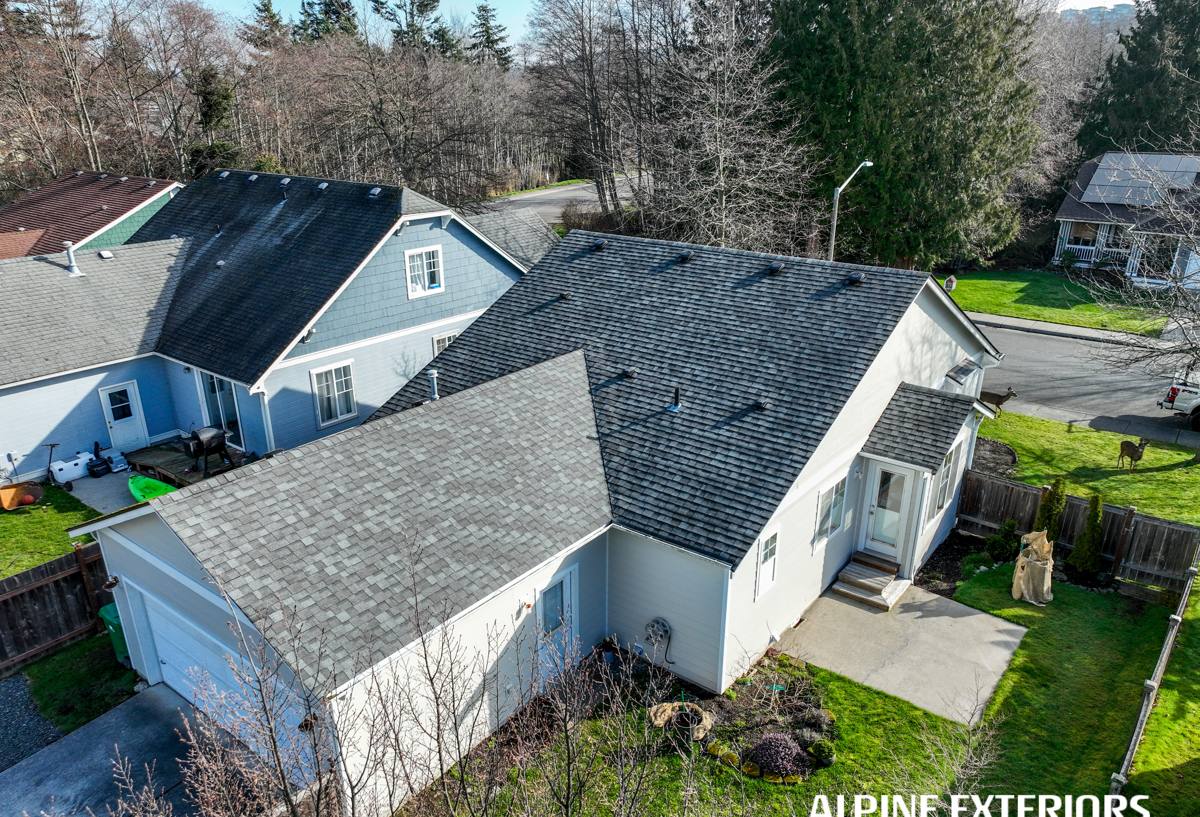
What We See on Maple Falls Homes
Working properties in and around Maple Falls, a few patterns show up consistently:
- North-facing walls and siding tucked under mature trees that rarely get direct sun, holding moisture and growing moss or algae faster than the rest of the house
- Gutter and downspout areas overwhelmed by needle and leaf debris, leading to overflow that saturates siding at the corners
- Wood-based siding (cedar, primed spruce, engineered wood panels) with soft spots, delamination, or paint failure where moisture has been sitting against the material
- Vinyl siding that's warped, faded, or pulled away from fasteners after years of temperature swings and wind-driven rain
- Foundation-level siding showing splashback staining and early rot from grade, landscaping, or drainage issues common on sloped, wooded lots
None of this is unusual for the area. It's what happens to exterior materials that weren't engineered for a shaded, wet, foothill environment when they're asked to perform in one for fifteen or twenty years.
Why We Only Install James Hardie Fiber Cement
We install James Hardie fiber cement siding exclusively. We don't install vinyl, LP SmartSide, Cemplank, Allura, primed spruce, or cedar, and we think homeowners deserve a straight answer as to why before they commit to a material for their home.
Wood-based products, whether that's traditional cedar, primed spruce, or engineered wood siding like LP SmartSide, share a common vulnerability: they're wood at the core. Modern engineered wood siding has come a long way with resin treatments and zinc borate protection, and it performs fine in a lot of climates. But wood products still rely on an intact factory coating and correct field caulking and painting to keep moisture out. In a shaded, slow-drying environment like Maple Falls, any gap in that protection — a missed caulk line, a scuffed edge, a fastener that wasn't sealed — gives moisture a way in, and moisture that gets into wood-based siding under tree cover doesn't dry out quickly.
Vinyl siding avoids the rot question entirely because it's plastic, but it brings its own trade-offs. It expands and contracts significantly with temperature swings, which shows up as visible waviness over time. It can crack in cold snaps, fade in UV exposure, and it's a thin, hollow product that doesn't hold up well to impact. It also can't be painted to refresh a look — once the color fades or goes out of style, the only fix is replacement.
Fiber cement products from other manufacturers, like Cemplank or Allura, are chemically similar to James Hardie's core material. Where they tend to differ is in the finish system, product engineering for specific climates, and the manufacturer's track record and warranty support. We standardized on James Hardie specifically because of what it gets right on jobs like the ones we do in Whatcom County.
What James Hardie Gets Right for This Climate
| Concern | How James Hardie Addresses It |
|---|---|
| Moisture and rot | Fiber cement core contains no wood fiber that can rot; it's engineered to handle wet, humid conditions |
| Moss and algae staining | Dense, factory-finished surface resists the buildup that soft or porous materials pick up faster in shade |
| Fire exposure | Non-combustible material, a genuine safety consideration in a wooded, forested area |
| Fading and touch-up paint | ColorPlus factory finish is baked on and warrantied against fading, rather than relying on field-applied paint |
| Regional climate variation | HZ5 product line is engineered specifically for the freeze-thaw, wet-winter Pacific Northwest climate zone |
| Long-term value | Strong transferable limited warranty backed by a manufacturer with decades in fiber cement |
ColorPlus Finish and the HZ5 Product Line
Two things matter most when we're speccing James Hardie for a Maple Falls property. The first is the ColorPlus factory finish, which is baked onto the siding under controlled conditions before it ever reaches the jobsite. That matters directly to the moss and staining problem: a consistent, dense factory finish sheds water and resists the kind of surface buildup that shows up first on shaded, north-facing walls. The second is Hardie's HZ5 line, engineered for climate zones like ours that see sustained moisture, freeze-thaw cycling, and cool, wet winters rather than dry heat. That's a meaningfully different set of stresses than what a product engineered for a hot, dry climate has to handle, and it's why product selection within the Hardie lineup isn't a throwaway detail — it's part of doing the job right for this specific location.
How a Siding Project Works, Start to Finish
Every property in Maple Falls is a little different depending on tree cover, slope, and existing siding condition, but the process generally follows the same steps:
- On-site assessment — we walk the property, check the current siding and any water damage at trim, corners, and foundation lines, and note drainage or grading issues that will affect the new siding's performance
- Moisture and structural check — where old siding is coming off, we inspect the sheathing and framing underneath for hidden rot before anything new goes up
- Weather barrier and flashing — correct house wrap, window and door flashing, and drainage detailing go in before siding, since this is what actually keeps water out over the long run
- Hardie installation to manufacturer spec — proper fastener spacing, clearances at grade and roofline, and correctly sealed joints, all done to the standards that keep the warranty valid
- Final walkthrough — we go over the finished work with the homeowner and flag any ongoing maintenance items specific to the property, like trimming back branches that shade the siding
What Homeowners Can Do Between Now and a New Install
If a full siding replacement isn't imminent, a few habits slow down the damage a shaded, wet lot causes:
- Keep gutters clear of needle and leaf debris, especially heading into fall, so overflow doesn't saturate siding at the corners
- Trim back branches and brush that keep siding in constant shade and block airflow
- Rinse visible moss or algae buildup with a garden hose rather than a pressure washer, which can force water behind siding seams
- Check paint and caulk lines on wood-based siding each spring, since this is the maintenance that keeps moisture out
- Watch for soft spots or discoloration near the foundation, a common early sign of splashback damage
More Than Siding: A Full Exterior Approach
Siding rarely fails in isolation. A roof that's letting water track down behind the fascia, windows with failed seals, or a deck that's trapping moisture against the house all put extra load on the siding around them. We handle roofing, windows, and decks alongside siding work, which means we can look at a Maple Falls property as one connected exterior system rather than fixing one problem while another keeps feeding it moisture. That's particularly relevant on wooded, sloped lots where drainage and shade issues tend to affect more than one part of the house at once.
Why a Local Crew Matters Here
A crew that mainly works flatter, more open lots in town isn't necessarily thinking about the same things a Maple Falls property needs: extra care around drainage on sloped ground, awareness of which walls are going to stay shaded and wet longest, and realistic expectations about moss and debris management given the tree cover. We work throughout the Lynden area and into the surrounding Whatcom County communities, including Maple Falls, and we plan every job around the specific conditions of that property rather than a generic install.
Get a Free, No-Pressure Estimate
If you're dealing with tired, moss-stained siding on a shaded Maple Falls lot, or you're planning ahead for a replacement, we're happy to come take a look. There's no obligation — just an honest assessment of your home's siding and what it would take to fix it right, using a product built to handle this climate for the long term.