 Lynden
 Why Color Choice Deserves Real Thought, Not a Quick Pick
Most homeowners spend more time picking a paint color for one room than they do picking the color that will cover every square foot of their home's exterior for the next fifteen years. That's backwards. Siding color affects resale value, how the house reads from the street, how much heat the walls absorb, and — with James Hardie ColorPlus — how long the finish actually lasts before it needs attention.
We install exclusively James Hardie fiber cement siding on homes throughout Lynden and the rest of Whatcom County, and color selection is one of the last steps in a project we take just as seriously as the installation itself. This page walks through how ColorPlus finishes actually work, how to think about color in our specific climate, and the mistakes we see homeowners make when they choose a color in isolation from the house and the site.
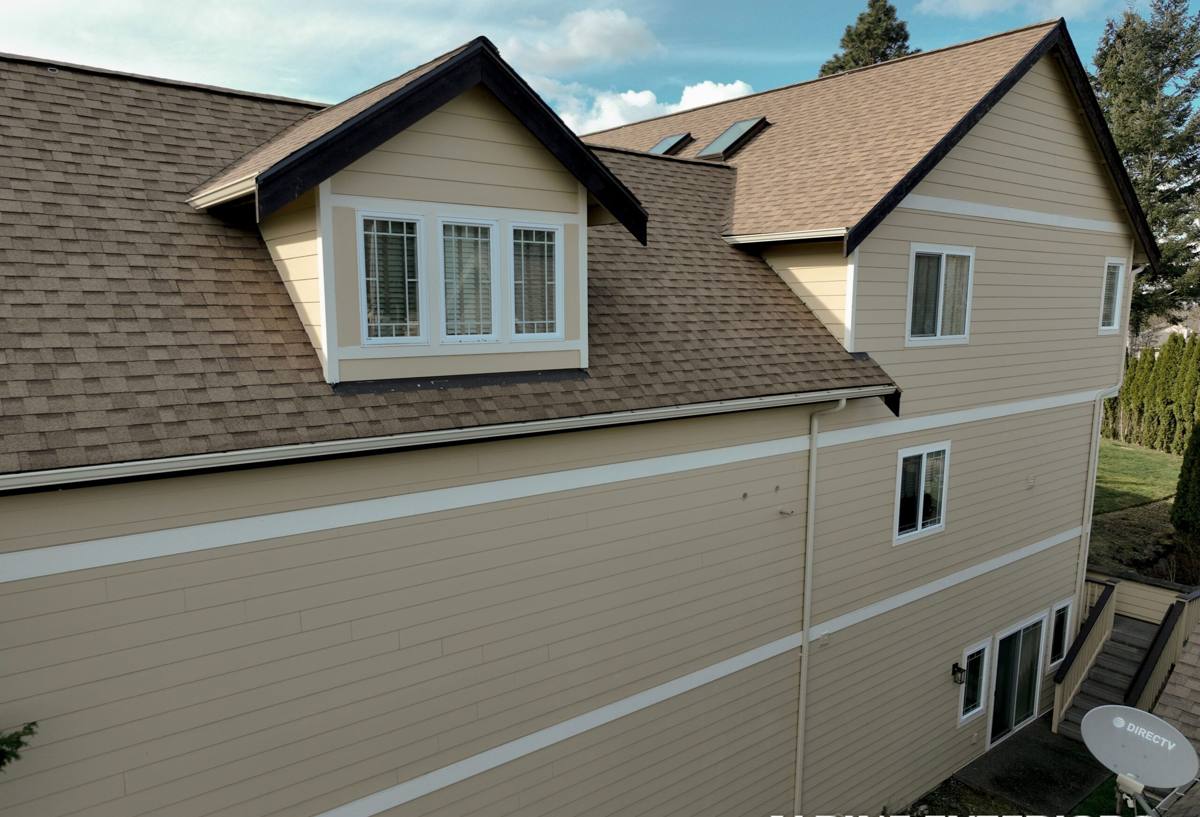
What Makes ColorPlus Different From "Regular" Paint
James Hardie's ColorPlus Technology is a factory-applied, baked-on finish — not a coat of paint rolled on after the boards arrive at a job site. The color is cured onto the fiber cement under controlled conditions before it ever leaves the factory, using multiple coats and a process designed to bond to the substrate rather than sit on top of it like field-applied paint does.
That distinction matters more here than in a lot of places. Lynden sits inland from Bellingham Bay, but this is still a marine climate — salt-laden air, long stretches of driving rain off the Strait of Georgia weather systems, and a moss season that can run from October through April. Field-applied paint on standard lap siding has to fight all of that from day one, and its bond to the board is only as good as the prep, primer, and weather conditions on the day it was sprayed. A factory finish doesn't carry that risk. It's cured before installation, so there's no "was the humidity too high the day they painted it" question hanging over the job.
What This Means in Practice
- Color consistency board to board, since every plank in a given color comes off the same factory line rather than a job-site mixed batch
- A 15-year limited warranty against fading, chipping, cracking, and peeling on the finish itself, separate from the substrate warranty
- No need for a full repaint cycle every 5-8 years the way field-painted wood, primed spruce, or unfinished fiber cement typically requires
- Touch-up product matched to the exact factory color, for the rare scuff or repair
Reading the Whatcom County Climate Into Your Color Decision
Color isn't just an aesthetic choice out here — it interacts with the environment in ways that are worth understanding before you commit.
Salt Air and Moisture
Homes closer to Bellingham Bay and the coastal side of the county deal with airborne salt that can accelerate wear on lesser finishes and hardware. ColorPlus's baked-on coating is formulated to resist that kind of environmental exposure better than a field-applied coat, but it's still worth pairing it with the right trim and fastener choices so the whole system ages evenly, not just the field boards.
Driving Rain
Whatcom County gets rain that comes in sideways more often than people expect, especially during fall and winter systems. Darker, saturated colors show water spotting and streaking differently than lighter tones — not because the finish fails, but because water sheeting patterns are simply more visible against a deep color. It's a cosmetic consideration, not a durability one, but it affects how "clean" a house looks between washings.
Moss and Algae Growth
Our long, damp shoulder seasons are exactly what moss and algae need to get established on north-facing walls, under eaves, and anywhere shade and moisture linger. Lighter and mid-tone colors tend to show green or black streaking sooner than darker colors, simply because the contrast is higher. This doesn't mean avoid light colors — it means factor in that any exterior in this region needs an occasional gentle wash regardless of color, and know that lighter finishes will show the "before" more obviously than the "after."
Heat, Sun Exposure, and Dark Colors
Dark colors have become popular in the Pacific Northwest over the last decade — charcoals, deep blues, near-blacks — and they look sharp against wood accents and black window frames. A couple of practical things to weigh:
- Dark colors absorb more solar heat than light colors, which can matter on south- and west-facing walls with long summer sun exposure
- James Hardie's HZ5 and HZ10 climate-engineered product lines are formulated for regional performance, and ColorPlus finishes are tested for color retention under UV exposure as part of the product's engineering — this isn't a new concern Hardie is guessing at
- Darker finishes will show dust, pollen, and water spotting more visibly between washings than mid-tone colors, simply due to contrast
None of this is a reason to avoid dark colors. It's a reason to go in with eyes open about maintenance expectations rather than assuming any color behaves identically over 15-plus years outdoors.
Matching Color to Your Home's Design and Site
A color that looks great on a sample chip or on a neighbor's house three streets over won't necessarily read the same way on your home. A few things worth walking through before deciding:
Undertones
Almost every "neutral" siding color has a warm or cool undertone hiding in it — a gray that leans blue, a beige that leans green, a white that leans yellow. These undertones shift depending on the light hitting them, which changes throughout the day and across our long gray-sky winters versus bright summer light. Look at large samples, not tiny chips, and view them at different times of day before deciding.
Roof, Stone, and Existing Fixed Elements
Roofing, foundation stone or brick, and any masonry accents are expensive to change and effectively lock in part of your palette. The siding color should complement those fixed elements rather than fight them.
Trim and Accent Contrast
James Hardie's trim boards and accent products are also available in ColorPlus finishes, which opens up intentional contrast — a deeper field color with lighter trim, or vice versa — without introducing a field-painted component that will age at a different rate than the factory-finished siding.
Lot Size and Sightlines
On a smaller in-town Lynden lot where the house is viewed up close, subtle color and texture variation matters more. On larger rural Whatcom County properties viewed from a distance, bolder colors and higher contrast trim tend to read better.
Comparing Finish Approaches
| Finish Type | How Color Is Applied | Typical Repaint Cycle | Fade/Chip/Peel Warranty |
|---|---|---|---|
| James Hardie ColorPlus | Factory-baked, multi-coat, cured before installation | Not required under normal conditions | 15-year limited warranty on the finish |
| Field-painted fiber cement or primed spruce | Primed at factory or job site, top-coated on-site | Every 5-8 years depending on exposure | Paint manufacturer's standard warranty, if any |
| Unfinished/primed-only cedar | Stained or painted after installation | Every 3-6 years given local rain and moss exposure | None from the siding manufacturer |
A Practical Color Selection Checklist
- Pull large-format ColorPlus samples, not just small chips, and view them against your actual roof and any masonry
- Look at the samples in morning light, midday sun, and overcast conditions — Whatcom County gives you plenty of the latter to test against
- Check your neighborhood or HOA guidelines, if any, before falling in love with a bold or unusual color
- Decide on field/trim contrast early, since it affects how much trim needs to be ordered in a second ColorPlus color
- Ask about the touch-up kit that ships with your specific color match
- Confirm which HZ product line (HZ5 or HZ10) is being specified for your home and how that pairs with the finish
- Walk the site at the time of day you're usually home to see the house, since lighting conditions change dramatically through a Pacific Northwest day
Why We Only Work With Hardie's Finish System
We standardized on James Hardie fiber cement, and ColorPlus specifically, because it removes variables that are otherwise outside anyone's control once a crew leaves the site. A factory-cured finish doesn't depend on the weather the week of installation, doesn't depend on how evenly a sprayer laid down a coat, and comes with a warranty structure that's tied to the manufacturer rather than to whoever happened to paint the boards. In a climate that throws salt air, sideways rain, and months of moss-friendly damp at every exterior surface, that consistency is worth more than any single color choice.
If you're planning a siding project in Lynden or elsewhere in Whatcom County and want to see ColorPlus samples against your own roofline and site conditions, we're happy to bring a full color deck out and walk the property with you. Reach out for a free, no-pressure estimate using the form below.