 Lynden
 Why Bellingham Siding Takes a Different Kind of Beating
Bellingham sits close enough to the water that homes here deal with a combination of stresses most inland Whatcom County properties never see. Salt-laden air off Bellingham Bay works its way into fasteners, trim joints, and any gap in a home's weather barrier. Driving rain, pushed sideways by wind coming off the Sound, gets forced into laps and seams that would stay dry in a calmer climate. And the long, overcast wet season that stretches from fall through spring keeps exterior surfaces damp for weeks at a time, which is exactly the environment moss, algae, and rot organisms need to take hold.
None of that means a home is doomed to constant siding problems. It means siding repair here has to account for moisture and organic growth as the root cause, not just patch the visible symptom. A crack painted over without addressing what let water behind it will reopen. A soft board replaced without checking what's happening underneath will fail again in a season or two.
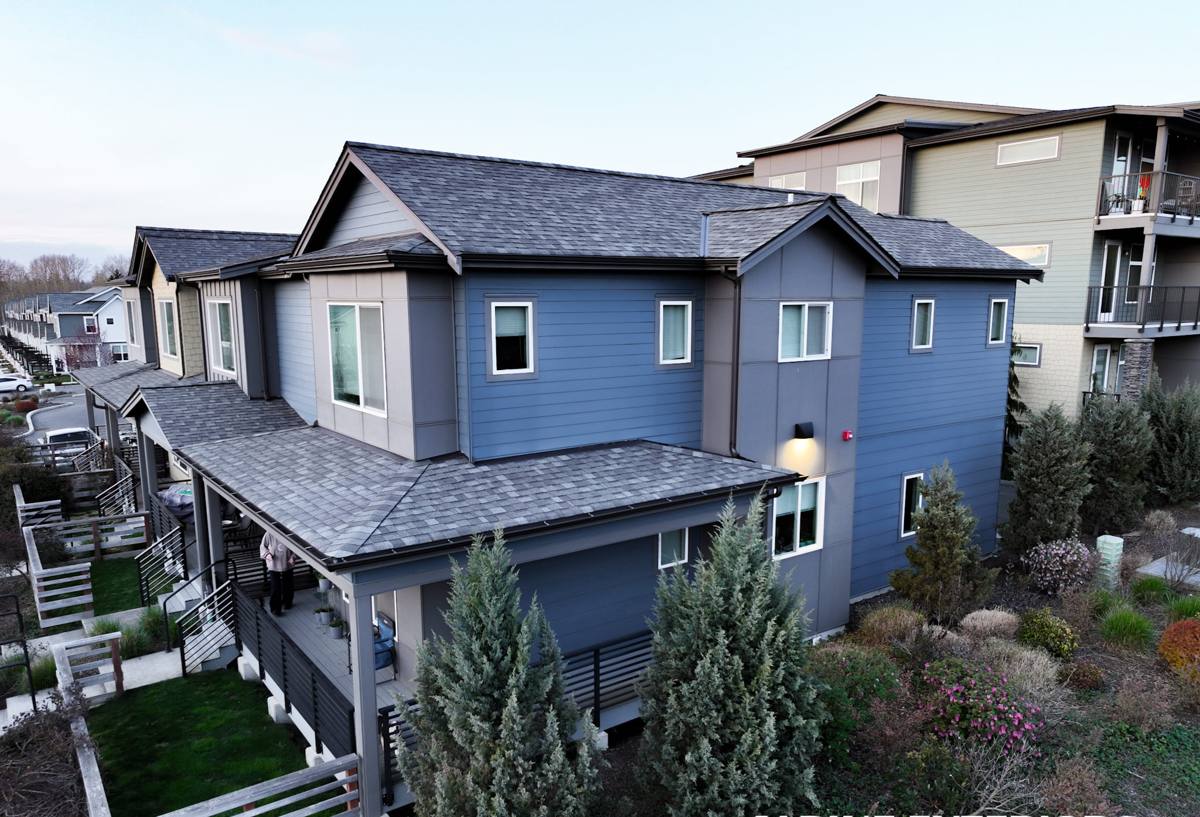
Signs Your Bellingham Home Needs Siding Repair
Most siding problems show themselves in ways that are easy to dismiss as cosmetic until they aren't. Knowing what to look for early keeps a small repair small.
Visual and Physical Warning Signs
- Soft, spongy, or crumbling siding when pressed, especially near the bottom courses and around window and door trim
- Visible cracking, splitting, or buckling panels, particularly after a hard freeze or a stretch of wind-driven rain
- Persistent moss, algae, or dark streaking that keeps returning after cleaning, especially on north-facing or shaded walls
- Paint that's peeling, bubbling, or failing faster than expected, which often signals moisture trapped behind the surface rather than a paint quality issue
- Gaps opening up at seams, corners, or where siding meets trim, window flashing, or the foundation line
- Nail pops, warping, or panels that have pulled slightly away from the wall
- A musty smell or visible staining on interior walls that share an exterior wall with damaged siding
Where Bellingham Homes See the Most Damage
The patterns are fairly consistent across the area: the side of the house that takes the prevailing wind and rain off the water usually shows damage first, followed by shaded north walls where moss gets a foothold and things stay damp longer. Lower courses near grade, deck ledger connections, and anywhere siding meets a roofline or chimney are also common trouble spots because those are the places water naturally concentrates.
Repair or Replace? How We Make That Call
Not every damaged section needs a full re-side, and we don't push replacement when a legitimate repair will hold up. The decision comes down to how much of the wall is affected, whether the water intrusion has reached the sheathing or framing, and how old and how sound the surrounding siding is.
| Situation | Usually a Repair | Usually Replacement |
|---|---|---|
| Damage extent | Isolated to a few boards or one section of wall | Spread across multiple walls or the whole elevation |
| Underlying sheathing | Dry, solid, no rot found once siding is pulled | Soft, delaminated, or rotted sheathing found behind siding |
| Siding material condition | Rest of the siding is sound and the material is still in production or matchable | Siding is failing broadly, discontinued, or original install had systemic flaws |
| Cause of damage | One-time event: impact damage, a single failed flashing point, storm damage | Ongoing moisture problem, chronic moss, material reaching end of service life |
| Age of siding | Newer install, otherwise performing well | Original siding is decades old and repair would just delay the inevitable |
When we're not sure which category a home falls into, we open up a section to look at the sheathing before quoting anything. Guessing at what's behind the siding is how homeowners end up paying for a cosmetic patch over a real structural problem.
What a Correct Siding Repair Actually Involves
A repair done right addresses three things: what caused the damage, what damage already exists, and how to prevent the same failure from happening again in the same spot.
Diagnosis Before Any Work Starts
We start by tracing the water path, not just the visible damage. A stain on a wall three feet from a window can be caused by flashing that failed at the window head, not a problem with the siding itself. Repairing the siding without fixing the flashing means the same damage comes back within a wet season or two.
Removing Compromised Material
Damaged boards, trim, and any affected house wrap or building paper get removed back to solid material — not just the section that looks bad. Water travels further than it shows on the surface, especially with wood-based products, so we check adjacent boards before closing anything back up.
Correcting the Water Management
This is the step that gets skipped in a lot of quick patch jobs and it's the one that actually prevents repeat failures. That means proper flashing at any penetration, correct lap orientation so water sheds outward instead of pooling, and a sound weather-resistive barrier behind the new material before a single new board goes up.
Matching and Finishing
New material gets installed to the same reveal, fastening pattern, and caulking standard as a full install — not shortcuts because it's "just a repair." Where James Hardie siding is already on the home, we use ColorPlus-matched panels and trim so the repaired section blends in rather than standing out as an obvious patch.
Repairing Existing Siding vs. Repairing James Hardie
We install James Hardie fiber cement exclusively, which means most of our new work is Hardie from the start. But repair calls are different — plenty of Bellingham homes we're asked to look at have vinyl, LP SmartSide, cedar, or primed wood siding already on them, and we get called to fix a specific problem area, not necessarily to re-side the whole house.
We're straightforward with homeowners about what that means. We can repair most existing siding materials competently, using materials that match what's there. What we won't do is recommend more of a product we don't stand behind installing long-term. If a home has widespread failure in wood, LP SmartSide, or aging vinyl and the honest answer is that repair after repair isn't a good use of the homeowner's money, we'll say so — and if replacement makes sense, we'll explain why we'd do that section, or eventually the whole elevation, in Hardie rather than matching the existing product. That's not a sales pitch; it's the same standard we hold for every job. Fiber cement doesn't rot, doesn't feed moss and algae the way wood-based products can, and holds a factory finish far longer than field-painted alternatives — which matters even more in a climate that stays wet as long as Bellingham's does.
Moss, Moisture, and Bellingham's Long Wet Season
Moss deserves its own explanation because it's the single most common complaint we hear from Bellingham homeowners, and it's often misunderstood. Moss itself doesn't eat through siding the way rot does, but it does two things that cause real damage over time: it holds moisture directly against the surface far longer than open air would, and its root structure works into seams, laps, and any surface imperfection, prying them open a little more with each wet season.
On wood-based siding, that sustained moisture is exactly what feeds rot underneath the growth. On fiber cement, moss is mostly a surface and finish issue rather than a structural one, but left unaddressed it still traps water against seams and caulk lines. Either way, the long stretch of overcast, damp weather typical here means moss isn't a one-time cleanup — it's an ongoing maintenance factor that has to be planned for, especially on shaded or north-facing walls that never fully dry out between rain events.
Salt air compounds the moisture problem by accelerating corrosion on fasteners and any exposed metal flashing or trim. A fastener that rusts and loosens creates a new entry point for water, which is why repair work near the coast has to pay particular attention to fastener type and flashing material, not just the siding itself.
Our Repair Process for Bellingham Homes
- On-site inspection. We look at the visibly damaged area and check adjacent sections, trim, and penetrations that commonly cause the same failure.
- Opening up the wall where needed. If there's any sign of water intrusion, we pull back siding to check the sheathing and weather barrier before quoting a fix.
- Honest scope and pricing. We explain what we found, whether it's a straightforward repair or something bigger, and what each option costs — no upsell, no downplaying a real problem either.
- Correcting the cause, not just the symptom. Flashing, water barrier, and drainage details get fixed as part of the repair, not left for next time.
- Matched, code-correct finish work. New material is installed and finished to blend with the surrounding siding as closely as the existing material allows.
- Walkthrough. We show the homeowner what was done and what to watch for going forward, especially if moss or moisture was part of the original problem.
What Affects the Cost of a Siding Repair
| Factor | Why It Matters |
|---|---|
| Extent of hidden damage | Sheathing or framing repair adds cost beyond the siding itself |
| Material match | Matching an existing color or discontinued profile can take more sourcing time than a common material |
| Access and height | Second-story or steep-site work takes longer and needs more equipment |
| Root cause complexity | A simple caulk or flashing failure is quick; chronic moisture intrusion takes more diagnostic time |
| Trim and penetration involvement | Repairs near windows, vents, or rooflines involve more detail work than open wall sections |
We give a specific number after inspection, not a phone estimate — siding damage in this climate is rarely as simple as it looks from the ground.
Why a Crew That Already Works in Bellingham Matters
Repair work rewards local experience in a way new construction doesn't always. Knowing which walls in this area typically take the worst weather, how fast moss reestablishes on a shaded elevation here versus a sunnier inland lot, and which older siding products were commonly used on Bellingham-area homes in different decades all shape how we diagnose a problem the first time instead of guessing. A crew that's already worked on homes in this specific stretch of Whatcom County has seen the failure patterns before — which means less time spent figuring out what's wrong and more time actually fixing it correctly.
It also means accountability. We're not driving in from out of the area for a one-time job; we're repairing homes in a community we work in regularly, and that repair needs to hold up through the next wet season, not just look fine on the day we leave.
Get an Honest Look at Your Siding
If you're seeing soft spots, recurring moss, cracked panels, or peeling paint on your Bellingham home, it's worth getting an honest read on what's actually happening before it spreads further. We'll inspect the affected area, tell you plainly whether it's a repair or something bigger, and give you a straightforward estimate with no pressure either way. Reach out for a free estimate using the form below.