 Lynden
 Storm Damage Roof Repair for Aldergrove Homes
Aldergrove sits just north of the border crossing that connects it to Lynden, Washington, and the roofs on both sides of that line take the same kind of weather. When a windstorm rolls through the Fraser Valley or a stretch of driving rain sits over the region for days, it doesn't matter which side of the crossing your house is on — the damage shows up the same way: lifted shingles, soaked decking, and flashing that's been worked loose. This page covers what storm damage roof repair actually involves for Aldergrove homes, what a correct repair looks like versus a quick patch, and why it's worth hiring a crew that already knows this specific stretch of border-area weather.
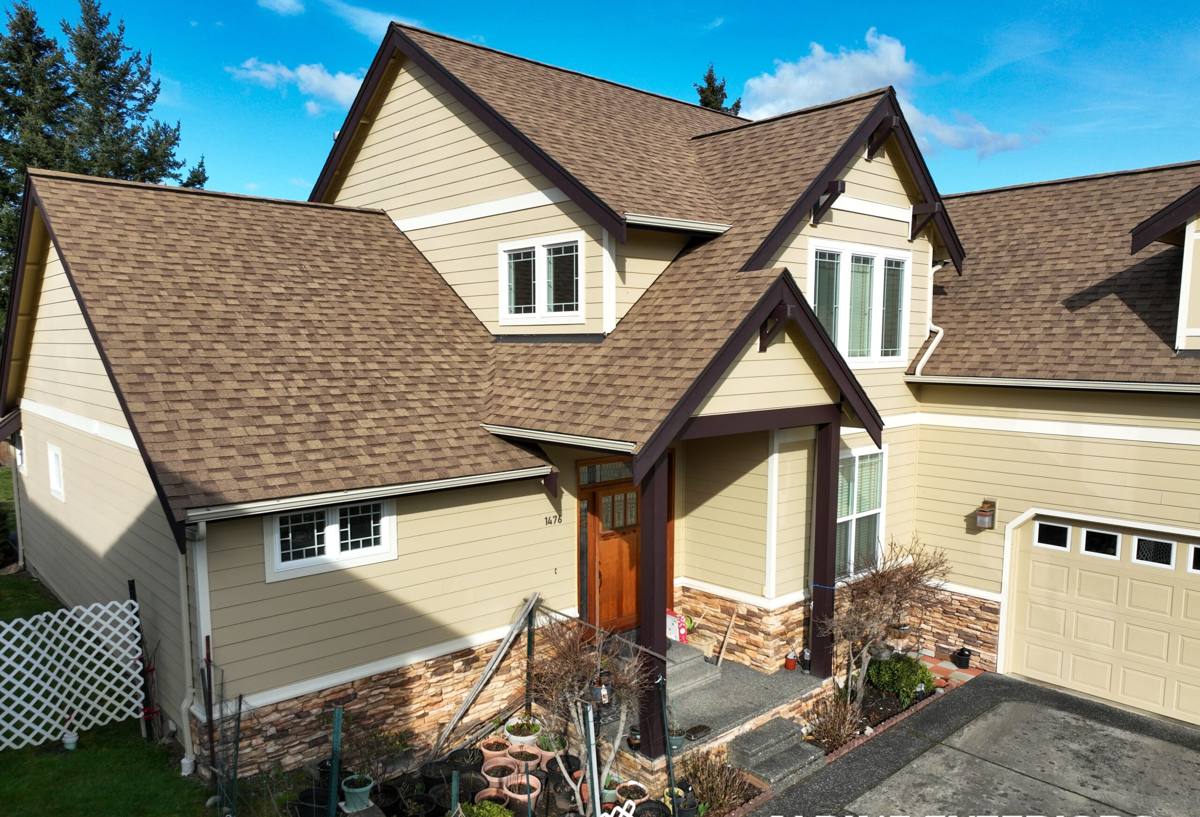
Why Storms Hit Aldergrove Roofs Harder Than They Look
From the ground, storm damage often looks minor — a shingle out of place, a little debris in the gutter. On the roof itself, the picture is usually different. A few things about this area's climate make that gap between "looks fine" and "isn't fine" wider than homeowners expect.
Driving Rain and Wind-Driven Wet
Pacific storms in this part of the Fraser Valley rarely come straight down. Wind pushes rain sideways, up under shingle tabs and against flashing edges that were never designed to shed water horizontally. A roof that's watertight in a normal shower can still leak in a windstorm, because the water is being forced into laps and seams instead of running off them.
The Long Moss Season
Shaded, north-facing slopes and slower-drying valleys keep moss active for a good chunk of the year here. Moss doesn't just look bad — it holds moisture against the shingle surface, lifts tab edges, and creates a wick that channels water toward fasteners and seams. A roof that's been carrying moss going into a storm is already compromised before the wind ever picks up.
Salt Air and Corrosion
Storm systems moving through this part of the Pacific Northwest often carry salt-laden marine air well inland, and Aldergrove is close enough to the coast to feel it. Salt air speeds up corrosion on exposed metal — flashing, fasteners, gutter hardware — which is one reason a fastener or flashing detail that held fine for years can suddenly fail during one bad storm.
What Actually Counts as Storm Damage
Not every storm-related roof problem is obvious. Some of the most damaging issues are the ones a homeowner never sees from the driveway.
- Shingles lifted, cracked, or torn loose along ridge lines and roof edges where wind uplift is strongest
- Flashing pulled or bent away from chimneys, skylights, valleys, and vent penetrations
- Granule loss or bruising from wind-driven debris or hail, which weakens the shingle's weather layer even without a visible hole
- Moss-lifted shingle edges that let wind-driven rain track underneath
- Punctures or cracked decking from falling branches
- Gutter and downspout damage that backs water up under the roof edge instead of carrying it away
- Slow leaks that only show up days after the storm, once saturated moss or underlayment finally gives way
If you're not sure whether what you're looking at is storm damage or just normal wear, a few warning signs are worth checking from inside the house and from the ground before calling anyone out:
- Water stains or discoloration on ceilings, especially near exterior walls or chimneys
- Daylight visible through the attic roof deck
- A noticeable increase in granules collecting in gutters or at downspout outlets
- Shingles you can see are curled, cracked, or simply missing
- Flashing that looks bent, lifted, or separated from the surface it's sealing against
- Musty smell in an attic or top-floor closet after a storm
What a Correct Storm Repair Involves
A rushed storm repair and a correct one can look almost identical from the street, and that's exactly the problem. A correct repair starts with stopping active water intrusion, but it doesn't stop there.
If there's an active leak, the first job is temporary protection — a proper tarp-down that's actually secured to the roof, not just draped over it, so it holds through the next round of wind. From there, the repair itself needs to address the whole assembly, not just the visible surface:
- Decking inspection — soft or delaminated plywood under damaged shingles has to be found and replaced, not just covered back over
- Underlayment — the water-resistant barrier beneath the shingles needs to be intact and properly lapped, especially around any repaired section
- Flashing detail — valleys, chimneys, and vent penetrations need flashing that's correctly lapped with the shingle courses, not just caulked, since caulk is a short-term fix that fails faster than the metal underneath it
- Material match — replacement shingles should match the existing roof's profile and color as closely as possible so the repair doesn't stand out as a patch job or create a visible seam where water can concentrate
- Moss and debris clearing — moss growth in and around the repair area gets removed so it isn't continuing to hold moisture against fresh work
The difference between these two approaches usually isn't visible on day one. It shows up the next time a storm comes through and either holds or doesn't.
Our Process, Step by Step
- Initial call. Tell us what you're seeing — a leak, missing shingles, storm debris — and whether it's active or something you noticed after the weather cleared.
- On-site inspection. We get on the roof and, where it's accessible, into the attic, to look at both the surface damage and what's happening underneath it.
- Photo documentation. We photograph the damage clearly enough to support an insurance claim if you decide to file one.
- Written scope. You get a clear explanation of what's actually wrong, what needs to happen to fix it correctly, and an honest read on whether repair or replacement makes more sense.
- Emergency tarping, if needed. Active leaks get temporary protection the same day where possible, so the damage doesn't spread while repairs are scheduled.
- The repair itself. Matched materials, correct flashing and underlayment work, and decking replacement where the storm actually got through to it.
- Cleanup and walk-through. Nails, old shingle scraps, and debris get cleared, and we walk the finished work with you before calling it done.
Repair or Replace? What Actually Drives That Decision
Storm damage doesn't automatically mean a new roof, and it doesn't automatically mean a small patch will hold either. The honest answer depends on a handful of factors working together, not any single one.
| Factor | Leans Toward Repair | Leans Toward Replacement |
|---|---|---|
| Roof age | Well within its expected service life | Already near or past the end of its expected life |
| Extent of damage | Isolated to one section or slope | Spread across multiple slopes or the whole roof |
| Decking condition | Solid, dry decking beneath the damaged shingles | Widespread soft spots or rot found during inspection |
| Moss history | Light, recently treated growth | Long-standing moss with visible shingle lifting across the roof |
| Repair history | This is the first significant repair | Multiple past repairs to the same areas |
We'll always tell you honestly where your roof falls on that table. A repair that's genuinely the right call is the right call — we're not in the business of selling a full replacement to someone who needs a section fixed.
Insurance Considerations for Storm Claims
Storm damage is one of the more common reasons homeowners file a roofing insurance claim, and the same basic principles apply whether you're working with a Washington insurer or a BC one: clear documentation matters more than almost anything else. Photos taken close to the time of the storm, a written scope of the damage, and a detailed repair estimate all make the claims process smoother, regardless of who your insurer is.
We're not insurance adjusters and won't pretend to speak for your policy's specific terms — that conversation belongs with your own insurer or broker. What we can do is give you the documentation and honest assessment you need to have that conversation from an informed position, rather than guessing at what a storm actually did to your roof.
Why It Matters to Hire a Crew That Already Works This Border Area
Roofing crews that only occasionally work near the Aldergrove–Lynden crossing tend to treat every job the same, regardless of region. A crew that's regularly on roofs here knows a few things that generalist crews often miss: how long moss season actually runs on shaded Fraser Valley slopes, which flashing details tend to fail first under this area's wind-driven rain, and how much lead time a real storm-tarping response takes when the job could be on either side of the border.
Familiarity also means less guesswork on your end. A crew that's done this repair dozens of times in this specific climate isn't learning on your roof.
Before hiring anyone for storm repair, it's worth asking a few direct questions:
- Are you licensed and insured, and can you show proof of both?
- Will I get a written estimate before any work starts?
- Do you inspect the decking and underlayment, or just replace visible shingles?
- What's the warranty on the repair work itself, separate from the shingle manufacturer's warranty?
- Can you provide references from other storm repairs in this area?
- How quickly can you respond if there's an active leak?
Any contractor who hesitates on these questions, or pushes you toward a full replacement before fully inspecting the damage, is worth a second opinion.
Preventing the Next Storm From Doing the Same Damage
Once a storm repair is done, a little seasonal maintenance goes a long way toward keeping the next one from causing the same kind of damage.
- Clear gutters and downspouts before the fall rain season starts, so storm water actually drains instead of backing up under the roof edge
- Treat moss growth on a regular schedule rather than waiting until it's visibly lifting shingles
- Trim back branches that overhang the roofline, since falling limbs are a common cause of storm-related punctures
- Have the roof looked at after any major windstorm, even if nothing looks obviously wrong from the ground
- Address small flashing or shingle issues promptly — they're far cheaper to fix before a storm turns them into a leak
If your roof has recent storm damage — or you're just not sure whether what you're seeing is worth a closer look — we're happy to come take a look and give you a straight answer. The estimate is free, there's no pressure to book anything on the spot, and you'll walk away knowing exactly what condition your roof is actually in.