 Lynden
 Composite Decking Built for Wiser Lake's Damp, Shaded Climate
Wiser Lake sits in a low, tree-lined pocket of Whatcom County just outside Lynden, and homes around it live with a slightly different climate than the open farmland a few miles away. The lake holds humidity close to the ground, mature trees keep much of the shoreline in shade for a good part of the day, and that combination sits on top of the same driving Pacific rain and salt-tinged marine air that moves through this whole region. None of that is unique to any one yard, but stacked together it makes decks around Wiser Lake work harder than decks almost anywhere else nearby. A flat wood or composite surface at ground level is exactly where moisture wants to collect, and a long moss season doesn't help.
Composite decking, installed the right way for this specific setting, handles that punishment far better than wood. The "installed the right way" part matters — a lot of composite decking problems people blame on the material are actually installation problems: bad drainage, trapped moisture under the boards, or framing that was never suited to a wet, shaded lot in the first place.
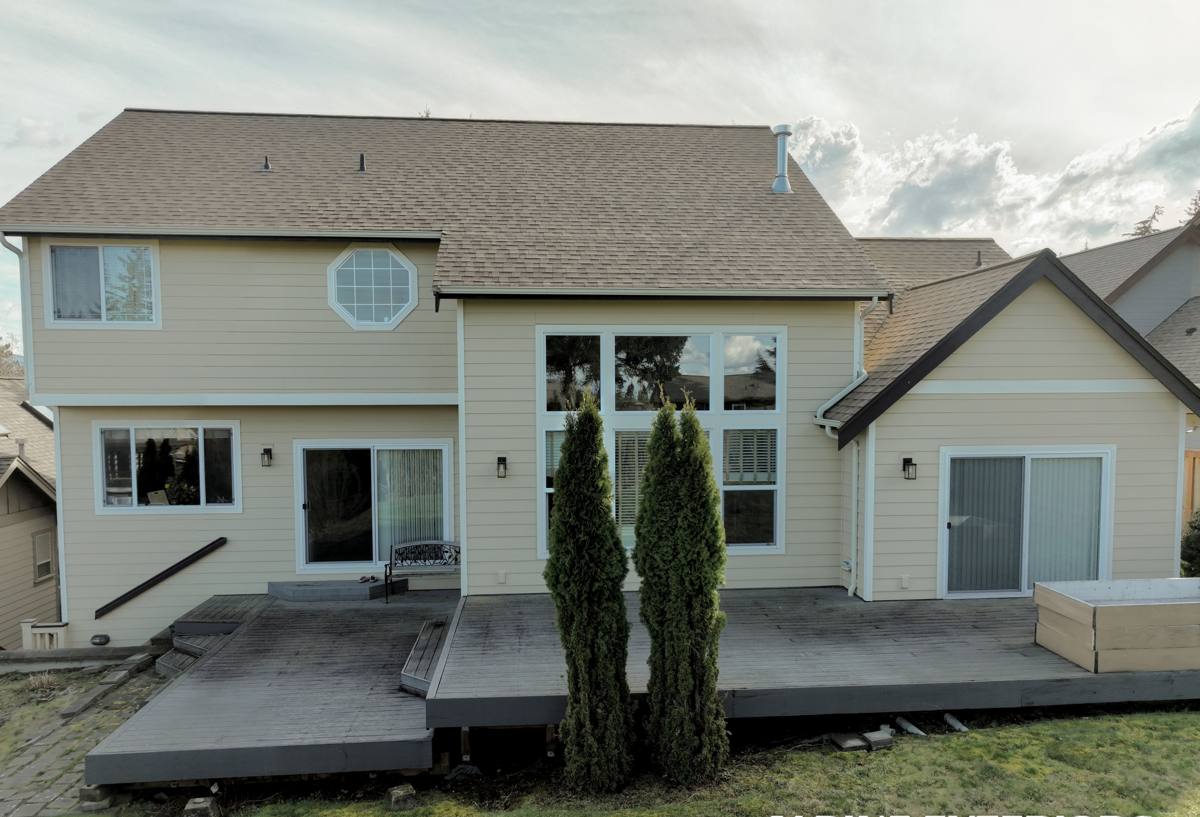
What Wiser Lake's Climate Actually Does to a Deck
A Long Moss and Algae Season
Shaded lots near the water stay damp long after sunnier parts of the county have dried out. Moss and algae find a foothold anywhere water sits instead of draining — in board grooves, around fastener heads, in the corners where a deck meets the house. Once established, moss holds moisture against the surface even longer, which speeds up whatever damage is already happening underneath.
Driving Rain and Splash-Back
Rain coming off the lake at an angle soaks vertical surfaces — rail faces, stair stringers, skirting — not just the flat deck surface. Splash-back off the water side of a property adds even more moisture load right at ground level, which is exactly where framing and fasteners are most vulnerable.
Shade That Never Lets a Deck Fully Dry
Dense tree canopy around much of Wiser Lake blocks a lot of direct sun. On an open lot, a deck dries out between storms; on a shaded lake lot, it often doesn't fully dry before the next round of rain moves through. Wood fed by that cycle stays at a moisture content that supports rot and mold growth for most of the year.
Why Composite Outperforms Wood in This Kind of Setting
Wood can be a fine decking material in a dry, sunny yard with an attentive owner. On a shaded, humid lot near Wiser Lake, it's fighting an uphill battle from day one. Here's the honest comparison, based on how each material actually behaves in a wet, shaded environment:
| Factor | Standard Wood | Pressure-Treated Wood | Capped Composite |
|---|---|---|---|
| Moisture absorption | High — swells, cups, and checks | Lower, but still absorbs at cut ends and fastener holes | Minimal — capped shell resists water intrusion |
| Moss/algae resistance | Poor in shade | Poor to fair in shade | Good — smooth cap sheds growth more easily |
| Maintenance | Annual sanding, staining, sealing | Periodic sealing and staining | Occasional wash with soap and water |
| Typical lifespan in shaded, lake-adjacent settings | Shortened by rot and splitting | Moderate, if maintained on schedule | Long, with manufacturer warranties to match |
None of this means wood is a bad material everywhere — it just means a shaded lot next to Wiser Lake is close to a worst-case scenario for it. Composite isn't magic either; it still needs to be installed with real attention to drainage and airflow, which is the part that separates a deck that lasts from one that doesn't.
What a Correct Composite Deck Installation Involves Here
Framing and Fastening
On shaded, damp lots we build to tighter joist spacing than the bare manufacturer minimum, because boards that stay damp longer benefit from more support underneath. We use hidden fastener systems rather than face-screwing whenever the board profile allows it — every exposed screw hole is a place water can sit and eventually work its way into the board core.
Board Gapping and Drainage
Composite boards need a consistent gap to drain water through and to allow the material to expand and contract with temperature swings. Get that gap wrong — too tight, or inconsistent — and you end up with standing water and debris trapped between boards, which is exactly the kind of pocket moss loves.
Ledger Flashing and Moisture Barriers
Where a deck attaches to the house, the ledger board and its flashing are doing the most important waterproofing work on the whole structure. In a humid, shaded setting like Wiser Lake, a poorly flashed ledger is one of the most common places we find hidden rot on older decks. We flash and seal that connection properly every time, whether we're building new or replacing an old deck's substructure.
Airflow Underneath
A deck skirted in tight with no airflow traps humidity underneath, which works against everything composite decking is good at. We design skirting and under-deck ventilation so air can actually move, and we grade the soil underneath away from the house rather than letting water pool against the foundation.
Our Process, Start to Finish
- Site walk and moisture assessment — we look at sun exposure, tree cover, and drainage patterns before we talk materials.
- Structural evaluation — on a rebuild, we check the existing ledger, posts, and footings for hidden rot before deciding what can be reused.
- Design and material selection — board profile, color, and railing chosen for both your taste and the realities of a shaded, damp lot.
- Permitting — we handle the Whatcom County permit and inspection process so you're not tracking down paperwork yourself.
- Framing — new or repaired substructure, built with proper spacing, flashing, and rot-resistant materials for this environment.
- Composite installation — hidden fasteners, correct gapping, and clean transitions at stairs and rails.
- Final walkthrough — we check the finished deck with you before we call the job done, not before.
Choosing Boards, Color, and Railing for a Lake Property
Slip Resistance
A deck near water gets walked on with wet feet more than most, and a shaded surface takes longer to dry after rain. We favor boards with a textured or grooved surface finish for better grip underfoot, especially on stairs and any section of deck closest to the water.
Color Choices
There's a real trade-off here, and we'll tell you both sides rather than just push whatever's in stock. Darker boards tend to hide moss shadowing and pollen staining better, but they run hotter underfoot in direct sun. Lighter boards stay cooler but show streaking and organic debris more visibly, especially on a shaded lot where that debris doesn't wash off as fast. Boards with more variegation in the grain pattern tend to hide staining well regardless of base color, which is often the most practical choice for a Wiser Lake lot.
Railing
Composite, aluminum, and cable rail systems all pair well with composite decking and hold up fine in this climate. Once a deck reaches a certain height off the ground, guard rail height and baluster spacing are set by code — that's part of what we handle during permitting and inspection, so it's built right the first time rather than flagged after the fact.
Composite Deck Maintenance Checklist for Wiser Lake Homes
Composite decking is genuinely low-maintenance compared to wood, but "low-maintenance" isn't "no-maintenance" — especially in a shaded, humid setting where moss has every advantage. A few habits go a long way:
- Rinse or sweep debris out of board grooves before fall leaf-drop and the wet season sets in, so moss doesn't get a foothold over winter.
- Keep gutters and downspouts clear so roof runoff isn't sheeting directly onto the deck surface or ledger connection.
- Trim back overhanging branches where you reasonably can, to let more light and airflow reach the deck.
- Wash the surface periodically with mild soap and a soft-bristle brush — skip the high-pressure washer, which can damage the cap layer and force water into seams.
- Check the drainage gaps between boards each season and clear out any leaves or needles that have packed in.
- Have the ledger flashing and any framing you can access inspected every year or two, especially on an older deck.
What Affects the Cost of a Composite Deck at Wiser Lake
Every property is different, and the only way to get an accurate number is a site visit — but a few factors move the price more than others, and it's worth knowing what they are before comparing quotes.
| Factor | Why It Matters Here |
|---|---|
| Deck size and layout | Multi-level decks and complex shapes need more framing and labor than a simple rectangle |
| Substructure condition | A shaded, damp lot often means more hidden rot to address on a rebuild than a sunnier property |
| Board tier and brand | Composite lines vary in cap thickness, color depth, and warranty length |
| Railing type | Composite, aluminum, and cable rail all price differently |
| Site access and grade | Sloped or hard-to-access lots near the water add labor time |
| Permitting complexity | Whatcom County requirements vary with deck height and attachment to the house |
As a broad range, most homeowners in this area budget somewhere between a few thousand dollars for a small deck refresh and considerably more for a large, multi-level composite deck with rails, stairs, and lighting. A firm number only comes after we've actually looked at your site.
Why Hiring a Crew That Already Works Wiser Lake Matters
A contractor who only occasionally works this side of Whatcom County has to relearn the same lessons every time: which lots have poor drainage, which have wells or septic systems that limit where a deck can go, which slopes need extra footing work, and how county permitting actually handles a deck build near a lake lot. A crew that already works Wiser Lake regularly has already worked through those questions and builds with them in mind from the first site visit, instead of finding out partway through the job.
That familiarity shows up in small decisions that add up: framing spaced for the shade your specific lot gets, flashing detailed for the amount of splash-back your deck will actually see, and a permit process that doesn't stall because nobody accounted for a setback or easement early on.
If you're thinking about a new composite deck, or replacing one that's showing its age, we're happy to take a look and give you a straightforward, no-pressure estimate — just fill out the form below and we'll get in touch.