 Lynden
 Windows Built for Sumas Weather, Not Just Sumas Style
Sumas sits right up against the Canadian border in the low, damp country north of Lynden, where the Nooksack River valley funnels wind and moisture through the fields most of the year. Homes here don't just get rained on — they sit under a marine layer that keeps humidity high for months at a stretch, with driving rain that comes in sideways more often than straight down. Add a long moss season that coats north-facing siding, trim, and rooflines, and you have a climate that is genuinely hard on window openings, even when the windows themselves look fine from the curb.
Window installation in this part of Whatcom County isn't just about picking a style and setting glass in a hole. It's about managing water at every joint, sealing against wind pressure that pushes rain uphill under poorly lapped flashing, and choosing materials that won't trap moisture against wood framing. Get that wrong and you don't find out for a year or two — by then it's a rot repair, not a window job.
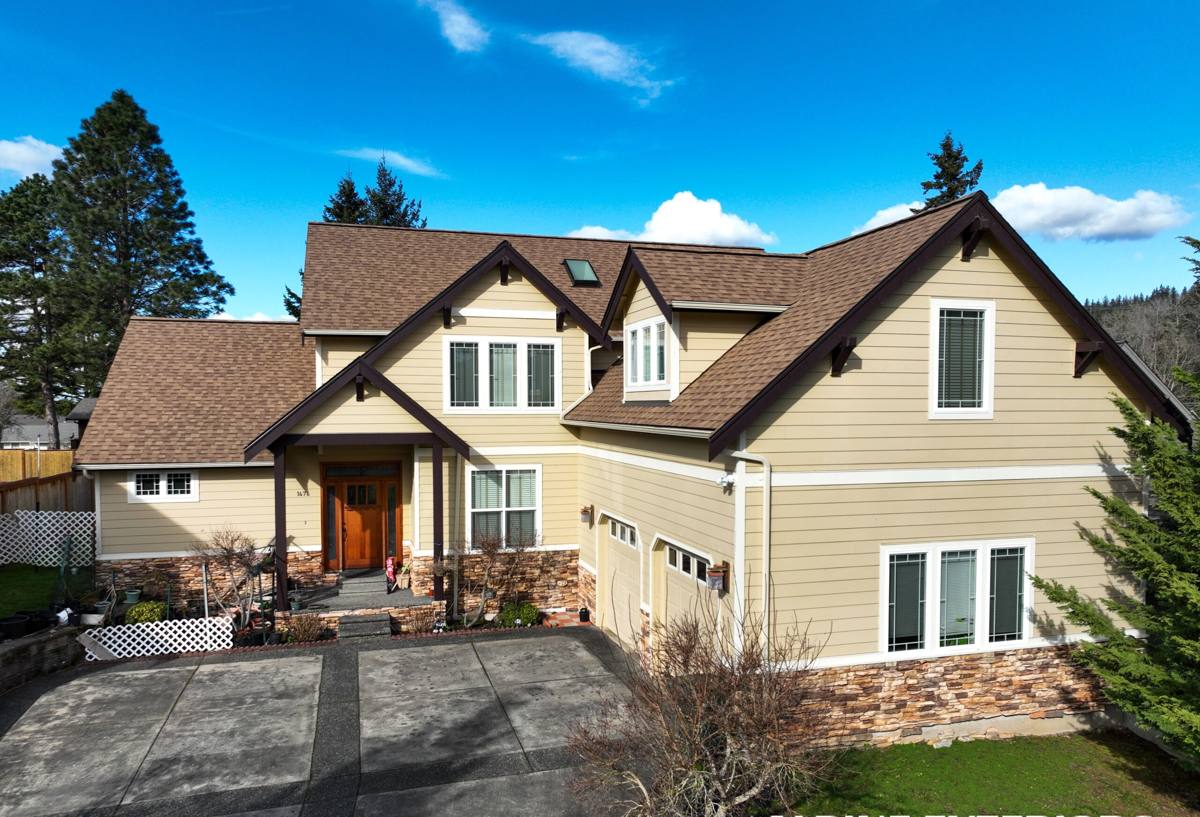
What the Local Climate Actually Does to Windows
Salt Air and Coastal Moisture
Sumas isn't right on the coast, but Whatcom County's marine air still carries enough salt and moisture inland to accelerate corrosion on hardware, weep systems, and unprotected fasteners. Cheaper window hardware and uncoated screws show pitting and stiffness years before they would in a drier inland climate.
Driving Rain and Wind-Loaded Walls
Open farmland around Sumas means less wind break than you'd get in a denser town, so exterior walls take direct wind-driven rain. Water gets pushed sideways and upward into gaps that would stay dry in calmer conditions, which is exactly why flashing detail at the head, jambs, and sill matters more here than the brand of window installed.
Moss, Algae, and Standing Moisture
Long wet seasons and tree cover around many Sumas properties mean moss and green algae growth on north- and shade-facing trim, sills, and the siding around window openings. Moss holds moisture against wood and caulk joints far longer than open air would, which shortens the life of sealants and speeds up rot at exactly the spots a window depends on to stay watertight.
Seasonal Flooding and High Ground Moisture
Parts of the Sumas lowlands are known for seasonal high water and saturated ground in the wettest months. Even where flooding doesn't directly reach window level, prolonged ground saturation raises ambient humidity around the home's lower floors, which affects how window openings dry out after a storm.
Signs a Sumas Home's Windows Need Attention
- Soft, spongy, or discolored trim or sill wood directly below or beside the window
- Fogging or a hazy film between panes of double-glazed units — a sign the seal has failed
- Visible gaps, cracked caulk, or daylight around the frame from inside
- Persistent condensation on the inside of the glass in cold weather, even with normal ventilation
- Moss or dark staining creeping onto the siding directly above or beside a window opening
- Windows that are difficult to open, close, or lock — often a sign the frame has shifted or swelled
- Noticeable drafts or a cold spot near the window when it's windy outside
What a Correct Window Installation Involves
A window installation is only as good as the parts nobody sees once the trim goes back on. In a climate like this, the sequence matters as much as the window itself.
Removing the Old Unit Without Hiding Problems
Before a new window goes in, the old opening gets inspected — not just glanced at. Any sill or framing wood that's soft, stained, or damp gets identified now, not discovered later when a callback comes in.
Flashing and Water Management
Proper installation means flashing tape and building paper are lapped correctly — sill pan first, then jambs, then head flashing over the top — so water is always directed outward and down, never trapped behind the window. This is the single most common shortcut taken on rushed jobs, and it's the one that costs homeowners the most later.
Air Sealing and Insulation
The gap between the window frame and the rough opening gets sealed with a low-expansion foam or backer rod and sealant — never packed tight with standard spray foam, which can bow the frame and cause the sash to bind.
Interior and Exterior Sealant
A quality, paintable, weather-rated sealant goes around the exterior trim and interior stops. In this climate, sealant quality and application matter more than in drier regions, since it's under near-constant moisture load for much of the year.
Choosing a Frame Material for Whatcom County Conditions
| Frame Material | How It Handles Local Moisture | Maintenance | Typical Fit |
|---|---|---|---|
| Vinyl | Won't rot or corrode; performs consistently in damp conditions | Low — occasional cleaning | Most Sumas homes, best value |
| Fiberglass | Excellent moisture and temperature stability; minimal expansion/contraction | Low | Homes wanting long-term durability, willing to pay more upfront |
| Aluminum | Conducts cold and can condense heavily in this climate; prone to corrosion near salt-laden air over time | Moderate | Limited use — mainly certain commercial or specialty applications |
| Wood / Wood-Clad | Attractive but vulnerable to prolonged damp exposure and moss contact if not maintained | High — regular painting/sealing | Homeowners prioritizing appearance who commit to upkeep |
We don't install every material on this list for every situation. Wood-frame windows can look great, but in a climate with this much sustained moisture and moss pressure, they demand a maintenance schedule most homeowners underestimate — repainting, resealing, and checking joints yearly. We'll always tell you honestly what a given material needs from you after installation, not just what it costs going in.
New Construction and Older Homes Around Sumas
A lot of the housing stock in and around Sumas includes older farmhouses and homes built before modern flashing standards were common practice. Replacing windows in these homes often reveals framing that was never properly protected from moisture in the first place — original construction sometimes relied on caulk alone with no sill pan or membrane. When we open up an older opening, we address what we find rather than installing a new window over an old problem.
Newer builds are more likely to have modern house wrap and flashing systems already in place, which simplifies the job, but even those need careful integration so the new window ties into the existing water management layer without creating a gap.
Our Installation Process
- On-site assessment of existing windows, framing condition, and any moisture or rot signs
- Honest recommendation on frame material and glass package suited to the home's exposure — sun, wind, and rain direction all factor in
- Written estimate with no pressure to decide on the spot
- Careful removal of old units and inspection of the rough opening before anything new goes in
- Proper sill pan flashing, jamb and head flashing, and air sealing per manufacturer and code standards
- Interior and exterior trim finished and sealed
- Final walkthrough so you know how the new windows operate and what to watch for over the first year
Energy Performance in a Border-Town Climate
Sumas sees colder winter mornings than areas closer to Puget Sound, with more exposure to continental cold air pushing down from the north. A window's U-factor and glass package matter here — double-pane with a low-E coating and an appropriate gas fill is the practical minimum we recommend for most homes, and it pays back over time in fewer cold drafts near seating areas and less condensation buildup on interior glass during cold snaps.
Why Hiring a Crew That Already Works in Sumas Matters
Window installation looks similar everywhere on paper, but the details that keep a window watertight change with the climate it sits in. A crew that installs windows mainly in drier or more sheltered areas may not instinctively over-build the flashing detail the way this valley's wind-driven rain requires. Working regularly in Whatcom County — Sumas, Lynden, and the surrounding lowlands — means we've seen how these openings fail when they're done wrong, and we build every installation to avoid those exact failure points.
We're also familiar with the older farmhouse framing common in this area, the moss and moisture patterns particular to shaded and low-lying lots, and how to sequence a job around this region's unpredictable rain windows so the opening isn't left exposed longer than necessary.
After Installation: Keeping Windows Performing
- Rinse pollen, dust, and grime off glass and tracks a few times a year — buildup holds moisture against seals
- Check exterior caulk lines annually, especially after a hard winter, and touch up any cracking before wet season hits full stride
- Clear moss or algae from siding and trim near windows promptly rather than letting it establish
- Operate locks and hardware periodically even on windows you don't open often, to keep mechanisms from seizing
- Watch for condensation patterns each winter — a sudden change from prior years can flag a developing seal or ventilation issue
If you're weighing whether it's time to replace aging windows or you just want a straight answer on what a Sumas home actually needs, we're happy to take a look. Reach out for a free, no-pressure estimate using the form below.