 Lynden
 James Hardie Siding Built for Maple Falls' Wooded Climate
Maple Falls sits up along the Mount Baker Highway corridor, east of Lynden and closer to the foothills than most of the towns we work in around Whatcom County. That location changes what a house needs from its siding. Properties out here tend to sit under heavier tree cover, get more shade across more of the day, and see more annual rainfall than the open farmland closer to Lynden itself. None of that is dramatic on any single day, but stacked up over ten or twenty years, it's a tougher, wetter test on an exterior wall than a lot of siding products are built to handle without real maintenance.
We install James Hardie fiber cement siding exclusively, and this page covers what that looks like specifically for a Maple Falls home: what the local conditions actually do to siding over time, what a correct installation involves on a shaded, wooded lot, how we price and run a project out here, and why working with a crew that already knows this stretch of the county matters more than it might seem.
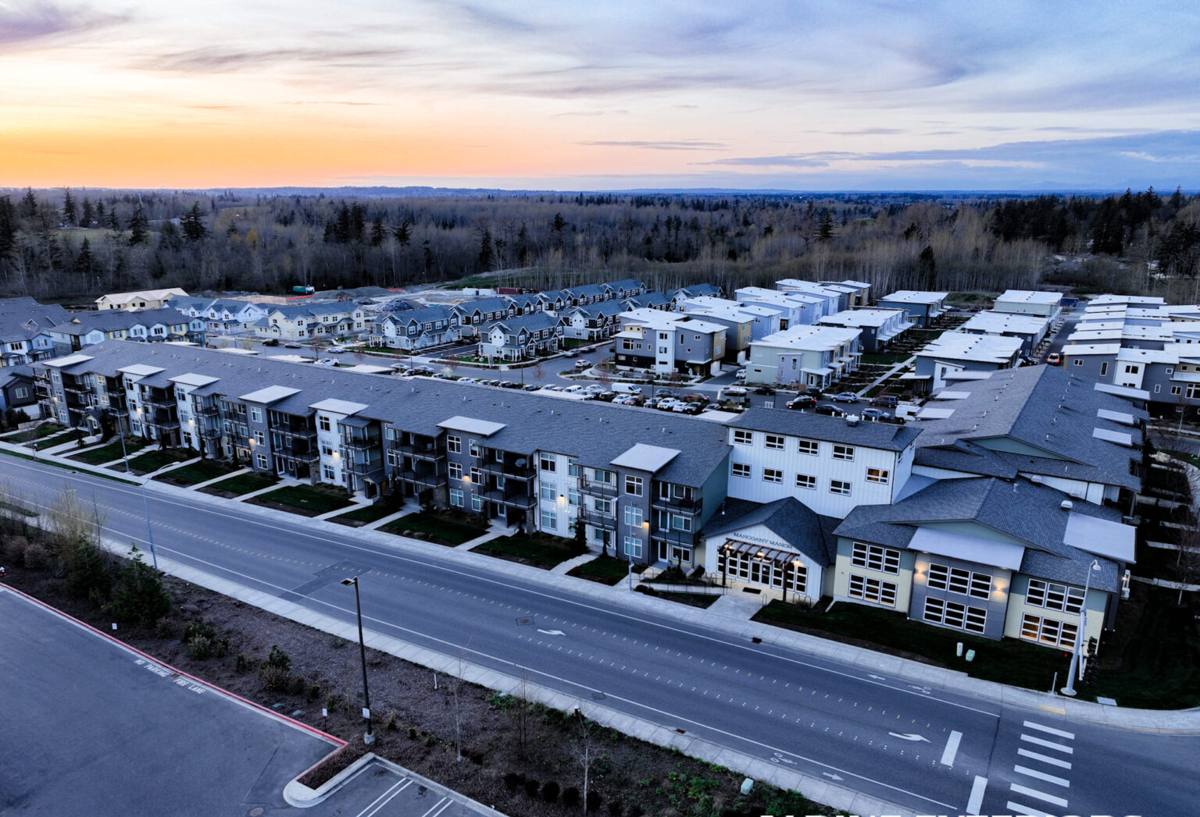
What Maple Falls' Climate Does to Exterior Siding
Heavy Tree Canopy and an Even Longer Moss Season
Whatcom County already runs a long moss and mildew season thanks to mild temperatures and steady moisture most of the year. Maple Falls takes that further. Properties tucked under fir and cedar canopy stay shaded for more of the day than open lots do, which means walls dry out slower after every rain event. Slower drying is exactly what moss, algae, and mildew need to establish and spread on a siding surface, and organic growth on the surface traps moisture against the wall behind it, which is where a lot of long-term siding problems actually start.
Elevation and Rainfall in the Foothills
As you move east from the lowland farmland around Lynden toward the Mount Baker foothills, annual rainfall tends to climb with elevation. Maple Falls sits high enough in that gradient that homes here typically see more total precipitation over a year than properties down on the valley floor. That's not a dramatic difference on any given storm, but it adds up in total wet-hours a wall assembly has to shed water and dry out.
Driving Rain and Regional Salt Air
Like the rest of the county, Maple Falls gets wind-driven rain that doesn't fall straight down for much of the year. Wind pushes moisture sideways into lap joints, trim, and any seam where the water management detailing isn't right, which is a harder test on caulked joints and painted surfaces than a simple rainfall total suggests. Salt-tinged air off the Sound reaches inland across the county as well, and while Maple Falls isn't waterfront, that regional exposure still plays a role in how fasteners, trim hardware, and factory finishes hold up over decades.
Why James Hardie Fiber Cement Is the Right Match Here
James Hardie siding is fiber cement, a blend of Portland cement, sand, and cellulose fiber cured into rigid boards. It's inorganic, which matters directly for a shaded, moss-prone property, because it doesn't have a wood-based core that can absorb water, swell, or feed organic growth the way wood or wood-fiber products can. It's also non-combustible, which is a real consideration for wooded, tree-lined properties near the foothills.
The HZ5 Product Line
James Hardie engineers different product lines for different climate zones. The HZ5 line is built for regions with sustained moisture exposure and freeze-thaw cycles, which fits Whatcom County's wet, mild winters better than a product engineered for a hot, dry climate. That's one of the specific reasons we standardized on this manufacturer rather than fiber cement as a generic category.
ColorPlus Factory Finish
Instead of relying on a field-applied paint job, Hardie's ColorPlus finish is baked on in multiple coats at the factory, under controlled conditions, before the boards ever reach the site. On a shaded lot where a painted surface would stay damp longer between dry spells, a consistent, factory-cured finish holds up more predictably than a site-painted one, and it's backed by its own finish warranty separate from the substrate warranty.
What a Correct Installation Involves on a Shaded Maple Falls Lot
Fiber cement's real-world performance depends heavily on installation quality, arguably more on a shaded, slow-drying lot than on an open one. A rushed install can undercut even the best material.
| Installation Detail | Why It Matters in Maple Falls |
|---|---|
| Manufacturer-specified clearances from grade, mulch beds, and landscaping | Wooded lots often have beds and groundcover right against the foundation; tight clearances trap moisture against the bottom edge of the siding |
| Rainscreen or drainage gap behind the siding | Gives walls a way to dry out between storms, which matters more when shade already slows natural drying |
| Correct fastener type, spacing, and depth | Prevents cracking and keeps the water-resistive barrier behind the siding intact through decades of wet-dry cycling |
| Flashing at windows, roof-to-wall transitions, and penetrations | These are the actual entry points for wind-driven rain, not the flat field of the siding itself |
| Sealant limited to manufacturer-specified joints only | Over-caulking traps moisture behind boards instead of letting it drain and dry as designed |
Choosing a Hardie Product and Color for a Wooded Lot
James Hardie offers several siding profiles, and the right one for a Maple Falls property is mostly a question of the home's architecture and how much trim and detail work the design calls for.
- HardiePlank lap siding is the traditional horizontal look most common on homes in this area, available in several exposure widths and textures.
- HardiePanel vertical siding gives a board-and-batten look, often used as an accent on gables or entry features, or across an entire elevation for a more modern profile.
- HardieTrim boards finish out corners, window and door surrounds, and fascia in a material that matches the siding's moisture and finish characteristics, rather than mixing in a wood trim that ages differently.
On color, ColorPlus finishes come in a range of tones, and homeowners on shaded lots sometimes assume darker colors will show algae or moss staining faster. In practice, any color on a consistently shaded wall is more exposed to organic growth over time than the same color in full sun, because the growth is driven by moisture and lack of direct light, not by the finish itself. The factory finish resists staining and holds its color better than a field-applied paint would regardless of the shade of color chosen, which matters more here than it does on an open, sunnier lot.
Before settling on a product mix, it's worth thinking through a short list of questions:
- How much direct sun does each elevation actually get across the day and across the seasons?
- Are there mature trees close enough to the house that limbing or clearance work should happen before or during the project?
- Does the home's trim and architectural detail call for a lap profile, a panel profile, or a mix of both?
- Is there existing moss, algae, or moisture staining on the current siding that should factor into the color and profile decision?
- What's the realistic long-term maintenance the homeowner is willing to keep up with, even on a low-maintenance product?
Cost Factors for a Maple Falls Hardie Project
Bids for what looks like the same job can vary by thousands of dollars, and the difference almost always comes down to real differences in scope, access, and site conditions rather than one contractor simply charging more.
| Factor | What It Affects |
|---|---|
| Site access and driveway/staging conditions | Longer or narrower driveways and limited turnaround space add setup time and can affect delivery and equipment logistics |
| Tree cover near the structure | May require limbing, ground protection, or careful scaffold placement to keep work and material clear of overhanging branches |
| Condition of the sheathing under the old siding | Hidden rot or moisture damage, more likely under long-term shade and moss exposure, adds repair scope once old siding comes off |
| Product mix (lap, panel, trim, and accent details) | More architectural detail and profile variety means more cutting, fitting, and labor time |
| Color and finish selection | Standard ColorPlus colors are priced differently than custom or premium finish options |
Our Process, Start to Finish
- In-person inspection: We walk the property in person, not from a photo, and look at sun exposure, drainage, tree proximity, and the current condition of the siding and any visible moisture or growth issues.
- Detailed proposal: We put together a scope and price that reflects the actual site, including any access or clearance work the property needs, so the number we give you is the number we expect to hold to.
- Tear-off and sheathing check: Old siding comes off down to the sheathing so we can see what's actually underneath before anything new goes up, including any hidden moisture damage.
- Installation to manufacturer spec: Weather-resistive barrier, flashing, clearances, fastening, and finish work follow James Hardie's published installation requirements, not shortcuts that happen to look fine on day one.
- Final walkthrough: We go over the finished work with you before calling the job done, and clean up the site so it looks better than we found it.
Why Hiring a Crew That Already Works in Maple Falls Matters
A siding crew that mostly works open, easy-access lots in town isn't necessarily set up to handle a wooded property with a longer driveway, mature trees close to the house, and a wall assembly that's been drying slower than average for years. We've priced and staged jobs on lots like that, we know what to look for once old siding comes off a shaded wall that's had moss or moisture sitting on it, and we know how to plan tree clearance and material staging around a property that isn't a flat, open lot. That familiarity shows up in fewer surprises mid-project and a bid that reflects the real scope from the start, not a change order once the crew actually sees the site.
If you're weighing a re-side in Maple Falls or anywhere else in Whatcom County, we're happy to walk the property, take an honest look at what's on the walls now, and give you a straight recommendation. Reach out using the form below to schedule a free, no-pressure estimate.