 Lynden
 Kendall's Climate Is Harder on Siding Than It Looks
Kendall sits back from the open coastline, but that doesn't mean the weather goes easy on a house. Whatcom County's marine-influenced air still finds its way inland, and out here it combines with heavy tree cover, foothill shade, and long stretches of overcast, damp weather to create conditions that are arguably tougher on exterior materials than a straight coastal exposure. Homes tucked against timber or set back from full sun stay wet longer after every rain. Add driving rain that comes in sideways during fall and winter storms, and you have an environment where the wrong siding material doesn't just look tired after a few years — it starts failing structurally.
Moss is the most visible symptom. In Kendall's shaded, moisture-retentive microclimate, moss season isn't a few weeks in spring — it's most of the year on north-facing walls and anywhere siding stays damp under overhangs or tree canopy. Moss holds water against the surface, and any siding material that can absorb that moisture — bare wood, primed wood, some engineered wood products — will eventually swell, delaminate, or rot from the inside out, often before the surface damage becomes obvious.
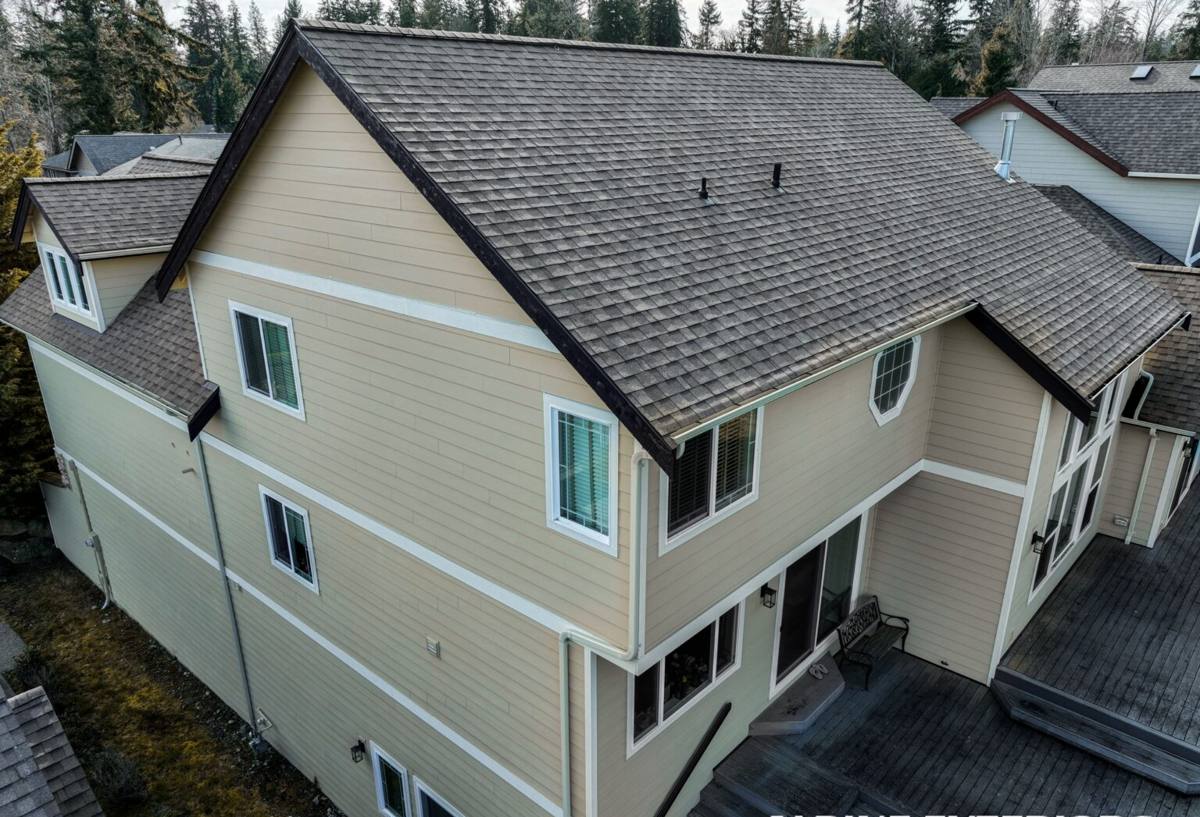
What Kendall Homes Actually Need From Their Siding
Given that climate, a siding system for this area needs to do three things well: shed water fast, resist moisture absorption at the material level (not just at the paint layer), and hold a factory finish long enough that homeowners aren't repainting every few years in a climate where paint never gets a long dry season to cure and bond properly. That's a shorter list than most sales pitches make it sound, but it's the honest one.
Why This Rules Out Some Common Products
Vinyl siding sheds water on the surface but relies on gaps and laps that can trap moisture behind the panel, and it doesn't stand up well to the freeze-thaw and constant damp cycling that shaded Whatcom County properties see. Primed wood and cedar look right for a rural, wooded setting like Kendall, but wood is an organic material — it's exactly what moss, mildew, and rot are built to break down, and in a climate this wet, that process moves faster than most homeowners expect. Engineered wood products like LP SmartSide use a wood-strand core, which means the same moisture-absorption vulnerability at any cut edge or damaged spot, just with a different manufacturing process. None of these are "bad" products in every climate. They're just a poor match for Kendall's specific combination of shade, rain, and moss pressure.
Why We Install James Hardie Fiber Cement — and Only James Hardie
Fiber cement is cement, sand, and cellulose fibers, not wood. It doesn't rot, it doesn't feed mold or moss the way organic siding does, and it's non-combustible — a real consideration for properties near Kendall's wooded and rural stretches where wildfire risk gets more attention every year. We standardized on James Hardie specifically, not fiber cement in general, because of how the product line is engineered and finished.
HZ5 Engineering for the Pacific Northwest
James Hardie makes climate-specific formulations, and the HZ5 line is engineered for regions with exactly this weather profile — freeze-thaw cycling, sustained damp, and heavy rain exposure. That's a meaningfully different product than a generic fiber cement board, and it's a big part of why installation results hold up here over the long term.
ColorPlus Factory Finish
The other half of the equation is the finish. James Hardie's ColorPlus coating is baked on at the factory under controlled conditions, not brushed or sprayed on site in whatever weather window the crew gets. In a climate where field-applied paint rarely gets a good, dry cure, a factory finish is the difference between siding that holds its color and seal for years and siding that starts looking chalky or blotchy within a couple of seasons. It also carries its own finish warranty separate from the substrate warranty — something most site-painted products simply can't offer.
Siding Material Comparison for a Climate Like Kendall's
| Material | Moisture / Rot Resistance | Moss & Mildew Behavior | Finish Durability | Typical Lifespan |
|---|---|---|---|---|
| James Hardie Fiber Cement | Excellent — cement-based, does not absorb and swell like wood | Resists surface growth; growth that does form washes off without damaging the board | Factory ColorPlus finish, warrantied separately | 30+ years to substrate warranty |
| Vinyl | Sheds surface water but traps moisture behind panels in laps and gaps | Can host mildew in seams; damp climates accelerate this | Color baked into material but fades and chalks over time; can't be effectively repainted | 15-25 years, shorter in heavy shade |
| LP SmartSide / Engineered Wood | Vulnerable at cut edges and any breach in the treated coating | Wood-strand core feeds organic growth once moisture gets in | Field or factory finish, still wood-based substrate underneath | Highly installation and maintenance dependent |
| Primed Wood / Cedar | Poor in sustained damp shade without diligent upkeep | Most vulnerable — organic material, moss's natural substrate | Field-applied paint, needs recoating on a regular cycle | Shortest without heavy ongoing maintenance |
What a Correct Fiber Cement Installation Actually Involves
Fiber cement's long-term performance depends almost entirely on how it's installed, not just what brand is on the truck. This is where a lot of the "fiber cement failed" stories actually come from — not the material, but shortcuts in the install.
Flashing and Water Management
Every window, door, and penetration needs proper flashing and a drainage plane behind the siding, not just caulk at the joints. In a climate with Kendall's rain volume, caulk is a backup, not a water management strategy. Correct installation assumes some moisture will get behind the cladding and gives it a path to drain and dry.
Clearances That Actually Matter Here
James Hardie specifies minimum clearances from siding to grade, roofing, decks, and other horizontal surfaces. In a shaded, damp property, these clearances aren't a paperwork formality — they're the difference between a wall that dries out between rain events and one that stays wet enough, long enough, to feed moss and mildew growth right at the bottom courses.
Fastening and Joint Treatment
Boards need to be fastened per manufacturer spec — correct nail placement, not overdriven or underdriven — and butt joints need to be properly treated and, ideally, backed with flashing rather than relying on caulk alone. Done right, a fiber cement wall has almost no places for water to linger.
Our Process for a Kendall Fiber Cement Project
- Walk and assess — we look at existing siding, moisture damage, trim condition, and the specific shade and drainage pattern of the property before quoting anything.
- Scope and estimate — a clear, itemized estimate covering tear-off, any sheathing repair found underneath, house wrap, flashing details, and the Hardie product and color chosen.
- Tear-off and inspection — removing old siding is when hidden rot or moisture damage shows up; we address it before anything new goes on, not after.
- Water-resistive barrier and flashing — house wrap and flashing installed correctly around every opening before a single piece of siding goes up.
- Hardie installation to spec — proper clearances, fastening, and joint treatment throughout.
- Final walkthrough — trim, caulking, and touch-up review with the homeowner before we call the job done.
Why It Matters That We Already Work in Kendall
A siding crew that's worked Kendall properties before already knows the practical realities: driveways and access on rural lots, dealing with tree cover and drip lines during the job, and how the local moisture and shade patterns show up on real houses, not just in a manufacturer's climate chart. That local familiarity shows up in small decisions — where to add extra flashing attention, which elevations need the most drainage consideration, how to sequence the job around Whatcom County's wet season — that a crew unfamiliar with the area might not think to make.
It also matters for permitting and code questions specific to Whatcom County, and for knowing which Kendall-area supply and disposal logistics make sense for a given property, rather than treating every job like it's the first one out this way.
Maintaining Fiber Cement Siding in a Shaded, Damp Climate
James Hardie siding is low-maintenance, not no-maintenance. In Kendall's specific conditions, a little seasonal attention goes a long way toward protecting the investment:
- Rinse siding gently once or twice a year, with extra attention to north-facing and shaded walls where moss takes hold first
- Keep gutters clear so overflow doesn't run down the wall face and keep siding wet longer than it needs to be
- Trim back trees and shrubs so air can move across the wall and sunlight can reach it during drier stretches
- Check caulking at trim and joints annually and re-caulk any cracked or pulled sections promptly
- Inspect the bottom courses near grade and decks for soil or mulch buildup that violates clearance
- Address any moss growth early with a gentle wash rather than letting it establish and spread
What Affects Cost on a Kendall Project
Every property is different, but the main cost drivers on a Kendall fiber cement job are consistent: the condition of the sheathing underneath the old siding once it's exposed, the complexity of the home's shape (corners, dormers, trim detail add labor), the Hardie product line and profile chosen, and site access for material staging and disposal on rural lots. We give straight, itemized numbers once we've actually seen the property — not a ballpark based on square footage alone, since the hidden condition of what's underneath the existing siding is often the biggest variable.
If you're weighing options for a Kendall property, we're glad to walk the house, point out anything we see — good or concerning — and put together a clear, no-pressure estimate for James Hardie fiber cement siding built for this specific climate. There's no obligation, and no pressure to sign anything on the spot.