 Lynden
 Windows Built for a Wet, Salt-Touched Corner of the Pacific Northwest
Abbotsford sits in the Fraser Valley, close enough to the coast and to Whatcom County that homes here deal with the same weather patterns we see on our side of the border: long stretches of driving rain, humid air carrying salt off the Strait of Georgia and Puget Sound, and a moss season that can run most of the year on north-facing walls and rooflines. Windows are one of the first places that weather finds a way in. A frame that's slightly out of level, a sill pan that wasn't sloped right, or flashing tape that was skipped to save ten minutes — any one of those is enough to start a slow leak that doesn't show up as a stain on the drywall for a year or two.
We install windows the way we'd want them installed in our own homes, and we treat every job in Abbotsford the same as a job in Lynden: same flashing sequence, same attention to the sill, same refusal to caulk over a problem instead of solving it. This page walks through what that actually looks like, and what you should expect from anyone who touches your windows in this climate.
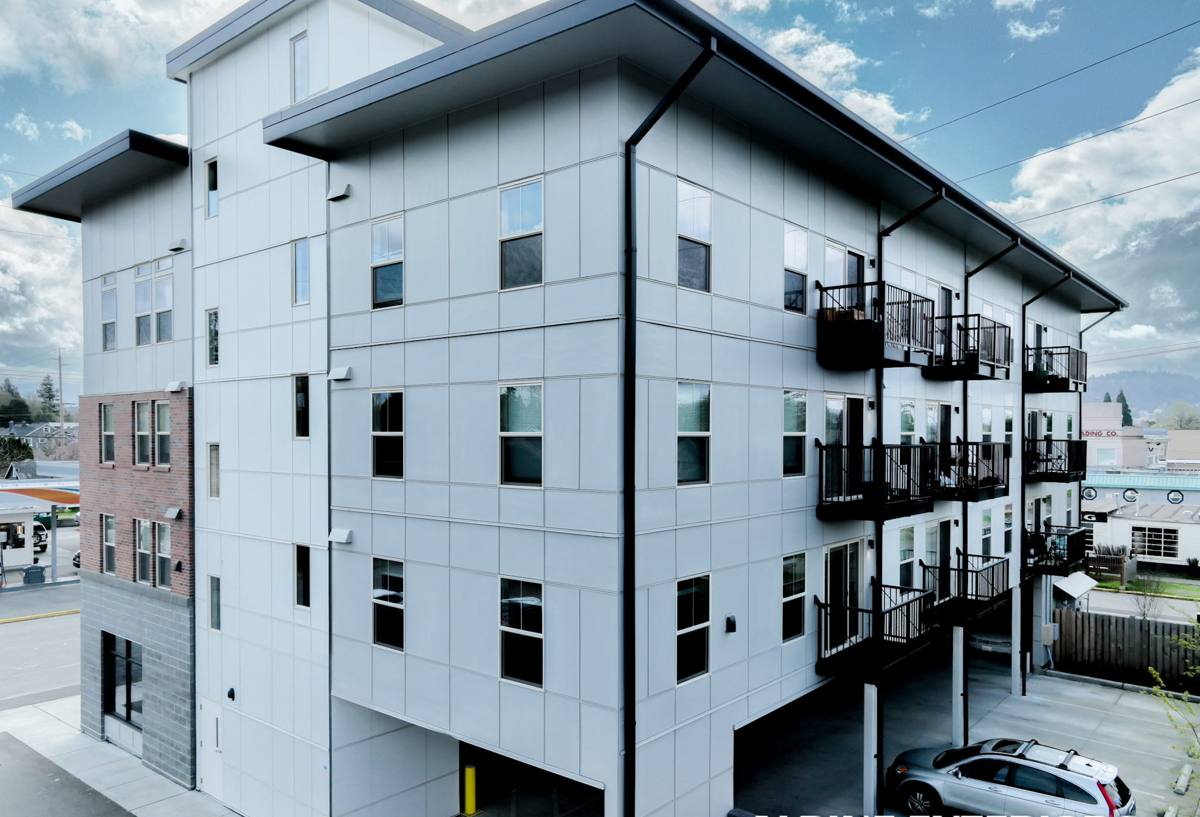
How This Climate Wears Down a Window Over Time
It's rarely one dramatic storm that fails a window — it's years of small exposures adding up.
- Driving rain pushed sideways by wind finds any gap in the flashing or sealant and works it wider year after year.
- Salt-laden air accelerates corrosion on hardware, screws, and lower-grade aluminum components, especially on walls facing open exposure.
- Moss and organic buildup on siding and trim above windows holds moisture against the wall longer than bare siding would, feeding rot at the header and jamb.
- Constant humidity swings — wet fall and winter, drier summer — expand and contract wood framing and trim, which loosens fasteners and opens hairline gaps over time.
None of this means the climate is unbeatable. It means the installation details that get skipped in drier regions can't get skipped here.
Signs Your Windows Are Losing That Battle
Most window failures in this region show up gradually. Worth checking for, especially before winter:
- Soft or spongy trim or siding directly around a window frame
- Fogging or moisture between the panes of a double- or triple-glazed unit — a sign the seal has failed
- Visible daylight or a draft you can feel with your hand along the frame
- Paint that's bubbling or peeling only near the window, not the rest of the wall
- Windows that are hard to open, close, or lock — often a sign the frame has shifted or swelled
- Moss or dark streaking building up on the trim or sill above a window
Any one of these on its own might just be cosmetic. Two or more together, especially soft wood plus a hard-to-operate window, usually means moisture has already gotten behind the frame.
What a Correct Window Installation Actually Involves
Setting a window in an opening looks simple from the outside. The parts that actually keep water out are mostly invisible once the trim goes back on.
Sill Pan and Drainage
Every opening should get a sloped sill pan so any water that does get past the window has somewhere to go — outward, not into the wall cavity. This is the single most common shortcut we see skipped on older installs, and it's the one that causes the most rot.
Flashing Sequence
Flashing tape and building wrap need to be layered in the right order — sill, then jambs, then head flashing — so water is always directed down and out, like shingles. Do it out of order and you've built a funnel instead of a barrier.
Air Sealing and Insulation
The gap between the window frame and the rough opening needs to be filled with a low-expansion foam or backer rod and sealant — not stuffed with fiberglass, which does nothing to stop air or moisture movement. This is also where a big chunk of a window's real-world energy performance comes from, separate from the glass itself.
Interior and Exterior Sealant
A proper install seals the exterior for weather and leaves the interior seal for air control, with a gap between them so any moisture that does get in can still dry out. Sealing both sides solid is a common mistake that traps moisture inside the wall.
Choosing the Right Window for This Climate
There's no single "best" window — the right choice depends on exposure, budget, and how much upkeep you want to take on. Here's how the common options compare for a coastal-influenced climate like Abbotsford's:
| Frame Material | Moisture Resistance | Maintenance | Typical Fit |
|---|---|---|---|
| Vinyl | Very good — won't rot, minimal corrosion risk | Low — occasional cleaning | Best value; most common choice for full replacements |
| Fiberglass | Excellent — very stable in wet/humid swings | Low | Higher upfront cost, longer-term stability |
| Wood (clad exterior) | Good if the cladding is intact; vulnerable if damaged | Higher — exterior clad still needs inspection | Homes prioritizing interior wood look |
| Aluminum | Weaker in salt-air exposure without upgraded finishes | Moderate — watch for corrosion on hardware | Less common for full-house replacement here |
Glass matters as much as frame material. Double-pane with a good low-E coating is the standard baseline; in homes with a lot of west or open-water exposure, we'll often talk through argon fill and warm-edge spacers, which help both with condensation resistance and comfort near the glass on cold, damp days.
Our Installation Process, Start to Finish
- On-site assessment — we check existing framing, look for signs of past water intrusion, and measure actual openings rather than trusting old spec sheets.
- Product selection — we walk through frame and glass options based on your home's exposure, budget, and what you actually want to maintain long-term.
- Removal — old windows come out carefully so we can inspect the rough opening and framing underneath before anything new goes in.
- Repair if needed — any soft framing, rot, or old flashing failures get addressed before a new window ever gets set. We won't install a new window into a compromised opening and call it done.
- Sill pan and flashing — sloped drainage path and correctly layered flashing tape, every time, regardless of whether it's visible once the job is finished.
- Set and shim the window — leveled, plumbed, and squared, with proper shimming so the frame isn't carrying stress that will eventually crack a seal.
- Insulate and seal — low-expansion foam or backer rod, sealant on the exterior, and an interior air seal that still allows drying capacity.
- Trim and finish — interior and exterior trim reinstalled or replaced, caulked, and painted to match.
- Final check — operation, locking, and a visual water-path check before we consider the job complete.
Replacement vs. New Construction Windows
Most work we do in established neighborhoods is replacement — fitting a new window into an existing opening without disturbing the surrounding siding, which is faster and less invasive. New-construction windows, which have a nailing flange and integrate directly with the house wrap, are the better call when siding is already coming off, when there's existing rot that needs the opening exposed anyway, or when we're changing a window's size or shape. We'll tell you honestly which one your project actually needs rather than defaulting to whichever is easier for us.
Why a Crew That Already Works This Area Matters
Abbotsford and Lynden share a building climate more than they share a building code — but knowing both matters. A crew that only installs windows in drier inland climates tends to under-build the flashing and drainage details because they've never had to chase a callback caused by driving rain off open exposure. Working this border region regularly means we've seen how moss buildup, salt air, and sustained wet seasons actually affect window openings over years, not just what a spec sheet says should happen. That's the difference between an install that looks right on day one and one that's still performing correctly in year ten.
Maintenance That Actually Extends Window Life
A good installation is the foundation, but a little seasonal attention goes a long way in this climate:
- Clear moss and debris from trim, sills, and the wall surface above windows at least once a year
- Check exterior caulking annually for cracking or separation, especially on south- and west-facing walls
- Keep gutters and downspouts clear so water isn't sheeting down past window heads
- Operate every window at least a few times a year, even ones you rarely open, so hardware doesn't seize
- Watch for condensation between panes — it means a seal has failed and the insulating gas has escaped, not something that resolves on its own
- Repaint or reseal exposed wood trim before it starts to visibly crack or gray
What Affects the Cost
Every home is different, but a few factors consistently drive price up or down: the number of openings, whether it's replacement or new-construction (which involves more siding and trim work), frame material, glass upgrades like argon fill or extra low-E coatings, and how much repair the existing framing needs once the old window comes out. We'd rather walk your specific home and give you real numbers than quote a range that doesn't mean much for your situation.
If your windows are drafty, fogging, hard to operate, or just due for an honest look, we're happy to come out, take a look, and give you a straightforward, no-pressure estimate — use the form below to get started.