 Lynden
 Storm Damage Roof Repair Built for Sumas and Lynden Conditions
Sumas sits close enough to the Fraser Valley and the Nooksack lowlands that its roofs take a specific kind of beating. It isn't just one big storm a year that does the damage — it's the steady combination of driving rain off the valley, wind funneling down from the foothills, and long stretches of gray, wet weather that never quite let a roof dry out. Add in salt-tinged air that drifts inland from the Puget Sound region and settles on metal fasteners and flashing, and you've got a roofing environment that punishes shortcuts. A repair that would hold up fine in a drier climate can fail here in a season or two if it isn't done right.
This page is specifically about storm damage roof repair for homes in and around Sumas and greater Lynden — not a general overview of roofing services. If a windstorm lifted shingles, rain got past your flashing, or moss finally worked its way under a weak seam, this is what you need to know before you call anyone out.
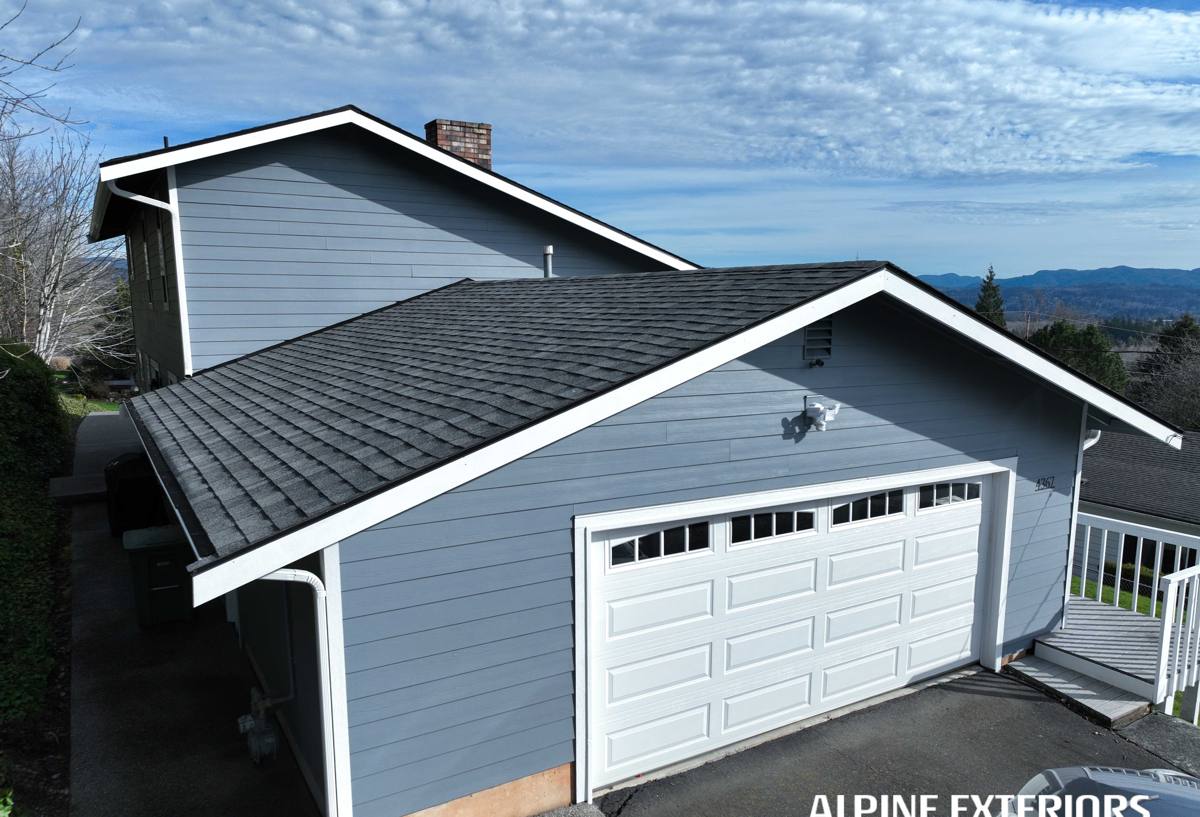
What Storm Damage Actually Looks Like Here
Whatcom County storms rarely produce the dramatic hail or tornado damage you'd see elsewhere in the country. Instead, damage builds from repeated exposure and shows up in quieter, easier-to-miss ways:
Wind Damage
Sustained wind off open farmland around Sumas doesn't need to be extreme to do damage — it just needs to be consistent. Wind works shingle tabs loose at the edges, lifts ridge caps, and stresses the seal strips that hold asphalt shingles flat. Once a few tabs are lifted, every subsequent storm gets underneath them and makes the problem worse.
Wind-Driven Rain
Rain that comes in sideways during a storm behaves differently than a normal downpour. It can be pushed up and under shingle edges, around chimney and vent flashing, and into any gap that a straight-down rain would never reach. This is one of the most common causes of "mystery leaks" that show up well away from the actual point of entry.
Long-Term Moisture and Moss
Whatcom County's moss season runs long — often eight months or more of conditions damp enough to support growth. Moss holds moisture directly against roofing material, and as it spreads under shingle edges it physically lifts them. A roof weakened by months of moss growth is far more vulnerable when an actual storm hits, because the seal and structure underneath are already compromised.
Salt Air Effects on Metal Components
Homes closer to the water and even further inland in Whatcom County see accelerated corrosion on exposed metal — flashing, fasteners, gutter hardware, and vent caps. Corroded metal fails quietly, and a rusted-through flashing seam is often the real cause behind a leak that looks, at first glance, like a shingle problem.
Signs Your Roof Took Storm Damage
Storm damage isn't always obvious from the ground. Here's what we recommend homeowners check after any significant wind or rain event:
- Shingles that look curled, lifted, or missing from an otherwise even roofline
- Granules collecting in gutters or at downspout outlets (a sign of shingle wear from wind abrasion)
- New water stains on ceilings or upper interior walls after a storm
- Flashing around chimneys, skylights, or vents that looks bent, separated, or rusted
- Sagging or soft spots when walking the attic space, if it's safely accessible
- Debris — branches or larger material — that struck the roof directly
- Gutters pulling away from the fascia or full of shingle fragments
If you see two or more of these after a storm, it's worth getting a roof looked at before the next weather system moves through, not after.
What a Correct Storm Damage Repair Involves
A lot of storm repair work done poorly is really just patchwork — sealing the one spot that's visibly leaking without addressing why it failed in the first place. That approach tends to fail again within a year, especially in a climate that gives a roof so little time to dry out between storms. A repair done correctly includes a few non-negotiable steps:
Full Assessment, Not Just the Reported Leak
We start by inspecting the entire roof plane, not just the area where a leak showed up inside the house. Wind-driven rain and moss damage often travel — water can enter at one point and track along the underlayment before it shows up somewhere else entirely. Fixing only the interior symptom without finding the true entry point is the single most common reason storm repairs fail to hold.
Matching Materials and Method to the Existing Roof
Repairs need to match the existing shingle profile, flashing style, and fastening pattern as closely as possible. A patch that doesn't integrate properly with the surrounding roofing creates a new weak point instead of fixing the old one.
Underlayment and Decking Check
If water has been getting in for any length of time, the underlayment and roof decking underneath the shingles may be compromised. We check for soft or delaminated decking before closing a repair back up — sealing shingles over damaged decking just hides the problem for another season.
Flashing and Fastener Attention
Given how much local damage traces back to corroded or loosened metal, every repair includes a check of nearby flashing and fasteners, not just the shingles themselves. Replacing a shingle next to failing flashing solves half the problem.
Our Process, Start to Finish
- Initial contact and scheduling — we get a description of what happened and when, which helps us know what to look for before we're on site.
- On-roof inspection — a full visual and physical check of the affected area and the roof as a whole, including flashing, vents, and gutter condition.
- Written findings and options — we explain what we found in plain terms, what caused it, and what the repair involves, including whether it's a true repair situation or something closer to a replacement.
- Repair work — completed using materials matched to your existing roof, with attention to the underlying cause, not just the visible symptom.
- Final check — we confirm the repair is sealed and integrated properly before we consider the job done.
Repair vs. Replacement: How We Decide
Not every storm-damaged roof needs full replacement, and not every roof can be reasonably patched. We base the recommendation on the roof's overall condition, not just the storm event that prompted the call.
| Factor | Leans Toward Repair | Leans Toward Replacement |
|---|---|---|
| Roof age | Under roughly 12-15 years, in otherwise sound condition | Nearing or past its expected service life |
| Extent of damage | Isolated to one section or a few spots | Widespread across multiple roof planes |
| Decking condition | Solid, no soft spots or rot found | Soft, delaminated, or water-damaged decking |
| Moss and moisture history | Minor, surface-level growth | Long-term moss intrusion under multiple shingle courses |
| Prior repairs | First repair on this section | Multiple past patches in the same area |
We'd rather tell a homeowner honestly that a repair will hold than sell a replacement that isn't needed yet — and we'd rather recommend replacement than keep patching a roof that's genuinely at the end of its life.
What Affects the Cost of a Storm Repair
Storm repair pricing varies enough by situation that we won't quote a number without seeing the roof, but these are the main factors that move the price up or down:
| Cost Factor | Why It Matters |
|---|---|
| Roof pitch and accessibility | Steeper or harder-to-reach areas take more time and safety setup |
| Extent of hidden damage | Decking or underlayment replacement adds material and labor beyond surface shingles |
| Number of flashing points involved | Chimneys, skylights, and multiple vents each require careful, individual work |
| Shingle availability and match | Older or discontinued shingle lines can require sourcing time or a wider patch area |
| Moss remediation needed | Roofs with heavy moss buildup may need cleaning and treatment alongside the repair |
Generally, a contained repair to a single roof section is a modest expense compared to a full re-roof, but a full inspection is the only way to know which category a given job falls into.
Insurance and Storm Damage
Many storm-related roof repairs are covered under homeowners insurance, particularly wind and impact damage from a documented weather event. We're not an insurance company and can't make coverage determinations, but we can provide a clear, honest written assessment of what we find on the roof — documentation that's useful whether or not you end up filing a claim. If you do file, having an independent inspection from a local roofer who isn't trying to inflate the scope of work works in your favor with the adjuster.
Why It Matters That We Already Work in Sumas
A roofer unfamiliar with this specific stretch of Whatcom County might not think to check for salt-air corrosion on flashing, or might underestimate how much a long moss season has already weakened a roof before a storm even hits. Working regularly in and around Sumas and Lynden means we know what local roofs are up against year-round, not just what a single storm did on a single day. That context changes what we look for during an inspection and how we explain what we find — the goal is a repair that actually holds through the next several storm seasons, not just until the next one.
Get an Honest Look at Your Roof
If a recent storm left you with a leak, missing shingles, or just a feeling that something isn't right up there, we're glad to come take a look. There's no pressure and no obligation — just a straightforward assessment of what happened and what it would take to fix it correctly. Use the form below to request a free estimate.