 Lynden
 Building Decks for the Acme Area's Wet, Wooded Corner of Whatcom County
The properties in and around Acme sit in one of the greener, more tree-covered pockets near Lynden — bigger lots, more shade, and ground that stays damp longer into the spring than the open farmland closer to town. That's part of what makes the area appealing, but it also means a deck out here works harder than a deck on a dry, sun-exposed lot. Between salt-laden air moving in off the Salish Sea, driving rain that comes in sideways during fall and winter storms, and a moss season that can run half the year under tree cover, a deck built without that environment in mind starts showing problems well before it should.
This page is specifically about custom deck building for homes in the Acme area — what the climate actually does to a deck over time, what a correctly built one involves, and how we approach the work. We're not going to give you a generic "decks are great" pitch. We're going to walk through the real trade-offs so you can make a decision you're happy with in ten years, not just on install day.
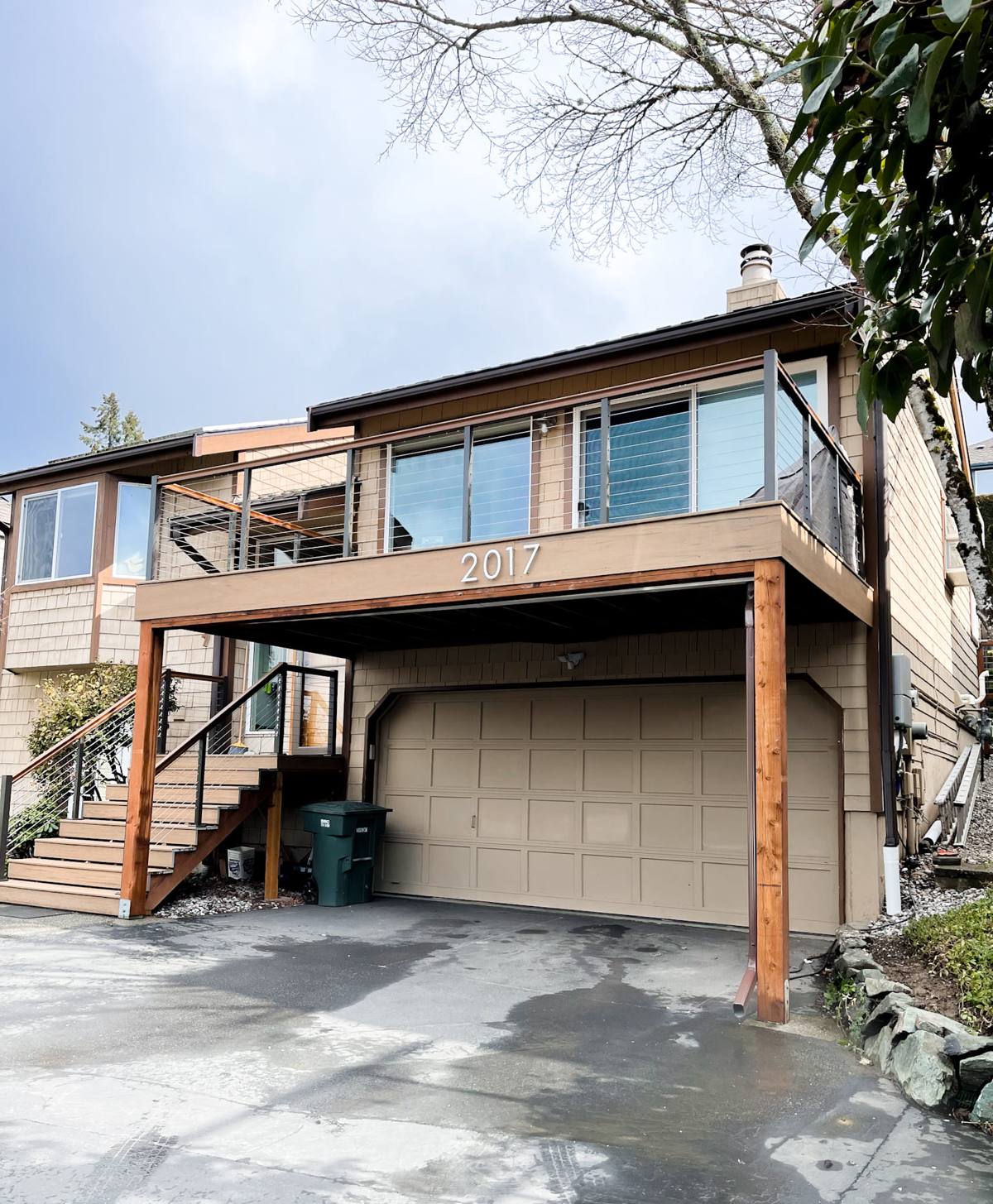
What Rain, Moss, and Salt Air Actually Do to a Deck Here
Most deck failures we see aren't from bad weather doing something dramatic — they're from years of ordinary moisture exposure hitting a spot that was never designed to shed it. In this part of Whatcom County, that shows up in a few predictable ways.
Moss and Organic Buildup
Tree cover and consistent moisture are exactly what moss and algae need. On a deck, that buildup does more than look bad — it holds water directly against the wood or composite surface, keeps boards from drying out between rain events, and turns any flat, low-airflow spot into a slip hazard. Board spacing, airflow underneath the deck, and how much sun a layout gets all affect how fast moss takes hold.
Driving Rain and End-Grain Rot
Wind-driven rain doesn't just fall on a deck, it gets pushed sideways into joints, fastener holes, and the cut ends of boards — the parts of any piece of lumber that absorb moisture fastest. Ledger boards where a deck attaches to the house, stair stringers, and any spot where two pieces of material meet are the most common places we find hidden rot on older decks.
Salt Air and Metal Fasteners
Salt in the air accelerates corrosion on anything metal — screws, joist hangers, post bases, and railing hardware. Standard hardware store fasteners that would hold up fine further inland can start rusting and staining the surrounding wood within a few seasons out here. It's a small detail that gets skipped constantly, and it's one of the most common reasons a deck starts looking rough long before the actual structure is failing.
Choosing the Right Decking Material for This Climate
There's no single "best" decking material — there's the right material for your budget, your maintenance appetite, and how much sun and moss exposure your specific lot gets. Here's the honest comparison we walk homeowners through.
| Material | Upfront Cost | Maintenance in This Climate | Realistic Lifespan | Best For |
|---|---|---|---|---|
| Pressure-treated pine | Lowest | Annual cleaning, re-sealing every 1-2 years | 15-20 years, less if neglected | Budget-conscious builds, homeowners willing to maintain it |
| Cedar | Mid-range | Regular cleaning, staining or oiling every 1-2 years | 15-25 years with upkeep | Natural look, better rot resistance than pine |
| Capped composite | Highest | Occasional wash, no staining or sealing | 25-30+ years | Low-maintenance priority, heavy moss/shade exposure |
| Uncapped composite | Mid-to-high | More prone to moisture absorption than capped, still low-maintenance | 15-25 years | Budget-friendly composite option, drier or sunnier lots |
For heavily shaded, moss-prone lots — which describes a good number of properties around Acme — we generally steer people toward capped composite or, if they want real wood, cedar with a realistic maintenance plan they'll actually keep up with. Pressure-treated pine can absolutely work here, but only if you go in knowing it needs yearly attention. A deck that looks like a bargain on install day and gets neglected for five years usually ends up costing more in repairs than the upgrade would have.
What a Correctly Built Deck Looks Like Underneath
The decking material is the part everyone sees. The part that actually determines whether a deck lasts is underneath it, and it's also the part that's easiest for a rushed or inexperienced crew to shortcut.
Footings and Framing
Footings need to sit below frost depth and bear on undisturbed or properly compacted soil — not guessed at. In damp, shaded ground like a lot of Acme-area yards, we also pay attention to drainage around the footings themselves, because standing water against a post base is a slow but steady path to failure.
Ledger Attachment and Flashing
Where the deck meets the house is the single highest-risk connection on the entire structure. Proper flashing — installed in the right order, lapped correctly with the house's existing weather barrier — is what keeps water from tracking behind the siding and rotting the house's rim joist, not just the deck. This is the detail we see skipped or done wrong most often on older decks we're asked to repair or replace.
Joist Spacing and Fastener Selection
Joist spacing depends on the decking material and the span, not a one-size-fits-all number. And given the salt air and moisture in this area, we use corrosion-resistant, coated or stainless fasteners and hangers rather than standard hardware — it costs a little more upfront and saves the deck from rust streaking and hardware failure years down the line.
Airflow Underneath
A deck built low to the ground with poor ventilation underneath traps moisture and accelerates rot from below, even if the top surface looks fine. Where grading allows, we build in enough clearance and, where it doesn't, we plan drainage so water isn't pooling under the structure.
Railings, Stairs, and Local Code Requirements
Any deck more than 30 inches off the ground needs a code-compliant guardrail, and stairs have their own requirements for rise, run, and handrails. Whatcom County permitting applies to most new deck construction and many significant deck replacements — the threshold depends on size and height, and it's worth confirming before work starts rather than after. We handle the permit process as part of the job rather than leaving homeowners to sort it out themselves.
Beyond the legal minimums, railing choice matters for this climate too. Wood railings need the same maintenance commitment as wood decking. Metal or composite railing systems hold up with less upkeep but cost more upfront — the same trade-off that applies to the decking itself.
Our Process From Estimate to Finished Deck
- Site visit and honest assessment — we look at grading, shade, tree cover, and how the deck ties into the house before recommending anything.
- Material and layout discussion — we walk through the real trade-offs above based on your budget and how much maintenance you actually want to do.
- Permitting — we pull what's required through Whatcom County so you're not left chasing paperwork.
- Build — footings, framing, flashing, and decking, done in the order that actually protects the structure long-term, not the order that's fastest.
- Final walkthrough — we go over the finished deck with you, including what maintenance it'll need and when.
We don't push upsells during this process. If pressure-treated pine and a realistic maintenance plan is the right call for your budget, we'll say so. If your lot's moss exposure means composite will save you money over ten years, we'll say that too.
Maintenance Checklist for Acme-Area Deck Owners
Whatever material you choose, a little seasonal attention goes a long way in this climate. Here's what we recommend to homeowners in this area specifically:
- Sweep leaves and debris off the deck regularly in fall — trapped organic matter is what feeds moss growth.
- Clean the surface at least once a year with a deck-safe cleaner, more often in heavily shaded spots.
- Check and re-seal or re-stain wood decking on the schedule the product actually requires, not just when it looks faded.
- Inspect fasteners and hardware annually for rust staining, which usually signals it's time to address corrosion before it spreads.
- Keep gutters and downspouts near the deck clear so runoff isn't dumping extra water onto or under the structure.
- Trim back overhanging branches where possible to cut down on both debris and shade-driven moss growth.
Why a Crew That Already Works This Part of Lynden Matters
Deck construction advice that's correct for a dry, open lot isn't always correct for a shaded, damp one, and a lot of the material and framing decisions above depend on knowing which situation you're actually in. A crew that's worked other properties around Acme and the broader Lynden area has already seen how moss, drainage, and salt air play out on real decks in this specific environment — not just in a manual. That translates into fewer surprises: the right fastener choice from day one, flashing done correctly the first time, and a material recommendation that matches how your particular lot actually behaves through a Whatcom County winter, not a generic climate zone.
It also means someone who's reachable if a question comes up two years after the build — not a crew that worked one job in the area and moved on.
If you're planning a new deck or replacing one that's showing its age, we're happy to come take a look and give you a straightforward, no-pressure estimate. Use the form below to get started.