 Lynden
 Building a Deck That Actually Holds Up in Laurel
Laurel sits in one of the wetter, greener corners of Whatcom County, and that's exactly the kind of setting a deck should be built for — not just built to look good on a dry afternoon. A custom deck here has to handle months of steady rain, a marine-influenced climate that keeps everything damp longer than homeowners expect, and a moss season that can stretch from fall clear through spring. We build decks for Laurel and the surrounding Lynden area with those realities in mind from the first stake in the ground, not as an afterthought once the boards are already down.
A deck that's "just fine" somewhere drier can fail quietly here — soft spots under composite decking, rusted fasteners bleeding rust streaks, a ledger board rotting from the inside where nobody looks. None of that is dramatic until it is. Our approach is to design and build so those problems never get a foothold in the first place.
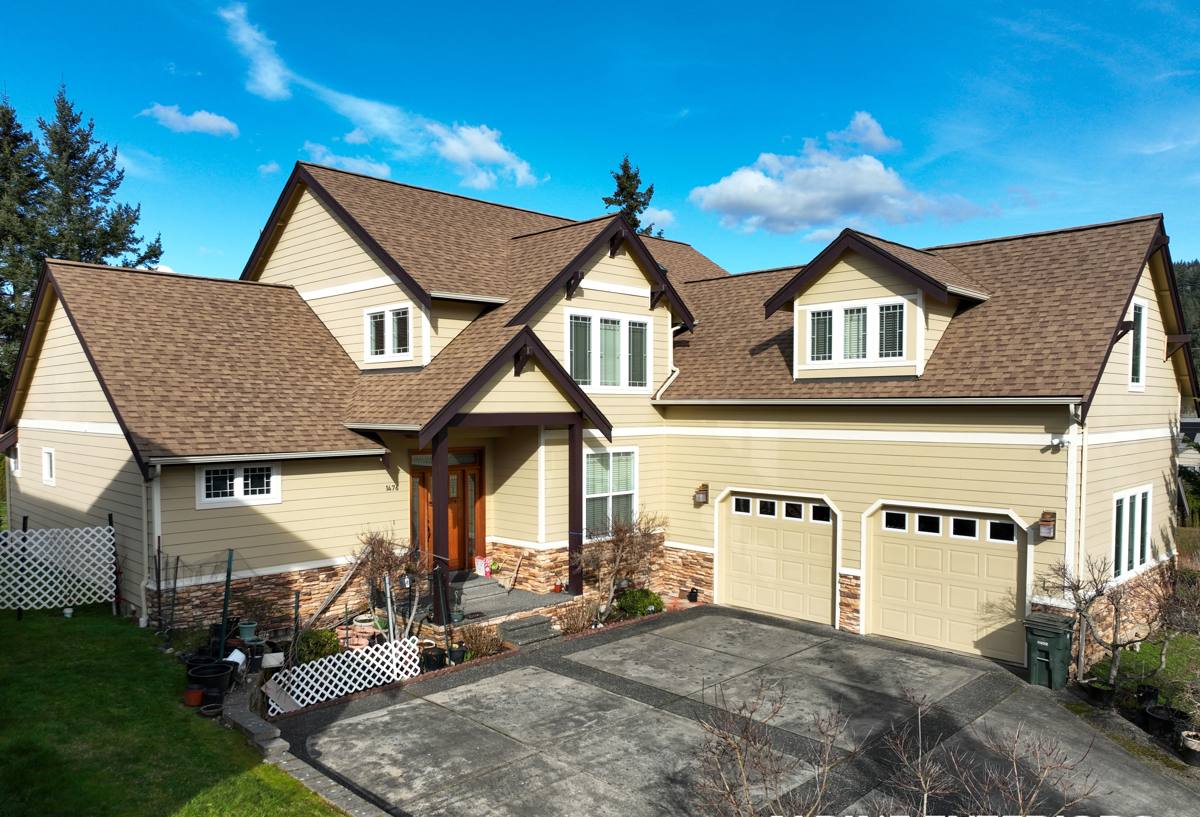
What Whatcom County Weather Does to a Deck Built the Wrong Way
Every region has its own way of testing a deck's construction. Around Laurel, the challenges tend to stack:
- Driving rain pushed sideways by wind finds gaps at ledger boards, post bases, and stair stringers that would stay dry in a calmer climate.
- Salt air carried inland from Bellingham Bay and the greater Puget Sound accelerates corrosion on any fastener, bracket, or hardware that isn't rated for it.
- Extended shade and moisture from mature trees and overcast stretches create ideal conditions for moss, algae, and mildew to colonize decking surfaces, especially on the north or east side of a house.
- Freeze-thaw cycling, while milder here than inland Washington, still moves footings and fasteners over time if depth and drainage weren't handled correctly at the start.
None of these on their own destroys a deck overnight. What they do is expose every shortcut. A deck built with the wrong fastener coating, a ledger board flashed with tape instead of proper metal flashing, or joists left unprotected under composite boards will show it within a few wet seasons — usually as soft framing, staining, or a slick, moss-covered surface that's genuinely unsafe to walk on.
Choosing Decking Material for a Laurel Property
There's no single "best" decking material — there's a best material for your budget, your sun exposure, and how much upkeep you actually want to do. We walk every Laurel homeowner through the real trade-offs rather than pushing whatever has the best margin.
| Material | Upfront Cost | Maintenance in This Climate | Notes for Laurel Homes |
|---|---|---|---|
| Pressure-treated lumber | Lowest | Annual cleaning and re-sealing to fight moss and moisture | Budget-friendly, but needs consistent upkeep or it grays and stains fast in shaded yards |
| Cedar | Mid | Regular sealing; natural rot resistance helps but isn't a substitute for care | Good look for traditional homes; still needs attention in constant damp |
| Capped composite | Higher | Occasional washing; no sealing or staining | Best resistance to moss staining and moisture damage long-term |
| PVC decking | Highest | Lowest maintenance overall | Fully synthetic, handles standing moisture well, but least "natural" appearance |
For shaded lots — common where mature evergreens border a property — we lean homeowners toward capped composite or PVC unless they're genuinely committed to the maintenance schedule wood requires. For sunnier, more open lots, a well-sealed cedar or PT deck can perform well for years if it's maintained on schedule.
The Structural Details That Actually Determine How Long a Deck Lasts
Ledger Board Flashing
The ledger board — where the deck attaches to the house — is the single most common failure point on decks in wet climates. Water that gets behind an improperly flashed ledger doesn't just rot the deck; it can migrate into the rim joist and wall framing of the house itself. We install proper metal flashing with a drip edge and correctly lapped water-resistive barrier at every ledger connection, not just adhesive tape, which degrades faster than most homeowners realize under constant moisture.
Fasteners and Hardware
Salt-influenced air moving through Whatcom County corrodes standard fasteners faster than in drier inland regions. We use stainless steel or heavy-duty coated fasteners and connectors rated for ground contact and coastal exposure, particularly on structural hardware like joist hangers and post bases where a failed fastener isn't cosmetic — it's a safety issue.
Footings and Post Bases
Footings are set to the required frost depth and poured with drainage in mind so water doesn't pool against concrete or wood posts. Post bases are elevated off the footing surface rather than embedded in it, keeping end grain out of standing water — a detail that's easy to skip and expensive to fix later.
Joist Protection
Under composite and PVC decking especially, we tape or cap the tops of joists to keep water from wicking into the wood through screw penetrations. It's a small material cost that prevents the kind of hidden rot that doesn't show up until a board finally gives way underfoot.
Railings, Stairs, and Code Requirements
Guardrails, stair geometry, and baluster spacing aren't optional style choices — they're governed by building code for good reason, and they matter more on a deck that's wet or mossy for a good part of the year. We build to current code requirements for guardrail height, baluster spacing, and stair rise/run, and we account for the fact that a railing or stair tread that's slightly slick on a dry day can be genuinely hazardous after a week of Whatcom County drizzle. Where a permit is required for the project, we handle that process rather than leaving it to the homeowner to sort out after the fact.
How We Approach a Custom Deck Project in Laurel
1. On-Site Design Conversation
We walk the property with you, talk through how the deck will actually be used — entertaining, grilling, a quiet spot off the kitchen — and account for sun exposure, tree cover, and drainage on your specific lot.
2. Material and Layout Decisions
We lay out honest options for decking material, railing style, and footprint, with real trade-offs explained rather than upsold.
3. Permitting and Site Prep
Where permits apply, we handle the paperwork. Site prep includes grading and drainage checks so water moves away from the house and footings rather than pooling underneath the new structure.
4. Framing and Flashing
This is where the deck's lifespan is really decided — ledger flashing, joist protection, fastener selection, and footing placement all happen at this stage, before any decking goes down.
5. Decking, Railings, and Finish Work
Boards, railings, and stairs are installed to spec, with attention to consistent spacing for drainage and airflow underneath the decking surface — which matters directly for moss and mildew resistance later.
6. Walkthrough
We walk the finished deck with you, cover basic care for the material you chose, and answer questions before we consider the job done.
Keeping a Deck in Good Shape Through a Long Rainy Season
Even a well-built deck needs some seasonal attention in this climate. What that looks like depends heavily on material, but a few basics apply across the board:
- Sweep debris and standing leaves off the deck surface regularly — trapped organic matter holds moisture and feeds moss growth.
- Clean moss and algae with a deck-safe cleaner rather than a pressure washer set too aggressively, which can strip wood fibers or damage composite surfaces.
- Check that gaps between boards stay clear so water can drain through rather than pooling on top.
- Inspect fasteners, railings, and stair connections once a year for looseness or corrosion, especially heading into winter.
- Re-seal wood decking on the schedule appropriate to the product — skipping a year in this climate shows up fast.
- Confirm gutters and downspouts near the deck are directing water away, not onto or under the structure.
None of this is complicated, but it's the difference between a deck that looks and performs well for decades and one that starts showing problems within a few wet seasons.
Why It Matters to Hire a Crew That Already Works in Laurel
A deck built by a crew unfamiliar with this specific climate often looks fine on install day and starts showing problems within a year or two — moss taking hold faster than expected, fasteners staining, a ledger board that wasn't flashed for driving rain coming sideways off the water. Building decks around Lynden and Laurel regularly means we're not guessing at footing depth, fastener specification, or drainage detailing — it's the same set of decisions on every job because the climate here is consistent about what it demands. That familiarity shows up in the parts of the deck you don't see as much as the parts you do.
If you're planning a custom deck for a Laurel property, we're happy to walk the site, talk through material and layout options honestly, and put together a straightforward estimate — no pressure, no pushy upsell. Use the form below to get started.