 Lynden
 Siding Installation in Laurel: Why the Details Matter Here
Laurel sits in a part of Whatcom County where homes take a steady, year-round beating from the weather. Salt-laden air moves in off the water, driving rain comes sideways more often than straight down, and a long, damp moss season keeps roofs, fences, and exterior walls wet for months at a stretch. None of that is dramatic on any given day. It's the cumulative effect that wears siding down — fasteners corrode, seams that were "close enough" start letting water behind the cladding, and paint film that looked fine in year one starts chalking and peeling by year five. A siding installation done right in this area isn't just about the product you choose. It's about how that product is detailed, flashed, and fastened to actually perform against these specific conditions, year after year.
This page focuses on one thing: what correct siding installation looks like for a Laurel-area home, and how we approach that job differently than a crew that installs whatever brand a homeowner asks for.
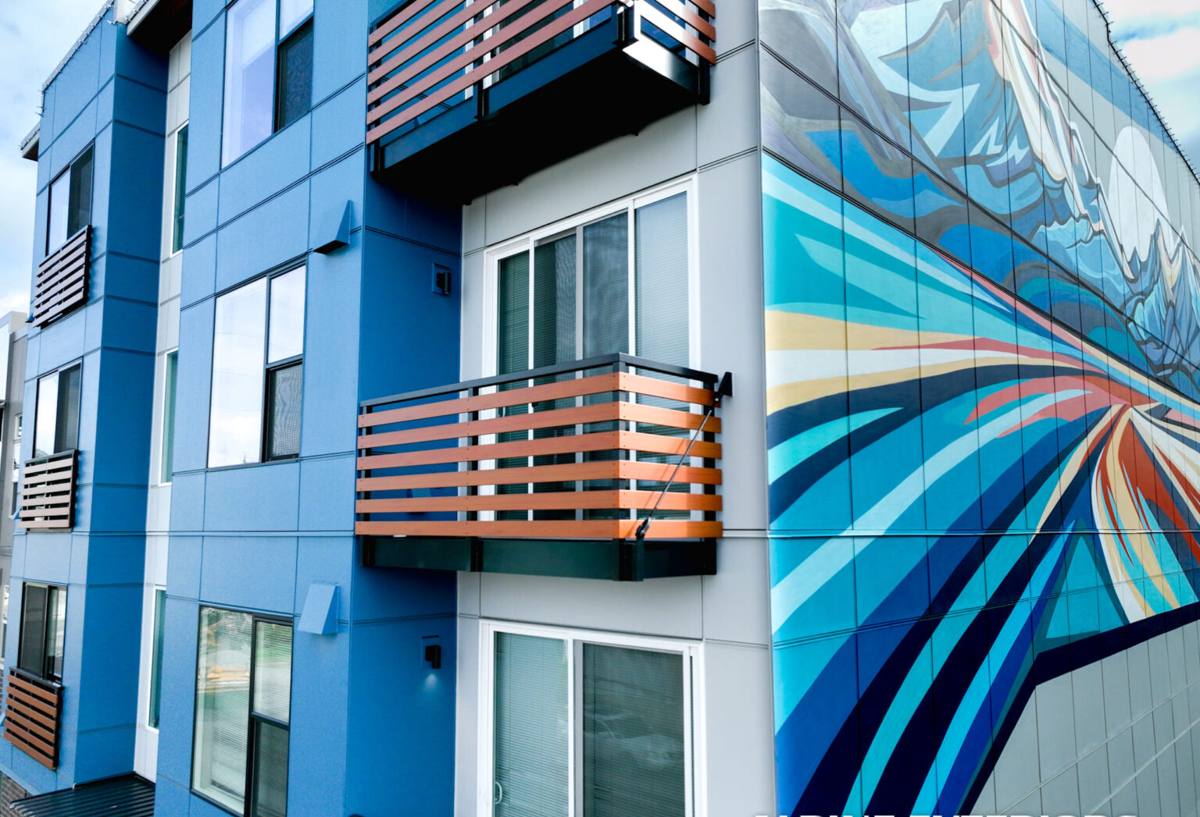
What Laurel Homes Actually Need From Their Siding
Whatcom County's climate isn't extreme in the way a hurricane zone or a desert is extreme — it's persistent. That's actually harder on a building. A house here doesn't need siding that survives one bad storm; it needs siding and installation detailing that survives thousands of gray, wet weeks without ever fully drying out between them.
Moisture Management Over Time
Driving rain finds every gap, lap, and penetration in a wall. Over a normal Pacific Northwest winter, a home's siding system gets tested far more often than in drier parts of the country. If the water-resistive barrier behind the siding isn't lapped correctly, if flashing at windows and trim isn't integrated with that barrier, or if the siding itself absorbs and holds water at the bottom edge, moisture works its way into the wall assembly. That's when you get soft trim, stained sheathing, and eventually rot — problems that show up years after a bad installation, not the day it happens.
Moss, Algae, and Constant Dampness
A long moss season means north-facing and shaded wall sections stay damp longer than sun-exposed ones. Siding materials and finishes that hold moisture at the surface — or that require a painted film to stay intact to resist water — are working against the climate instead of with it. This is one of the biggest differences between products, and it's a major reason we standardized on fiber cement with a factory-applied finish rather than field-painted wood or wood-based composite siding.
Salt Air and Metal Fasteners
Coastal-influenced air in this part of Whatcom County accelerates corrosion on lower-grade fasteners and trim metal. Installation that uses the wrong nail or screw spec, or that skips corrosion-resistant flashing at critical joints, sets up a slow failure that's invisible from the ground for years.
What a Correct Siding Installation Involves
Siding installation is often talked about like it's a finish trade — nail boards to a wall, caulk the seams, done. In this climate, that approach fails predictably. A correct installation is really a water-management system, with the visible siding as only one layer of it.
The Water-Resistive Barrier and Flashing Sequence
Before any siding goes up, the wall needs a continuous, correctly lapped water-resistive barrier. Every window, door, and penetration gets flashed and integrated into that barrier in the right order — flashing under the barrier at the top, over it at the bottom — so water is always directed outward, never trapped behind the cladding. This sequencing is where a lot of installation shortcuts happen, because it's invisible once the siding is on.
Clearances and Drainage
Siding needs a minimum clearance from the ground, from roof lines, from decks and patios, and from grade so it isn't sitting in standing water or trapped moisture. A ventilated rainscreen gap behind the siding lets any moisture that does get in dry out instead of sitting against the wall sheathing. Skipping or shrinking these clearances to save a little material is one of the most common corners cut in budget installations.
Fastening Specification
Fastener type, length, spacing, and placement all affect how siding performs over decades, not just whether it holds up on install day. Fiber cement in particular has specific fastening requirements by manufacturer that, if ignored, can void warranty coverage and lead to cracking or blow-off in wind events.
Joints, Caulking, and Trim Details
Butt joints, corner details, and trim-to-siding transitions are where most visible failures start. Correct installation minimizes exposed end grain, backs joints properly, and uses sealants and trim details rated for the exposure — not just whatever is fastest to install.
Why We Install Only James Hardie Fiber Cement
We don't install vinyl, LP SmartSide, primed spruce, cedar, or other fiber cement brands. That's a deliberate standard, not a limitation in what we're capable of installing. In a climate defined by driving rain and a long wet season, the material itself has to be able to hold up before installation quality even becomes the deciding factor.
ColorPlus Factory Finish
James Hardie's ColorPlus finish is baked on in a controlled factory environment, not applied on-site with a brush or sprayer at the mercy of weather and temperature. That matters here specifically because field-applied paint on wood-based siding has to cure and bond in exactly the kind of damp, cool conditions Whatcom County gets for much of the year — conditions that work against a good paint bond. A factory finish sidesteps that problem entirely and holds color and sheen far longer under constant damp exposure.
Non-Combustible, Moisture-Engineered Material
Fiber cement doesn't rot, and it doesn't feed moss or algae growth the way wood fiber products can. Hardie's HZ product lines are engineered for specific climate zones, including the wetter regions of the Pacific Northwest, which means the product itself — not just the paint on top of it — is built to handle sustained moisture exposure.
A Warranty That Reflects Confidence in the System
James Hardie backs its siding with a strong, transferable warranty that covers the product itself, and the ColorPlus finish carries its own separate finish warranty. That's only meaningful, though, if the installation itself is done to the manufacturer's specification — which is why we treat installation detailing as equally important as the material choice.
What Drives the Cost of a Siding Installation
Every home in Laurel is a little different, so we don't quote off square footage alone. These are the factors that actually move the price on a real project:
| Factor | Why It Affects the Job |
|---|---|
| Existing siding removal | Tear-off, disposal, and any sheathing repair found underneath add labor before new siding can start |
| Wall complexity | Dormers, multiple gables, and cut-up wall sections take more trim, flashing, and cutting time than a simple rectangular wall |
| Water-resistive barrier condition | Whether the existing barrier can be reused or needs full replacement changes both material and labor scope |
| Trim and flashing detail level | Correct flashing at every window, door, and penetration is labor-intensive but non-negotiable in this climate |
| Siding profile and accessories | Lap width, shingle-style panels, and trim board selections vary in material cost and install time |
| Site access | Steep lots, limited driveway access, or tight setbacks affect staging and scaffolding needs |
We walk every project in person before quoting so the number you get reflects your actual home, not a generic average.
Our Installation Process
- On-site evaluation of existing siding, sheathing condition, and problem areas specific to the home's exposure
- Detailed proposal covering removal, barrier and flashing scope, Hardie product line and profile, and trim details
- Removal of existing siding and inspection of sheathing, with any needed repairs addressed before new material goes on
- Installation of a continuous water-resistive barrier with correctly sequenced flashing at every penetration
- Installation of James Hardie siding to manufacturer fastening specifications, including proper clearances and drainage gaps
- Trim, caulking, and final detail work at corners, joints, and transitions
- Final walkthrough so you can see the completed work and ask questions before we consider the job done
Installation Mistakes We See When We're Called In After the Fact
A fair amount of our work in the Lynden and Laurel area is re-siding homes where a previous installation didn't hold up. The patterns repeat:
- Missing or incorrectly lapped flashing at window and door heads, letting driving rain behind the barrier
- Siding installed with little or no clearance from decks, roofs, or grade, trapping moisture at the bottom edge
- No rainscreen gap, so any moisture that gets behind the siding has nowhere to go and no way to dry out
- Fasteners driven at the wrong spacing or angle, leading to cracked boards or loosened siding in wind
- Field-applied paint on wood-based siding failing early in shaded, moss-prone wall sections
- Corroded trim fasteners and flashing in areas with more salt air exposure
Every one of these is a detailing or product decision, not a mystery. They're also the exact issues correct fiber cement installation is designed to avoid.
Why It Matters That We Already Work in This Area
A crew that regularly works Lynden and the surrounding Whatcom County communities, including Laurel, already knows how this climate treats a wall assembly over time — not just in theory, but from tearing old siding off local homes and seeing exactly where it failed. That experience shapes decisions a generic installer might not think twice about: how much clearance to leave at grade, where to add extra flashing attention, which wall orientations need the most moisture-conscious detailing. It also means we're not learning the regional weather patterns on your project. We show up knowing what this climate does to a home over ten and twenty years, not just what it looks like on install day.
What to Check Before Hiring Anyone for Siding Work
Whether you hire us or someone else, these are worth confirming before work starts:
- Are they licensed and insured, and will they show you proof without being asked twice?
- Do they install to the specific manufacturer's written installation instructions for the product you're choosing?
- Will they inspect and address sheathing condition before covering it back up, or just nail over what's there?
- Do they detail flashing and water-resistive barrier work, or treat siding as a purely cosmetic install?
- Is the warranty they're offering tied to correct installation, and do they stand behind their own labor separately from the manufacturer's product warranty?
Living With Your New Siding
Correctly installed James Hardie siding is low-maintenance, but "low" isn't "none." An occasional rinse to clear pollen, moss spores, and general grime keeps the ColorPlus finish looking its best, especially on shaded sides of the home where moss pressure is highest. Beyond that, periodic visual checks at caulked joints and trim transitions — the same spots any siding system depends on — are the main thing worth keeping an eye on. Because the finish is factory-applied, you're not signing up for a repaint cycle the way you would with field-painted wood-based siding.
If your Laurel-area home's siding is showing its age, or you're planning ahead for a replacement, we're happy to come take a look and walk you through what we'd recommend and why. The estimate is free, there's no pressure, and you'll get a straight answer about what your home actually needs.