 Lynden
 Metal Roofing in Sumas: Built for This Corner of Whatcom County
Sumas sits out at the far edge of the county, against the Canadian border in the flat, low-lying farmland of the Sumas Prairie. It's a short drive from Lynden, but the exposure a roof takes here is its own thing — open valley floor, cold wind that funnels down from the north in winter, and rain that moves through sideways as often as it falls straight down. A metal roof handles that combination better than almost anything else on the market, provided it's installed with the right details underneath the panels. This page covers what metal roofing actually needs to hold up on a Sumas home, and how we approach that job as a crew based just up the road in Lynden.
We install metal roofing on homes throughout this stretch of Whatcom County, and Sumas is a regular part of that work. The material itself is only half the equation — the other half is underlayment, fastening, and flashing detail that accounts for this specific valley's weather rather than a generic install spec written for a milder climate.
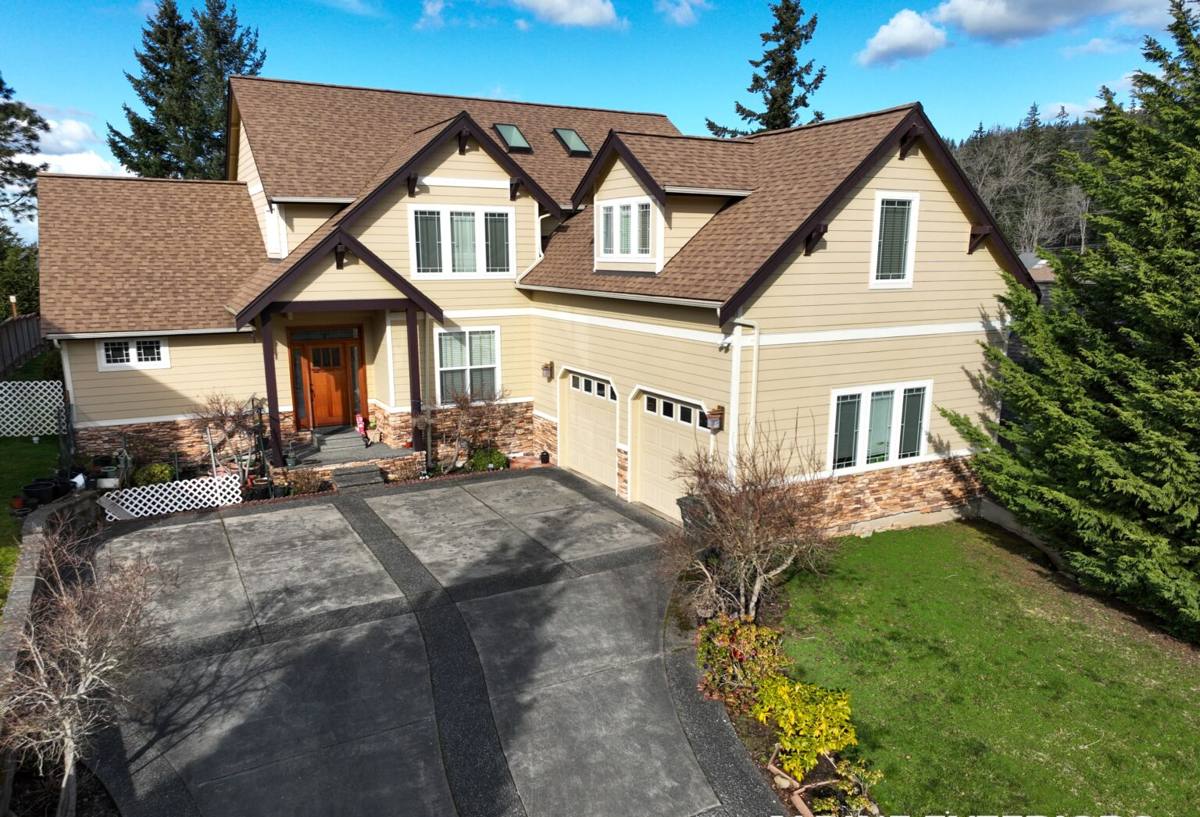
What Sumas's Climate Puts a Roof Through
Driving Rain Off the Valley Floor
Rain moving through this part of the county rarely falls straight down. It gets pushed sideways into roof valleys, around vent pipes and chimneys, and under any flashing that isn't lapped and sealed correctly. On a flat, low-lying property like most in Sumas, that water doesn't run off as fast as it would off a roof on higher, more exposed ground, so any weak point in the roof system has more time to let moisture in.
Cold Outflow Wind
Because of where Sumas sits at the head of the valley near the border, it sees cold outflow wind events in winter more often than towns closer to the water. Those events bring sharp temperature swings and real wind load, and a roof system that's marginal under ordinary Whatcom County weather can get tested hard when one of those wind events rolls through. Panel fastening and edge detail matter more here than on a calmer, more sheltered site.
Freeze-Thaw Cycling
Sumas gets more frequent hard frosts than the milder, coastal parts of the county. Water that's found its way into a seam or fastener point and then freezes expands, which turns a small leak into a bigger repair faster than it would in a purely wet-but-mild climate. Roofing details that would be fine near the water need to be tighter out here.
A Long Moss Season
Mild temperatures for most of the year, persistent valley dampness, and plenty of shaded roof area on most homes add up to a moss season that runs long in this part of the county. Moss holds water against a roofing surface instead of letting it shed and dry, and on porous materials that's exactly the condition that leads to trapped moisture and, eventually, rot in the deck underneath.
Why Metal Roofing Makes Sense for a Property Like This
Metal roofing isn't automatically the right call for every home, but for a Sumas property dealing with driving rain, wind, freeze-thaw, and a long moss season all at once, the case for it is a strong one. A smooth, non-porous metal surface sheds water fast and doesn't give moss much to hold onto the way a shingle's granulated surface does. It handles wind-driven rain and cold outflow events without the granule loss and edge lifting that asphalt shingles are prone to after enough seasons of that treatment. And because it doesn't absorb water into the material itself, freeze-thaw cycling isn't the same threat to a metal panel that it is to a porous or aging shingle.
The honest trade-off is upfront cost. A metal roof typically costs more to install than an asphalt shingle roof of the same size, and the panels themselves are less forgiving of a rushed or careless installation — a metal roof done wrong shows it faster than a shingle roof done wrong. For a homeowner planning to stay in the house long-term, or one who's tired of repeat moss and moisture problems on an aging shingle roof, that upfront cost is usually the better long-term math. For someone who wants the lowest possible install cost and doesn't mind a shorter service life, a well-installed shingle roof is still a reasonable option — we'll give you both sides rather than push toward whichever one we'd rather sell.
Choosing the Right Metal Panel for a Sumas Home
"Metal roofing" covers more than one product, and the differences matter for how the roof performs and how it looks on the house.
| Panel Type | Fastener Exposure | Typical Upfront Cost | Best Fit |
|---|---|---|---|
| Standing seam | Concealed — fasteners are hidden under raised, interlocking seams | Higher | Homeowners who want the longest service life and cleanest look, and who plan to stay long-term |
| Exposed-fastener panel | Visible screws through the panel face, gasketed to seal | Moderate | Budget-conscious metal roofing, outbuildings, or homeowners comfortable with periodic fastener checks |
| Stone-coated steel | Concealed, similar to standing seam | Higher | Homeowners who want the profile and look of shingle or shake with metal's durability underneath |
Standing seam is what we recommend most often for a full Sumas exposure — no exposed fasteners means no gasket seals to eventually wear out and no screw holes for wind-driven rain to work at over the years. Exposed-fastener panels are a legitimate, lower-cost option and we'll install them when that's the right call for the budget or the structure, but we'll always tell you what you're trading for that lower price: gaskets that need occasional inspection and a slightly shorter realistic service life.
What a Correct Metal Roof Installation Actually Involves
Underlayment
Metal panels need a synthetic or high-temp underlayment rated to sit under metal roofing specifically, not a minimum-code product meant for shingles. In a climate with this much sustained moisture, the underlayment is the roof's real backup system if anything ever gets past the panels themselves.
Fastening and Panel Layout
Panel layout, seam direction, and fastening pattern all need to account for the wind exposure Sumas actually sees, not a generic spec written for a sheltered lot. This is where cold outflow wind events either get handled correctly or become the reason a panel lifts a few winters in.
Flashing and Penetrations
Every valley, chimney, vent pipe, and roof-to-wall transition needs flashing detailed specifically for metal panels, lapped and sealed correctly rather than relying on caulk to bridge a gap. This is the single most common place a metal roof actually fails, and it's almost always an installation issue rather than a material one.
Ventilation
Attic and roof deck ventilation lets moisture escape from underneath instead of getting trapped against the deck. On a flat, low-lying property where ground moisture and valley damp already linger longer, proper ventilation is what keeps the roof deck itself from becoming the weak point even when the metal surface above it is doing its job perfectly.
Our Process, Start to Finish
- Inspection and estimate: We look at the existing roof, deck condition, ventilation, and how sun and shade fall across the different slopes before quoting anything.
- Tear-off and deck check: Old roofing comes off and we check the deck underneath for soft spots or moisture damage before any new material goes down. Covering a damaged deck just hides a problem that gets worse.
- Underlayment and flashing: This is the step that's easy to rush and impossible to inspect once the panels are up, so we treat it as the non-negotiable part of the job, not an upsell.
- Panel installation: Panels go on to manufacturer spec, with fastening and seam layout accounting for this valley's actual wind and rain exposure.
- Final walkthrough: We walk the finished roof with you, cover what maintenance (if any) it actually needs, and make sure the finished job matches what was estimated.
What Drives the Cost, and What Keeps a Metal Roof Sound
Cost Factors
| Factor | Why It Matters |
|---|---|
| Roof size and pitch | More surface area and steeper pitches take more material and labor time |
| Panel type | Standing seam costs more upfront than exposed-fastener panel for the same square footage |
| Number of penetrations and valleys | Each one needs custom flashing work, which adds labor regardless of panel type |
| Deck condition | Rot or soft spots found at tear-off need repair before new roofing goes on |
| Tear-off vs. overlay | A full tear-off costs more upfront but is usually the honest call once a deck's condition is unknown |
Keeping It Sound Through the Winters
- Clear debris and needles out of valleys and gutters before the heavy fall rain arrives
- Check flashing at chimneys, vents, and roof-to-wall transitions after any major wind event
- Watch for moss starting to establish on shaded, north-facing slopes and address it early
- Confirm gutters and downspouts are draining freely so water isn't backing up under the eaves
- Have the roof looked at after any unusually hard cold snap or windstorm, even if nothing looks obviously wrong
Why a Crew That Already Works Sumas Matters
A roofing crew that works this stretch of Whatcom County regularly, from Lynden out to the border communities like Sumas, sees how cold outflow wind, driving rain, and a long moss season actually behave on real roofs over a full year, not just how a panel performs on a spec sheet. That shows up in specific decisions: how much fastening pattern needs to change for a wind-exposed valley lot, which roof orientations hold moss longest, and which flashing details are worth the extra time on install day so you're not dealing with a callback after the next winter storm. Sumas's flat, open exposure near the border isn't identical to a more sheltered lot closer to Lynden proper, and a local crew treats that difference as part of the job instead of applying one generic approach to every roof in the county.
Get a Free, No-Pressure Estimate
If you're weighing metal roofing for a Sumas home, or want an honest read on whether your current roof still has good years left in it, we're glad to come take a look. Reach out using the form below to schedule a free estimate — no pressure, no upsell script.