 Lynden
 Siding That Has to Work in Sumas, Not Just Look Good
Sumas sits in a stretch of Whatcom County that gets more weather than people expect from a small border town. You're close enough to the coast to pick up salt-laden air on windier days, you're in a valley that holds moisture longer than the surrounding hills, and you get the same long, gray, wet stretch every fall through spring that the rest of Lynden and the Nooksack valley deal with. Siding here isn't decoration. It's the one layer standing between your framing and months of standing damp.
We install fiber cement siding — specifically James Hardie products — for homeowners in Sumas and the surrounding Lynden area. This page is about that one job, in this one place: what the local climate actually demands from a siding system, what correct installation looks like, and why the crew doing the work matters as much as the material itself.
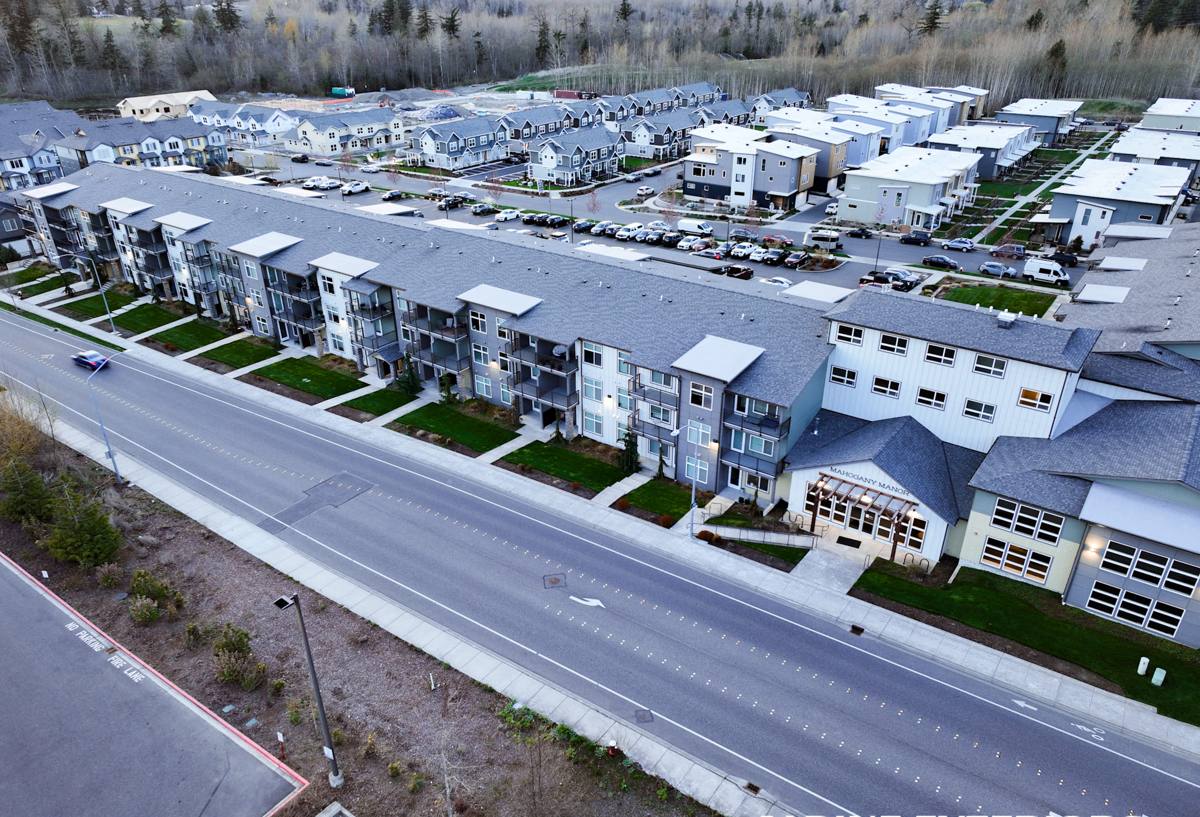
What Sumas Weather Does to a House Over Time
Salt Air and Driving Rain
Sumas doesn't get coastal salt spray the way a beach town does, but prevailing weather patterns off the Strait of Georgia and Puget Sound carry enough salt-tinged moisture inland to matter over a 20-30 year siding lifespan. Combine that with driving rain — wind-blown rain that hits walls at an angle instead of falling straight down — and you get a wall assembly that's fighting wind-driven water infiltration far more often than a house in a drier inland climate. Any siding that relies on paint film alone to keep water out, or that swells and cups when it takes on moisture, is going to lose that fight eventually.
The Long Moss Season
Whatcom County's moss season isn't really a season — it's most of the year. Shaded north and east walls, areas under overhangs, and anything near mature trees stay damp long enough for moss and algae to take hold and stay there. On wood-based siding, moss holds moisture against the surface, which accelerates rot from the back side of the board, not just the face. On siding that isn't dimensionally stable, that trapped moisture also drives swelling and paint failure.
Temperature Swings and Freeze-Thaw
Sumas gets cold snaps that dip below freezing, sometimes hard, mixed in with a lot of days hovering right around 40°F. Any moisture that's already worked its way into a siding board or its fasteners gets a freeze-thaw cycle to work with, which is how small cracks become big ones over a few winters.
Why We Only Install James Hardie Fiber Cement
We don't install vinyl, LP SmartSide, primed wood, cedar, or other fiber cement brands like Cemplank or Allura. That's a deliberate standard, not a sales pitch, and it comes directly from what we see holding up — and what we see failing — on homes in this exact climate.
- Non-combustible core: Hardie's fiber cement is cement, sand, and cellulose fiber — it doesn't burn, warp from heat, or provide fuel the way wood-based or vinyl products can.
- Dimensionally stable: It doesn't swell, cup, or expand and contract with moisture the way engineered wood siding does, which matters directly in a wet, humid valley climate like this one.
- Factory-applied ColorPlus finish: The color is baked on at the factory under controlled conditions, not brushed on in the field, and it's backed by its own finish warranty separate from the substrate warranty.
- Climate-engineered HZ5 product line: Hardie makes region-specific formulations for freeze-thaw and moisture-heavy climates — this isn't a one-size-fits-all product.
- Long, transferable product warranty: A meaningful warranty only matters if the manufacturer and the installer are both still standing behind their part of it, which is why installation quality and warranty terms have to be treated as one package, not two separate things.
Every one of those alternatives has legitimate uses somewhere. We just don't think any of them hold up as well, over as many years, in a Whatcom County valley climate with this much moisture exposure — so we don't put our name behind installing them.
What a Correct Fiber Cement Job Involves
Fiber cement siding is only as good as the wall assembly underneath it. Most of the failures we get called out to inspect on other contractors' work aren't the siding material's fault — they're installation shortcuts. A correct job includes:
Water-Resistive Barrier and Flashing First
A properly lapped weather-resistive barrier, correctly integrated window and door flashing, and kick-out flashing at roof-to-wall intersections — all installed before a single piece of siding goes up. This is the layer that actually keeps driving rain out; the siding is the second line of defense, not the only one.
Proper Clearances
Hardie specifies minimum clearances from grade, roofing, and decks — typically 6 inches from grade and 1-2 inches from roof and deck surfaces, depending on the detail. Skipping these clearances is one of the most common ways we see moisture wick into the bottom of a wall system.
Fastening to Spec
Correct nail placement, spacing, and penetration into framing or proper blocking — not just "close enough." Fastener mistakes don't show up as failures in year one; they show up as cracked boards and water intrusion five to ten years out.
Caulking and Joint Treatment
Butt joints, trim intersections, and penetrations need to be sealed correctly, with the right product, not just caulked over as an afterthought at the end of the job.
Ventilation Behind the Cladding
A rainscreen gap or proper drainage plane behind the siding lets any incidental moisture that does get past the surface actually dry out, instead of sitting against the sheathing — especially important on shaded, moss-prone walls.
How Our Process Works for a Sumas Home
| Step | What Happens |
|---|---|
| 1. On-site assessment | We walk the exterior, check current siding condition, sheathing and trim, and flag any moisture damage or rot before quoting anything. |
| 2. Scope and product selection | We recommend the specific Hardie product line and profile for your home, factoring in sun/shade exposure and wall orientation. |
| 3. Tear-off and inspection | Old siding comes off, sheathing is inspected, and any rot or damage is repaired before the new weather barrier goes on. |
| 4. Weather barrier and flashing | Correct lapping and flashing detail at every window, door, and penetration. |
| 5. Installation to Hardie spec | Proper clearances, fastening, and joint treatment throughout. |
| 6. Final walkthrough | We review the finished job with you on-site before calling it done. |
Cost Factors for Sumas Homeowners
We don't quote prices sight unseen, but the factors that move a fiber cement job up or down in cost are consistent from house to house:
| Factor | Why It Matters |
|---|---|
| Extent of existing damage | Rotted sheathing or framing found during tear-off adds repair scope that can't be known until the old siding is off. |
| Home size and wall complexity | More corners, dormers, and trim details mean more cutting, fitting, and labor time. |
| Product line and profile | Lap siding, board-and-batten, and shingle-style profiles all price differently. |
| Trim and accessory scope | Full trim, fascia, and soffit replacement alongside siding changes the total project cost. |
| Site access | Multi-story sections, tight lot lines, or landscaping obstacles affect labor time. |
Signs a Sumas Home Needs Siding Attention
- Persistent moss or algae staining that keeps coming back after cleaning
- Soft spots, bubbling, or visible swelling in siding boards, especially near the bottom of walls
- Paint that's peeling or alligatoring faster than a normal repaint cycle would suggest
- Visible gaps at butt joints, trim, or window flashing
- Cracked or warped boards, particularly on south- and west-facing walls that take the most sun and rain exposure
- Rising energy bills that may point to a compromised weather barrier letting in drafts
Why Hiring a Crew That Already Works in Sumas Matters
Fiber cement installation isn't forgiving of guesswork — the manufacturer's install specs exist because the failures that happen without them are slow and expensive to fix. A crew that already works this part of Whatcom County knows which walls in this valley take the worst of the driving rain, how much moss pressure to expect on shaded elevations, and where clearance and flashing details get skipped on cut-rate jobs. That's the difference between siding that looks right for one photo and siding that's still doing its job in twenty years.
If you're in Sumas or elsewhere around Lynden and want a straight answer on what your home's siding actually needs, we're happy to take a look. Reach out for a free, no-pressure estimate using the form below.