 Lynden
 Board & Batten Siding Built for Sumas' Wet, Mossy Climate
Sumas sits at the edge of the Nooksack lowlands in Whatcom County, right up against the marine air that rolls in off the Pacific and the Strait of Georgia. That combination means homes here deal with driving, wind-blown rain for months at a time, humidity that never fully lets up, and a moss and algae season that can run from fall through spring. Any siding installed on a Sumas home has to shed water fast, resist trapping moisture behind the surface, and hold up to the kind of grime and organic growth that thrives in this kind of damp, low-lying air. Board and batten siding done right can do all of that. Board and batten done wrong — with the wrong flashing details, the wrong fastening pattern, or the wrong material underneath a good-looking finish — turns into a moisture trap that rots from the inside before anyone notices a problem on the surface.
This page is specifically about board and batten siding for Sumas properties, not a general overview of the style. What follows is what we've learned installing exterior products in this part of Whatcom County: what the climate actually demands, what a correct board and batten installation looks like, and why we only do this work in James Hardie fiber cement.
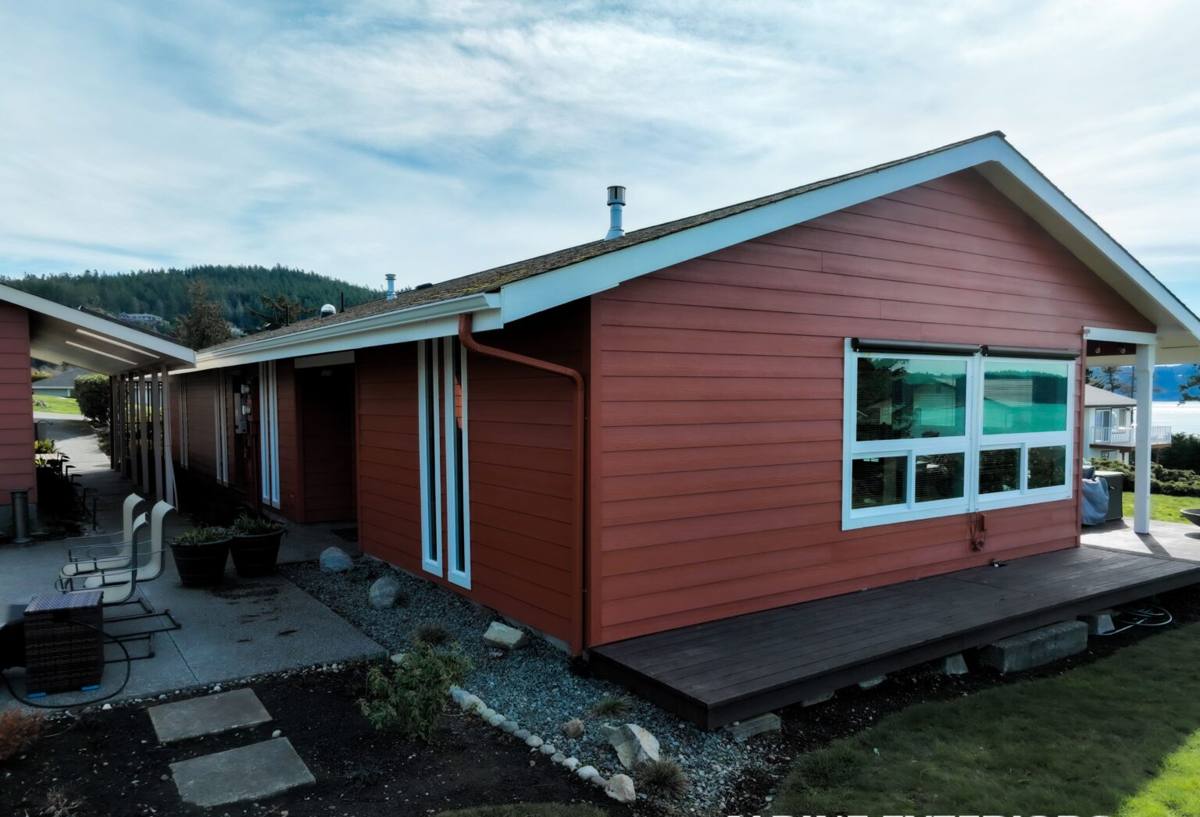
Why So Many Sumas Homeowners Choose Board & Batten
Board and batten has a clean, vertical look that reads as farmhouse, craftsman, or modern depending on the trim and color choices around it. It's a popular pick for full exteriors, gable accents, and porch or entry features on homes throughout Lynden and Sumas. Beyond the look, the vertical lines actually work in this climate's favor when the material and installation are correct: vertical panel joints, when properly flashed and battened, give water fewer horizontal ledges to sit on compared to some lap profiles, and a well-detailed board and batten wall sheds driving rain efficiently.
The appeal breaks down into a few consistent reasons homeowners bring up:
- A distinct, higher-end appearance compared to standard horizontal lap siding
- Strong curb appeal for farmhouse, modern, and craftsman-style remodels
- Works well as a full-house siding or as an accent on gables, dormers, and entries
- Vertical lines can visually add height to single-story homes
None of that matters if the underlying installation can't handle Whatcom County's wet season. The style is only as good as the water management behind it.
The James Hardie System We Install
We install James Hardie exclusively, and for board and batten that means HardiePanel vertical siding combined with HardieTrim boards used as the battens. This isn't the same as a thin board-and-batten look achieved with vinyl panels or a stick-built assembly of individual boards over building paper. It's an engineered fiber cement system designed specifically to be installed as a panel-and-batten wall assembly, with manufacturer-specified spacing, fastening, and flashing requirements behind it.
Panel and Batten Spacing
HardiePanel comes in 4-foot-wide sheets that get installed vertically, with HardieTrim battens fastened over the panel joints and at regular intervals across the field of the wall to create the board and batten rhythm. Batten spacing is a design decision — narrower spacing reads more traditional and farmhouse, wider spacing looks more modern — but the panel joints underneath still have to be flashed and lapped correctly regardless of how the battens are laid out on top.
Color and Finish
We install HardiePanel and HardieTrim with James Hardie's factory-applied ColorPlus finish, which is baked on at the factory rather than field-painted. That matters in a climate like this one: a factory finish resists the fading, chalking, and peeling that field-applied paint is more prone to under constant damp and UV cycling, and it comes backed by its own finish warranty separate from the substrate warranty on the panel itself.
What Correct Board & Batten Installation Actually Involves
Board and batten looks simple from the outside — vertical boards, battens over the seams — which is exactly why it gets installed poorly more often than most siding styles. The system depends on details that are invisible once the wall is finished.
Flashing and Moisture Management
Every horizontal panel joint needs proper flashing or a correctly lapped and sealed joint per the manufacturer's installation instructions. Panels need a water-resistive barrier behind them, correct clearance off the roofline, deck, and grade, and proper treatment at every penetration — hose bibs, light fixtures, dryer vents. In a climate with as much sustained rain as Sumas sees, any shortcut at these details eventually shows up as a moisture problem, even though board and batten's vertical lines are naturally good at shedding water when everything behind the surface is done to spec.
Fastening and Batten Attachment
Battens have to be fastened into structural framing or blocking, not just into the panel itself, and fastener spacing has to follow James Hardie's published requirements for the specific product and exposure. Undersized or incorrectly spaced fasteners are one of the most common causes of battens working loose or panels developing stress cracks over a few winters of wind and moisture cycling.
Caulking and Sealant Joints
Board and batten has more vertical seams and trim intersections than a typical lap siding job, which means more sealant joints that have to be done right — the correct sealant type, correctly tooled, at the correct joints (and not used as a substitute for flashing where flashing is actually required).
Mistakes We See on Poorly Installed Board & Batten
Because board and batten hides its structure so well, a bad installation can look fine for a year or two before problems surface. The issues we're called in to fix most often on Whatcom County homes include:
| Installation Error | Why It's a Problem in This Climate |
|---|---|
| Battens face-nailed with no blocking behind them | Loosen and work free under repeated wind-driven rain and freeze-thaw cycling |
| Missing or undersized flashing at horizontal joints | Driving rain gets pushed behind the panel instead of running off the face |
| Panels installed tight to grade, roofing, or decking | Wicks standing moisture into the panel base, accelerating deterioration and moss growth |
| Sealant used in place of proper flashing | Sealant degrades over years of UV and moisture exposure; flashing doesn't |
| Incorrect fastener spacing or type | Panels and battens crack or pull loose under wind load |
Every one of these is a workmanship issue, not a material issue — which is exactly why we care as much about who's on the ladder as which product goes on the wall.
Our Process for Sumas Board & Batten Projects
We run the same disciplined process on every board and batten job, adjusted for the specific home:
- On-site assessment — we look at the existing wall assembly, moisture barrier condition, framing, and any problem areas before quoting anything
- Design and layout — batten spacing, color selection, and trim details worked out with the homeowner before install begins
- Tear-off and prep — removal of failing siding, inspection of sheathing for hidden rot or moisture damage, repair before anything new goes up
- Weather barrier and flashing — correct house wrap, flashing, and penetration detailing installed to manufacturer spec, not shortcuts
- HardiePanel and HardieTrim installation — panels and battens installed per James Hardie's fastening and spacing requirements for our exposure
- Final detailing and cleanup — caulking, touch-up, site cleanup, and a walkthrough with the homeowner
We don't skip steps to hit a faster timeline, and we don't quote a job without seeing the wall first — too much of what makes board and batten last is hidden behind the panel, and we'd rather find problems before we start than after.
Cost Factors for Board & Batten Siding in Sumas
Every home is different, so we don't publish flat per-square-foot pricing, but these are the factors that actually move the number on a Sumas board and batten project:
| Factor | Why It Affects Cost |
|---|---|
| Wall condition underneath existing siding | Rotted sheathing or hidden moisture damage found during tear-off adds repair scope |
| Batten spacing and trim complexity | Tighter batten spacing and more trim detail means more material and labor |
| Full-house vs. accent application | Gable or entry accents cost far less than a full board and batten exterior |
| Home height and accessibility | Multi-story walls and tight access require more scaffolding and labor time |
| Color and finish selection | ColorPlus factory finishes vary in price by color line |
The only way to get an accurate number is a walk of the actual home — anyone quoting board and batten siding sight-unseen is guessing.
Why a Local Sumas and Lynden Crew Matters
Board and batten siding is unforgiving of shortcuts, and Whatcom County's climate is unforgiving of siding that wasn't installed with local weather in mind. A crew that already works in Sumas and greater Lynden knows how much rain exposure a given wall orientation actually sees through the winter, how permitting and inspection works with Whatcom County and local jurisdictions, and what moisture problems tend to show up on homes in this specific stretch of lowland climate. That local track record matters more on board and batten than on almost any other siding style, because so much of what makes the job succeed or fail is buried behind the finish where a homeowner can't see it until years later. Hiring a crew with no history installing in this specific climate means hoping their experience from a drier region translates — and with board and batten, it often doesn't.
Maintenance Checklist for Board & Batten in This Climate
James Hardie board and batten is low-maintenance compared to wood alternatives, but "low-maintenance" isn't "no-maintenance" in a climate that grows moss on everything. A simple annual routine keeps it performing for decades:
- Rinse the exterior annually to remove pollen, moss spores, and general grime buildup before they take hold
- Inspect caulked joints around windows, trim, and penetrations each year and re-caulk any that have cracked or pulled away
- Keep gutters clear so overflow doesn't run down the wall face and concentrate moisture at panel joints
- Trim back vegetation and landscaping that holds moisture against the siding or blocks sun and airflow
- Watch for any soft spots, staining, or battens that have started to loosen, and address them early rather than waiting
If you're weighing board and batten for a home in Sumas, we're happy to walk the property, look at what you're working with, and give you a straight answer on what it would take — no pressure, no obligation. Fill out the form below for a free estimate.