 Lynden
 Ferndale's Coastal Weather Is Harder on Roofs Than Most Homeowners Realize
Ferndale sits close enough to Bellingham Bay and the Strait of Georgia that salt-laden air is a normal part of the local climate, not an occasional nuisance. Combine that with the wind gusts that come off the water during winter storms, the driving rain that Whatcom County sees for months at a stretch, and a moss season that can run from fall through spring, and you get a roofing environment that punishes shortcuts. A repair that would hold up fine in a drier, calmer part of the state can fail here within a season or two if it isn't built for these conditions.
We're based in Lynden and have worked roofs throughout the surrounding area, including Ferndale, for years. That matters for storm repair specifically, because the damage patterns we see out here — wind-lifted shingle edges, flashing worked loose by repeated freeze-thaw and moisture cycling, moss wedging under shingle tabs and holding water against the deck — are consistent enough that we know what to check first and what usually gets missed.
What Actually Counts as Storm Damage
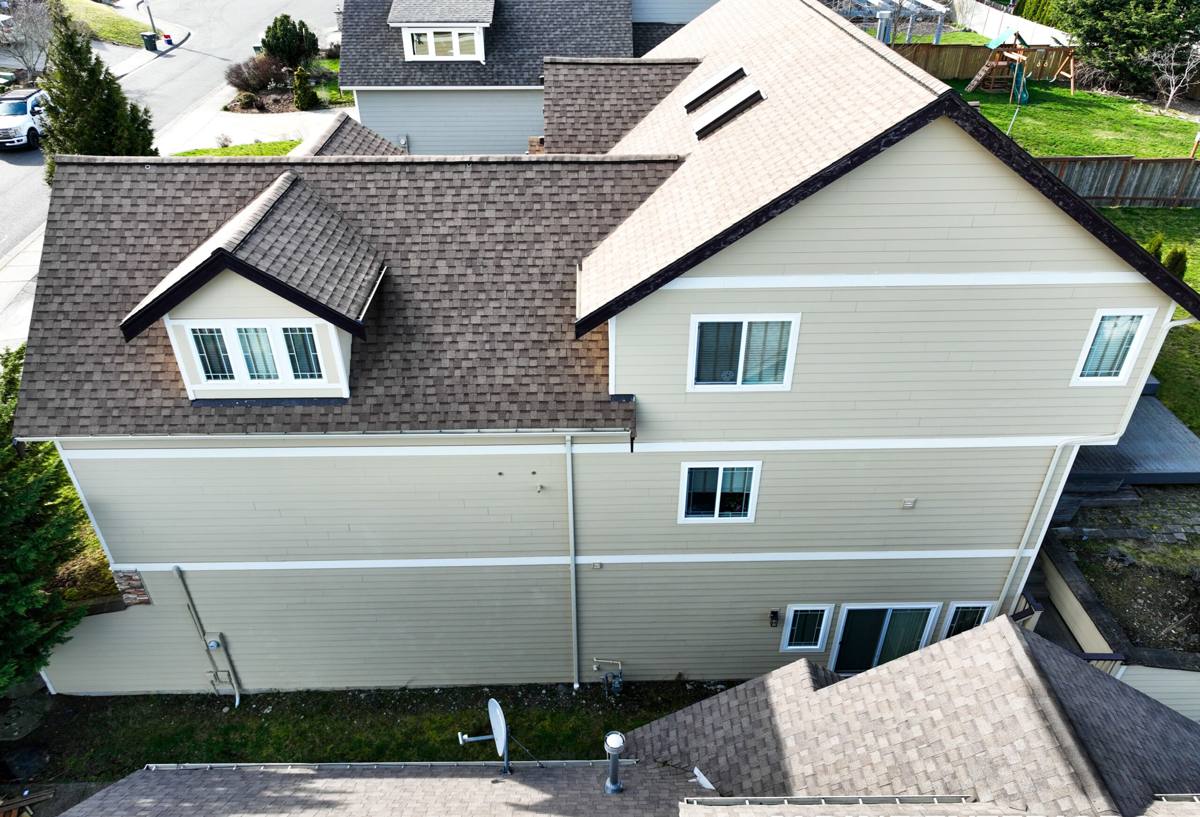
"Storm damage" covers more than a tree limb through the roof. After a wind event or a hard rain system moves through Whatcom County, the damage we're usually asked to look at falls into a handful of categories:
- Shingles lifted, cracked, or torn loose by wind gusts, especially along ridges, edges, and rake lines where wind pressure concentrates
- Flashing pulled away or bent at chimneys, skylights, and roof-to-wall transitions
- Granule loss from wind-driven rain and debris, which thins a shingle's protective surface even when the shingle itself is still in place
- Valley damage, where concentrated water flow during heavy rain finds any weak seam
- Fascia, gutter, and soffit damage from wind or falling debris that lets water behind the roofline instead of off of it
- Localized deck or sheathing softness where water has been getting in for a while, sometimes from a storm that happened months earlier
Signs You Can Check From the Ground
You don't need to get on a ladder after a storm to get a first read on your roof. Walk the perimeter of the house and look for shingle pieces or granules in the gutters and on the ground, gutters pulling away from the fascia, visible gaps or lifted edges along the roofline, and any daylight or staining around chimney and vent flashing. Inside, check the attic or top-floor ceilings for new water stains, especially after a storm with sustained wind.
Damage That Hides Until It's Inspected
The damage that costs homeowners the most is usually the kind that isn't visible from the yard. Wind can lift a shingle just enough to break its seal without tearing it off, which leaves the roof looking intact while water works its way underneath during the next rain. Flashing can be bent just enough to open a gap without falling off entirely. And moss that's been building for a season can hold moisture against shingles and decking long after the storm that first loosened them has passed. This is why a physical inspection after any significant wind or rain event is worth doing, even if the roof looks fine from below.
Why Salt Air and Moss Change How the Repair Should Be Done
Storm damage repair in Ferndale isn't just about replacing what broke — it's about repairing it in a way that accounts for what's going to keep attacking that spot afterward. Two things matter most here:
Salt air accelerates corrosion. Fasteners, flashing, and any exposed metal on a roof degrade faster near the water than they would inland. A repair that uses standard-grade materials might hold, but it won't hold as long. We use corrosion-resistant fasteners and flashing on repairs in this area as a matter of standard practice, not an upsell.
Moss doesn't wait for a dry spell to stop growing. In a lot of Washington climates, roofs get a real dry-out period each summer that slows moss and lets a roof reset. Whatcom County's marine layer and rainfall pattern mean moss pressure here is more persistent. A storm repair that patches the immediate damage but leaves moss-favorable debris, overhanging branches, or poor drainage in place is a repair that's likely to need attention again sooner than it should.
Our Storm Damage Repair Process
- Inspection. We walk the roof (not just look at it from the ground) and check attic space where accessible, documenting what's storm-related versus pre-existing wear so you have an honest picture of both.
- Written scope and estimate. You get a clear explanation of what needs to be repaired, what's optional, and roughly what it will cost before any work starts.
- Temporary protection if needed. If there's active leaking or exposed decking, we get it covered and weather-tight first, especially if more rain is in the forecast.
- Repair. Matching shingles, resealing or replacing flashing, addressing any soft decking, and correcting the underlying cause of the damage where there is one — not just patching the visible hole.
- Cleanup and check. Debris and old material hauled off, gutters and downspouts checked to confirm water is actually leaving the roof the way it's supposed to.
Repair vs. Replace: What Actually Drives the Decision
Not every storm-damaged roof needs full replacement, and not every roof that "just needs a patch" should stop there. The honest answer depends on a few factors:
| Factor | Leans Toward Repair | Leans Toward Replacement |
|---|---|---|
| Age of roof | Under roughly 12-15 years, materials still flexible | Near or past expected service life for the material |
| Extent of damage | Isolated to one section, slope, or flashing point | Spread across multiple slopes or recurring in the same areas |
| Decking condition | Solid, dry sheathing under the damaged area | Soft, delaminated, or water-stained decking found during inspection |
| Moss/algae history | Manageable with cleaning and minor repair | Long-term moss growth has degraded shingles broadly, not just where the storm hit |
| Shingle matching | Discontinued or badly faded shingles make patch repairs visibly obvious, but that's a cosmetic tradeoff, not a structural one | Same, if blending matters enough to you to justify a larger scope |
We'll tell you honestly which category your roof falls into rather than defaulting to the larger job.
Materials That Hold Up in This Climate
For storm repairs in Ferndale and the surrounding area, we favor materials and details that are built for sustained moisture exposure rather than just meeting minimum code:
- Corrosion-resistant flashing and fasteners, given the salt air off the bay
- Ice-and-water shield or equivalent self-adhered membrane at valleys, eaves, and flashing points, which matters more here than in drier parts of the state because of how long roofs stay wet
- Properly lapped underlayment sized for the region's rainfall volume, not the statewide minimum
- Zinc or copper strips considered at ridge lines on roofs with heavy moss history, as a preventive measure alongside the repair itself, when it fits the homeowner's goals and budget
We're not going to talk you into a premium material for its own sake. Where a standard-grade component is genuinely adequate for the repair, we'll say so. Where the local climate makes the upgrade worth the modest added cost, we'll explain why in plain terms — maintenance burden, how it handles standing moisture, and what the warranty structure actually covers — so you can make an informed call.
Insurance and Storm Claims: What to Know Going In
Many storm repairs are at least partially covered by homeowners insurance, but coverage depends entirely on your specific policy, so we're not going to make promises about what your carrier will or won't pay. What we can do is provide a clear, itemized inspection report and estimate that you can submit with a claim, and point out which damage appears storm-related versus which appears to be pre-existing wear, since adjusters look at that distinction closely. If you're not sure whether damage is worth filing a claim over, we're happy to do the inspection first so you have real information before you call your insurer.
Why a Lynden-Based Crew Matters for a Ferndale Roof
Storm damage repair rewards local knowledge. A crew that works Whatcom County regularly knows how wind typically moves through this part of the county during a storm, which roof orientations tend to take the worst of it, and how fast moss re-establishes itself on a shady, moisture-prone roof versus a sun-exposed one. That's the kind of judgment that comes from doing this work in this specific climate repeatedly, not from a general roofing checklist. We're also close enough to Ferndale to respond quickly after a storm, which matters when a compromised roof is exposed to the next weather system while you wait.
After a Storm: A Quick Homeowner Checklist
- Walk the perimeter and check gutters and the ground for shingle pieces or heavy granule buildup
- Check attic space or top-floor ceilings for new stains or damp spots
- Photograph any visible damage from the ground for your records, before cleanup
- Avoid getting on the roof yourself, especially on wet or moss-covered surfaces
- Cover any obviously exposed area temporarily with a tarp only if it's safely reachable — otherwise wait for an inspection
- Call for an inspection sooner rather than later; a small leak left through a few more rain events tends to become a bigger repair
If your roof took a hit in a recent storm — or you just want an honest read on how it's holding up against Ferndale's salt air, rain, and moss — we're glad to come take a look. Fill out the form below for a free, no-pressure estimate.