 Lynden
 Siding Replacement Built for Acme's Climate, Not a Generic Job
Acme sits in the rural stretch east of Lynden, where the Nooksack River drainage runs up toward the Mt. Baker foothills. It's a different pocket of Whatcom County than the flatter farmland closer to town — more tree cover, more shade, more standing moisture in the air for longer stretches of the year. Homes out here take a different kind of beating than a house in the middle of Lynden proper, and siding replacement has to account for that, not just swap old boards for new ones in the same pattern.
Whatcom County as a whole deals with driving rain off the Pacific weather systems, a marine-influenced dampness that reaches well inland, and a moss season that can run from fall through spring. Add in the tree canopy common around Acme properties, and you get siding that stays wet longer after every storm, gets less direct sun to dry out, and grows moss and algae faster than siding on an open lot. A correct siding replacement job in this area starts by planning for that reality, not just matching the old look.
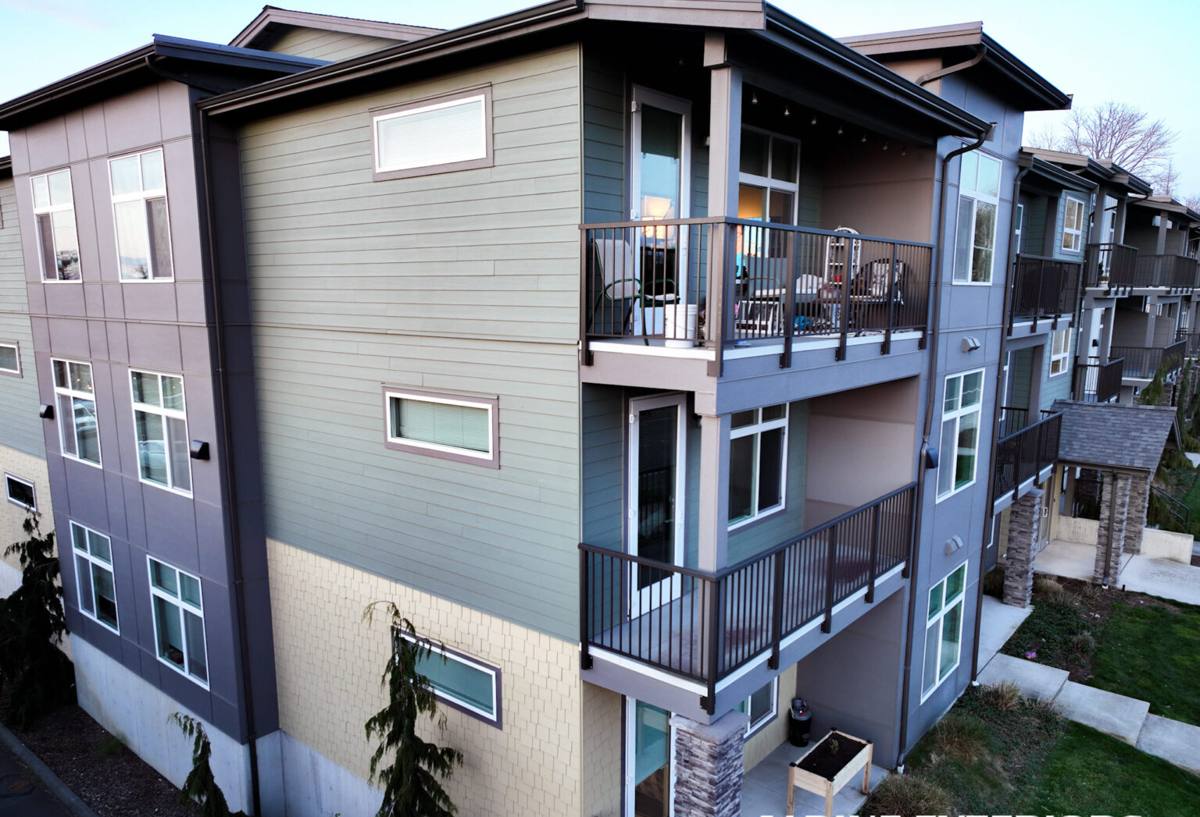
What Actually Wears Out Siding Around Acme
Before we talk about replacement, it's worth being clear about what's actually damaging the siding in the first place. It's rarely one dramatic event — it's cumulative moisture exposure that most product types weren't built to handle long-term.
- Prolonged dampness: shaded lots and tree cover mean siding dries slower after rain, which shortens the life of moisture-sensitive materials.
- Moss and algae growth: constant low-level moisture plus shade is exactly the environment moss thrives in, and it holds water against the siding surface even longer once established.
- Wind-driven rain: storms push water sideways into laps, seams, and trim joints, which is where poor original installation shows up first as rot.
- Freeze-thaw cycling: Whatcom County gets enough cold snaps that trapped moisture in siding or sheathing can freeze, expand, and accelerate cracking or delamination.
- UV and salt-influenced air: even away from the immediate coastline, marine air moving inland carries some salt content that contributes to fastener corrosion and finish breakdown over decades.
None of this means Acme is an unusually harsh place to build — it means the margin for error in material choice and installation quality is smaller than it looks on a dry summer day when the crew is measuring for the job.
What a Correct Siding Replacement Job Involves
Siding replacement is not cosmetic work. Done right, it's a full inspection and rebuild of the wall's moisture-management system, with new siding as the visible last step. Skipping any of the underlying steps is how a house ends up needing the same repair again in half the time.
Tear-Off and Inspection
Old siding comes off in sections so the sheathing underneath can be inspected as we go, not just at the end. This is where hidden problems from the original build or a prior siding job usually surface — soft sheathing, missing or failed flashing, and water staining that tells us where past leaks were happening.
Sheathing and Framing Repair
Any rotted or compromised sheathing gets cut out and replaced before anything new goes up. Covering damaged sheathing with fresh siding just hides a problem that keeps getting worse behind the wall.
Weather-Resistive Barrier
A new drainage plane and weather-resistive barrier go on correctly lapped, shingle-style, so any water that gets past the siding has a clear path down and out rather than into the wall cavity. This is one of the most commonly rushed steps in low-bid siding jobs, and it's the one that matters most in a wet climate.
Flashing at Every Penetration
Windows, doors, hose bibs, vents, and any other wall penetration get proper flashing integrated with the weather barrier — not just caulked over. Caulk fails; flashing that's built into the water management system doesn't rely on a bead of sealant staying intact for twenty years.
Siding Installation to Manufacturer Spec
Fastener type, spacing, clearance from grade, and gapping at butt joints all follow the manufacturer's installation instructions exactly — not a generalized "how we've always done it" approach. Fiber cement in particular has specific requirements around fastener penetration and joint treatment that affect long-term performance.
Why We Install Only James Hardie Fiber Cement
We standardized on James Hardie siding for every job we do, including in Acme, and we don't install vinyl, LP SmartSide, Cemplank, Allura, primed spruce, or cedar. That's not a marketing position — it's a decision based on what holds up in this specific climate.
Vinyl is affordable and low-maintenance in mild conditions, but it can warp under heat and stress, and its seams and channels give moss and algae plenty of texture to grip in a shaded, damp environment. Engineered wood products like LP SmartSide perform well when installation and maintenance stay on schedule, but any lapse in caulking or coating upkeep opens the door to moisture intake at the wood-strand core faster than most homeowners expect. Cedar and primed spruce are genuinely beautiful and can look great for years, but they need real ongoing maintenance — refinishing, sealing, moss treatment — to hold up in a climate this wet, and that maintenance burden only grows the longer a house sits under trees.
James Hardie fiber cement is non-combustible, dimensionally stable in wet-dry cycling, and factory-finished with ColorPlus technology so the color coat isn't relying on field-applied paint to resist moisture and UV. Hardie's HZ5 product line is engineered specifically for climates with more moisture exposure, which describes Acme and the rest of Whatcom County well. It costs more up front than vinyl and holds its own against engineered wood, but the combination of moisture resistance, fire resistance, and a strong transferable warranty is why it's the only product we put our name behind.
Quick Comparison: Common Siding Materials in a Wet, Shaded Climate
| Material | Moisture Behavior | Maintenance Load | Fire Resistance |
|---|---|---|---|
| James Hardie Fiber Cement | Dimensionally stable, factory-sealed finish | Low — occasional wash | Non-combustible |
| Vinyl | Can warp with heat/cold cycling; seams trap moisture | Low, but limited repair options | Melts/combusts under heat |
| LP SmartSide (engineered wood) | Wood-strand core vulnerable if coating fails | Moderate — coating upkeep required | Combustible |
| Cedar / Primed Spruce | Absorbs moisture without regular sealing | High — refinishing, moss treatment | Combustible |
Our Process for an Acme Siding Replacement
Every job starts with an honest look at the house, not a sales pitch. Here's what that looks like in practice:
- On-site inspection of existing siding, trim, and any visible moisture damage or moss buildup.
- Written estimate that separates material, labor, and any sheathing or framing repair as a distinct line item — no vague lump sums.
- Tear-off in manageable sections so the wall stays protected from weather during the job, especially important given how quickly a storm can roll in.
- Sheathing repair and new weather-resistive barrier installation, inspected before any siding goes back on.
- James Hardie installation to manufacturer spec, including fastening, clearances, and joint treatment.
- Final walkthrough covering warranty paperwork and basic care going forward.
Signs an Acme Home Needs Siding Replacement Now
Not every siding problem needs full replacement, but these are the signs that repair alone probably won't solve the underlying issue:
- Soft or spongy spots when you press on the siding, especially near the bottom courses or under windows.
- Persistent moss or dark streaking that comes back within weeks of cleaning.
- Visible gaps, cracking, or warping at butt joints and corners.
- Peeling or bubbling paint on wood siding that keeps recurring in the same spots.
- Interior signs like water stains on ceilings or walls near exterior corners.
- Siding that's original to a home more than 25-30 years old, regardless of visible damage.
What Affects the Cost of Siding Replacement
Every house is different, so we won't quote a number here we can't stand behind — but these are the real factors that move a bid up or down, and they're worth asking about when you're comparing estimates.
| Factor | Why It Matters |
|---|---|
| Amount of sheathing repair needed | Rot found during tear-off is unpredictable until the old siding is off |
| Home size and wall complexity | More corners, dormers, and trim detail means more labor and cut waste |
| Siding profile chosen | Lap width, shingle style, and trim detail affect material and labor cost |
| Access and site conditions | Trees, slopes, and tight setbacks (common on rural Acme lots) affect staging and scaffolding time |
| Existing moss/moisture damage | Heavier remediation on a shaded, damp lot adds time before new siding can go up |
Why Hiring a Crew That Already Works Acme Matters
A crew that's already worked rural properties around Acme knows the practical realities that don't show up on a spec sheet — how much longer a shaded north wall stays damp after a storm, how tree cover changes where moss establishes first, and how driveway and lot access on a rural property affects staging material and equipment. That's not a reason to skip vetting a contractor, but it does mean fewer surprises during the job and a better read on what a given wall actually needs versus what a generic bid assumes.
It also means straight answers about maintenance expectations specific to this kind of setting — how often a shaded exterior might need washing, what moss growth actually means for the wall behind it, and when a repair is enough versus when replacement is the honest recommendation.
Get a Straight Answer About Your Siding
If you're dealing with moss buildup, soft spots, or siding that's simply reached the end of its service life on an Acme property, we're happy to take a look and give you a clear, no-pressure assessment of what it actually needs. Use the form below to request a free estimate — there's no obligation, and we'll tell you honestly if replacement is warranted or if a repair will hold you for now.