 Lynden
 Deming sits in the Nooksack River valley at the foot of the Mount Baker foothills, under some of the heaviest tree cover in Whatcom County. That setting is beautiful, but it's rough on a roof. Firs and cedars keep large sections of a roof shaded most of the day, rain systems moving off the Salish Sea dump steady, driving moisture through the valley, and needles and debris collect in every valley and gutter. A roof repair here isn't the same job as one on an open, sunny lot — it has to account for shade, moss, and constant dampness working on the roof year-round.
Roof Repair Built for Deming's Wet, Wooded Climate
Most roof damage we find in Deming didn't happen in a single storm. It built up slowly, from months of shade and standing moisture wearing down shingles, flashing, and fasteners faster than they would on a roof that gets full sun and dries out between rains. Whatcom County's broader marine-influenced climate — long wet seasons, wind-driven rain off the water, and mild but persistent humidity — reaches well up the valley, and Deming's tree canopy locks that moisture against the roof surface instead of letting it evaporate off. The result is a roof that can look fine from the ground while quietly losing granules, softening decking, or growing moss under a layer of needles.
A repair that ignores that reality — a quick patch or a tube of caulk over a visible leak — usually fails again within a season or two. A repair that accounts for it lasts.
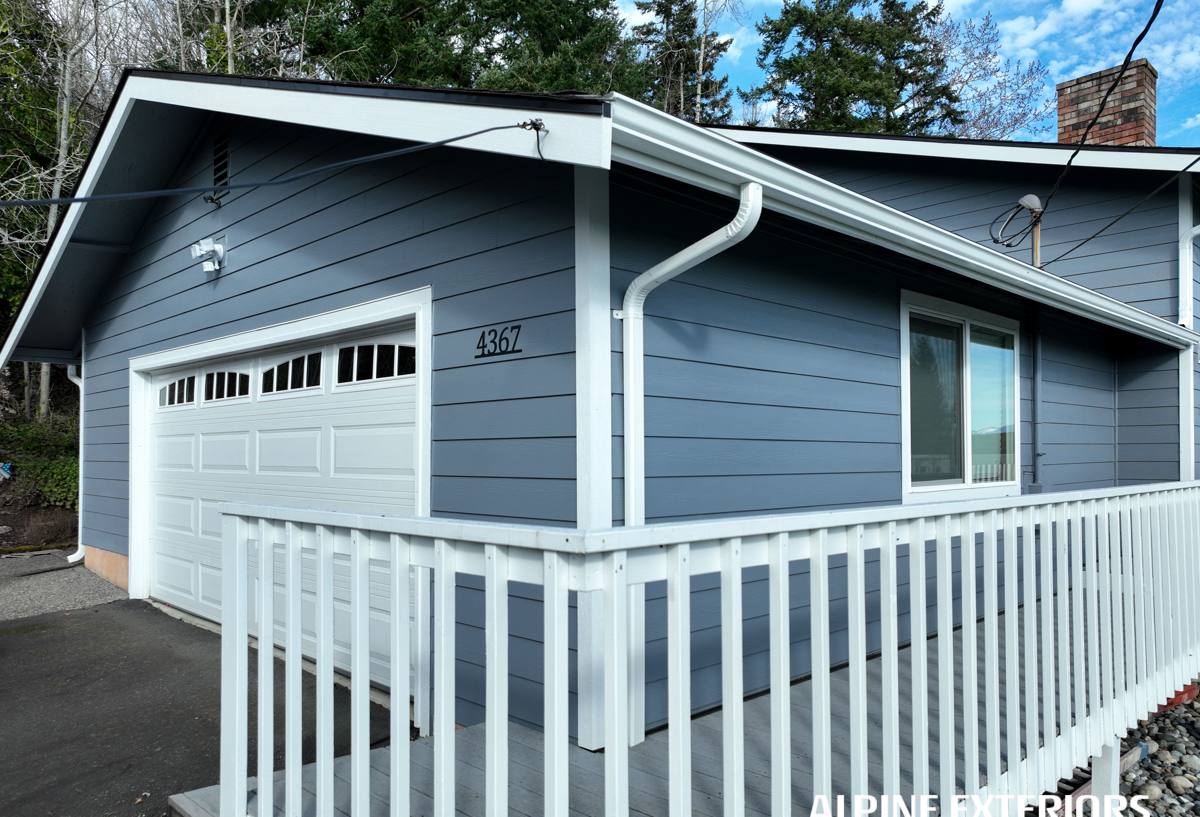
Common Roof Problems We Find on Deming Homes
Moss and Organic Growth
Shaded, north-facing slopes and anything under a tree canopy stay damp longer than the rest of the roof, which is exactly what moss needs to take hold. Left alone, moss doesn't just sit on top of shingles — it lifts the edges, holds water against the surface, and works its way under the tab line. By the time it's visible from the driveway, it's often already loosening granules and shortening the life of the shingles underneath.
Wind-Driven Rain and Flashing Failures
Rain in this part of Whatcom County rarely falls straight down. It comes in at an angle, driven by wind funneling through the valley, and finds its way into any gap around chimneys, skylights, vent pipes, and roof-to-wall transitions. Flashing is the first line of defense at all of these points, and it's also the most common source of leaks we're called out to fix — not because the shingles failed, but because the metal or sealant around a penetration did.
Tree Debris and Impact Damage
Needles, cones, and small branches collect in valleys and behind chimneys, holding moisture against the roof and clogging drainage paths. Larger limb strikes during winter windstorms can crack shingles, dent flashing, or puncture decking outright. Both problems tend to go unnoticed until a leak shows up inside the house, which is usually well after the damage started.
What a Correct Repair Actually Involves
A proper roof repair starts with figuring out why the roof failed, not just where water is showing up inside the house. Water often travels along decking or framing before it drips through a ceiling, so the visible stain and the actual entry point can be several feet apart. We trace the path back to its source before we touch a shingle.
From there, a correct repair typically means:
- Pulling back enough surrounding roofing to inspect the decking underneath for soft spots or rot, not just patching over the top
- Matching replacement shingles and flashing to the existing roof as closely as possible, both in material and in how they're integrated with surrounding courses
- Rebuilding flashing details — not just re-caulking them — at chimneys, vents, and wall transitions where wind-driven rain is most likely to get in
- Clearing moss and organic debris from the repair area and treating the surface so growth doesn't come right back
- Confirming the repair sheds water correctly under the roof's actual slope and drainage pattern before calling the job done
Sealant alone is rarely a fix in this climate — it's a stopgap. Moisture finds the next weak point within a season or two if the underlying cause isn't addressed.
Repair or Replace? How We Help You Decide
Not every roof problem in Deming calls for a full replacement, and not every leak can be permanently solved with a patch. We walk homeowners through the honest trade-offs rather than defaulting to the bigger job.
| Factor | Leans Toward Repair | Leans Toward Replacement |
|---|---|---|
| Age of roofing material | Roof is well within its expected service life | Roof is near or past its expected service life |
| Extent of damage | Isolated to one area — a flashing point, a section of shingles | Widespread moss, granule loss, or soft decking across multiple slopes |
| Decking condition | Solid decking under the damaged area | Soft, rotted, or delaminated decking in several spots |
| History of repairs | First significant issue on this roof | Repeated leaks or repairs in different areas over recent years |
| Budget timeline | Homeowner wants to extend the roof's life a few more years | Homeowner is planning ahead and wants to stop recurring repair costs |
We give a straight answer based on what we actually find on the roof, including when a repair is the more sensible choice — not just the cheaper one to quote today.
Our Roof Repair Process
- Inspection. We get on the roof, not just in the attic, to check decking, flashing, moss coverage, and shingle condition directly — and to look at slopes and valleys that aren't visible from the ground.
- Written estimate. We explain what's actually causing the problem, what the repair involves, and what it costs before any work starts. No surprise add-ons once we're up there.
- The repair. We work efficiently to limit how long the roof is opened up, especially given how quickly weather can turn in this part of the county, and we protect landscaping and gutters while we work.
- Cleanup and check. We clear debris, old material, and moss from the work area and confirm the repair is shedding water properly before we consider the job finished.
Materials and Methods We Use
For asphalt shingle roofs, the most common type in the area, we match replacement shingles as closely as possible in style, color, and weight so the repair blends in rather than standing out as a patch. For flashing, we use corrosion-resistant metal properly integrated with the surrounding roofing — lapped and sealed the way it was designed to work, not just surface-caulked. Underlayment in the repaired section gets replaced along with the visible roofing, since old, brittle underlayment is often part of why a leak developed in the first place.
We don't cut corners with short-life sealants or mismatched materials just to make a quick fix look finished. In a climate that gives a roof this little downtime between rain events, the materials and the workmanship both have to hold up, not just look right on the day we leave.
Why a Deming-Familiar Crew Matters
Roofing work in Deming often means working around long driveways, steep or wooded lots, and limited staging space that a crew unfamiliar with the area hasn't planned for. Knowing the terrain and access challenges common to properties out here means less wasted time on-site and fewer surprises on repair day.
It also means recognizing the difference between a roof problem that's cosmetic and one that's structural, based on patterns we see repeatedly on homes with heavy tree cover and shaded slopes — the kind of judgment that comes from working on roofs in this specific setting, not just roofs in general.
Simple Roof Maintenance Between Repairs
A few habits go a long way toward keeping moss and moisture damage from turning into a bigger repair later:
- Clear needles, cones, and leaves from valleys and gutters at least twice a year, more often under heavy tree cover
- Have moss treated or removed before it spreads under shingle edges, not after it's visibly thick
- Trim back branches that overhang the roofline to reduce shade, debris, and impact risk
- After any significant windstorm, do a visual check from the ground for missing or displaced shingles
- Address small leaks as soon as they're noticed — a stain that seems minor can mean weeks of hidden moisture in the decking
If you're seeing moss buildup, a stain on a ceiling, or damage after a windstorm, we're happy to take a look and give you a straightforward, no-pressure estimate for what it would take to fix it right. Use the form below to get started.