 Lynden
 Siding Replacement for Nooksack-Area Homes
Nooksack is a small farming community a few miles from Lynden, sitting in the flat agricultural country of northeastern Whatcom County along the Nooksack River. It's a quieter, more rural stretch than the coastal towns closer to Bellingham Bay, but it sits under the same weather system that shapes exterior work across this whole corner of Washington. Homes here take on salt-tinged marine air moving in off the water, driving rain that comes in sideways more often than it falls straight down, and a moss season that runs longer than most homeowners expect. We work this area regularly, and a Nooksack siding replacement gets planned around what that combination actually does to a wall assembly over years, not just what a product brochure promises.
On siding, we install James Hardie fiber cement exclusively. For a rural Whatcom County property that sees this much sustained moisture, wind, and shade, it's the material we recommend without hesitation, and this page walks through why, along with what a correct replacement actually involves.
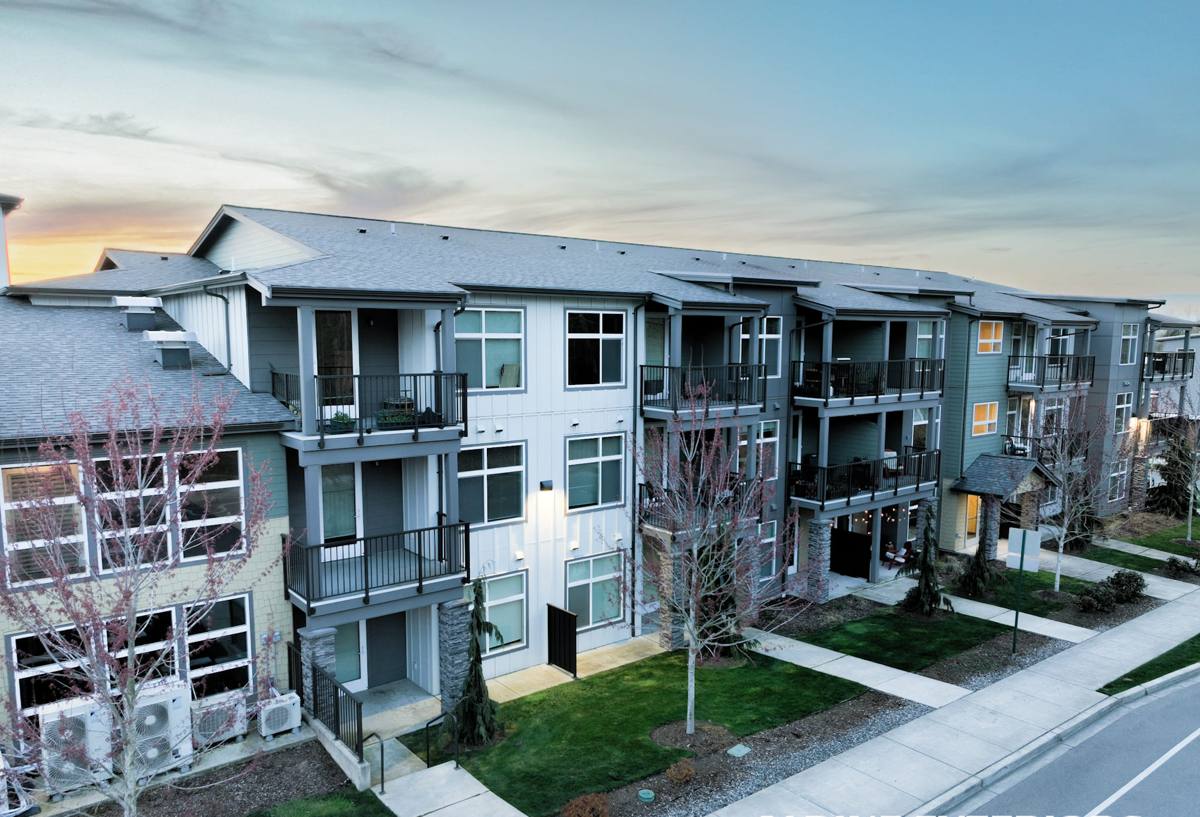
What the Local Climate Puts Nooksack Siding Through
Salt Air, Even This Far Inland
Nooksack sits well inland from the immediate shoreline, and it's easy to assume salt exposure isn't a real factor out here. It still is. Marine air carries salt across this whole part of the county, and over years it accelerates corrosion on fasteners, flashing, and lower-grade trim hardware. It's a slower process than at the coastline, but real enough that hardware and material choices on a Nooksack home shouldn't be made as if the property were sitting in a dry, landlocked climate.
Driving Rain on Open Farmland
Rain through fall and winter rarely falls straight down in this region — wind pushes it sideways into wall assemblies, window flashing, and the joints where roof meets wall. Nooksack's open farm country doesn't offer much wind shelter the way a tree-lined in-town lot might, so exposed walls take that sideways load directly. Siding and trim that aren't detailed to shed wind-driven rain, rather than just rainfall from above, tend to show water damage first at seams, corners, and anywhere flashing is doing less than it should.
A Long Moss Season
Mild temperatures, sustained regional moisture, and plenty of shaded wall area on many rural properties add up to a moss and mildew season that stretches across much of the year here. It shows up first as staining or green growth on north-facing and shaded walls, and it's more than a cosmetic issue — sustained organic growth holds moisture directly against the wall assembly, which is exactly the condition that leads to hidden rot if it isn't cleaned and addressed.
Flat, Low-Lying Ground
Like much of the farmland stretching across this part of the county, many Nooksack properties sit on flat, low-lying ground near the river system. Flat ground doesn't shed water the way a sloped or well-drained lot does, and that changes how siding needs to be detailed near grade so it isn't wicking moisture up from wet soil after a wet season.
Signs a Nooksack Home's Siding Needs Replacing
Not every issue calls for a full tear-off, but a few signs consistently point toward replacement rather than a patch job:
- Moss or dark staining that returns quickly after cleaning, especially on shaded or north-facing walls
- Soft or spongy siding, particularly low on the wall or around window and door trim
- Peeling paint or visible warping, most common on older wood-based or engineered wood siding
- Cracked, buckled, or missing panels after a windstorm
- Rust staining running down from fasteners or trim hardware
- Musty odors or staining on interior walls that back up to exterior siding
- Siding older than 20-25 years with no documented replacement history
Any one of these is worth a professional look before the next wet season adds to the damage. On a rural Nooksack property, water that's tracking in behind old siding can spread through sheathing for a season or two before it ever shows up as an obvious interior problem.
Why We Only Install James Hardie Fiber Cement
We used to install a wider range of siding products. We narrowed that down to one system after years of tear-offs and service calls across this part of Whatcom County, watching which materials actually held up under sustained moisture and salt exposure and which ones quietly became maintenance headaches for the homeowner.
- Non-combustible core: Fiber cement doesn't feed a fire the way wood-based siding products can, which matters for household safety and insurance underwriting alike.
- Factory-applied ColorPlus finish: The color is baked on under controlled factory conditions instead of brushed on in the field, so it resists fading, chalking, and moisture intrusion far longer than site-applied paint.
- Climate-engineered HZ product lines: Hardie's HZ5 formulation is built for regions with significant moisture exposure and freeze-thaw cycling, which describes this stretch of the county well.
- Dimensional stability: Fiber cement doesn't swell, cup, or warp the way engineered wood siding can after repeated wet-season moisture cycles.
- Strong transferable warranty: Hardie backs its products with a solid warranty structure, provided the installation follows spec, giving homeowners real protection rather than a marketing claim.
We don't install LP SmartSide, vinyl siding, Cemplank, Allura, primed spruce, or cedar. Each has a place in the broader market, and plenty of homeowners elsewhere are satisfied with them. But we made a professional call that one system we trust completely, installed correctly, is worth more to a homeowner than a cheaper option that quietly shifts maintenance risk onto them a few years down the road — especially on a rural property that doesn't get checked on as often as a home closer to town.
Choosing the Right Hardie Product for a Nooksack Home
| Product Line | Best Use | Why It Fits This Area |
|---|---|---|
| HardiePlank lap siding | Most standard single-family and farmhouse-style homes | Traditional lap profile sheds wind-driven rain effectively when installed with proper overlap and flashing |
| HardiePanel vertical siding | Accent walls, gables, and outbuildings | Clean vertical lines that pair well with the barn and farmhouse styles common on rural properties here |
| HardieShingle siding | Craftsman-style homes and accent sections | Textured look without the moisture absorption and upkeep of real wood shingle |
| HardieTrim boards | Corners, window and door casing, fascia | Factory-finished trim resists the same salt exposure and freeze-thaw cycling as the field siding |
Color and profile come down to the individual home, but the underlying product family and installation approach stay consistent — we spec what fits a Nooksack property's actual exposure rather than defaulting to whatever's easiest to install.
What Correct Installation Actually Involves
Material choice only gets a Nooksack home halfway there. The rest comes down to installation detail, and it's the detail work that separates a siding job that lasts twenty-five years from one that starts letting water in behind the cladding within a few wet seasons.
Tear-Off and Substrate Check
Once old siding comes off, we check the sheathing underneath for rot or soft spots before anything new goes up. Covering damaged sheathing with new siding just hides a problem that gets worse behind the wall — we'd rather find it now than have it surface again in a few years.
Weather Barrier and Flashing
Given how much siding failure in this region traces back to water getting behind the cladding rather than through it, the house wrap, window flashing, and every wall penetration get careful attention. This is the step that's easiest to rush and hardest to inspect once the siding is up, so we treat it as non-negotiable.
Grade Clearance
On flat, low-lying farmland lots, we confirm proper clearance between siding and grade so the material isn't sitting close enough to wet ground to wick moisture up over time. It's a small detail that's easy to overlook and expensive to fix after the fact.
Installation to Manufacturer Spec
James Hardie's warranty depends on installation following their published specifications — correct fastener spacing and type, proper clearances above grade and roofline, and correct field-cutting and sealing practices. We treat that spec as the baseline for every job, not an upsell.
Cost Factors for a Nooksack Siding Replacement
| Factor | What It Affects | Why It Matters Here |
|---|---|---|
| Tear-off vs. overlay | Labor scope and substrate access | Tear-off reveals hidden moisture and rot damage common under older siding in this climate |
| Substrate condition | Repair costs before new siding goes on | Long-term trapped moisture can rot sheathing and framing behind the wall |
| Home size and trim detail | Material quantity and labor hours | Farmhouse-style trim and multiple gables add cutting and flashing time |
| Grade and drainage | Siding clearance and moisture management | Flat, low-lying lots hold ground moisture longer, affecting how siding is detailed near grade |
| Site access | Labor time and equipment staging | Rural properties can have longer driveways or wider staging needs than in-town lots |
Exact costs depend on the specific property and its exposure, which is why we walk the home in person before giving a real number instead of quoting off a generic price sheet.
How the Project Runs, Start to Finish
- An in-person walk-through of the home to assess current siding condition, sheathing risk, and how sun, wind, and shade exposure vary across each wall
- A written estimate based on what we actually find, not a flat per-square-foot guess
- Tear-off and a substrate check before any new material goes up
- Weather barrier, flashing, and grade clearance work done to spec, since this is the step that determines whether the job lasts
- Installation of the chosen Hardie product line following manufacturer spec for fastening and clearances
- A final walkthrough covering care and maintenance expectations before we call the job complete
Why a Crew That Already Works in Nooksack Matters
A crew that works this part of Whatcom County regularly understands how salt air, wind-driven rain, and a long moss season behave on real rural homes over a full year, not just how a product performs on a spec sheet. That experience shapes practical decisions on install day: which wall orientations on an open farmland lot stay wet longest, where extra flashing attention pays off, and which fastening details are worth the added time so a homeowner isn't dealing with a callback after the next winter storm. Nooksack's mix of open exposure and flat, low-lying ground means its siding needs look a little different from a sheltered in-town lot in Lynden, and a crew with hands-on local experience treats that difference seriously instead of applying a one-size-fits-all approach.
If your Nooksack-area home needs new siding, or you'd like an honest second opinion on what's happening behind an aging wall, we're glad to take a look. Reach out using the form below to schedule a free, no-pressure estimate.