 Lynden
 Roof Repair Built for Nooksack's Weather
Nooksack sits in a part of Whatcom County that asks a lot of a roof. You're close enough to the water to pick up salt-laden air, far enough into the foothills to catch heavy, prolonged rain off the Cascades, and shaded enough through fall and winter that moss gets a long head start before anyone notices it. None of that is unusual for this corner of Washington, but it does mean a roof repair here has to account for more than a single leak or a missing shingle. We look at the whole system — decking, underlayment, flashing, ventilation, and moss history — before we decide what actually needs fixing.
This page is specifically about repair work on existing roofs in and around Nooksack, not full replacements. If your roof is sound but has a problem area, this is the service that gets it handled correctly the first time, without pushing you toward a bigger job than you need.
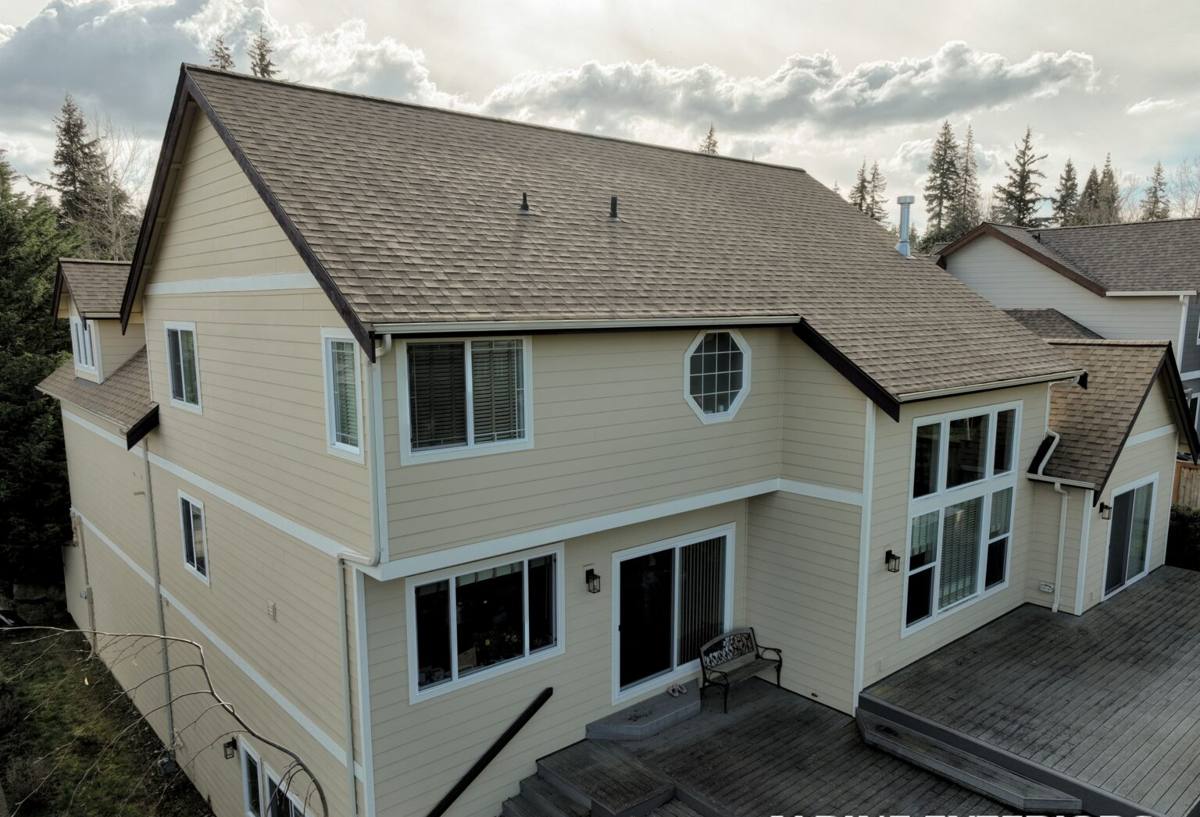
Signs a Nooksack Roof Needs Repair Attention
Most roof problems in this area show up gradually. Homeowners often notice the small signs but assume they're cosmetic. A few of these, especially in combination, usually mean it's time for a closer look:
- Dark streaking or green-black patches on the roof surface, particularly on north-facing slopes that stay shaded
- Moss or moss residue along shingle edges, ridge lines, or valleys
- Granules collecting in gutters or at downspout outlets
- Soft or spongy feeling on the roof deck when walked (never attempt this yourself)
- Water stains on interior ceilings, especially after a stretch of heavy or sideways rain
- Curling, cracked, or lifted shingle edges
- Rust streaks or visible gaps at flashing around chimneys, vents, or skylights
- Daylight visible through the attic roof deck
- Sagging in the roofline between rafters
Any one of these on its own might be a minor, inexpensive fix. Several at once, or a leak that's already reached the interior, usually means the damage has been developing for a while.
What's Actually Causing the Damage
Moss and Sustained Moisture
Whatcom County's moss season runs long — often from early fall through late spring — and Nooksack's tree cover and cooler, shaded lots make it worse than in more open, sun-exposed neighborhoods. Moss isn't just unattractive. It holds moisture directly against the shingle surface, works its way under tabs and along seams as it grows, and gradually lifts material that's supposed to stay flat and sealed. Left alone through a few wet seasons, moss growth is one of the most common reasons we get called out for a repair that could have been a five-minute cleaning a year earlier.
Wind-Driven and Prolonged Rain
Rain that falls straight down is rarely the problem. Rain that comes in sideways during a windstorm — which this area gets its share of — tests every seam, lap, and flashing point on a roof. Repairs that don't account for wind-driven rain often fail again during the next storm because the fix only addressed where water was seen, not where it actually entered.
Salt Air and Metal Fatigue
Being close enough to Puget Sound and Bellingham Bay to catch salt air means metal components — flashing, fasteners, gutter hardware — corrode faster here than they would further inland. A repair that reuses corroded fasteners or unsealed flashing is a repair that's going to need redoing sooner than it should.
Freeze-Thaw Cycling
Nooksack doesn't see extreme cold often, but it does see enough freeze-thaw swings each winter to stress any crack, gap, or trapped moisture pocket that's already present. A small flaw that was stable in summer can widen noticeably by spring.
What a Correct Roof Repair Involves
A roof repair done right isn't just patching the spot where water showed up inside the house. Water travels — it can enter several feet from where a stain appears on a ceiling, following the roof deck or rafters before dripping down. Our approach is:
- Find the actual entry point. We trace the leak from the interior sign back to its source on the roof, checking flashing, valleys, and penetrations along the way — not just the nearest shingle.
- Check the decking underneath. If water has been getting in for any length of time, the plywood or OSB deck beneath the damaged area may be soft or delaminating. Shingles laid over compromised decking will fail again quickly.
- Assess surrounding material, not just the failure point. Shingles age as a batch. If the ones next to the damaged section are also brittle or granule-worn, patching just the failure spot creates a mismatch that fails again soon.
- Address the cause, not just the symptom. If moss caused the failure, we remove growth from the surrounding area and treat for regrowth. If flashing was the issue, we replace it rather than re-caulking over old metal.
- Match materials appropriately. Where a repair is visible, we work to match existing shingle color and profile as closely as the market allows — full uniformity isn't always possible with aged roofing, and we'll tell you honestly if it isn't.
Repair or Replace? How We Help You Decide
Not every roof problem calls for a full re-roof, and not every roof is a good candidate for another round of patching. We give you a straight answer based on the roof's age, condition, and repair history — not a sales pitch toward the bigger job.
| Factor | Leans Toward Repair | Leans Toward Replacement |
|---|---|---|
| Roof age | Under 15–18 years (typical asphalt shingle life in this climate) | Approaching or past expected lifespan |
| Extent of damage | Isolated to one section or penetration | Spread across multiple slopes |
| Deck condition | Solid, no soft spots | Soft, rotted, or delaminating in multiple areas |
| Repair history | First or second repair on this roof | Repeated repairs to the same or nearby areas |
| Granule loss | Localized | Widespread, visible in gutters roof-wide |
| Moss history | Recent, addressed early | Long-term, with visible shingle lifting throughout |
If your roof lands solidly in the repair column, that's exactly what we'll recommend and do — no upsell.
Materials for Repair Work
Matching and reinforcing materials matter as much as the labor. For Nooksack's conditions, here's how the common options compare for repair purposes specifically:
| Material | Best Use in a Repair | Trade-Off to Know |
|---|---|---|
| Architectural asphalt shingle | Matching or replacing damaged sections on the majority of area roofs | Exact color/wear match to older roofs isn't always achievable |
| Ice-and-water shield underlayment | Reinforcing valleys, eaves, and flashing transitions prone to wind-driven rain | Adds labor time to install correctly under existing shingles |
| Metal flashing (step, valley, counter) | Replacing corroded or improperly sealed flashing around chimneys, walls, and valleys | Needs to be fully replaced, not patched — sealant alone doesn't hold long-term in this rainfall |
| Sealants and roofing cement | Finishing seals around fasteners and flashing edges | Should never be the primary repair method on its own — it's a finishing step, not a fix |
We stand behind straightforward, correctly-installed materials over specialty products marketed as one-size-fits-all leak solutions. A properly flashed, properly underlaid repair outperforms a heavy application of sealant every time, even though the sealant looks like the faster fix in the moment.
Our Process for Nooksack Repair Calls
When you reach out about a roof issue in Nooksack, here's what to expect:
- Initial conversation. We ask what you're seeing — where, how long, and under what conditions (during a storm, after moss buildup, gradually over months).
- On-site inspection. We get on the roof and in the attic where accessible, tracing the actual path of the water rather than assuming it starts where you see it.
- Written estimate. You get a clear explanation of what's failing, why, and what fixing it correctly involves — in plain language, not trade jargon.
- The repair itself. Scheduled around weather where possible, since installing shingles or sealing flashing on a wet roof compromises the work.
- Follow-up guidance. We tell you what to watch for afterward and, if moss or debris was a contributing factor, what maintenance interval will keep it from coming back.
Why a Crew That Already Works Nooksack Matters
Roofing crews that work broadly across Western Washington see plenty of roofs, but a crew that regularly works in and around Nooksack and greater Lynden has a working sense of which slopes in this specific area hold moss longest, which roof orientations catch the worst of the wind-driven rain off the valley, and how salt air affects fasteners and flashing on homes at this distance from the water. That local pattern recognition shortens the diagnostic part of a repair call — we're not guessing at how this climate behaves, we're working from what we already see on roofs nearby.
It also means we're not a stranger coming back if a repair needs a follow-up look after the next big storm. Being local to Whatcom County isn't a marketing line here — it's the reason the diagnosis tends to be right the first time.
Keeping a Repaired Roof in Good Shape
A correctly done repair should last, but this climate rewards a bit of upkeep between service calls. A simple seasonal routine goes a long way:
- Have moss growth checked and removed before it spreads under shingle tabs, ideally before the wet season builds momentum each fall
- Keep gutters and downspouts clear so water isn't backing up against the roof edge during heavy rain
- Trim back overhanging branches that keep sections of the roof shaded and slow to dry
- After any major windstorm, do a visual check from the ground for lifted or missing shingles
- Have flashing and seals inspected every couple of years, even without an active leak, since salt air corrosion is gradual and easy to miss until it fails
None of this requires getting on the roof yourself — a quick check from the ground, or a call to us if something looks off, is usually enough.
Get a Straight Answer on Your Roof
If you're dealing with a leak, moss buildup, or damaged flashing on a Nooksack-area roof, we're glad to take a look and tell you honestly whether it's a repair, and what that repair should actually involve. Use the form below to request a free, no-pressure estimate.