 Lynden
 Why Nooksack Homes Need Siding Built for This Climate
Nooksack sits in a part of Whatcom County where the weather doesn't do anything in half measures. Rain moves through in long, soaking stretches rather than quick storms, humidity stays high for months at a stretch, and cooler weather systems drifting in off the Salish Sea bring a faint edge of salt-laden air that settles into the valley along with everything else. Add in a moss season that can stretch from fall through spring, and you have a set of conditions that will find every weakness in a home's exterior cladding over time.
Siding in this environment isn't just a cosmetic layer. It's the barrier standing between that moisture cycle and the wood framing, sheathing, and insulation behind it. Products that handle a drier climate fine — or that rely on paint film or caulking to stay watertight — tend to show their age fast here. That's the backdrop for why we install fiber cement, and specifically James Hardie fiber cement, on homes throughout the Lynden and Nooksack area.
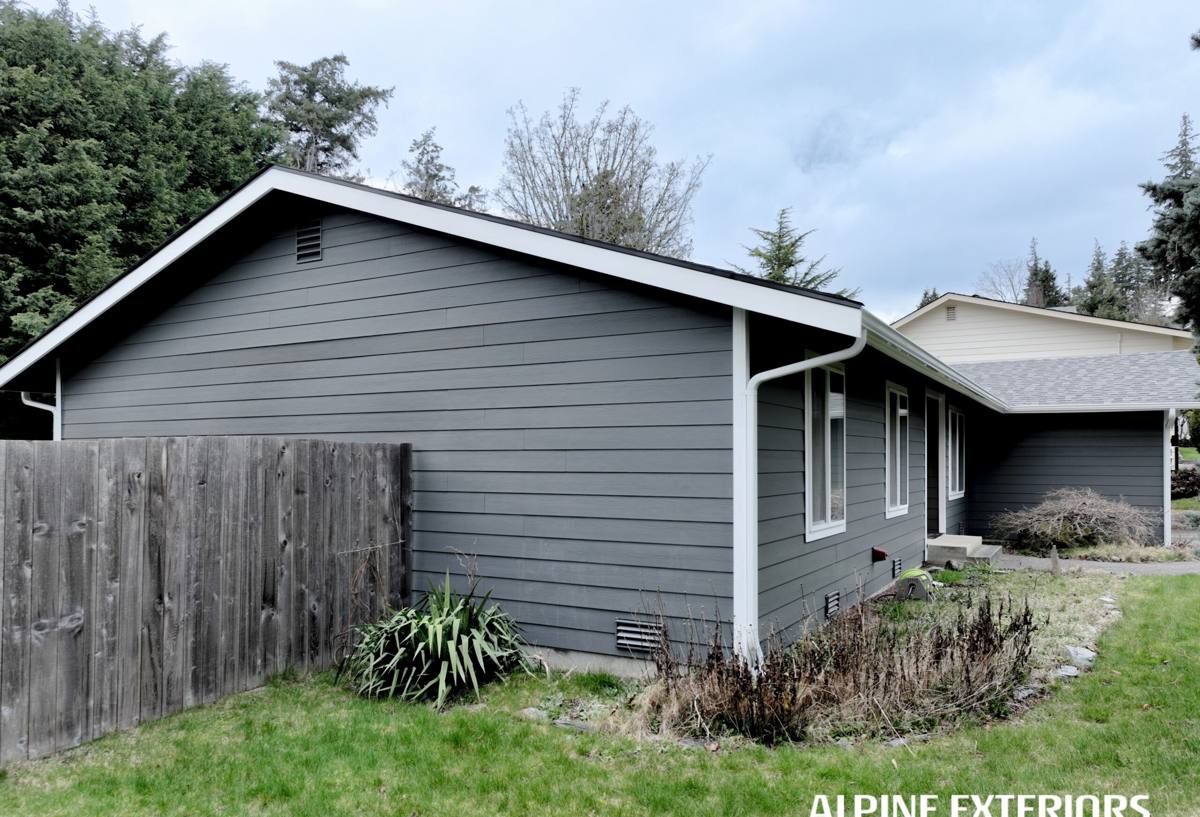
What "Correct" Fiber Cement Installation Actually Means
Fiber cement siding is only as good as the installation behind it. The material itself is dense, stable, and resistant to moisture absorption, but every seam, fastener, and transition point is an opportunity for water to get behind the cladding if it's not detailed properly. In a climate like Nooksack's, where siding stays damp for extended periods rather than drying quickly between rains, installation shortcuts show up as problems years earlier than they would in a drier region.
The details that matter most
- Proper starter strip placement so the bottom course sits correctly and sheds water away from the foundation
- Flashing integrated at every window, door, and roofline intersection — not just caulk bridging the gap
- Consistent gapping at butt joints and trim to allow for expansion without forcing water-trapping tight seams
- Fasteners driven to manufacturer spec — not overdriven, which crushes the material and opens a path for moisture
- A drainage plane (house wrap or rainscreen) behind the siding so any water that does get past the cladding has somewhere to go
- Caulking used only where the manufacturer specifies it, not as a substitute for correct flashing
Skipping any one of these doesn't cause an immediate failure. It causes a slow one — moisture intrusion that shows up as soft trim, staining, or paint failure two, five, or ten years down the road, usually after the original crew is long gone.
Why We Install James Hardie and Nothing Else
We standardized on James Hardie fiber cement for every siding job we take on, including the work we do around Nooksack. It's a decision made after weighing what actually holds up in this climate, not brand preference for its own sake.
Hardie's fiber cement is non-combustible, which matters as wildfire smoke seasons have become a more regular part of Pacific Northwest summers. It's engineered in HZ product lines specifically for climate zones — HZ5 formulations are built for the freeze-thaw and moisture cycling common in areas like ours, rather than a one-size-fits-all mix. The ColorPlus factory finish is baked on under controlled conditions, which gives it more consistent, longer-lasting color retention than field-applied paint has to fight for against Nooksack's rain and UV exposure. And the warranty structure is transferable and backed by a manufacturer with decades of fiber cement production behind it, not a smaller or newer entrant to the category.
We don't install LP SmartSide, vinyl, Cemplank, Allura, or unfinished wood siding like primed spruce or cedar. Each of those has legitimate uses in the right situation, but we've made a professional call that Hardie's combination of moisture performance, factory finish, and long-term warranty support is what we're willing to put our name behind on a home in this region.
How We Approach a Nooksack Siding Job
The process doesn't change much from house to house, but the details we watch for are shaped by working in this specific area for years.
Assessment first
Before any siding comes off, we look at what's underneath — sheathing condition, existing moisture damage, how the current wrap or drainage plane (or lack of one) has performed. A home that's had chronic moss buildup on the north-facing walls often tells us something about where water has been sitting longest, and that shapes where we pay extra attention during install.
Product selection
We walk through Hardie's board options — lap siding, panel systems, trim, and soffit — matched to the home's style and exposure. North- and west-facing walls in this area take the brunt of driving rain and prolonged shade that slows drying, so those elevations sometimes get different attention in fastening and flashing detail than a sun-exposed south wall.
Installation and inspection
Crews follow Hardie's published installation specs to the letter — clearance heights off grade and roofing, fastener patterns, joint treatment — because deviating from spec is the single most common reason fiber cement underperforms. Once the job is done, we walk it with the homeowner so they know what was done and what to watch for going forward.
Where Poor Installations Go Wrong
Most fiber cement problems we get called out to inspect on older installs trace back to a handful of repeated shortcuts. Here's how correct practice compares to what causes trouble later.
| Detail | Correct Approach | Shortcut That Causes Problems |
|---|---|---|
| Clearance above grade/roofline | Manufacturer-specified gap maintained | Siding installed tight to grade or roofing, wicking moisture upward |
| Window and door flashing | Integrated flashing with proper overlap | Caulk used alone to seal the gap, which fails over time |
| Fastener placement | Driven flush, per spacing spec | Overdriven, cracking the board and exposing raw edges to moisture |
| Butt joints | Small gap, properly sealed per spec | Boards forced tight together, trapping water at the seam |
| Drainage plane | Continuous house wrap or rainscreen behind siding | Siding installed directly over sheathing with no drainage path |
Living With Fiber Cement Through a Nooksack Moss Season
Fiber cement resists moisture damage far better than wood-based siding, but it's not maintenance-free, and Whatcom County's long damp season means moss, algae, and mildew will still try to take hold on shaded or north-facing surfaces. The good news is that correctly installed Hardie siding with a factory ColorPlus finish is easy to keep clean without damaging the material or the finish.
- Rinse siding with a garden hose and soft brush once or twice a year, focusing on shaded north walls where moss gets a foothold first
- Avoid pressure washing directly at seams, trim edges, or fastener points — it can force water behind the siding
- Trim back shrubs and trees so siding gets airflow and at least some direct sun exposure to speed drying
- Check caulked joints annually, especially around windows and trim, and have any cracked caulk replaced promptly
- Watch gutters and downspouts — overflow running down a wall is one of the fastest ways to create a chronic wet spot
What Affects the Cost of a Fiber Cement Job in This Area
Every home is different, but the factors that move the price on a Nooksack-area fiber cement project are fairly consistent.
| Factor | Why It Matters |
|---|---|
| Existing siding removal and sheathing condition | Moisture-damaged sheathing found underneath old siding needs repair before new siding goes on |
| Home size and wall complexity | More corners, gables, and trim detail mean more labor and cut waste |
| Board profile and finish selection | Lap width, panel style, and trim choices from Hardie's lineup vary in material cost |
| Number of exposed elevations | Walls facing prevailing wind and rain may warrant extra flashing detail |
| Access and site conditions | Slopes, landscaping, and multi-story sections affect labor time |
We give straightforward, itemized estimates rather than vague lump-sum numbers, so homeowners can see what's driving the cost.
Why Local Experience in Nooksack Matters
A crew that's worked houses throughout Lynden and the surrounding Whatcom County communities has already seen how this specific climate behaves against different home orientations, roof lines, and sun exposures. That's not something a crew coming from a drier or milder region picks up on the first job. Knowing which walls in this area tend to hold moisture longest, how moss season actually plays out here, and where flashing details get tested hardest by driving rain all comes from doing the work locally, year after year — not from a general installation manual alone.
If you're planning a siding project in Nooksack or anywhere nearby, we're happy to take a look at your home and walk you through what correct James Hardie installation would involve for your specific situation. Reach out for a free, no-pressure estimate using the form below.