 Lynden
 Asphalt Shingle Roofing Built for Nooksack's Climate
Nooksack sits in one of the wetter corners of Whatcom County, tucked against the foothills with the Nooksack River nearby and marine air pushing in off the Salish Sea. That combination means roofs here deal with more than just rain. They deal with long stretches of damp shade under tall conifers, salt-laden air that corrodes fasteners and flashing faster than inland areas, and driving wind-rain events that find every weak seam in a roof system. Asphalt shingle roofing remains the most practical, cost-effective choice for most homes in this area, but only when it's specified and installed with this climate in mind. A shingle roof that would hold up fine in a drier eastern Washington town can fail early here if the underlayment, ventilation, and flashing details aren't right.
This page covers what a correctly built or repaired asphalt shingle roof looks like for a Nooksack home, what tends to go wrong locally, and how we approach the work.
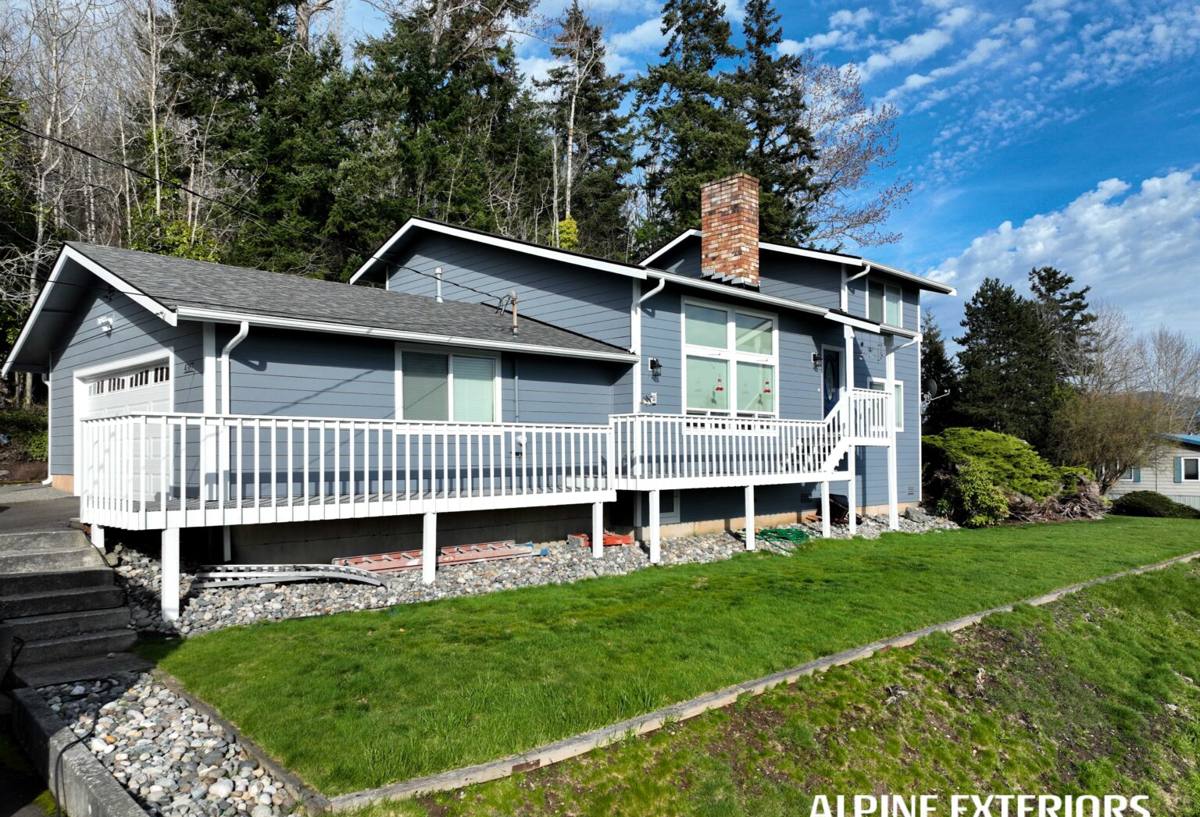
What Whatcom County Weather Does to a Shingle Roof
Moss and Organic Growth
Nooksack's tree cover and consistent moisture create ideal conditions for moss, algae, and lichen. Moss doesn't just look bad — it holds water against the shingle surface, lifts shingle edges as it grows, and works its way under tabs and around nail heads. On north-facing slopes and shaded sections near trees, moss can take hold within a couple of years if a roof isn't treated or if there's no zinc or copper strip protection. Left unaddressed, moss growth shortens the usable life of an otherwise sound roof by years.
Driving Rain and Wind-Driven Water
Storms coming off the Sound don't always drop rain straight down. Wind-driven rain pushes water sideways and upward under shingle tabs, at ridge caps, and around any penetration — vents, chimneys, skylights. A roof with tight but not properly sealed shingles, or one relying on an older felt underlayment instead of a synthetic or self-adhered membrane at vulnerable areas, is more likely to develop slow leaks that show up as staining well after the storm has passed.
Salt Air and Metal Corrosion
Being close enough to Puget Sound's marine influence means salt-bearing air reaches Whatcom County roofs, even well inland. Standard electro-galvanized nails, cheap flashing, and uncoated fasteners corrode faster in this environment than they would in a dry climate. Corroded fasteners lose holding power, and corroded flashing develops pinholes that let water in exactly where roofs are already vulnerable — valleys, sidewalls, and chimney saddles.
Temperature Swings and Freeze-Thaw
Lynden and Nooksack don't get extreme cold most winters, but the region does see enough freeze-thaw cycling, especially in shaded, damp sections, to stress shingles that have already absorbed moisture. A shingle that's saturated and then freezes is more prone to granule loss and cracking than one that's properly ventilated and allowed to dry.
What a Correct Asphalt Shingle Roof Includes
A roof that's built to actually perform in this climate is more than "shingles nailed to plywood." The components underneath and around the shingles matter as much as the shingles themselves.
- Ice and water shield or self-adhered membrane at eaves, valleys, and around all penetrations — not just at the eave line, given how much sideways water Nooksack storms push around.
- Synthetic underlayment across the full deck, which holds up better than old-style felt when a roof sits wet for extended periods during install or before shingles cure.
- Corrosion-resistant fasteners — hot-dipped galvanized or stainless in exposed areas — sized and placed per the shingle manufacturer's nailing pattern, not shot in with a generic pattern.
- Properly lapped step flashing at sidewalls and chimneys, not continuous "L" flashing caulked in place, which fails faster and is a common shortcut on older reroofs in this area.
- Balanced intake and exhaust ventilation so the attic can actually dry out between wet spells, reducing the moisture buildup that feeds moss, rot, and mildew from the underside.
- Zinc or copper moss-control strips near the ridge on shaded roofs, which is a low-cost addition that meaningfully slows regrowth.
Choosing a Shingle for This Area
Not every asphalt shingle product is a good fit for a heavily shaded, moisture-heavy lot versus an open, sun-exposed one. The table below outlines how common shingle classes compare for Nooksack conditions specifically.
| Shingle Type | Typical Lifespan (Local Conditions) | Best For | Trade-offs |
|---|---|---|---|
| 3-Tab Standard | 15–20 years | Budget reroofs, secondary structures | Lower wind rating, less algae resistance, shows moss/staining sooner |
| Architectural (Laminate) | 25–30 years | Most Nooksack homes | Higher upfront cost, but better wind rating and thicker profile resists granule loss |
| Algae-Resistant (Copper-Granule) Architectural | 25–30 years, better appearance retention | Shaded lots, north-facing slopes, tree cover | Slight cost premium; still needs ventilation and moss-strip support, not a standalone fix |
| Impact-Resistant Class 4 | 25–30+ years | Homes wanting hail/debris resistance and possible insurance credit | Higher material cost; check with your insurer on actual premium impact before assuming savings |
For most Nooksack homes we recommend a mid-to-upper architectural shingle with algae resistance built in, especially on roofs with any tree overhang. It costs more than a basic 3-tab up front but avoids repeat moss treatments and premature replacement.
Repair vs. Replacement: How We Evaluate a Nooksack Roof
Not every problem roof needs a full tear-off. We look at age, decking condition, and how localized the damage is before recommending anything.
Signs a Repair Is Reasonable
Isolated leaks around a single penetration, a section of wind-lifted shingles after a storm, or flashing failure at one chimney or sidewall can often be repaired without touching the rest of the roof — provided the shingles themselves still have usable life and aren't brittle or granule-bare across the board.
Signs Replacement Is the Honest Answer
Widespread granule loss, shingles that are cupping or cracking broadly, soft or spongy decking found during inspection, or a roof already past 20–25 years with moss damage in multiple areas usually means patch repairs won't hold. We'll tell you plainly if a repair is just delaying an inevitable replacement rather than solving the problem.
Our Process for a Shingle Roof Project
1. On-Site Inspection
We walk the roof (or use a drone where pitch or safety requires it) and check the attic from inside where accessible — looking at ventilation, any daylight or staining at deck boards, and insulation condition, since attic moisture problems often show up as roof problems.
2. Written Scope and Estimate
You get a clear, itemized scope: tear-off or overlay, underlayment type, flashing work, ventilation changes, and shingle product options with straightforward pricing ranges — no vague allowances.
3. Tear-Off and Deck Check
For full replacements, we remove existing roofing down to the deck and inspect for rot or soft spots before anything new goes down. Damaged decking gets replaced, not covered over.
4. Underlayment, Flashing, and Ventilation Install
This is where the climate-specific work happens — ice and water membrane at vulnerable areas, correctly lapped step flashing, and balanced ventilation, all before a single shingle course goes on.
5. Shingle Installation
Installed to the manufacturer's nailing specification, with attention to valley treatment and ridge details, which is where most wind and rain failures actually originate.
6. Final Walkthrough
We review the finished roof with you, cover warranty paperwork, and point out any maintenance items — like moss-strip location or gutter clearance — that will keep the roof performing.
Maintenance That Actually Matters Here
A well-built shingle roof in Nooksack still needs periodic attention given the moss and moisture load. This isn't about upselling annual contracts — it's a short list that makes a real difference:
- Keep gutters clear of needles and debris so water sheds off the roof edge instead of backing up under shingles.
- Trim back tree limbs that shade the roof and drop debris, which slows drying and accelerates moss growth.
- Have moss physically removed (not just chemically treated) every couple of years on shaded slopes, using methods that don't strip granules.
- Check attic ventilation isn't blocked by insulation, since blocked soffit vents undo the benefit of a properly designed ventilation system.
- After major wind events, do a visual check from the ground for lifted or missing shingles rather than waiting for a leak to show up inside.
Why Local Experience on This Job Matters
Roofing crews that primarily work drier climates sometimes underspecify underlayment or skip moss-strip and ventilation details because those problems don't show up fast in their home region. A crew that regularly works Lynden, Nooksack, and the rest of Whatcom County has already seen which flashing shortcuts fail here, which shingle lines hold their color and granules under constant damp shade, and how much ventilation a typical local attic actually needs given our humidity levels. That local pattern recognition is the difference between a roof that needs attention again in eight years and one that goes the full 25.
Get a Straightforward Estimate
If you're dealing with moss buildup, a suspected leak, aging shingles, or you're simply planning ahead for a replacement, we're happy to take a look and give you an honest read on what your roof actually needs — no pressure, no inflated scope. Use the form below to request a free estimate for your Nooksack home.