 Lynden
 Blaine's Coastal Climate Is Hard on Roofs
Blaine sits right on the water at the northwest corner of Whatcom County, and that location shapes what a roof there has to deal with. Salt-laden air moves inland off the water almost year-round, wind-driven rain comes in sideways during winter storms rather than falling straight down, and the region's mild, damp winters create long stretches where roof surfaces barely dry out. Add in heavy tree cover on many lots and you get a near-constant moss and algae season that can run from fall through spring.
None of that means a roof in Blaine is doomed to fail early. It means the materials, fasteners, flashing details, and ventilation choices matter more here than they would in a drier, inland climate. A roof built to a generic national standard will often underperform in this environment. A roof built with Blaine's specific conditions in mind holds up the way it's supposed to.
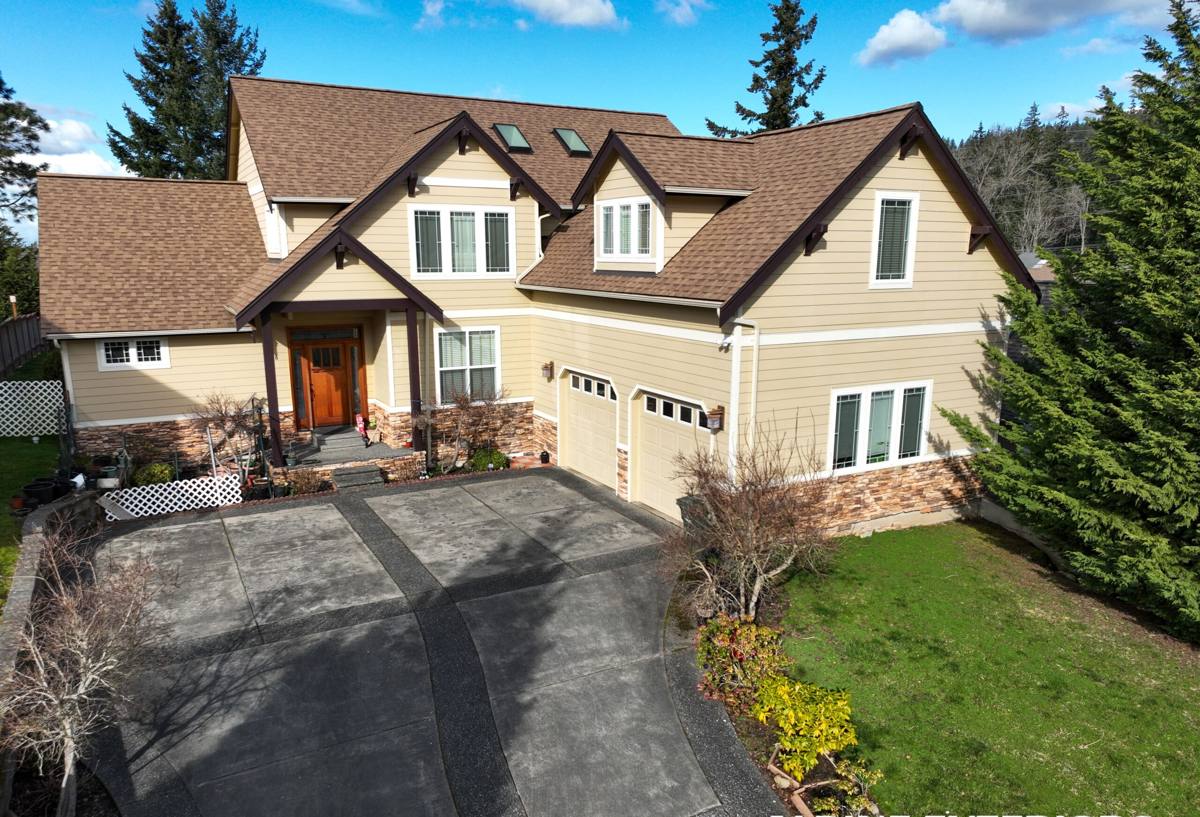
Signs a Blaine Home Needs a New Roof, Not Another Repair
Roofs rarely fail all at once. In this climate, the warning signs tend to show up gradually, and homeowners often patch around them for a year or two before deciding a full replacement makes more sense than continuing to chase leaks. Watch for:
- Granules collecting in gutters or at downspout outlets, a sign the shingle surface is wearing thin
- Dark streaking or thick moss growth on north-facing slopes that keeps coming back after cleaning
- Curling, cupping, or cracked shingles, especially on slopes that face the prevailing wind and rain
- Soft spots or sagging in the roof deck when walked on
- Daylight visible through the attic or staining on attic sheathing and insulation
- Repeated flashing leaks around chimneys, skylights, or wall intersections despite past repairs
- A roof approaching or past the manufacturer's expected service life for its material and this climate
If two or three of these show up together, it's usually a sign the roofing system as a whole — not just one flashing detail or one bad shingle run — is reaching the end of its useful life.
What a Correct New Roof Installation Actually Involves
Tear-Off and Deck Inspection
A proper installation starts with removing the old roofing down to the deck, not layering new material over old. That's the only way to find out what's actually going on underneath — soft or delaminated plywood, rot around penetrations, or old fastener patterns that won't hold new material correctly. Any damaged decking gets replaced before anything new goes down. Skipping this step is one of the most common ways a new roof fails early, because a good roof covering over a compromised deck is still a compromised roof.
Underlayment and Water Management
In a climate with sustained wind-driven rain, underlayment choice and installation detail matter as much as the visible roofing material. Ice-and-water shield or a comparable self-adhering membrane belongs at eaves, valleys, and around every penetration, since these are the spots where wind can force water backward under the shingles. A synthetic underlayment across the rest of the deck adds a second line of defense if wind ever gets past the primary roofing surface.
Flashing, Not Caulk
Chimneys, skylights, sidewall intersections, and roof-to-wall transitions need properly formed metal flashing, step-flashed and integrated with the underlayment — not sealant applied over old flashing as a shortcut. Caulk degrades; correctly lapped metal flashing sheds water for the life of the roof.
Ventilation Built Into the System
Balanced intake at the eaves and exhaust at the ridge keeps the attic dry and temperate, which does two things in this climate: it reduces condensation that can rot decking from underneath, and it keeps roof surface temperatures more even, which slows the moss and algae growth that thrives on cool, damp, poorly ventilated roofs.
Final Roofing Material Installation
Fastener placement, nailing patterns, and exposure lines all need to match the manufacturer's specification for high-wind, high-moisture regions — not just standard spacing. This is also where valleys, hips, and ridge caps get finished, and where a rushed crew tends to cut corners that show up as leaks two or three winters later.
Choosing a Roofing Material for Salt Air and Moss
There's no single "best" roofing material for every Blaine home — it depends on budget, roof pitch, and how much long-term maintenance a homeowner wants to take on. Here's how the common options compare for this specific climate:
| Material | Salt Air Behavior | Moss Resistance | Typical Lifespan Here |
|---|---|---|---|
| Architectural asphalt shingles | Good with corrosion-resistant fasteners and flashing | Moderate; benefits from algae-resistant granules and periodic cleaning | 20–30 years |
| Standing seam metal | Very good with a marine-grade coating and finish | High; steep, smooth surface sheds debris and dries fast | 40–50+ years |
| Composite / synthetic shake | Good; doesn't absorb moisture like wood | Moderate to high depending on product | 30–50 years |
| Natural cedar shake | Requires diligent maintenance near salt air | Low without regular treatment; a natural moss substrate | Varies widely with upkeep |
Our standard is to steer homeowners toward architectural asphalt or metal for most Blaine roofs — not because other materials can't work, but because they demand a level of ongoing maintenance and moisture vigilance that most homeowners don't want to sign up for in a climate this damp. If a homeowner wants natural cedar for its look, we'll say so plainly and explain what upkeep that choice requires rather than talking anyone out of their preference.
Cost Factors Worth Understanding Up Front
Roof pricing in this area depends on more than just square footage. The factors that move the number most are:
- Roof pitch and complexity — steep or cut-up rooflines with many valleys and hips cost more to work safely and correctly
- Deck condition — how much plywood needs replacing once tear-off exposes the sheathing
- Material choice — asphalt, metal, and composite carry different material and labor costs
- Access and site conditions — tree cover, tight lot lines, and staging space affect labor time
- Ventilation and flashing upgrades — bringing an older roof system up to current standards
We'd rather walk a roof in person and give a real number than quote a range that doesn't reflect the actual home.
Our Installation Process, Start to Finish
- On-site inspection of the existing roof, attic ventilation, and any visible problem areas
- A written estimate that spells out material, underlayment, flashing, and ventilation specifics — not a one-line total
- Scheduling that accounts for Blaine's rain patterns, so tear-off and dry-in happen in the same work window whenever possible
- Tear-off, deck inspection, and any necessary sheathing repair
- Underlayment, flashing, and ventilation installation
- Final roofing material installation to manufacturer spec
- Cleanup, magnetic sweep for stray fasteners, and a final walk-through
Why a Crew That Already Works Blaine Matters
Roofing crews that work across a wide, generic service area tend to apply the same specs everywhere. A crew based in Whatcom County and familiar with Blaine's specific conditions makes different calls by default — corrosion-resistant fasteners as a baseline instead of an upsell, ice-and-water shield at eaves and valleys as standard practice rather than an add-on, and scheduling built around this area's rain patterns instead of guessing. Local experience also means fewer surprises with permitting and inspection expectations, since the requirements aren't identical from one Whatcom County jurisdiction to the next.
It also means accountability. A crew that plans to keep working in this community has a direct incentive to get the flashing details and ventilation right the first time, because a callback isn't an inconvenience three hours away — it's next door.
Living With Your New Roof: Moss and Salt Air Maintenance
A correctly installed roof in this climate still benefits from basic upkeep. Clear gutters and valleys of debris at least twice a year so water isn't dammed against the roofing material. Have moss and algae growth treated or gently removed before it thickens, rather than left to hold moisture against the surface. Keep an eye on flashing around chimneys and skylights after major windstorms, since these are the spots most likely to show early wear. None of this is heavy maintenance — it's the difference between a roof that reaches its full expected lifespan and one that doesn't.
If your roof in Blaine is showing its age, or you'd just like an honest opinion on whether repair or replacement makes more sense, we're happy to take a look and put together a free, no-pressure estimate — use the form below to get started.