 Lynden
 Building New in Bellingham: Get the Windows Right the First Time
New construction is the one point in a home's life when windows can be installed exactly the way they're supposed to be — tied into the weather-resistive barrier, flashed in the correct sequence, and set before the siding ever goes on. Get it right at this stage and the window openings on a Bellingham home will stay dry and trouble-free for decades. Get it wrong, and the mistakes get buried behind siding and trim, where nobody finds them until there's rot, staining, or a soft spot in the wall.
We install new-construction windows on homes being built in and around Bellingham, in Whatcom County, where the openings need to be built for a coastal climate: salt air off the bay, driving wind-driven rain, and a long, damp moss season that keeps exterior surfaces wet for months at a stretch. This page covers what that actually means for a new-construction window install, what a correct job looks like, and how we handle it.
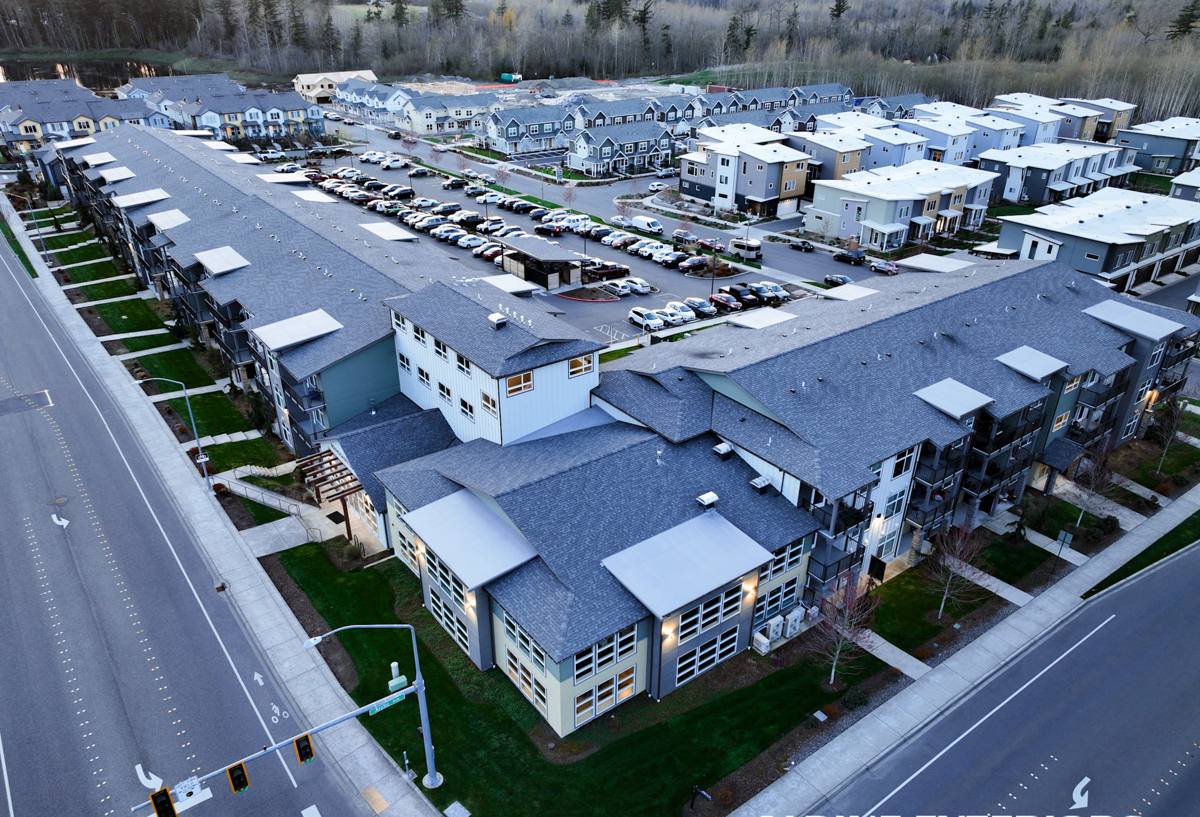
Why Bellingham's Climate Puts Extra Demands on Window Openings
Bellingham sits close enough to the water that salt-laden air is a real factor on hardware, fasteners, and any exposed metal flashing. Combine that with the wind-driven rain that comes through Whatcom County off the Strait, and a window opening isn't just dealing with rain falling straight down — it's dealing with water being pushed sideways and upward against the wall, looking for any gap in the flashing to get behind.
Wind-Driven Rain
A window that would be fine in a drier inland climate can leak in Bellingham if the flashing relies on caulk alone instead of a proper shingle-lap sequence. Wind pressure can drive water uphill along a wall surface, so every layer around the opening needs to overlap correctly, not just be sealed shut.
Salt Air and Corrosion
Fasteners, hinges, and flashing metals that aren't rated for coastal exposure corrode faster near the water. We pay attention to fastener and flashing material selection on Bellingham jobs specifically because of this — it's a different consideration than a build fifteen miles inland.
The Long Moss Season
Whatcom County's moss season isn't just a roof problem. Sustained dampness and shade around a home keep wall surfaces wet longer after every rain, which means any small flashing defect at a window has more time to do damage before things dry out again. A window opening that's built to shed water quickly and let any incidental moisture drain and dry is a much better bet here than one that depends on a perfect, permanent seal.
New Construction vs. Replacement: Why the Job Is Different
New-construction windows have a nailing flange built into the frame and get installed while the wall is still open — before siding, and usually right after the weather-resistive barrier (house wrap) is up. That's a real advantage over replacement work, because it lets the flashing tie directly into the wall system instead of being retrofitted around existing siding.
The trade-off is that there's no room for shortcuts. A replacement window installed into an existing opening can lean on the surrounding wall's existing flashing history. A new-construction window is setting the flashing history for that opening — if the sequence is wrong here, it's wrong for the life of the house.
What a Correct New-Construction Window Install Involves
There's a specific order of operations that keeps water moving out and down instead of in and behind the wall. Skipping or reordering any of these steps is where most window-related water damage actually starts.
| Step | What It Does | What Goes Wrong If Skipped |
|---|---|---|
| Sill pan flashing | Creates a drainage pan under the window so any water that gets past the frame has somewhere to go besides the framing | Water sits on bare wood sill framing and soaks in over time |
| Side flashing (jambs) | Directs water down and out over the sill pan | Water tracks behind the frame at the sides |
| Head (top) flashing | Sheds water away from the top of the window before it reaches the frame | Water sits directly against the top of the window and works its way in during wind-driven rain |
| Weather-resistive barrier integration | Laps the house wrap over the flanges in the correct shingle order so water is directed onto the wrap, not behind it | Reverse-lapped wrap funnels water directly into the wall cavity |
| Sealant and backer rod | Backs up the mechanical flashing, doesn't replace it | A caulk-only install fails as soon as the sealant ages or moves — with nothing behind it |
Notice that sealant is last on that list, not first. Caulk is a backup layer, not the primary defense. Any window install that leans on sealant as the main line of defense against water is going to have problems eventually, especially in a climate that sees as much sustained wet weather as Bellingham does.
Choosing Window Frame Materials for a Bellingham New Build
Frame material is a real decision on new construction, and it's worth making with the local climate in mind rather than picking on looks alone.
| Frame Type | Strengths | Trade-Offs in This Climate |
|---|---|---|
| Vinyl | Cost-effective, good energy performance, low maintenance, won't corrode | Limited color options; large sizes can need reinforcement |
| Fiberglass | Dimensionally stable, holds paint well, strong performance in big openings | Higher upfront cost than vinyl |
| Wood or wood-clad | Traditional look, popular on some Whatcom County builds | Any breach in the exterior cladding exposes wood to moisture — needs more diligent flashing and long-term upkeep in a wet, salt-air climate |
We don't push one product line over another as a blanket rule — the right call depends on the design, the budget, and how the openings are protected by roof overhangs and siding details. What we do insist on is a frame and glazing package that's rated for Pacific Northwest wind and moisture exposure, with hardware and fasteners suited to a coastal-influenced climate.
Our Process on Bellingham New-Construction Window Jobs
- Review the plans and rough openings against the specified window sizes and manufacturer flashing instructions before anything is installed.
- Confirm the weather-resistive barrier is installed and lapped correctly before we set a single window — this is the step that gets rushed on job sites when trades are trying to keep a schedule.
- Install sill pan flashing at every opening, sized for the specific window and sill condition.
- Set the window plumb, level, and square, and fasten per the manufacturer's schedule — not just "enough to hold it."
- Flash the jambs and head in the correct shingle-lap order, integrating with the house wrap.
- Seal and back-rod as the final, secondary layer of protection.
- Walk every opening before siding closes it up, since this is the last point where a flashing mistake can still be caught and fixed cheaply.
Why Coordinating Windows with Siding Matters
We're a siding contractor first, which matters here: we install new-construction windows with an eye toward exactly how the siding, trim, and rainscreen gap will interface with the window opening afterward. A window crew that never touches siding can do a technically fine window install and still leave a wall assembly that doesn't drain or dry well once the siding goes on over it.
Details like where trim meets the window flange, how a rainscreen gap is maintained around the opening, and how water table flashing at the base of a wall ties into the window flashing above it all affect how the whole wall performs — not just the window in isolation. Handling both trades under one crew removes a lot of the miscommunication that happens when a window sub and a siding sub never talk to each other about how their work is supposed to meet.
Checklist: What to Confirm Before Your Bellingham Build's Windows Get Closed Up
- Weather-resistive barrier is installed and correctly lapped before window install begins
- Sill pan flashing is present at every opening, not just the ones facing the weather
- Head flashing sheds water away from the frame, not straight down onto it
- House wrap laps over the flanges in proper shingle order (top over sides, sides over sill)
- Sealant is used as a backup layer, not the only line of defense
- Fasteners and any exposed metal are suited to a coastal, salt-air environment
- Windows meet current Washington State Energy Code requirements for the project
- Every opening is visually inspected before siding covers it up
Why Hire a Crew That Already Works in Bellingham
A crew that works Bellingham regularly already knows what the wind-driven rain does to a poorly flashed opening, what salt air does to the wrong fastener, and how long a moss season can keep a wall wet after a flashing mistake. That's not something you learn from a manufacturer's install sheet — it's something you learn from seeing what actually fails on homes in this specific part of Whatcom County, and building openings that are set up to handle it from day one.
New construction only gives you one real shot at doing this correctly before it's sealed behind finished walls. If you're building in Bellingham and want windows installed the right way from the start, we'd be glad to take a look at your plans and walk through the details with you — reach out for a free, no-pressure estimate using the form below.