 Lynden
 Why Nooksack Roofs Wear Differently Than Roofs Inland
Nooksack sits close enough to the Strait of Georgia and the Salish Sea air currents that homes here deal with a mix most inland Whatcom County properties don't: salt-laden moisture riding in on marine air, long stretches of driving rain off the foothills, and a moss season that can run eight months or more in a wet year. None of these things is dramatic on its own. Together, over ten or fifteen years, they're what separates a roof that still looks tight from one that's quietly failing underneath.
Salt air accelerates corrosion on any exposed metal fastener, flashing seam, or cut edge that isn't properly coated or sealed. Driving rain doesn't just fall straight down here — wind off the valley pushes it sideways and up under laps, ridge caps, and poorly lapped flashing. And moss doesn't just look bad; its root structure works into seams and holds moisture against the roof surface long after the rest of the property has dried out. A roofing material and installation method that ignores any one of these three factors is planning to be replaced sooner than it should be.
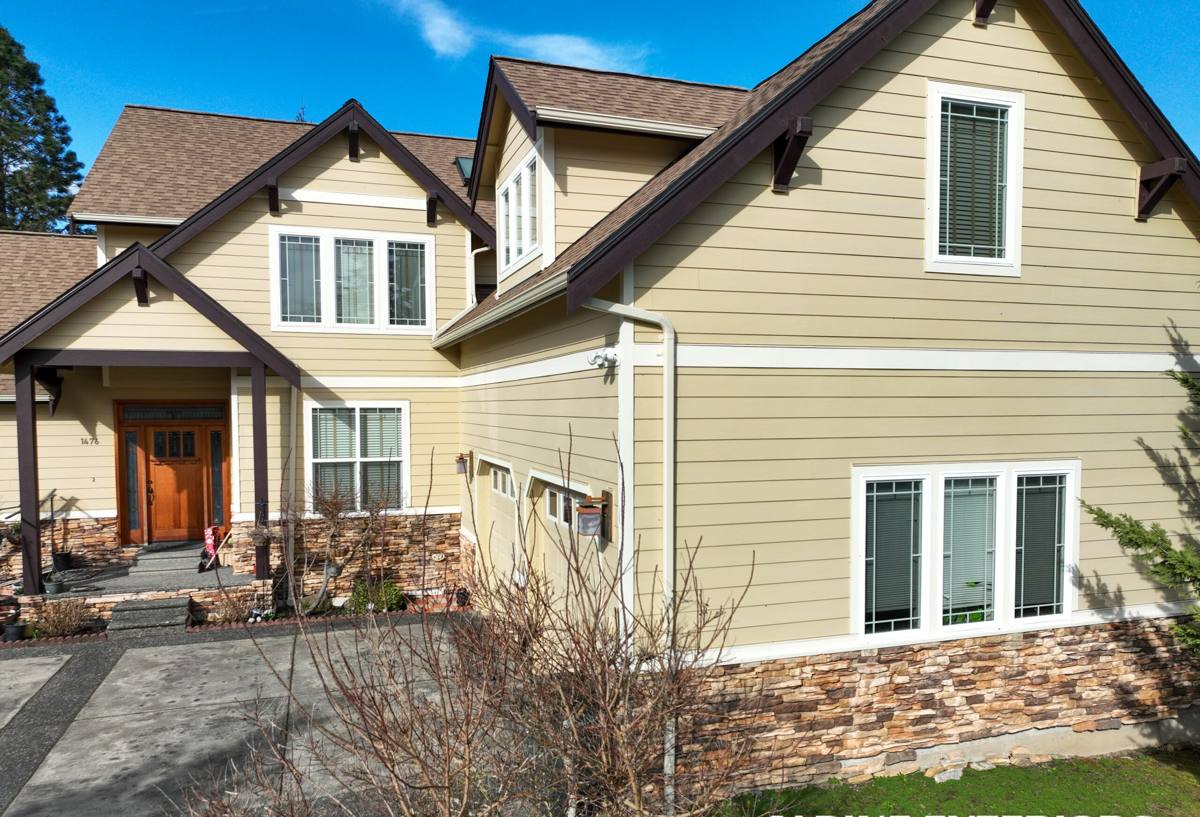
Why Metal Roofing Fits This Climate
Metal roofing isn't the right call for every home or every budget, but for Nooksack's specific conditions it solves problems that asphalt shingles simply can't:
- Steep-slope metal sheds driving rain fast, giving wind-blown water far less time to find a weak seam
- A properly finished metal surface gives moss very little to grip onto, compared to the textured surface of shingles
- Quality coated steel and aluminum resist salt-air corrosion far better than exposed fasteners or bare galvanized product
- Metal roofs shed snow and ice load cleanly rather than trapping it, which matters in the occasional hard Whatcom County winter
- A correctly installed metal roof routinely outlasts two or three shingle roof cycles, which matters for homeowners planning to stay put
The catch is that word "correctly." Metal roofing is far less forgiving of installation shortcuts than shingles are. A shingle roof with a slightly off fastener pattern often still performs fine for years. A metal roof with the wrong fastener spacing, the wrong flashing detail, or panels that weren't allowed to expand and contract properly will show problems — oil-canning, leaks at penetrations, fastener backout — much sooner. That's the whole reason installation quality matters more here than the panel spec sheet does.
Panel Types and Finishes: What Actually Holds Up Near Nooksack
Not all metal roofing performs the same way in salt-influenced, high-moisture climates. Here's how the common options compare for a property in this area:
| Panel Type | Best For | Trade-Offs in This Climate |
|---|---|---|
| Standing Seam (concealed fastener) | Primary roofs, long-term durability | Highest upfront cost, but no exposed fasteners for salt air or driving rain to attack over time |
| Exposed Fastener Panel | Outbuildings, budget-conscious projects | Lower cost, but exposed screws and washers are the first thing to fail near marine air — needs closer maintenance |
| Metal Shingle / Shake Profile | Homes wanting a traditional look with metal performance | Good moss and rain performance; more seams than standing seam, so flashing detail work matters more |
| Bare or Mill-Finish Galvanized | Rarely recommended here | Minimal coating protection against salt exposure; we generally steer homeowners toward a proper paint or Kynar-type finish instead |
Finish matters as much as panel profile. A quality baked-on paint system with strong coastal/corrosion warranties holds its color and its protective layer far longer than a bargain coating. We won't install a bare or minimally coated panel as a primary roof in this area — it's not that the material is unusable, it's that it puts more maintenance burden and earlier failure risk on the homeowner than a properly finished panel does, and we'd rather be upfront about that trade-off before the contract is signed than after the first repaint is needed.
Fasteners and Flashing Deserve as Much Attention as the Panels
On an exposed-fastener system, the screws and their rubber washers are almost always the first failure point in a salt-air environment — long before the panel itself has any issue. We spec corrosion-resistant fasteners matched to the panel metal (mixing incompatible metals causes galvanic corrosion, which speeds up failure) and we don't overdrive or underdrive screws, both of which compromise the washer seal. Flashing at valleys, walls, chimneys, and penetrations gets the same attention — these are the spots where driving rain actually gets in, far more often than through the field of the panel itself.
What a Correct Metal Roof Installation Involves
A metal roof is only as good as what's underneath and around it. On every Nooksack-area metal roof we install, the process includes:
- Deck inspection and repair — soft, rotted, or improperly spaced decking gets addressed before anything goes on top of it
- High-quality synthetic or self-adhered underlayment — this is the real backup waterproofing layer, especially at eaves and valleys where wind-driven rain concentrates
- Proper panel layout and fastening pattern — spaced and torqued to manufacturer spec, not "close enough"
- Correctly lapped, sealed flashing at every wall, chimney, skylight, and valley — not caulk used as a substitute for proper metal work
- Ridge and hip venting that keeps attic moisture moving instead of trapping it against the underside of the deck
- Ice-and-water protection at eaves and valleys, sized appropriately for our rain volumes rather than a minimal code-minimum strip
Ventilation is worth calling out specifically. A tightly sealed metal roof over a poorly ventilated attic can trap condensation underneath the panels — which shows up as rust or rot from the inside, not the outside, and often isn't caught until it's already done damage. Getting the ventilation right is part of doing the job correctly, not an upsell.
Where We See Existing Metal Roofs Fail in This Area
When we're called out to look at an underperforming metal roof in the Lynden and Nooksack area, the cause is almost always one of a short list of things:
- Exposed fasteners left unmaintained for years until washers cracked and screws backed out
- Flashing that was caulked instead of properly formed and lapped, with the caulk eventually failing
- Panels installed without room to expand and contract with temperature swings, leading to oil-canning or fastener stress
- Moss and organic debris allowed to build up in valleys, holding moisture against seams
- Ventilation that was never addressed, leading to underside condensation
Almost none of these are panel failures. They're installation or maintenance gaps — which is exactly why choosing the crew matters as much as choosing the panel.
How Our Process Works
For a Nooksack-area metal roof, our process is straightforward and we walk homeowners through each step:
- On-site assessment — we look at the existing roof, deck condition, ventilation, and any moss or moisture patterns specific to the property's exposure
- Written estimate — panel type, finish, flashing scope, and underlayment spelled out, no vague line items
- Tear-off and deck prep — including repair of any soft or damaged decking found once the old roofing is off
- Underlayment and flashing installation — the layer that does the real waterproofing work
- Panel installation — fastened and spaced to manufacturer spec, with attention to the details most installers rush
- Final walkthrough — we go over the finished roof with the homeowner before calling the job done
Maintenance That Actually Extends the Life of a Metal Roof Here
Metal roofs need less maintenance than shingles, but "less" isn't "none" — especially with our moss season and salt exposure. A short, honest maintenance checklist:
- Clear moss, needles, and debris from valleys and roof-to-wall transitions once or twice a year
- Have exposed fasteners visually checked every few years for washer cracking or backout
- Keep gutters clear so water isn't backing up under the eave edge
- Watch for any streaking or discoloration at seams, which can signal a flashing issue starting early
- Address any moss growth before it establishes rather than after
Why Hiring a Crew That Already Works Nooksack Matters
A metal roof installed by a crew that hasn't dealt with this area's combination of salt air, wind-driven rain, and moss season tends to default to generic detailing — code-minimum ventilation, standard fastener schedules, flashing built for a drier or calmer climate. That's how a roof ends up needing attention again in five years instead of twenty-five. We work in Lynden and the surrounding Whatcom County communities regularly enough to know which details actually matter here versus which ones are just spec-sheet boilerplate, and we build every metal roof to hold up against the conditions this property will actually see, not average conditions somewhere else.
If you're weighing metal roofing for a home in the Nooksack area, we're glad to come take a look, walk the roof, and give you a straight answer on what it needs — no pressure, no inflated urgency. Request a free estimate below and we'll get you scheduled.