 Lynden
 Building a Deck That's Actually Ready for Maple Falls Weather
A deck in Maple Falls lives a harder life than a deck built somewhere dry. Between long stretches of driving rain, the moisture-laden air that rolls through Whatcom County for much of the year, and a moss season that seems to start earlier and last longer every year, an outdoor structure here is under near-constant pressure from water. Add in tree cover on many lots, which keeps decking damp and shaded well after a storm has passed, and you have a recipe for problems if the deck wasn't built with this climate specifically in mind.
We build custom decks for homeowners throughout the Lynden area, including Maple Falls, and the difference between a deck that lasts and one that doesn't usually comes down to decisions made before the first board is ever cut — material selection, framing details, and how water is directed away from the structure rather than left to sit on it.
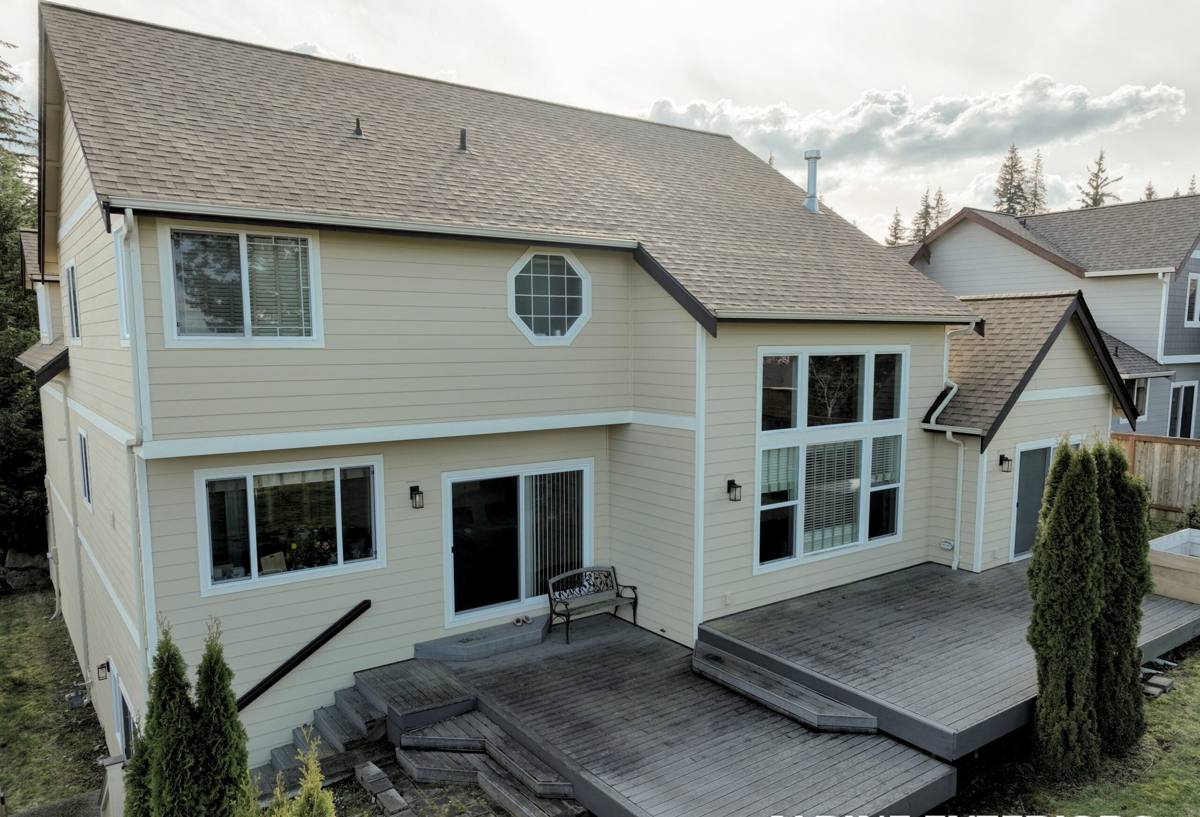
What Local Homes Actually Need From a Deck
Every deck has to hold weight and look good, but a deck built for this part of Washington has a few extra jobs to do:
- Shed water fast instead of letting it pool on boards, ledgers, or framing connections
- Resist moss and algae growth in shaded or north-facing areas of the yard
- Handle repeated wet-dry cycling without cupping, splitting, or fastener pop
- Use hardware and connectors that won't corrode from constant moisture exposure
- Stay safely footed and slip-resistant even when the surface is damp for weeks at a time
None of this is exotic — it's standard good building practice — but it only happens if it's planned for from the start rather than treated as an afterthought once the deck is already framed.
Sun Exposure and Tree Cover Change the Equation
Two decks built ten minutes apart in Whatcom County can age very differently depending on how much direct sun they get. A deck tucked under mature trees or on the north side of a house will stay damp longer after every rain, which means faster moss buildup and more aggressive maintenance needs. That doesn't mean those spots can't have a great deck — it just means the material choice, board spacing, and finish need to account for it up front.
Choosing the Right Decking Material
There's no single "best" decking material — there's the right material for your budget, your site conditions, and how much upkeep you actually want to do. Here's how the common options stack up in a wet, moss-prone climate:
| Material | Moisture Behavior | Maintenance | Typical Lifespan |
|---|---|---|---|
| Pressure-treated wood | Good if properly sealed; can absorb water at cut ends and fastener holes | Annual cleaning and re-sealing recommended | 15–20+ years with upkeep |
| Cedar | Naturally rot- and insect-resistant; still needs sealing in this climate | Periodic cleaning and re-oiling for appearance | 15–20+ years with upkeep |
| Composite decking | Doesn't absorb water or rot; surface can still grow moss/algae film | Regular washing to prevent surface buildup; no sealing needed | 25–30+ years, varies by brand and product line |
| PVC decking | Fully moisture-resistant, will not rot | Low — occasional washing | 25–30+ years, varies by brand and product line |
We install both quality wood and composite/PVC systems, and we'll tell you honestly which one fits your situation rather than pushing whatever's easiest to install. A shaded, moss-prone lot often does better long-term with a composite or PVC board because it won't feed moss spores the way bare wood fiber can, but plenty of homeowners still prefer the look and feel of real wood and are willing to keep up with sealing — that's a legitimate choice too, as long as you go in knowing the maintenance commitment.
What Correct Framing Looks Like Here
The decking surface is what you see, but the framing underneath is what determines whether the deck is still solid in fifteen years. In a climate like ours, a few framing details matter more than they would somewhere dry:
Ledger Flashing and Water Management
Where a deck attaches to the house, the ledger board connection is one of the most common failure points in the Pacific Northwest — not because the framing lumber fails, but because water gets behind the ledger and rots the house's rim joist or sheathing from the inside out. Correct flashing, with proper overlap and a drainage gap where needed, keeps that water moving away from the structure instead of trapping it against the wall.
Footings and Post Bases
Footings need to be sized and set below frost depth and bear on solid, undisturbed soil — not fill dirt or organic topsoil that can compress or shift when saturated. Post bases should hold the post up off the concrete rather than letting end grain sit in standing water, which is one of the fastest ways to rot a post from the bottom up.
Joist Spacing and Airflow
Tighter joist spacing than the minimum code allows adds stiffness and reduces bounce, but the framing bay also needs enough airflow underneath to let the structure dry out between rain events. A deck built low to the ground with poor ventilation underneath will stay damp far longer than one with proper clearance, which accelerates rot and moss growth on the underside of the boards.
Railings, Fasteners, and Hardware That Won't Let You Down
It's easy to focus on decking material and forget the hardware holding everything together, but in a wet climate, corroded fasteners and connectors are a real long-term risk. We use stainless steel or coated fasteners rated for exterior ground-contact use, hidden fastener systems where appropriate for a cleaner look, and structural connectors sized to the actual loads the deck will see — not just whatever's cheapest at the hardware store. Railings, whether wood, metal, or composite, should also be detailed so water doesn't sit in post caps or baluster connections, which is a common spot for rot and rust to start unnoticed.
Our Process, Start to Finish
- Site visit and consultation — We walk the site with you, look at sun exposure, drainage, tree cover, and how you actually plan to use the space.
- Design and material selection — We talk through wood versus composite/PVC, layout, railing style, and any structural considerations specific to your lot.
- Written estimate — A clear breakdown of scope, materials, and cost before anything is scheduled.
- Permitting — We handle the local permitting and inspection process so the deck is built and documented to code.
- Framing and structural work — Footings, posts, ledger flashing, and joists are all installed to hold up under Whatcom County conditions, not just to pass a quick inspection.
- Decking, railing, and finish work — Boards, railings, stairs, and any lighting or finishing details are installed and cleaned up.
- Final walkthrough — We go over the finished deck with you, including care and maintenance guidance specific to the material you chose.
Keeping a Deck Ahead of Moss and Moisture
Even a well-built deck needs some seasonal attention in this climate. A simple maintenance routine goes a long way toward protecting the investment:
- Sweep leaves and debris off the deck regularly, especially in fall — trapped organic material holds moisture and feeds moss
- Wash the surface at least once or twice a year to remove algae and moss film before it gets established
- Check and clear gaps between boards so water and debris don't build up and hold moisture against the framing
- Inspect railings and stair connections annually for loose fasteners or early rust
- Re-seal or re-stain wood decking on the schedule recommended for the product — don't wait until it's visibly gray and dry
- Trim back overhanging branches where possible to increase sun exposure and airflow
What Affects the Cost of a Custom Deck
Every project is different, but these are the main factors that move the price up or down:
| Factor | Impact on Cost |
|---|---|
| Decking material (wood vs. composite/PVC) | Composite and PVC cost more upfront, less over time in maintenance |
| Deck size and shape | Larger footprints and multi-level or custom shapes add material and labor |
| Height off the ground | Elevated decks require more structural framing, stairs, and railing |
| Site access and slope | Difficult access or a sloped lot can increase footing and labor costs |
| Railing style and extras | Custom railings, built-in seating, or lighting add to the total |
| Permitting requirements | Varies by jurisdiction and project scope |
We'll walk through these with you during the estimate so you know exactly what's driving the number, not just a lump-sum quote with no explanation.
Why Working With a Crew That Already Knows This Area Matters
A deck built by someone unfamiliar with local conditions can look great the day it's finished and still develop problems within a few years — a ledger that wasn't flashed correctly, framing set too low with no airflow, or a decking material that wasn't suited to a shaded, moss-prone yard. We work throughout Lynden and the surrounding Whatcom County communities, including Maple Falls, and we build every deck expecting the rain, the moss season, and the long wet stretches this area gets, not the mild, dry conditions a generic build plan might assume. That local familiarity shows up in the details you don't see once the deck is finished — the flashing, the footings, the hardware — which are exactly the details that determine whether you're dealing with repairs in five years or enjoying a solid deck for decades.
If you're planning a new deck or replacing one that's showing its age, we're happy to take a look and talk through what makes sense for your home and your budget. Reach out for a free, no-pressure estimate using the form below.