 Lynden
 Siding Replacement Built for Laurel's Weather, Not Just Any Weather
Homes in the Laurel area near Lynden sit in a specific slice of Whatcom County's climate: close enough to the water and the lowland river valleys to catch salt-tinged air on the wind, exposed to long stretches of driving rain off the Pacific storm track, and shaded enough in places to grow moss on almost anything that holds moisture. That combination is harder on exterior siding than people expect. A product that performs fine in a dry inland climate can fail early here, and a siding job that's installed correctly in a mild climate can still let water in when the rain comes sideways for three days straight.
Siding replacement in Laurel isn't a generic project. It's a decision about what material can actually stand up to salt exposure, sustained moisture, and moss growth year after year, paired with an installation that accounts for how water actually moves around this house in this location. That's the lens we bring to every Laurel estimate.
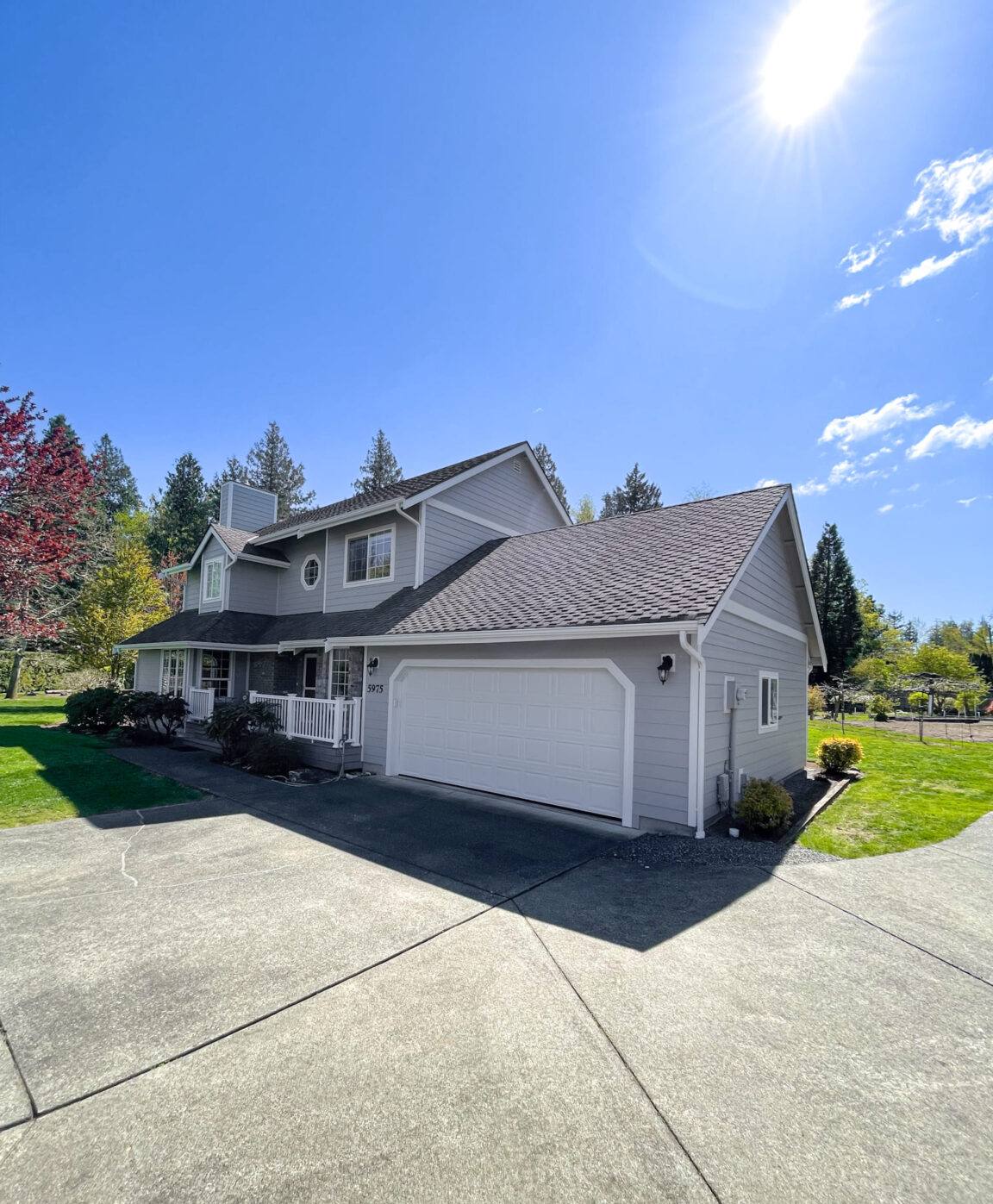
What This Climate Does to Siding Over Time
Salt Air
Even homes that aren't waterfront pick up salt-laden moisture carried inland on coastal wind. Salt air accelerates corrosion of fasteners and trim metal, and it can degrade paint finishes and some composite materials faster than a dry climate would. Materials and finishes that aren't rated for coastal exposure tend to show it first at fastener heads, corners, and butt joints.
Driving Rain
Whatcom County gets rain that doesn't just fall — it drives sideways during winter storm systems. That means water is being pushed laterally into every seam, joint, and penetration in the siding, not just running down the face of the wall. Siding and flashing details that rely on gravity alone to shed water aren't enough here. Laps, seams, and terminations all need to be detailed to resist wind-driven rain, not just vertical runoff.
Moss Season
Shaded walls, roof overhangs, and north-facing elevations in this area stay damp long enough for moss and algae to take hold, sometimes for months at a stretch. Moss holds moisture against the siding surface, which is exactly the condition that causes rot, coating breakdown, and paint failure in materials that aren't built to tolerate sustained dampness.
Signs a Laurel Home's Siding Needs Replacing, Not Just Patching
- Soft or spongy spots when you press on the siding, especially near the bottom courses or window trim
- Persistent moss or dark streaking that returns within weeks of being cleaned off
- Paint that's bubbling, peeling, or chalking heavily rather than just fading
- Visible gaps, warping, or buckling at seams and corners
- Rust staining running down from fasteners or trim
- Interior signs — musty smell, discolored drywall, or trim near exterior walls that feels damp
- Siding that's original to a home built more than 20-25 years ago, especially wood, hardboard, or early composite products
Any one of these can sometimes be addressed with a repair. But when several show up together, or when the underlying material itself is the problem, patching just delays a full replacement while the moisture damage underneath keeps spreading.
What a Correct Siding Replacement Actually Involves
Replacing siding well is mostly about what happens before the new siding ever goes up. In a climate like Laurel's, the sequence matters as much as the material.
Full Tear-Off and Inspection
We remove the old siding down to the sheathing so we can actually see the wall — not guess at what's behind it. This is where hidden rot, old flashing mistakes, or framing damage get found and fixed before they're covered up again for another 20 years.
Weather-Resistive Barrier
A properly lapped and sealed weather-resistive barrier is the layer that protects the wall assembly if any water does get past the siding — which, in driving rain, it eventually will at some point. This layer has to be continuous and correctly integrated with window and door openings.
Flashing at Every Penetration
Windows, doors, hose bibs, vents, and any other wall penetration need flashing detailed to shed water outward and downward, lapped correctly with the weather barrier. This is the single most common place we find failures on older Whatcom County homes — not the siding material itself, but flashing that was skipped or installed backwards.
Correct Fastening and Clearances
Fastener type, spacing, and depth all affect how siding holds up to wind-driven rain and to the expansion and contraction that comes with our seasonal temperature and moisture swings. Ground clearance and clearance from roof lines and decks also matter for keeping splashback and moss-prone dampness away from the bottom courses.
Finish and Trim Detailing
Corners, trim boards, and caulked joints are where a lot of moisture problems start. These need to be sealed and detailed so water is directed out and away, not trapped against the wall.
Why We Install Only James Hardie Fiber Cement
We standardized on James Hardie fiber cement siding for every home we side, including in Laurel, and we don't install vinyl, LP SmartSide, primed wood, cedar, or other fiber cement brands. That's a deliberate professional standard, not a sales preference.
Fiber cement resists moisture, moss, and rot in a way that wood-based and vinyl products generally can't match over the long run, and it's non-combustible. Within fiber cement, we use Hardie specifically because of its factory-applied ColorPlus finish (which holds up better against fading and chipping than field-applied paint), its HZ5 product line engineered for wetter, harsher climates like ours, and a transferable warranty backed by a manufacturer with a long track record. In a climate defined by salt air, driving rain, and moss, those specific properties aren't marketing points — they're the reason the siding still looks and performs the way it should ten and twenty years out.
How Siding Options Compare in Laurel's Climate
| Material | Moisture/Moss Resistance | Maintenance | Typical Lifespan Here |
|---|---|---|---|
| James Hardie Fiber Cement | Strong — engineered for wet climates, resists rot | Low — factory finish, occasional wash | 30+ years with correct install |
| Vinyl | Won't rot but traps moisture behind it if installed poorly; can warp | Low, but limited repair options | 15-25 years, shorter with UV/impact damage |
| Primed Wood/Spruce | Vulnerable to rot and moss without diligent upkeep | High — repainting, caulking, moss treatment | 10-20 years depending on maintenance |
| Cedar | Natural but absorbs moisture; moss-prone in shaded areas | High — sealing, staining, moss control | 15-25 years with regular care |
Lifespan ranges above assume typical exposure and upkeep; homes with heavier shade, coastal exposure, or deferred maintenance will see shorter real-world results with the lower-performing materials.
Our Process From Estimate to Finished Job
- On-site assessment — we walk the home, check for existing moisture damage, and look at sun/shade exposure and drainage around the foundation
- Written estimate — clear scope, product line, and pricing, no pressure to sign on the spot
- Tear-off and inspection — old siding comes off, sheathing and framing get checked
- Repair as needed — any rot or damage found gets addressed before new materials go on
- Weather barrier and flashing installation — the part that actually keeps water out long-term
- Hardie siding installation — installed to manufacturer specs for fastening, clearance, and joint detailing
- Final walkthrough — we review the finished work with you before calling the job done
What Affects the Cost of a Laurel Siding Replacement
| Factor | Why It Matters |
|---|---|
| Home size and wall complexity | More corners, gables, and trim details mean more labor and material |
| Extent of hidden damage | Rotted sheathing or framing found during tear-off adds repair scope |
| Product line and profile | Hardie offers multiple plank widths, textures, and colors at different price points |
| Accessibility | Steep sites, limited access, or multi-story walls affect labor time |
| Trim and detail work | Custom trim, window surrounds, and accent details add scope |
We don't publish a flat per-square-foot price because these factors genuinely change the number from house to house — an honest estimate has to be based on your specific home, not a generic average.
Why It Matters That We Already Work in the Lynden and Laurel Area
A crew that regularly works homes around Lynden and the surrounding Whatcom County communities already knows how local wind-driven rain patterns hit different wall orientations, which areas hold moss longest through the wet months, and how salt air exposure varies depending on how close a property sits to open water and prevailing wind. That local knowledge shapes real decisions on a job — where to pay extra attention to flashing, which elevations need the most moisture protection, and what a realistic maintenance expectation looks like for this specific climate. It's the difference between a crew that installs siding correctly in general and one that installs it correctly for a Laurel home specifically.
If your Laurel-area home is showing signs of siding wear or you're planning ahead for a replacement, we're happy to take a look and walk you through what we find. Use the form below to request a free, no-pressure estimate.