 Lynden
 Siding Replacement in Kendall: What This Climate Actually Requires
Kendall sits inland from Bellingham Bay but still gets the full weather package that defines siding wear across this part of Whatcom County: salt-tinged marine air that migrates well past the shoreline, wind-driven rain that hits walls sideways instead of falling straight down, and a moss and mildew season that stretches across most of the calendar because temperatures stay mild and moisture stays constant. None of those three factors is dramatic in isolation. Stacked on top of each other, year after year, they're a harder test on an exterior wall than most siding products were designed around, and they show up on Kendall homes as fading, soft spots, cracked caulk lines, and moss colonizing shaded elevations long before the siding was supposed to need attention.
This page is specifically about siding replacement for homes in and around Kendall: what the local climate does to different siding materials over time, what a correct tear-off-and-replace job actually involves, and why we install only James Hardie fiber cement rather than offering a menu of products and letting price decide the outcome.
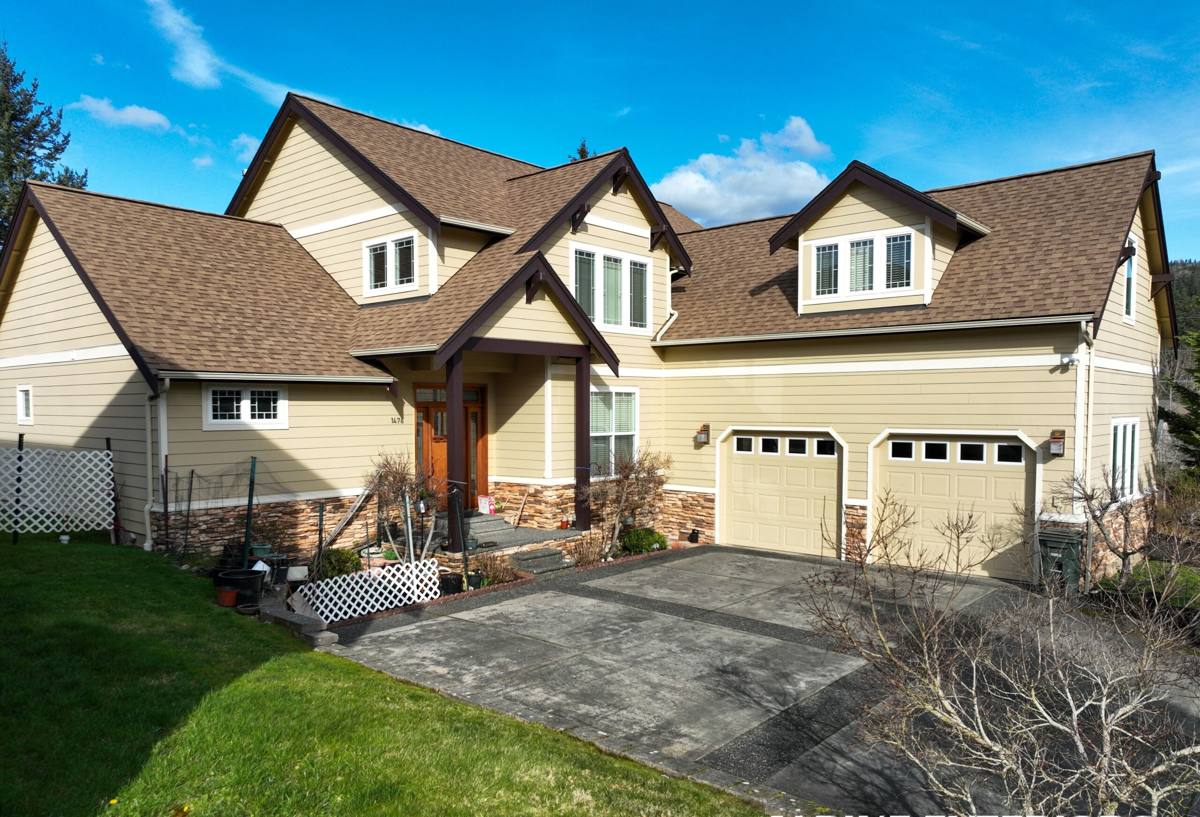
Signs a Kendall Home Needs Siding Replacement, Not Just Repair
Not every siding problem calls for a full replacement, but there's a point where patching individual boards stops making sense and a full re-side becomes the more honest recommendation. Here's what we look for during an estimate.
- Soft, spongy, or visibly swollen siding, especially near the bottom courses, corners, and anywhere close to grade or a downspout.
- Paint or factory finish that's failing across large sections rather than one or two isolated boards.
- Persistent moss or mildew staining on shaded walls that comes back within a season or two of cleaning.
- Cracked, gapped, or missing caulk at seams and trim that's let water behind the siding for more than one wet season.
- Visible warping, cupping, or separation at panel joints, particularly on walls that face prevailing wind and rain.
- Interior signs like musty smells, discolored drywall, or soft trim near exterior walls, which usually mean moisture has already gotten past the siding.
One or two of these on an otherwise sound wall might just need targeted repair. Several of them across multiple elevations, especially combined with siding that's already at or past its expected service life, is usually the point where a full replacement costs less over time than continuing to chase individual failures.
Why We Install Only James Hardie Fiber Cement in Kendall
We used to install a wider range of siding products, and years of callbacks and tear-offs in this specific part of Whatcom County changed our approach. Vinyl siding is affordable and low-maintenance in drier climates, but its lapped, non-sealed joints and heat-sensitive panels aren't built for the amount of wind-driven rain and temperature swing this region delivers over a normal winter. Engineered wood products like LP SmartSide use a treated wood-fiber core that depends on an intact factory coating and fully sealed field cuts to keep water out indefinitely, which is a lot of long-term maintenance riding on a wood-based product in a climate where wet weather is the default rather than the exception. Cedar and primed spruce are genuine, attractive materials, but they're organic, combustible, and dependent on a paint or stain schedule that has to be kept up consistently, and moss finds an organic surface especially easy to colonize during a long damp season.
Other fiber cement manufacturers, like Cemplank and Allura, are in the right material category, and fiber cement generally is the right direction for this climate. We standardized specifically on James Hardie for its factory-applied ColorPlus finish, its climate-engineered HZ product lines, the strength of its transferable warranty, and the depth of its installer network and support in this region. That's a business decision that costs us some flexibility on estimates, since we're not the contractor to call if you've already decided on vinyl or engineered wood. It's also the decision that lets us stand fully behind every siding job we do in Kendall, because we're not stretching our expertise across five different product systems with five different sets of failure modes.
What a Correct Siding Replacement Job Actually Involves
Fiber cement's long-term performance depends heavily on what happens underneath it, not just the boards themselves. A rushed tear-off or a skipped step in the water-management sequence can undercut even the best siding material, so we treat the sequence below as non-negotiable rather than optional upgrades.
Tear-Off and Sheathing Inspection
Old siding comes off first, which is also the point where hidden rot, insect damage, or failed old flashing gets exposed. On a lot of Kendall homes with siding original to the build, this is where problems that were invisible from the outside finally show themselves, and it's important to address them before anything new goes back on the wall.
Weather-Resistive Barrier (WRB)
A new housewrap or WRB goes over the repaired sheathing, forming the drainage plane that carries any moisture that gets past the siding back out and away from the wall assembly rather than letting it sit against the framing.
Rain Screen or Drainage Gap
A rain screen, furring, or drainage mat behind the siding creates a gap that lets moisture drain and the wall dry out between wet stretches, which matters more here than in a drier climate because the wall rarely gets a long uninterrupted dry period to fully dry naturally.
Flashing at Windows, Doors, and Penetrations
Every window, door, vent, and other wall penetration needs flashing integrated with the WRB in the correct lapped order, directing wind-driven rain outward instead of trapping it behind trim or siding seams.
Fastening and Clearances
James Hardie specifies exact fastener types, placement, and depth, along with minimum clearances from grade, roofline, and decks. Those clearances keep splash-back and standing moisture away from board edges, which is one of the more common places a siding job fails early in a high-rainfall climate.
Caulking, Trim, and Factory-Cut Edges
Factory-cut edges preserve the ColorPlus finish's protection better than field cuts, and any field cuts that are necessary get sealed to spec. Caulking happens at the joints the manufacturer specifies, not everywhere, since over-caulking can trap moisture instead of releasing it.
Comparing Siding Materials for Kendall's Climate
Here's an honest look at how the main siding categories hold up under the salt air, driving rain, and long moss season that define this area, based on what we've seen in tear-offs across Whatcom County.
| Material | Moisture & Moss Behavior | Maintenance Burden | Realistic Lifespan Here |
|---|---|---|---|
| James Hardie fiber cement | Inorganic core resists rot and swelling; ColorPlus finish resists fading and moss staining better than field-applied paint | Low; occasional washing, no repainting on the color-matched schedule | 30-50 years with correct install |
| Vinyl | Won't rot, but seams and J-channels aren't built for sustained wind-driven rain; can warp under heat | Low, but limited repair options if damaged | 20-30 years |
| Engineered wood (LP SmartSide) | Wood-fiber core depends on intact coating and sealed cuts; vulnerable if moisture gets past the surface | Moderate to high; coating and caulk upkeep is ongoing | 20-30 years with diligent maintenance |
| Cedar / primed spruce | Organic and moisture-absorbent; highly hospitable to moss and mildew in shaded, damp conditions | High; regular paint or stain schedule required | 15-30 years depending on upkeep |
This table reflects our own standard, not a claim that every other product fails outright. Vinyl and engineered wood both have a place in drier climates or on budgets where fiber cement isn't realistic. We just don't think they hold up as well against this specific combination of salt air, driving rain, and moss as James Hardie does, which is why it's the only product we put on Kendall homes.
James Hardie Product Lines and Colors for This Region
James Hardie engineers different product lines for different climate zones, and the HZ5 line is built for regions with freeze-thaw cycles and sustained moisture exposure, which fits Whatcom County's winters better than a line engineered primarily for hot, dry climates. Within HZ5, homeowners in Kendall typically choose between lap siding, which gives a traditional horizontal-board look, and panel systems like board-and-batten for a more vertical, modern profile. Trim, soffit, and fascia products in the same system let the whole exterior get finished with matched materials rather than mixing fiber cement walls with a different trim product that ages differently.
ColorPlus finish is baked on in multiple coats at the factory rather than applied on site, and it's backed by its own finish warranty separate from the substrate warranty. That factory process matters more here than it might in a drier market, because a site-applied paint job is exposed to salt air and UV from day one, while ColorPlus is cured under controlled conditions before it ever reaches a Kendall job site. We'll walk through the current color and texture options during an estimate and talk through which reads best against the specific light and surroundings on your property.
Our Siding Replacement Process
- On-site assessment: We walk the property, look at every elevation, and identify which sections are failing versus which are still sound, rather than assuming a full re-side is automatically the answer.
- Written estimate: You get a clear, itemized estimate covering tear-off, sheathing repair allowances, WRB, rain screen, James Hardie materials, and labor, with no vague line items.
- Scheduling around the weather: We plan the job for a stretch of workable weather where possible, since an open wall during a heavy rain event is a real risk we'd rather avoid than manage after the fact.
- Tear-off and sheathing repair: Old siding comes off, damaged sheathing gets identified and repaired, and you're shown what we find before we close the wall back up.
- WRB, rain screen, and flashing: The full water-management sequence goes in before a single piece of new siding is installed.
- James Hardie installation: Siding, trim, and any panel work go up to manufacturer specification, with correct fastening, clearances, and caulking.
- Final walkthrough: We go over the finished job with you, point out anything worth knowing for future maintenance, and make sure you have your warranty paperwork in hand.
Why Hiring a Crew That Already Works Kendall Matters
A crew that regularly does siding replacement in and around Kendall has already seen how salt-tinged air accelerates finish and hardware wear here compared to a drier inland market, how wind-driven rain finds its way through a poorly lapped flashing detail, and which elevations in this area need extra attention because of shade, tree cover, or prevailing wind exposure. That's practical knowledge that shows up in dozens of small decisions during a job, decisions a crew unfamiliar with this specific stretch of Whatcom County might not think to make at all. It also means working with a contractor who understands how to sequence a tear-off around this region's weather rather than getting caught mid-job by a wind-driven rain event, and who's still around and reachable years later if a warranty question comes up.
If your Kendall home's siding is showing its age or you just want a straight answer about whether repair or full replacement makes more sense, we're glad to take a look. Use the form below to request a free, no-pressure estimate.