 Lynden
 Why Kendall Homes Need Siding Repair Done Right
Kendall sits in a stretch of Whatcom County where the weather doesn't do anything by halves. Winters bring long stretches of driving rain, the marine air off the Puget Sound region keeps everything damp for months at a time, and the tree cover and shade that make this area beautiful also mean siding rarely gets a full day of sun to dry out. Add a moss season that can run from late fall through spring, and you've got a climate that finds every weak point in a home's exterior and works on it patiently, year after year.
Siding repair here isn't just about patching what's visibly broken. It's about understanding why that spot failed in the first place — usually moisture that found a way in and had nowhere to go — and fixing the cause, not just the symptom. A repair that only addresses the surface damage tends to come back within a season or two. A repair that's done correctly accounts for water management, ventilation, and the materials underneath the siding, not just the boards themselves.
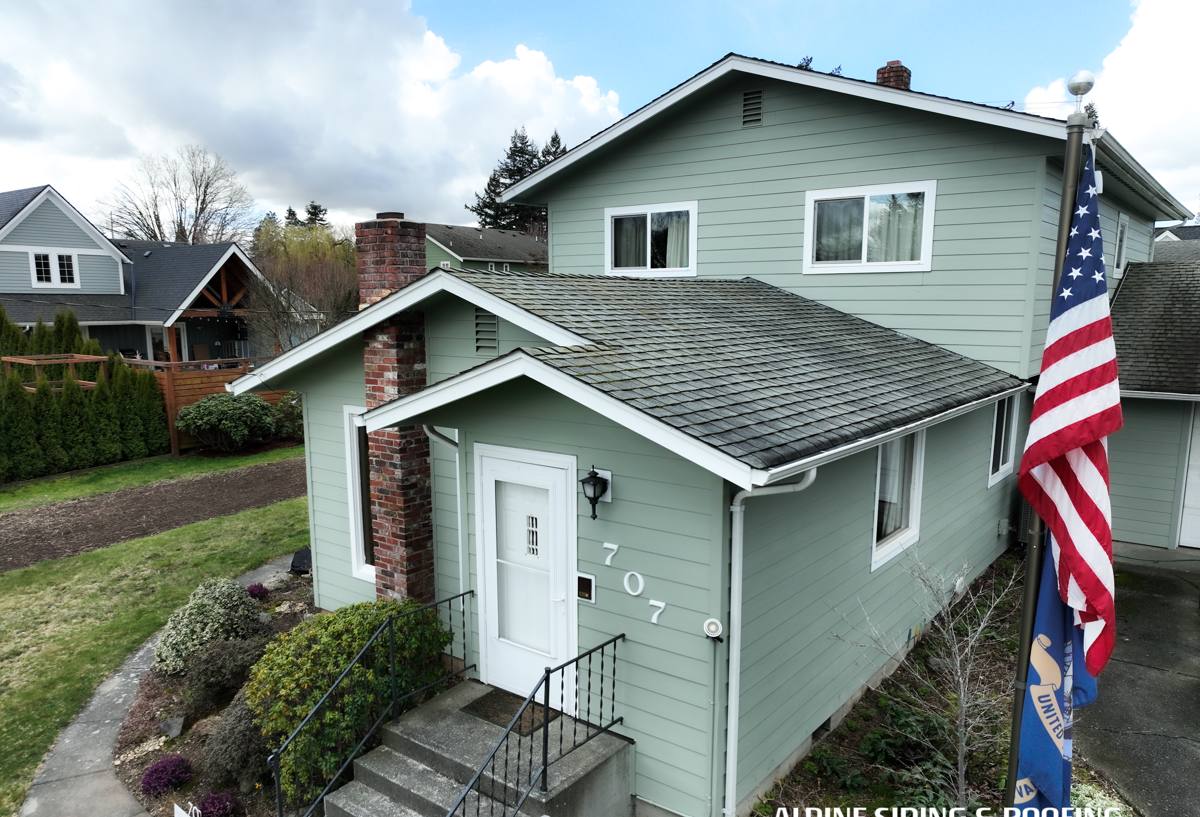
How Whatcom County's Climate Wears Down Siding
A few specific conditions do most of the damage we see on Kendall homes:
- Driving rain: Wind-driven storms push water sideways into seams, laps, and trim joints that were never designed to handle water hitting them head-on.
- Persistent moisture: Long gray stretches without real drying time mean any water that gets behind siding sits there instead of evaporating out.
- Moss and algae growth: Shaded, north-facing walls and roof lines stay damp longer, giving moss a foothold that traps even more moisture against the siding surface.
- Salt-influenced air: The moist, salt-tinged air common across Whatcom County accelerates corrosion on fasteners, flashing, and any exposed metal trim.
- Temperature swings: Freeze-thaw cycles in the colder months expand trapped moisture, which widens cracks and pushes failing caulk and trim joints further apart.
None of these are dramatic on their own. The problem is that they're constant, and siding that was installed even slightly wrong, or that's simply reached the end of its material life, doesn't get a break to recover.
Signs Your Siding Needs Repair
Most siding problems give warning signs well before they become structural. Homeowners in Kendall should watch for:
- Soft or spongy spots when you press on the siding, especially near the bottom of walls or under windows
- Visible cracking, buckling, or warping in individual boards or panels
- Persistent moss, algae, or dark staining that keeps returning after cleaning
- Paint that's peeling, bubbling, or failing faster than it should
- Gaps opening up at seams, corners, or trim joints
- Rust streaks below fasteners or flashing
- Any musty smell or visible damage on interior walls that back up to exterior siding
- Woodpecker damage or insect activity in older wood-based products
Any one of these on its own might be a small, contained repair. Several appearing together, especially on the same wall, often points to a moisture problem working underneath the surface that needs a closer look before anything gets patched.
What a Correct Siding Repair Actually Involves
A siding repair that's done right is more than swapping out a damaged board. There's a sequence to it that determines whether the fix lasts or fails again in a year or two.
Diagnosis before demolition
Before removing anything, we identify why that section failed. Was it a flashing detail that let water in above a window? A butt joint that was never properly sealed? A drainage plane that was compromised during the original install? Fixing the visible damage without addressing the cause just resets the clock on the same failure.
Checking what's behind the siding
Once the damaged material is removed, we inspect the water-resistive barrier, sheathing, and framing underneath. If moisture has reached the sheathing or framing, that has to be addressed — dried out, repaired, or in some cases replaced — before any new siding goes back on. Covering up compromised sheathing with new siding is a shortcut that guarantees a repeat problem.
Matching materials and profiles
Repairs need to match the existing siding's profile, reveal, and finish closely enough that the patch isn't an eyesore and doesn't create a new place for water to catch. This is one of the more skill-dependent parts of the job — a mismatched repair stands out and can actually create a new failure point at the transition.
Correct flashing and sealing
Every seam, joint, and penetration in the repaired area gets proper flashing and sealant, installed to shed water the way the rest of the wall system is designed to. This is where a lot of lower-quality repairs cut corners, because it's the part nobody sees once the job is finished.
Repair or Replace? How We Make That Call
Not every damaged section needs a full re-side, and not every problem area can be fixed with a patch. We walk homeowners through the honest tradeoffs rather than defaulting to the more expensive option.
| Situation | What It Usually Means | Likely Path |
|---|---|---|
| Isolated damage on one or two boards, sound sheathing underneath | Localized failure, not a systemic issue | Targeted repair |
| Damage repeating across multiple walls or elevations | Possible original installation issue affecting the whole home | Broader inspection, likely larger repair or partial re-side |
| Soft sheathing or framing found behind siding | Water has been getting in for a while | Repair sheathing first, then re-side that section |
| Siding material is near or past its usable life | Ongoing repairs will keep resurfacing | Full replacement is usually more cost-effective long term |
| Cosmetic wear only, structure and boards are sound | Surface-level issue | Cleaning, caulking, or minor repair |
We'd rather tell a homeowner honestly that a $400 repair will hold for years than sell a full re-side that isn't needed yet — and we'd rather flag early that a patch job is only buying a season or two than let someone spend money on a fix that won't hold.
Our Repair Process
- Inspection: We walk the exterior, identify every area of concern, and check behind visibly damaged siding when needed.
- Honest assessment: We explain what we found, what's causing it, and what the realistic repair options are — including if a small fix is genuinely enough.
- Scope and estimate: A clear, written scope of the repair work and cost before anything starts.
- Removal and inspection of the wall system: Damaged siding comes off, and we check the sheathing, barrier, and framing underneath.
- Repair the substrate if needed: Any compromised sheathing or framing gets addressed before new siding goes back on.
- Install matching siding, flashing, and sealant: New material is installed to match the existing profile and finish, with correct water management details.
- Final walkthrough: We review the completed work with the homeowner before we consider the job done.
Why We Repair and Install With James Hardie Fiber Cement
We install and repair with James Hardie fiber cement siding exclusively — not vinyl, not LP SmartSide, not primed spruce or cedar. That's a deliberate standard, not a default. Fiber cement handles the wet, mossy, temperature-swinging conditions common to Whatcom County better over the long run than the wood-based or vinyl alternatives, because it doesn't rot, doesn't feed insects, and doesn't expand and contract with moisture the way wood products do.
For repair work specifically, Hardie's ColorPlus factory finish matters: it means a properly matched repair board can blend into existing siding without a visible painted patch, since the finish was baked on at the factory rather than field-applied. Hardie's HZ product lines are also engineered for specific climate zones, which is relevant here — Pacific Northwest moisture exposure is a real design factor, not an afterthought. When a repair uses the same product line and profile as the original installation, it holds up the same way the rest of the wall does, rather than becoming the next weak point.
Why a Crew That Already Works Kendall Matters
Kendall's mix of rural lots, mature tree cover, and proximity to the Nooksack River corridor creates shade and moisture patterns that differ house to house, even within a small area. A crew that's worked this specific area understands which walls typically take the worst of the driving rain, where moss tends to establish first, and how older homes in the area were commonly sided — which matters when a repair needs to match decades-old trim details or siding profiles.
That local familiarity also means fewer surprises on the estimate. We're not guessing at how the regional climate has treated a given wall assembly — we've seen the pattern before on other homes nearby, and it shapes both the diagnosis and the fix.
Keeping Repairs From Becoming Repeat Repairs
A correctly done repair should hold for years, but a few habits help it hold longer in Kendall's climate:
- Keep gutters clear so water isn't overflowing directly onto siding below
- Trim back vegetation and tree limbs that keep walls shaded and damp
- Rinse moss and algae growth off siding before it establishes a thick layer
- Re-caulk exposed joints and trim on a regular schedule, not just when they visibly fail
- Walk the exterior after major storms and check for new gaps, cracking, or staining
- Address small issues promptly rather than waiting for them to spread
None of this requires special equipment or expertise — it's mostly about not letting small, easily fixed issues sit through another wet season.
Get an Honest Look at Your Kendall Home's Siding
If you're seeing soft spots, cracking, persistent moss, or siding that just doesn't look right anymore, it's worth getting an honest read on what's actually going on before it turns into a bigger project. We offer free, no-pressure estimates for Kendall homeowners — including a straight answer on whether you're looking at a simple repair or something more. Fill out the form below to get started.