 Lynden
 Windows Built for the Kendall Climate
Kendall sits in the Nooksack River valley northeast of Lynden, closer to the foothills and the Mt. Baker corridor than most of the rest of Whatcom County. That location means more rain days, more humidity sitting in the valley, and a longer stretch of gray, wet weather before summer finally shows up. Windows here do a harder job than windows in a drier climate — they're not just holding back cold air, they're holding back moisture, wind-driven rain, and the kind of persistent damp that eventually finds every weak seal in an old frame.
When we talk about "energy-efficient windows" for a Kendall home, we're really talking about two things at once: keeping heat inside during the long heating season, and keeping water and moisture out year-round. A window that does one but not the other isn't doing its job.
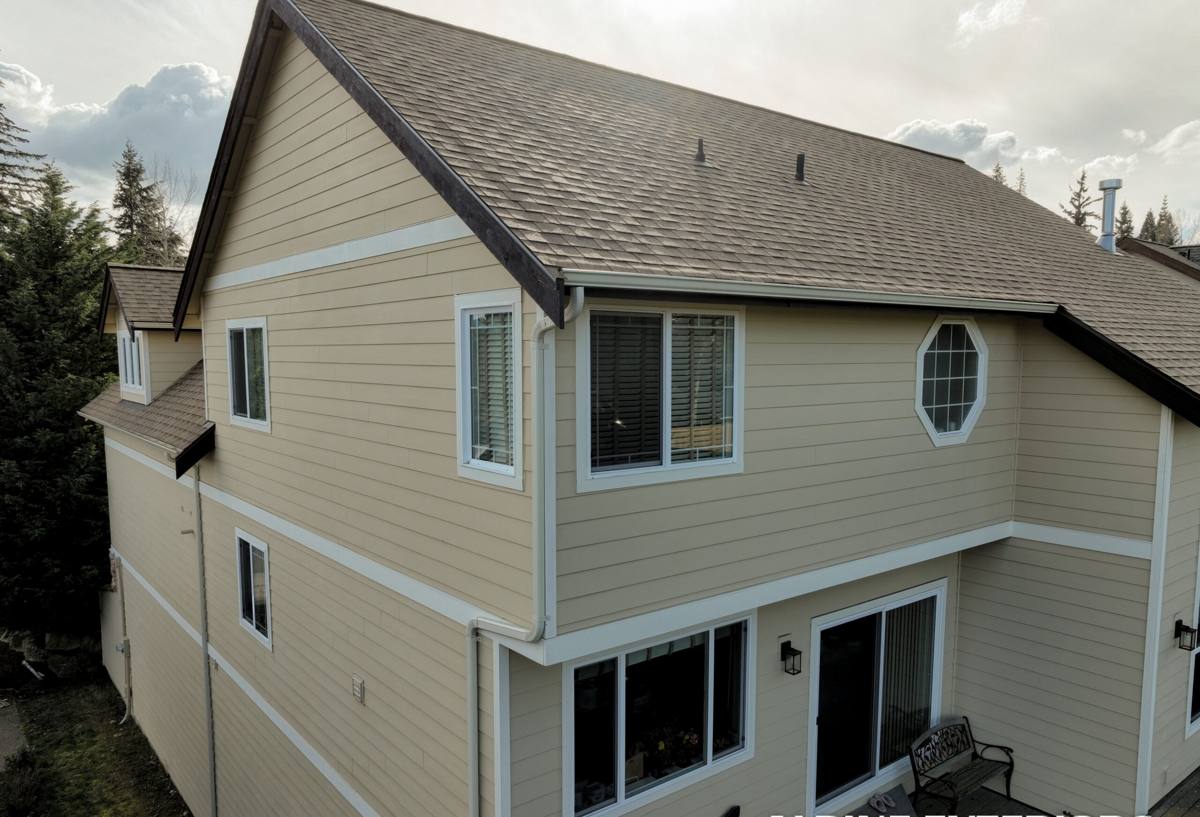
What Whatcom County Weather Does to Old Windows
Driving Rain and Air Infiltration
Wind-driven rain doesn't fall straight down — it gets pushed sideways into siding and window trim during storms coming off the Sound. On older single-pane or early-generation double-pane windows, that means water working its way past failed caulk lines, warped wood sashes, or aluminum frames that were never built with a proper thermal break. Once water gets behind the trim, it doesn't dry out quickly in this climate — it just sits, and the rot or corrosion starts from the inside where you can't see it.
Long Moss Season and Frame Materials
Whatcom County's moss season isn't a few weeks — it's most of the year. Moss and algae hold moisture against whatever they're growing on, and untreated wood window sills and trim are an easy target. This is one of the practical reasons we steer homeowners toward frame materials that don't feed that cycle, which we'll get into below. It's less about any one product being bad and more about picking materials that match how wet this area actually stays.
What "Energy-Efficient" Actually Means
The term gets used loosely, but there's an actual standard behind it. Every window sold with an NFRC (National Fenestration Rating Council) label carries a few numbers worth understanding before you buy anything.
Reading the Label
- U-Factor — how well the window resists heat loss. Lower is better for our climate; this is the number that matters most for heating bills in a place with as many cold, wet months as Whatcom County has.
- SHGC (Solar Heat Gain Coefficient) — how much solar heat passes through the glass. Less critical here than in sunnier climates, but still worth balancing on south- and west-facing walls.
- Air Leakage — how much air passes through the assembly. This is where driving rain and wind exploit weak points, so it matters as much for water management as for drafts.
- Condensation Resistance — how well the window resists interior fogging and moisture buildup, which is a real issue in humid valley air during our cold snaps.
Frame Material Comparison
| Frame Material | Moisture Behavior | Maintenance | Notes for This Area |
|---|---|---|---|
| Vinyl | Does not absorb water, no rot risk | Low — occasional cleaning | Most common choice for value and low upkeep in wet climates |
| Fiberglass | Very stable, minimal expansion/contraction | Low | Higher upfront cost, holds paint and finish well over time |
| Wood / Wood-Clad | Vulnerable to moisture if seals fail | Higher — needs monitoring and refinishing | Requires diligent maintenance in a moss-heavy, high-rain area |
| Aluminum | Conducts cold, prone to condensation without thermal break | Moderate | We generally advise against it for main living spaces here unless thermally broken |
None of these materials are wrong in every situation — a wood-clad window with good detailing can last decades. But for most Kendall homes, we default to vinyl or fiberglass because they hold up against sustained moisture with the least ongoing maintenance from the homeowner.
What a Correct Installation Actually Involves
The window unit itself is only part of the equation. Most window failures we get called out to inspect aren't a bad product — they're an installation that skipped a step that doesn't show up until years later. A correct installation in this climate includes:
- Removing old flashing and building paper back to sound sheathing, not just caulking over what's there
- Installing a proper sloped sill pan so any water that gets past the glass drains outward instead of pooling
- Flashing tape or membrane integrated with the house wrap in the correct shingle-lap order, so water sheds down and out
- Low-expansion foam or backer rod and sealant around the frame — never packed solid with standard foam, which can bow the frame
- Interior air sealing at the rough opening, separate from the exterior weatherproofing
- Exterior trim and caulking that's rated for sustained UV and moisture exposure, not a generic caulk that will crack within a couple of seasons
Skip the sill pan or get the flashing lap order wrong, and you can install the most expensive window on the market and still get rot in the wall cavity within a few years. This is the part of the job that doesn't get photographed for a brochure, but it's the part that determines whether the window performs for 20 years or 5.
Our Process for a Kendall Window Project
We keep the process straightforward because homeowners deserve to know what's happening to their house and when.
1. On-Site Assessment
We walk the exterior and check existing window condition, sill and trim rot, current flashing (if any is visible), and how each elevation is exposed to prevailing wind and rain. Kendall properties often have a mix of exposures — a sheltered side facing a barn or tree line, and an open side taking the brunt of valley wind — so we look at each window individually rather than assuming one answer fits the whole house.
2. Measurement and Product Selection
We measure each opening precisely — old houses settle, and rough openings are rarely perfectly square. We go over frame material, glazing package, and grille or trim style based on your home's age and your priorities, whether that's lowest maintenance, closest match to the home's original look, or lowest heating cost.
3. Removal and Prep
Old units come out carefully, with the opening inspected for hidden rot or water damage before anything new goes in. If we find damaged sheathing or framing, we flag it and address it before installing — not after.
4. Installation and Flashing
New units go in plumb, level, and square, with full flashing and sill pan detailing as described above. This step is where most of the long-term performance is decided.
5. Interior and Exterior Finish
Trim, caulking, and touch-up work are finished on both sides, and the site is cleaned up before we walk it with you.
Cost Factors for Kendall Window Replacement
We won't quote a number without seeing the house, since window count, size, access, and current condition all move the price. But these are the factors that typically drive cost up or down on a project like this:
| Factor | Effect on Cost |
|---|---|
| Number of openings | Largest single driver — per-window pricing benefits from doing multiple at once |
| Frame material (vinyl vs. fiberglass vs. wood-clad) | Fiberglass and wood-clad run higher than standard vinyl |
| Existing rot or hidden damage | Adds labor and material for sheathing/framing repair before the new window goes in |
| Full-frame vs. insert replacement | Full-frame (removing to the studs) costs more but is often the right call on older, rot-prone openings |
| Custom sizes or shapes | Non-standard openings cost more than stock sizes |
| Access and story height | Second-story or hard-to-reach windows add labor time |
As a broad range, homeowners in this area typically see per-window installed costs from the low thousands to considerably more for larger or custom units — but the only way to get a real number is a walk-through, which we do free of charge.
Why a Crew That Already Works in Kendall Matters
Rural Whatcom County properties often have their own quirks — older farmhouse construction, additions built at different times with different materials, well-established landscaping close to the house, or gravel driveways that affect how we stage equipment. A crew that's already worked jobs out here knows to check for these things before the truck even shows up, instead of discovering them mid-project.
We also know the practical side of scheduling around this area's weather: exterior work needs a real dry window to do flashing and sealing correctly, and in a valley that holds moisture longer than the surrounding areas, that means planning installs with a buffer instead of racing the next front coming through. Rushing a window install into a wet stretch is exactly how the "correct installation" steps above get skipped — we'd rather move the schedule than cut that corner.
After Installation: Keeping Windows Performing
New, energy-efficient windows still need basic upkeep, especially given the moss and moisture load in this region:
- Rinse pollen, moss spores, and grime off frames and glass a couple times a year
- Keep gutters and downspouts clear so water isn't sheeting down onto window heads
- Check exterior caulking annually for cracking or gaps, especially after a hard winter
- Vacuum out weep holes and tracks so drainage paths stay open
- Trim back vegetation that's holding moisture against the exterior trim
None of this is heavy maintenance — it's the kind of seasonal check most homeowners already do for gutters and siding, just extended to the windows.
If your Kendall home has old, drafty, or foggy windows — or you're just planning ahead for a remodel — we're happy to walk the property, look at what you're working with, and give you an honest, no-pressure estimate. Use the form below to get started.