 Lynden
 Windows Built for Kendall's Weather, Not Just the Showroom
Kendall sits in a stretch of Whatcom County where the weather works against your windows year-round. Homes out this way tend to have more tree cover than in town, which means more shade, more standing moisture on siding and trim, and a longer moss season on anything that stays damp too long. Add in the driving rain that comes through the county in fall and winter, plus the salt-tinged air that moves inland off the Strait on windy days, and you've got a climate that will find every weak point in a window installation. Not the window unit itself — the installation.
Most window failures we see in this area aren't because the glass or the frame gave out. They're because the window was set into the rough opening without proper flashing, sealant, or drainage, and water worked its way behind the trim over a few wet seasons. Once that happens, you're not just replacing a window — you're often dealing with soft sheathing, stained interior walls, or trim that's holding moss and algae because it never fully dries out between storms. A correct installation on the front end saves you that whole chain of problems.
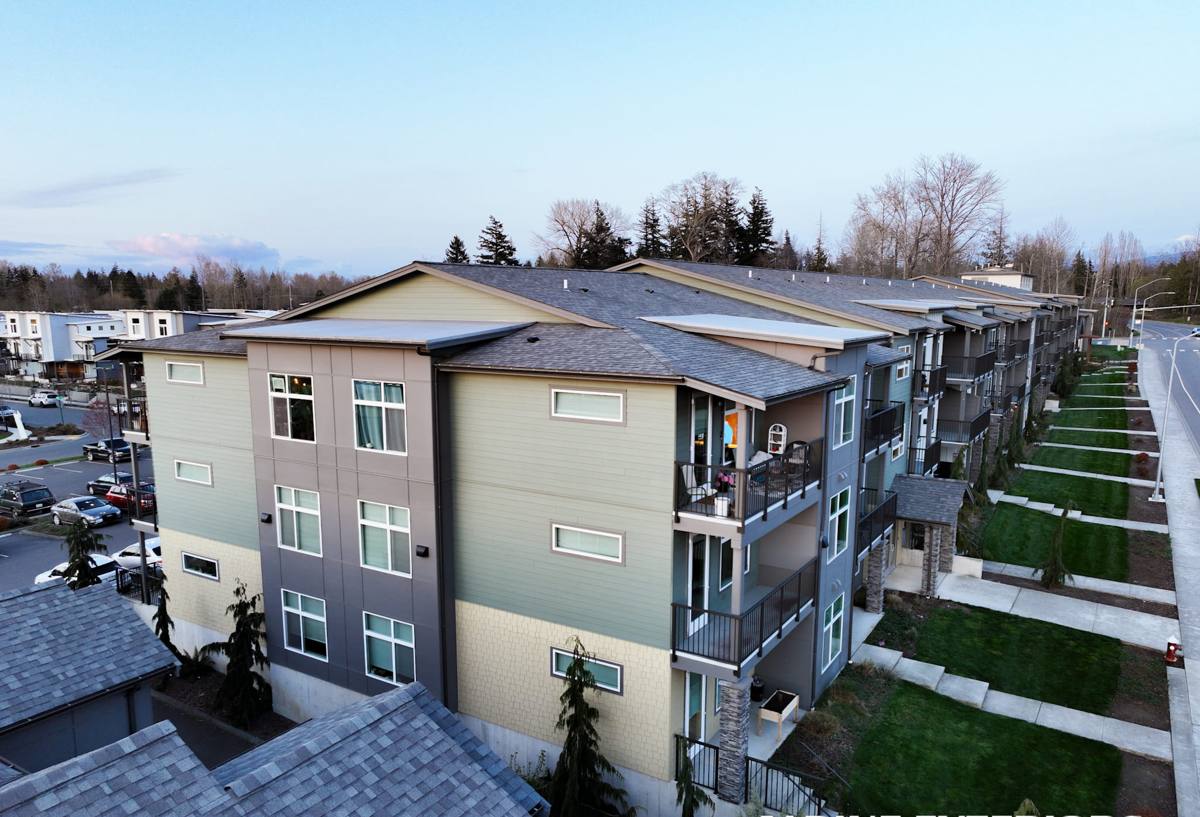
What "Correct" Actually Means on a Kendall Job
There's a real difference between a window that's installed and a window that's installed correctly. On every custom window job in Kendall, the details that matter most are the ones you won't see once the trim goes back on:
- Self-adhered flashing membrane at the sill and jambs, lapped correctly so water sheds outward, not into the wall cavity
- A sloped sill pan under every window so any water that does get past the exterior seal drains back out instead of pooling
- Proper shimming and squaring so the sash operates smoothly for years, not just on install day
- Continuous, compatible sealant at the exterior — not just a bead of caulk over gaps
- Interior air-sealing with low-expansion foam or backer rod, which also helps with the drafts and energy loss that older Kendall homes are notorious for
- Correct integration with whatever siding or house wrap is already on the wall, so the flashing sequence actually ties into your existing weather barrier instead of fighting it
Skip any one of these steps and the window can look fine from the driveway while quietly letting moisture into the wall assembly. That's the failure mode we're guarding against on every job, not just here but especially in a wooded, wet, low-airflow setting like Kendall.
Choosing Window Materials for This Climate
There's no single "best" window material — the right choice depends on your home's exposure, your budget, and how much upkeep you actually want to do. Here's how the common options hold up under Whatcom County's wet, moss-prone conditions:
| Frame Material | Moisture Performance | Maintenance | Typical Fit for Kendall |
|---|---|---|---|
| Vinyl | Won't rot; seams and welds need to be well-made to stay watertight long-term | Low — occasional cleaning | Good all-around choice for most homes, especially shaded lots |
| Fiberglass | Excellent — dimensionally stable, resists swelling and warping in damp cycles | Low | Strong option for high-exposure walls or homes near tree cover |
| Wood, unclad | Requires diligent finish maintenance; vulnerable in constant damp shade | High — repainting/refinishing on a cycle | Best reserved for covered porches or protected elevations |
| Wood-clad (aluminum or vinyl exterior) | Good — exterior shell protects the wood core if flashing is done right | Moderate | Popular where owners want a wood interior look with less upkeep |
| Aluminum | Durable but conducts cold, which drives condensation in damp winters | Low | Less common here for that reason; better suited to drier climates |
We'll walk you through this in person, because the right call often changes window-by-window on the same house. A window tucked under an eave with good sun exposure doesn't need the same spec as one on a north-facing wall shaded by fir trees, which is a very common situation on Kendall lots.
Glass Packages That Earn Their Keep
Whatever frame material you choose, the glass package matters just as much for a wet, moderate-temperature climate like this one:
- Dual-pane, Low-E glass is the practical baseline for this region — it manages heat loss and reduces condensation risk on cold, damp mornings.
- Argon or krypton gas fill between panes adds a modest efficiency boost for a relatively small cost difference.
- Triple-pane is worth considering on north- or west-facing walls that catch the worst of the driving rain and wind, or on homes closer to open, exposed ground where wind-driven moisture is a bigger factor.
- Warm-edge spacers (as opposed to older aluminum spacers) cut down on the cold-edge condensation that shows up as fogging or dripping along the bottom of the glass in winter.
Our Custom Window Process
"Custom" means the windows are built to your home's actual openings and your goals — not pulled off a shelf in a standard size. Here's how a typical job runs from first call to final walkthrough:
- On-site assessment. We look at every opening individually — exposure, existing flashing and siding condition, any signs of past water intrusion, and how the wall assembly is built.
- Measuring and material selection. Each window is measured for its specific rough opening. We talk through frame material, glass package, and style options based on that wall's exposure and your budget.
- Removal and opening prep. Old windows come out carefully, and we inspect the sheathing and framing underneath. Any soft wood or compromised material gets repaired before a new window ever goes in — installing a new window over a bad opening just hides the problem.
- Flashing and sill pan installation. This is the step that determines whether the window performs for twenty years or leaks in five. We build the drainage plane correctly every time.
- Window setting, shimming, and sealing. The unit is squared, shimmed, fastened per the manufacturer's specs, and sealed at the exterior with compatible sealant.
- Interior and exterior trim. Trim is fit, caulked, and finished to match your home, with interior air-sealing completed before trim goes back on.
- Final walkthrough. We test operation, check the seals, and go over care and warranty details with you before we call the job done.
Signs Your Kendall Home's Windows Need Attention
Because a lot of window damage happens slowly and out of sight, it helps to know what to watch for. If you're seeing any of the following, it's worth having windows looked at before the next wet season:
- Soft or discolored trim around the window frame, especially at the bottom corners
- Moss, algae, or dark streaking building up on the sill or trim faster than the rest of the house
- Condensation or fogging between panes (a sign the seal has failed on a double- or triple-pane unit)
- Drafts you can feel near the frame even when the window is fully latched
- Windows that are difficult to open, close, or lock — often a sign the frame has shifted or swollen
- Paint or finish that's peeling or bubbling on interior trim near the window, which usually points to moisture getting in from outside
What Drives the Cost of a Custom Window Job
Every home and every opening is different, so we won't quote a number without seeing the job, but these are the main factors that move the price up or down:
| Factor | Why It Matters |
|---|---|
| Frame material | Vinyl is typically the most budget-friendly; fiberglass and wood-clad options cost more up front but often save on maintenance |
| Glass package | Triple-pane and specialty coatings add cost but pay back in comfort and lower condensation risk |
| Opening condition | Rot repair or reframing behind the old window adds labor but is not optional if the sheathing is compromised |
| Window size and configuration | Large picture windows, bays, and custom shapes cost more than standard operable sizes |
| Number of windows | Doing a full-home replacement in one pass is usually more cost-efficient per window than piecemeal projects over several years |
| Access and site conditions | Second-story openings or tight lot access can add time to the job |
As a very rough starting point, homeowners in this area typically see installed costs in the range of a few hundred to a couple thousand dollars per window depending on size, material, and glass package — but the only way to get a real number is a walkthrough of your specific home.
Why It Matters That We Already Work in Kendall
A crew that's worked on homes throughout Kendall and the surrounding Lynden area already knows what this specific climate does to a building envelope. We're not guessing at how much rain exposure a north wall gets under tree cover, or how quickly moss establishes on a shaded sill — we see it on job after job in this exact area. That local familiarity shows up in small decisions: which flashing detail to use where your siding type meets the window, how much drainage capacity to build in for a wetter-than-average wall, and which materials genuinely hold up here versus which ones just look good on a spec sheet.
It also means we're accountable locally. We're not a crew passing through — we're working in Whatcom County, on Whatcom County homes, and standing behind that work with people who can come back and look at it in person if you ever have a question.
Keeping New Windows Performing Long-Term
A correct installation does most of the work, but a little seasonal attention keeps windows performing for the long haul in this climate:
- Rinse sills and tracks periodically to keep moss and organic debris from building up in a shaded, damp yard
- Check exterior caulking annually, especially after a hard winter, and have any cracked or separated sealant redone before the next rainy season
- Keep gutters and downspouts clear so water isn't sheeting down the wall directly above your windows
- Trim back vegetation that's keeping a wall in constant shade and moisture, where practical
- Operate windows through their full range a few times a year so hardware doesn't seize up from disuse
If you're weighing a full window replacement or just want an honest read on whether your current windows are still doing their job, we're happy to take a look. Reach out for a free, no-pressure estimate using the form below — we'll walk the house with you and tell you straight what we see.