 Lynden
 Custer's Siding Problem Is Different From Lynden's
Custer sits closer to the water than Lynden proper, which changes what a house's exterior has to put up with year after year. The same Whatcom County weather system that soaks Lynden also moves through Custer, but homes here catch more of the salt-laden air coming off the coast, more direct exposure on open, wind-swept lots, and the same shaded, damp conditions that keep moss growing for most of the year. A siding product that's merely "good enough" inland can fall behind faster out here.
We treat Custer as its own case, not a smaller version of Lynden. When we bid a job in this area, we're accounting for salt exposure on fasteners and trim, wind-driven rain finding its way behind poorly lapped boards, and moss and algae getting a head start in shaded, moisture-holding spots. This page walks through what that means for material choice, installation detail, and upkeep — not generic siding advice, but what actually matters for a house standing in Custer's specific mix of coastal air and Pacific Northwest rain.
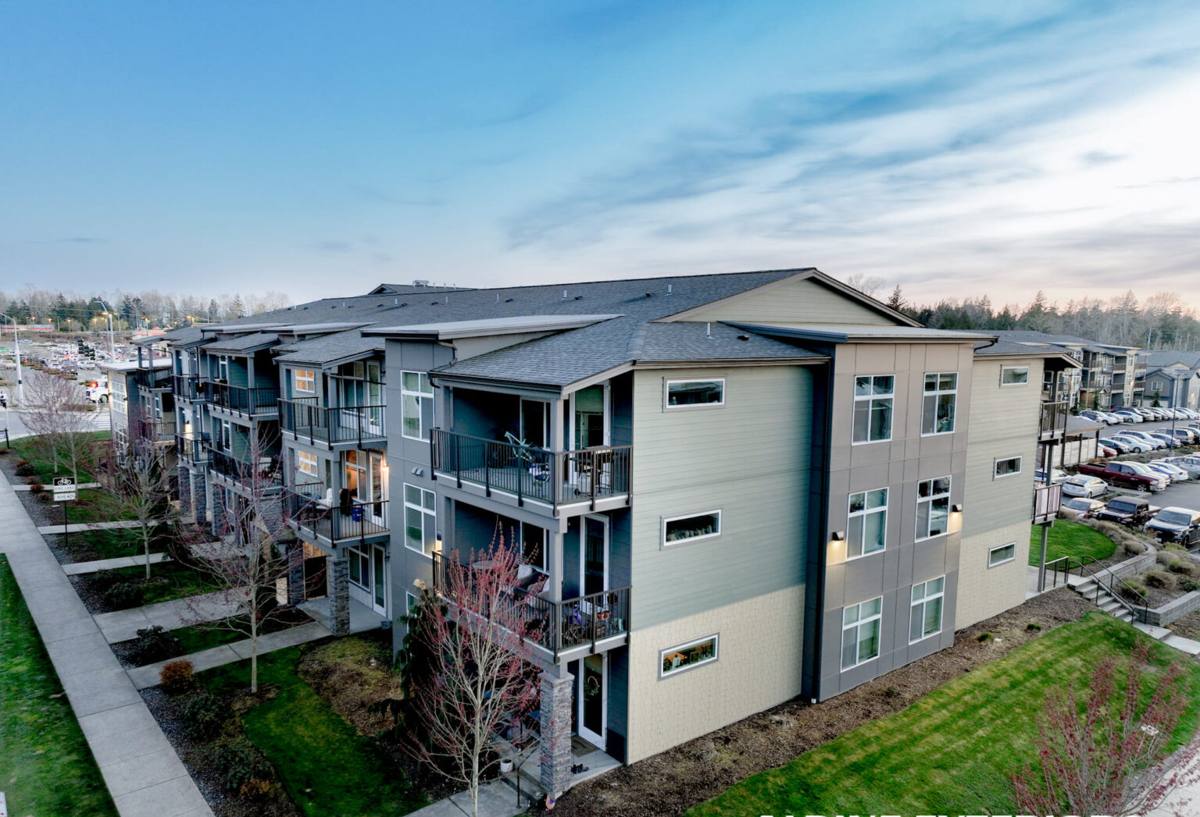
What Salt Air, Driving Rain, and Moss Actually Do to a House
Salt-Laden Air
Airborne salt doesn't just sit on the surface — it works into any exposed metal, any raw cut edge, and any seam that isn't properly sealed. Over years, that means accelerated corrosion on fasteners, faster breakdown of unprotected trim, and a general dulling of finishes that weren't built to resist it. Vinyl doesn't corrode, but its seams and clips still take a beating, and cheaper caulking systems degrade faster in salt air than manufacturers' lab tests always suggest.
Wind-Driven Rain
Custer doesn't get sheltered the way some inland lots do. Open exposure means rain doesn't just fall — it's pushed sideways into every lap, joint, and penetration in the siding. If the water-resistive barrier behind the siding isn't continuous, if flashing at windows and trim isn't detailed correctly, or if laps are too shallow, wind-driven rain finds the gaps. That's when you get soft sheathing, stained drywall, or a slow rot problem that doesn't show up until it's expensive.
Moss and Sustained Dampness
Whatcom County's moss season runs long, and shaded or north-facing walls near trees or fences can stay damp for days after a storm passes. Moss and algae don't just look bad — they hold moisture against the siding surface, which is exactly the condition that rots wood-based products and stains poorly-finished ones. A siding material's real test isn't how it looks new, it's how it looks after five wet winters with moss trying to take hold on every shaded run.
Why We Install Only James Hardie Fiber Cement
We made a standing decision as a company: we install James Hardie fiber cement siding, and we don't install vinyl, LP SmartSide, Cemplank, Allura, or raw wood siding like primed spruce or cedar. That's not a marketing line — it's a professional judgment based on how these products actually perform against exactly the conditions described above.
Vinyl doesn't rot, but it expands and contracts with temperature swings, its seams are a long-term weak point for wind-driven rain, and it can't be painted to refresh a fading color without specialty product limitations. Wood-based engineered siding and traditional wood products depend entirely on an intact factory or field-applied coating; the moment that coating is compromised — by a nail gun mis-hit, a joint left uncaulked, or years of moss holding moisture against the surface — the substrate underneath is vulnerable to swelling and rot. Cedar and primed spruce are honest, attractive materials, but they ask for a maintenance commitment (recoating, caulk renewal, moss removal) that most homeowners don't want to keep up on a coastal-adjacent lot for the next twenty years.
James Hardie fiber cement is cement, sand, and cellulose fiber — it doesn't rot, it's non-combustible, and it doesn't feed moss or mold the way organic wood fiber does. Hardie's ColorPlus factory finish is baked on under controlled conditions rather than field-applied, which gives it better UV and moisture resistance than most site-applied paint jobs, and it carries a warranty that stays with the product rather than resetting to a shorter field-paint clock. For a coastal-influenced climate like Custer's, that combination — inert material, factory-cured finish, real fire resistance — is why we standardized on it and stopped installing the alternatives.
Product Lines We Use
| Hardie Product | Typical Use | Why It Fits Custer |
|---|---|---|
| HardiePlank Lap Siding | Primary wall cladding | Climate-engineered HZ5 formulation built for wetter, harsher weather regions |
| HardieShingle | Accent gables, dormers | Adds texture without introducing a wood-based moisture liability |
| HardieTrim | Corners, window and door casing | Fiber cement trim resists the same salt and moisture exposure as the field siding |
| HardiePanel | Porch ceilings, accent panels | Non-combustible, stable panel option for detail areas |
What a Correct Installation Actually Involves
Fiber cement siding is only as good as the installation behind it. Hardie engineers the product for long life, but a poor install can shorten that life dramatically — and in a wind-driven rain environment like Custer, the margin for error is smaller than it is inland.
- Continuous water-resistive barrier: a properly lapped weather barrier behind the siding, with no gaps, tears, or shortcuts around penetrations.
- Rainscreen or drainage gap: a small air gap behind the siding lets any moisture that does get past the cladding drain and dry instead of sitting against the sheathing.
- Correct flashing at every penetration: windows, doors, hose bibs, vents, and light fixtures all need proper flashing, not just a bead of caulk over the gap.
- Manufacturer-specified fasteners and nailing pattern: corrosion-resistant fasteners driven at the correct depth and location — overdriven nails crack the board's edge and create a water entry point.
- Proper lap and clearance: correct overlap on horizontal laps, and required clearance from grade, roofing, and decking so the bottom edge of the siding never sits in standing water or snow.
- Factory-cut edges sealed: any field-cut edge gets primed or sealed per Hardie's installation guidance so the cut edge doesn't become the weak point in an otherwise sealed system.
Every one of these is a place where a rushed or inexperienced crew cuts a corner that doesn't show up as a problem for two or three years — which is exactly long enough for it to be someone else's warranty claim to deal with.
Our Process, Start to Finish
Assessment and Estimate
We walk the exterior, check the condition of the existing siding and sheathing where it's exposed, and look specifically at the sides of the house that take the most wind-driven rain and the shaded runs where moss has already taken hold. That tells us where extra attention to water management is needed, not just where the siding looks worn.
Preparation
Old siding comes off, sheathing gets inspected and repaired where needed, and the water-resistive barrier goes on correctly — lapped shingle-fashion, sealed at seams, and detailed around every window, door, and penetration before a single piece of Hardie goes up.
Installation
HardiePlank, trim, and any accent products go up per Hardie's published installation instructions — correct fastener spacing, correct laps, correct clearances, caulked and sealed where the manufacturer specifies it and left to breathe where it shouldn't be sealed.
Cleanup and Walkthrough
We clear debris and old material from the site and walk the finished job with the homeowner so everyone's looking at the same thing before we call it done.
Cost Factors for a Custer Job
Every house is different, but the same handful of factors move the price up or down on most Custer projects. We give real numbers during an on-site estimate rather than a number pulled from a general price list, but this is what typically drives the range:
| Factor | Effect on Cost |
|---|---|
| Extent of sheathing repair or rot found during tear-off | Increases cost; can't be known precisely until old siding is off |
| House size and number of stories | More surface area and scaffolding/access needs raise labor cost |
| Trim and detail complexity (dormers, gables, multiple corners) | More cutting and detail work adds labor time |
| Siding profile and accent choices (shingle accents, panel details) | Mixed profiles cost more than a single lap-siding run |
| Existing moss/moisture damage requiring remediation | Adds repair scope before new siding can go on correctly |
Keeping Fiber Cement Siding Looking Right in a Salt-Air, Moss-Prone Area
Fiber cement is low-maintenance compared to wood, but "low-maintenance" isn't "no-maintenance," especially this close to the coast. A little seasonal attention keeps the ColorPlus finish looking good and prevents small issues from becoming siding problems.
- Rinse the exterior annually (a garden hose is usually enough) to clear salt residue and airborne grime before it builds up.
- Keep gutters clear so overflow doesn't run down the siding face and create a constant damp strip.
- Trim back shrubs and branches that keep a wall shaded and damp — airflow is the best moss prevention there is.
- Check caulking at trim joints and penetrations every year or two and have any cracked or missing caulk redone before winter rain sets in.
- Address moss on the siding surface promptly with a gentle wash rather than pressure-washing, which can drive water behind laps.
- Have any impact damage (a ladder bump, a thrown rock, storm debris) repaired quickly — an exposed cut edge is the one place fiber cement is vulnerable if left unsealed.
Why Hire a Crew That Already Works in Custer
Installation quality is the single biggest variable in how long fiber cement siding actually lasts, and that's especially true where wind-driven rain and salt air punish the smallest gaps in the work. A crew that already installs in Custer and the surrounding Whatcom County coastline knows which walls on a typical lot take the worst of the weather, has already worked through the water-management details that matter here, and isn't guessing at how the local climate should change the install. That's a different level of attention than a crew installing the same product in a drier, more sheltered region and applying the same generic approach everywhere.
We're a Lynden-based crew that works this corner of Whatcom County regularly, and Custer's mix of coastal exposure and long moss season is part of what we plan around on every job here, not an afterthought.
If you're considering new siding for a home in Custer, we're happy to come take a look and give you a straightforward, no-pressure estimate — no invented urgency, just an honest read on what your house needs and what it would cost to do it right. The form below gets that conversation started.