 Lynden
 Ferndale's Climate Is Harder on Siding Than It Looks
Ferndale sits close enough to the water and the open flats of Whatcom County that homes here take a steadier beating than siding was often designed for. Salt-laden air moves in off the Strait, wind-driven rain finds every gap and seam during the wet months, and the mild, damp winters mean moss and algae get a long runway to establish themselves on north-facing walls and anything shaded by trees or eaves. None of this is dramatic on any given day. It's cumulative. A small crack, a lifted seam, or a soft spot behind a downspout doesn't fail a house overnight — it fails it over three or four wet seasons of water working its way in a little further each time.
That's the core issue with siding repair in this area: by the time damage is visible from the ground, it's usually been developing behind the surface for a while. A repair done right addresses what's underneath, not just what's showing.
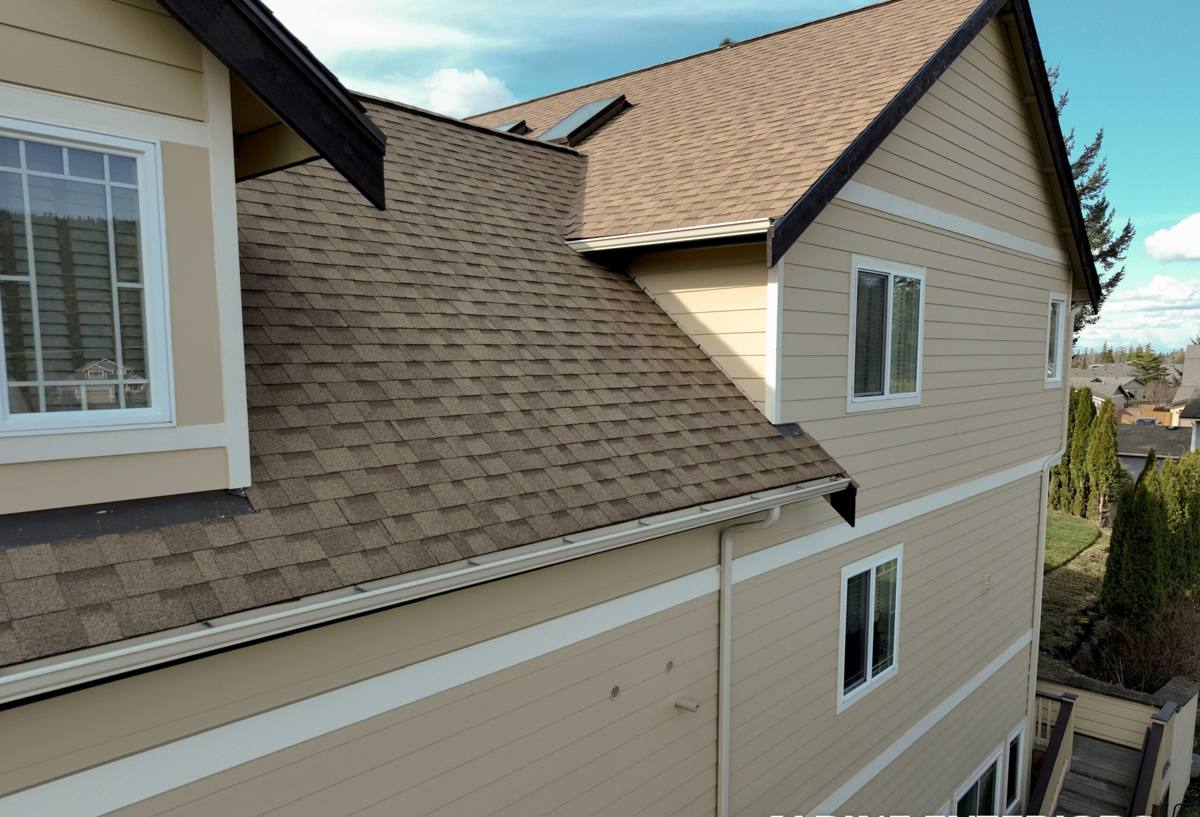
What Actually Damages Siding in Ferndale
Salt Air and Corrosion
Airborne salt accelerates corrosion on fasteners, flashing, and any exposed metal trim. Once a nail or staple starts rusting, it loses grip and the siding around it starts to move — which opens a path for water. Salt exposure also degrades some paint finishes faster than manufacturers' warranties assume, which is one reason factory-applied finishes hold up better here than field-applied paint over the long run.
Driving Rain and Wind-Driven Moisture
Whatcom County storms don't just rain down, they rain sideways. Wind-driven rain gets pushed up under laps, into butt joints, and around penetrations like hose bibs, vents, and light fixtures that weren't flashed generously enough to begin with. Once water gets behind the siding plane, it's the house wrap and flashing detail — not the siding face — that determines whether it causes rot or just runs off.
Moss, Algae, and Trapped Moisture
Ferndale's long damp season lets moss and algae take hold on shaded siding, especially under overhangs, behind landscaping, and on north and west elevations. Beyond the cosmetic issue, moss holds moisture against the surface far longer than open air would, which is exactly the condition that lets wood-based products soften and fiber cement's cut edges wick water if they weren't sealed properly during install.
Signs Your Siding Needs Repair Now, Not Later
- Soft or spongy spots when you press on the siding, especially near the bottom courses or under windows
- Visible cracking, splitting, or buckled panels, particularly after a hard freeze-thaw stretch
- Peeling or bubbling paint in one localized area, which often signals moisture trapped behind that section
- Dark staining or streaking that keeps coming back after cleaning
- Gaps opening up at seams, corners, or trim boards
- Moss or algae that regrows quickly after cleaning, suggesting the area stays wet longer than it should
- Higher heating bills or a drafty feeling near exterior walls, which can point to a compromised weather barrier
- Pest activity — carpenter ants and similar insects are drawn to softened, moisture-damaged wood
What a Correct Repair Actually Involves
A patch that only addresses the visible symptom tends to fail again within a season or two. A repair worth doing follows a few consistent steps regardless of what's on the wall:
1. Find the Water Path, Not Just the Damage
Before anything gets replaced, the question is where the water is actually getting in. That might be several feet away from where the damage shows up, since water travels down behind the siding plane before it pools or soaks in. Skipping this step is the single most common reason repairs don't hold.
2. Check the Weather-Resistive Barrier
Siding is the outer layer of a system, not the whole system. If the house wrap or building paper behind the damaged area is torn, sagging, or improperly lapped, replacing the siding alone just resets the clock on the same failure.
3. Address Flashing and Penetrations
Windows, doors, vents, and anywhere something passes through the wall are the most common failure points. Correct repair means re-flashing these details properly, not just caulking over the gap and hoping it holds through the next driving rainstorm.
4. Match or Replace to Maintain a Continuous Surface
Patched-in siding that doesn't match reveal, texture, or finish stands out and can also create new water paths at the transition. Sometimes the right call is replacing a full section or elevation rather than a single board, both for appearance and for a cleaner moisture barrier.
5. Confirm Fastening and Clearances
Correct nailing patterns, proper gaps at butt joints, and adequate clearance from grade, roofing, and decks all matter for how the repaired section performs going forward. A repair that ignores these details is cosmetic, not structural.
Repair or Replace? How to Think About It
Not every problem area needs a full re-side, and not every visible crack can be responsibly patched. The right call usually comes down to a few factors:
| Factor | Leans Toward Repair | Leans Toward Replacement |
|---|---|---|
| Extent of damage | Isolated to one area or elevation | Spread across multiple walls |
| Underlying material condition | Solid, dry substrate nearby | Soft or delaminating substrate widespread |
| Age of existing siding | Under 10-15 years, matching material available | Original siding is decades old or discontinued |
| Moisture readings behind siding | Localized, dry once the source is fixed | Elevated readings across several sections |
| Material type | Fiber cement with isolated impact damage | Failing wood composite, warped vinyl, or chronic moisture-prone products |
| Cosmetic match | Color and profile still available | Discontinued color, faded finish won't match |
When we find that damage is isolated and the substrate around it is sound, repair is the honest recommendation — there's no reason to sell a full re-side when a section will genuinely hold. When we find the underlying moisture problem is systemic, we say so plainly, because a patch in that situation is a short-term fix that costs more in the long run.
Our Repair Process
Inspection
We start by walking the affected area and checking adjacent sections, since damage this far into Whatcom County's wet season rarely stays confined to one spot. We'll check moisture levels where it's warranted, not just eyeball the surface.
Diagnosis and Honest Options
We explain what we found, what's causing it, and what the realistic options are — repair, partial replacement, or full re-side — along with the trade-offs of each. No pressure toward the bigger job if the smaller one is the right call.
The Repair Itself
This includes fixing the water path first, correcting flashing and barrier issues, and then restoring the siding surface to match. We don't consider a repair finished until the cause is addressed, not just the symptom.
Prevention Notes
Before we leave, we'll flag anything nearby worth keeping an eye on — a downspout that's discharging too close to the wall, landscaping trapping moisture against siding, or gutter issues sending water where it shouldn't go. Small maintenance items now prevent the next repair call.
Why a Crew That Already Works Ferndale Matters
Siding repair is diagnostic work as much as it's carpentry. A crew that regularly works Ferndale and the surrounding Whatcom County coastline has already seen how salt air corrodes specific fastener types, which elevations take the worst of the driving rain in this area, and where moss tends to establish first on local homes. That pattern recognition shortens the diagnosis and means less guesswork — and fewer repairs that need a second visit because the real cause wasn't caught the first time.
It also matters for material matching. Discontinued colors and profiles are a real problem with a house that's ten or fifteen years old, and a contractor familiar with what's been installed across the area has a better shot at sourcing something that blends in cleanly.
Where This Fits With Our Approach to Materials
We install James Hardie fiber cement siding exclusively, and that shapes how we handle repairs too. On homes already sided in Hardie, repairs are usually straightforward — the ColorPlus factory finish holds color well against salt air and UV exposure, and cut edges just need proper sealing to keep performing as designed. On homes with other siding types showing chronic, area-wide moisture problems, we'll tell you honestly when a patch is a temporary fix rather than a real solution, and when the more durable long-term answer is replacing the affected section — or the whole elevation — with a non-combustible, climate-engineered product built for exactly this kind of exposure. We're not going to talk you into a bigger job than you need, but we're also not going to pretend a Band-Aid repair on a failing product is a permanent fix.
Maintenance That Reduces Future Repair Calls
- Rinse siding annually, especially shaded and north-facing walls where moss and algae build up fastest
- Keep gutters clear so water isn't overflowing directly onto siding below
- Trim back landscaping so siding gets airflow and isn't staying damp longer than it should
- Re-caulk around windows, doors, and penetrations every few years, since caulk is a wear item, not a permanent seal
- Walk the exterior after major storms and check for anything that's shifted, cracked, or come loose
If you're seeing damage, soft spots, or persistent staining on your Ferndale home, we're happy to take a look and give you a straight answer on what it needs — whether that's a targeted repair or something more. Reach out below for a free, no-pressure estimate.