 Lynden
 Siding Repair for Everson and the Lynden Area
Everson sits in the Nooksack River valley, a short drive from Lynden, in a part of Whatcom County where the weather doesn't do anything halfway. Winters bring long stretches of driving rain, spring and fall stay damp for weeks at a time, and the marine air that moves inland off the Sound carries moisture into every seam, joint, and nail hole in a home's exterior. Siding here isn't decorative — it's the only thing standing between that weather and your framing. When it's compromised, even a small gap, crack, or piece of failed caulking, water finds its way in long before anyone notices a problem from the curb.
This page is about one thing: siding repair, done correctly, for homes in Everson and the surrounding Lynden area. Not a full replacement pitch, not a generic list of siding tips — just what actually needs to happen when siding on a local home is damaged, failing, or letting water past it, and why the details of that repair matter as much as the material itself.
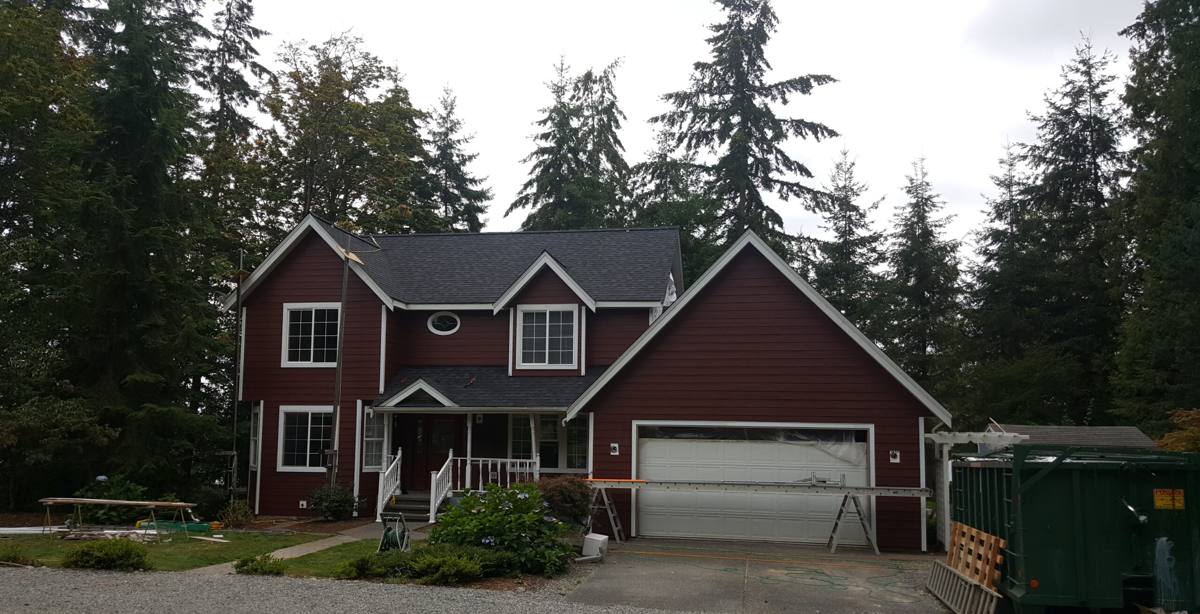
Why Whatcom County Weather Is Hard on Siding
A lot of siding damage in this region isn't dramatic. It's slow. It shows up as a soft spot near a window trim, a section of paint that keeps bubbling no matter how many times it's touched up, or a patch of siding that stays damp two days after everything else has dried out. A few things drive that pattern locally:
Driving Rain
Storms coming through the valley don't just fall straight down — wind pushes rain sideways into wall assemblies, working it into laps, corners, and any spot where caulking or flashing has started to fail. Siding that was installed with tight seams and correct overlaps sheds that water. Siding with even minor gaps starts absorbing it.
A Long Moss Season
Everson gets enough shade, humidity, and mild temperature swings to keep moss and algae active for much of the year, not just a few weeks in spring. On siding, moss holds moisture against the surface far longer than open air would, which is exactly the condition that leads to rot in wood-based products and finish breakdown on lower-quality materials. North-facing walls and anything shaded by trees or a neighboring structure are usually the first places it takes hold.
Salt-Influenced Marine Air
Whatcom County's proximity to the Sound means the air itself carries more moisture and mineral content than you'd find further inland. It's not the same direct salt exposure as a beachfront home, but over years it still accelerates corrosion on fasteners and trim, and it keeps humidity levels elevated even on days without rain.
None of this means siding is doomed to fail — it means siding has to be installed, sealed, and repaired with those specific stresses in mind, not with a one-size-fits-all approach.
Signs an Everson Home Needs Siding Repair
Most siding problems give warning signs well before they become structural. The homeowners who catch repairs early are the ones who know what to look for and check a couple of times a year, especially after a hard winter.
- Soft or spongy siding when pressed, especially near the bottom of walls or below windows
- Paint that's peeling, bubbling, or repeatedly failing in the same spot
- Visible cracks, chips, or holes in siding panels or boards
- Gaps opening up at seams, corners, or where siding meets trim
- Persistent moss or algae growth that keeps coming back after cleaning
- Staining or discoloration that tracks downward from a seam or fastener
- Warped, buckled, or separating boards
- Musty smell or visible moisture on interior walls that back up to affected siding
Any one of these on its own might be minor. Several showing up in the same area, or a problem that keeps returning after being patched, usually means the underlying cause hasn't actually been fixed — just covered.
What a Correct Siding Repair Actually Involves
Siding repair gets treated as a quick fix more often than it should be. Caulk over a crack, slap on a patch, repaint, done. That approach almost always fails again within a season or two in this climate, because it addresses the symptom and not the cause.
Diagnosing the Actual Cause First
Before any repair starts, the real question is why that section failed. Was it a flashing detail that was never installed correctly? A caulk joint that dried out and cracked? Trapped moisture behind the siding from a gap higher up the wall? Repairing the visible damage without answering that question just buys time before the same spot fails again.
Checking What's Behind the Siding
Any repair involving rot, staining, or persistent moisture means pulling back the affected siding to check the water-resistive barrier and sheathing underneath. If moisture has already reached the wall assembly, patching over it traps the problem instead of solving it. This is the step that gets skipped by crews trying to move fast — and it's the one that determines whether a repair actually holds.
Matching Material and Profile
A repair that doesn't match the existing siding's profile, reveal, and finish stands out immediately and can also create new water paths where the old and new material meet. Matching matters both for appearance and for making sure the repaired section performs the same as the rest of the wall.
Correct Flashing and Sealing
Flashing above windows, doors, and horizontal trim does most of the real work of keeping water out. Sealants matter too, but they're a secondary defense, not the primary one. A repair that relies on caulk to do a flashing detail's job will fail again — it's just a matter of time.
Repair or Replace? How to Think About It
Not every damaged section needs a full re-side, and not every problem can be permanently solved with a patch. The right call depends on how widespread the damage is, what's causing it, and what the siding is made of.
| Factor | Repair Often Makes Sense | Replacement Is Usually Worth Considering |
|---|---|---|
| Extent of damage | Isolated to one or two areas | Recurring across multiple walls or elevations |
| Cause | A single identifiable failure point (impact damage, one bad seam) | Systemic issue — original installation, material breakdown, or age |
| Underlying structure | Sheathing and framing test dry and sound | Rot or moisture damage found behind more than a small section |
| Age of siding | Siding is otherwise in good condition and mid-life | Siding is near or past its expected service life |
| Material | Durable material (e.g., fiber cement) with a localized issue | Material prone to ongoing moisture or maintenance issues |
An honest inspection should tell you which column you're in — not a sales pitch that steers every visit toward a full replacement, and not a quick patch that ignores a bigger problem underneath.
Why We Repair and Rebuild With James Hardie Fiber Cement
We install James Hardie fiber cement siding exclusively — we don't work with vinyl, LP SmartSide, Cemplank, Allura, or unprimed wood siding like spruce or cedar. When we're called to repair a section of siding, that standard shapes how we approach the job.
If a home already has Hardie siding, repairs are straightforward: Hardie's HZ5 product line is engineered for wetter, harsher climates, the factory-applied ColorPlus finish is designed to match across repaired sections without an obvious seam in color, and the material itself doesn't absorb water the way wood-based or engineered-wood products can. That's a meaningful advantage in a place with a moss season this long — fiber cement doesn't feed the growth or soften from sitting damp the way wood-based sidings can.
If a home has a different siding type that's failing — especially in ways tied to moisture, delamination, or repeated maintenance — we'll say so plainly. Some repairs on other materials are reasonable short-term fixes. Others are patches on a product that's simply reached the point of diminishing returns, and no amount of careful repair work changes that underlying math. We'd rather tell a homeowner that honestly than sell a repair we don't think will hold.
What This Means for Your Repair Estimate
When we look at a repair, we're evaluating both the immediate damage and what it tells us about the material and installation behind it. That's part of giving an honest assessment — not every job needs to end in a full re-side, but every homeowner deserves to know which situation they're actually in.
Our Process for Siding Repair in Everson
1. On-Site Inspection
We look at the affected area and the rest of the exterior — problems rarely stay isolated, and a full look tells us whether this is a contained repair or a sign of something wider.
2. Identify the Root Cause
We trace the damage back to its source: flashing, sealant failure, a grading or drainage issue, or simple wear. Fixing the visible damage without addressing the cause isn't a repair, it's a delay.
3. Open Up and Assess
Where moisture or rot is suspected, we open the area enough to check the sheathing and water-resistive barrier before closing anything back up.
4. Repair to Spec
Damaged material is replaced with matching product, correct flashing and fastening details are restored, and sealants are applied where they belong — not as a substitute for proper flashing.
5. Written Explanation
We tell you what we found, what we did, and what to watch for going forward, so you're not left guessing about the condition of your home's exterior.
Why It Matters to Hire a Crew That Already Works in Everson
Siding repair done by someone unfamiliar with this region tends to miss the details that actually matter here — how moss establishes on shaded walls, how wind-driven rain behaves against a wall assembly in a river valley, what flashing details hold up against a long wet season versus a milder climate. A crew that regularly works Everson and Lynden homes has already seen how local siding fails and why, which shortens the guesswork on your repair and reduces the chance of the same problem coming back in a year or two.
It also means someone who understands the practical side of working here — permitting norms, typical construction in the area, and how homes in this valley are built and weathered — rather than applying a generic approach that happens to work fine somewhere drier.
Get an Honest Look at Your Siding
If you're seeing soft spots, recurring moss, peeling paint, or gaps in your siding anywhere in Everson or the greater Lynden area, it's worth having it looked at before the next wet season makes the problem worse. We'll give you a straight assessment of what's actually going on and what it would take to fix it right — no pressure, no upsell, just an honest read on your home. Request a free estimate using the form below.