 Lynden
 Roofing Built for Everson's Weather, Not Just Any Roof
Everson sits in the Nooksack River valley in Whatcom County, close enough to the water and the marine air pattern that moves through this part of Washington to deal with the same conditions as the rest of the county: long stretches of driving rain, humid air that never fully dries out roof surfaces, and a moss season that can run most of the year. A roof that would hold up fine in a drier climate can start failing here within a decade if it wasn't installed with these specific conditions in mind.
New roof installation in Everson isn't just about picking a shingle color and nailing it down. It's about building an assembly — decking, underlayment, flashing, ventilation, and the roofing material itself — that sheds constant moisture, resists moss and algae growth, and stays sealed through wind-driven rain events. We install roofs across Whatcom County and see firsthand what fails here and why, and we build accordingly.
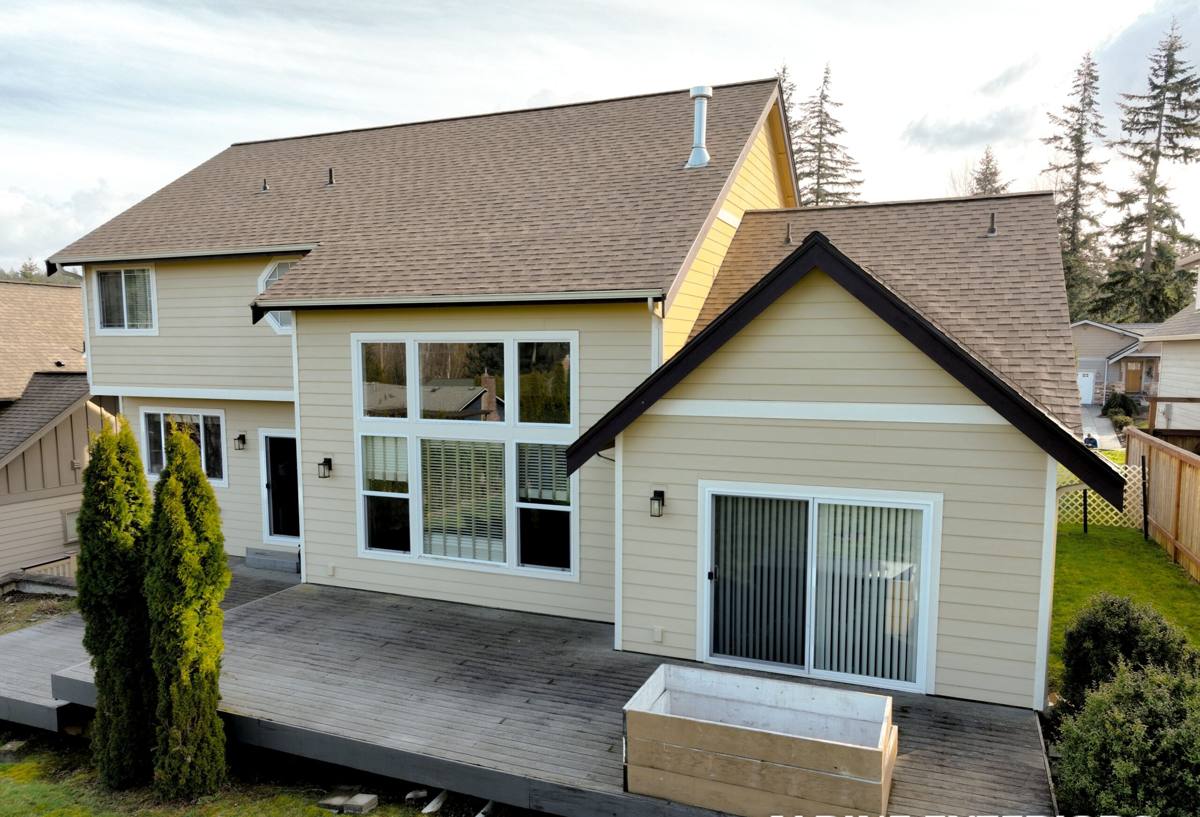
Why Roofs Wear Out Faster in This Part of the County
A few things combine to shorten roof life in Everson if the original installation cut corners:
- Persistent moisture. Rain here doesn't fall in short, drying-out bursts as often as it does in other regions — it lingers, and roofs stay damp longer between storms.
- Moss and algae. Shade from mature trees, north-facing slopes, and humid air create ideal conditions for moss to take hold, especially on roofs with poor airflow underneath the shingles.
- Wind-driven rain. Storms moving through the valley can push rain sideways under poorly flashed edges, valleys, and penetrations — points that a rushed installation often shortchanges.
- Salt-influenced air. Whatcom County's proximity to Puget Sound means some corrosion-prone metal components — flashing, fasteners, vent hardware — age faster than they would further inland.
None of this means roofing in Everson is a losing battle. It means the installation details that get skipped elsewhere can't be skipped here.
Signs an Everson Home Needs a New Roof, Not Another Repair
Homeowners often ask us to patch a leak, and sometimes that's the right call. Other times, patching is just delaying an inevitable full replacement. Signs it's time to talk about a new roof instead of another repair:
- Shingles are curling, cupping, or losing granules in visible patches
- Moss has worked its way under shingle edges, not just sitting on top
- You've had two or more leak repairs in different spots over the past couple of years
- The decking feels soft or spongy when walked on, or shows sagging from the ground
- The roof is past 20-25 years old (for asphalt composition) and has never been fully replaced
- Flashing around chimneys, skylights, or vents is rusted, lifted, or missing sealant
If a roof is showing two or more of these at once, a full replacement is almost always the more honest recommendation — repeated patching on a roof that's structurally past its service life just spends money without solving the underlying problem.
What a Correct Installation Actually Involves
Tear-Off and Deck Inspection
We remove the old roofing down to the decking rather than installing over an existing layer. This lets us actually see the wood — soft spots, rot around penetrations, or water staining that indicates a slow leak the old roof was hiding. Any damaged decking gets replaced before anything new goes down. Roofing over a compromised deck just guarantees a shorter lifespan for the new roof.
Underlayment and Ice/Water Protection
Given how much rain this area sees, we don't treat underlayment as an afterthought. Self-adhering ice and water barrier goes in valleys, around penetrations, and along eaves — the spots most likely to see water back up under wind-driven rain or ice damming during a cold snap.
Flashing
Flashing is where most leaks actually originate, not in the field of the roof itself. Chimneys, skylights, sidewalls, and valleys all get new flashing, not reused old metal, and it's installed to shed water in layers rather than relying on caulk to do the sealing.
Ventilation
Balanced intake and exhaust ventilation keeps the underside of the roof deck dry and temperature-stable. Poor ventilation is one of the biggest hidden contributors to premature moss growth and shingle failure in this climate — a hot, moist attic pushes condensation up into the roof assembly from below while moss works in from above.
Final Material Installation
Shingles, panels, or whatever material was selected get installed to manufacturer spec with the correct nailing pattern and exposure — details that matter more in high-wind, high-rain areas than they do in milder climates.
Choosing a Roofing Material for Everson's Climate
There's no single "best" roofing material — the right choice depends on budget, roof pitch, home style, and how much long-term maintenance a homeowner wants to take on. Here's how the common options compare for this specific climate:
| Material | Moisture & Moss Resistance | Typical Lifespan Here | Maintenance |
|---|---|---|---|
| Asphalt composition shingle | Good, especially algae-resistant (AR) rated products | 20-30 years | Periodic moss treatment, gutter clearing |
| Standing seam metal | Excellent — sheds moss and moisture well due to smooth surface and steep-slope performance | 40-60+ years | Low; occasional fastener/seam check |
| Synthetic/composite shingle | Very good; engineered to resist moisture absorption | 30-50 years | Low to moderate |
| Cedar shake | Fair without diligent upkeep — absorbs moisture, needs treatment | 20-30 years with maintenance | High — regular treatment and inspection |
We're upfront that some materials require more homeowner commitment than others in a climate like this one. Cedar shake, for example, can look great, but it needs consistent maintenance to resist moisture absorption and moss colonization — if that upkeep isn't realistic for a homeowner's schedule or budget, we'll say so rather than sell a product that's a poor fit for how the house will actually be maintained.
Our Installation Process
- On-site assessment. We inspect the existing roof, decking (where visible), attic ventilation, and any problem areas the homeowner has noticed.
- Written estimate. A clear scope of work and price, covering materials, tear-off, disposal, and any deck repair contingencies.
- Material selection. We walk through options based on budget, home style, and how much maintenance the homeowner wants to take on long-term.
- Scheduling around weather. Roofing work gets scheduled with an eye on Whatcom County's forecast — we don't install underlayment or shingles in the middle of a rain event.
- Tear-off and deck inspection. Old material removed, decking checked and repaired as needed.
- Underlayment, flashing, and ventilation installed. The parts of the job that determine whether the roof actually performs in this climate.
- Final material installation and cleanup. Site swept for debris and nails before we consider the job done.
- Walkthrough. We go over the finished roof with the homeowner before wrapping up.
Permits and Timeline
Most residential re-roofing work in Whatcom County requires a permit, and timelines depend on the county's current review load — this is something we handle as part of the job rather than leaving a homeowner to sort out on their own. Actual installation time for a typical single-family home usually runs one to three days once material is on-site and weather cooperates; steeper or more complex rooflines, or unexpected deck repair, can extend that.
Why Hire a Crew That Already Works in Everson
A crew that installs roofs across Whatcom County regularly sees how different materials and installation choices actually hold up under this area's rain and moss pressure over years, not just how they look on installation day. That experience shows up in small decisions — where extra ice and water shield gets added, how ventilation is balanced, which flashing details get reinforced — that a crew unfamiliar with the local climate might not think twice about. It also means we're not guessing at permit requirements, weather scheduling, or the kind of moss and moisture issues that are common on homes in this area.
What to Check Before Hiring Any Roofing Contractor
- Are they licensed and insured in Washington State, and will they show proof without being asked twice?
- Do they tear off old roofing rather than installing over it?
- Do they explain flashing and ventilation details, or just talk about shingle brand and color?
- Is the estimate written and itemized, not a vague verbal number?
- Do they have experience with this specific region's rain and moss conditions, not just general roofing experience?
- Will they walk the finished roof with you before calling the job complete?
If your Everson home's roof is showing its age or you're planning ahead rather than waiting for a leak, we're happy to take a look and talk through honest options. Fill out the form below for a free, no-pressure estimate.