 Lynden
 Fiber Cement Siding Built for Deming's Weather
Deming sits back from the coastline, but that doesn't mean the coast stops mattering. Weather systems moving in off the Pacific push driving rain up the Nooksack valley for months at a stretch, and the same marine air that keeps Whatcom County green also carries enough moisture and salt residue to work on anything less than a genuinely durable exterior. Add the tree cover common on properties out this way, and you get a long moss season that keeps siding damp far longer than it stays damp on homes in open, sun-exposed neighborhoods. Siding here isn't decorative — it's doing real work every day, whether the weather is being obvious about it or not.
We install fiber cement siding for homes throughout Deming and the rest of Whatcom County, and we do it with one product line: James Hardie. This page covers what the local climate does to siding over time, what a correct fiber cement installation actually involves, and how our process works from first estimate to finished job.
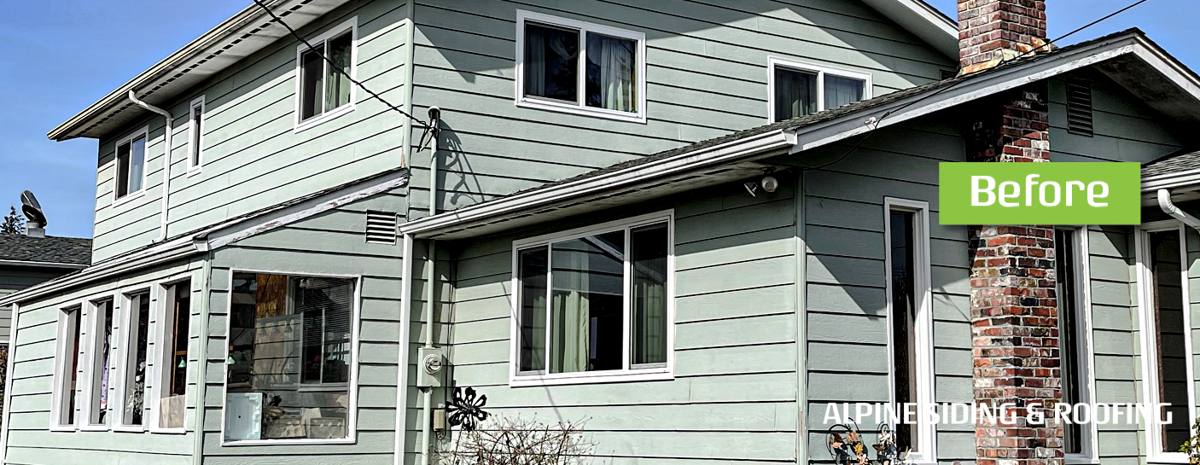
What This Climate Does to the Wrong Siding Material
Moisture That Doesn't Let Up
Western Washington doesn't get hurricane-force storms, but it makes up for that with duration. Rain here soaks a wall assembly over hours and days, not minutes, and one storm often rolls into the next before a wall has fully dried out. Any siding material that traps water behind it, wicks moisture into its own core, or takes a long time to dry between storms is fighting a losing battle in this climate. That's true of untreated wood, and it's true of lower-grade composite products that weren't engineered specifically for a wet marine climate in the first place.
Moss and Algae Take Hold
Shaded siding that stays damp is exactly where moss and algae like to grow. On homes with mature trees — common around Deming — north-facing walls and areas tucked under eaves can stay wet for days after a storm passes through. Moss holds moisture directly against the siding surface, and over years that constant dampness is what breaks down paint film, softens weaker substrates, and eventually invites rot in materials that aren't built to shrug it off.
Salt-Tinged Marine Air and Metal Components
Whatcom County's marine air reaches well inland, and it carries trace salt along with the moisture it dumps on everything it touches. It's a slower process than what a home right on the water deals with, but it still shows up over the life of a siding job — corroded fasteners, streaking around trim and flashing, and finishes that fade or chalk sooner than they should. Choosing corrosion-resistant fasteners and detailing flashing correctly isn't optional here; it's part of doing the job right the first time.
Why We Install Only James Hardie Fiber Cement
We settled on a standard years ago and we haven't wavered from it: James Hardie, and nothing else. Not vinyl, not LP SmartSide, not Cemplank or Allura, not primed spruce or cedar. Every one of those products has a legitimate place in the market — we simply won't put our name on an installation using them. Here's why Hardie is different:
- Non-combustible core. Fiber cement doesn't feed a fire the way wood-based or wood-fiber composite sidings can.
- Climate-engineered product lines. Hardie's HZ5 formulation is built for the freeze-thaw swings and near-constant moisture of the Pacific Northwest, not a one-size-fits-all national product.
- ColorPlus factory finish. A finish baked on under controlled factory conditions holds up better over time than paint applied on-site, which matters when a wall spends half the year damp.
- A warranty that's genuinely transferable to the next owner, which matters for resale when buyers start asking about siding age and condition.
- A long track record of performing correctly in exactly the kind of wet, moss-prone, marine-influenced climate that Deming sits in.
None of that matters if the installation itself is sloppy. The product is only half the equation — the crew and the details are the other half.
What a Correct Fiber Cement Installation Involves
Fiber cement is more forgiving than some materials, but it still punishes shortcuts, especially in a climate this wet. A correct installation includes:
- A drainable rain screen gap behind the siding so any moisture that gets past the surface has somewhere to go besides the sheathing.
- Properly lapped and sealed flashing at every window, door, and roof-to-wall transition — the single most common failure point on siding jobs we're called out to repair.
- Fastening at the exact pattern and depth Hardie specifies, not "close enough." Over- or under-driven nails are one of the fastest ways to void a warranty and invite water intrusion.
- Correct clearance from grade, decks, patios, and roof lines so siding isn't sitting in standing water or catching splash-back.
- Factory-primed cut edges and joints sealed with products compatible with the ColorPlus finish, not generic caulk that fails within a season or two.
We follow Hardie's published installation specifications on every job, not an abbreviated version of them. That's the difference between siding that looks good for two years and siding that looks good for twenty.
James Hardie Product Lines We Use
Not every home needs the same profile. We'll talk through what fits your house, your budget, and the look you're after, but here's a general breakdown of the lines we install most often:
| Product | Best For | Notes |
|---|---|---|
| HardiePlank Lap Siding | Most single-family homes | The standard horizontal lap look, available in a range of widths and textures |
| HardiePanel Vertical Siding | Modern styling, accent walls, gable ends | Clean vertical lines, often paired with board-and-batten trim |
| HardieShingle | Craftsman and cottage-style homes | Staggered or straight-edge shingle profiles without the upkeep of real wood shingles |
| HardieTrim | Corners, window and door surrounds, fascia | Shares the same climate-engineered core as the field siding |
Cost Factors for a Deming Fiber Cement Project
Every home is different, so we don't quote off square footage alone. These are the factors that most often move the number up or down:
| Factor | Why It Matters |
|---|---|
| Tear-off vs. new construction | Removing and disposing of old siding, and repairing any sheathing damage found underneath, adds labor |
| Hidden moisture or rot damage | Wet sheathing or framing discovered once old siding comes off has to be addressed before new siding goes on |
| Home size and wall complexity | Dormers, multiple gables, and cut-up wall lines take more time than a simple rectangular footprint |
| Profile and finish chosen | Wider lap reveals, shingle profiles, and premium ColorPlus colors carry different material costs |
| Trim scope | A full HardieTrim corner and window package costs more than reusing sound existing trim |
| Access and site conditions | Tree-covered lots, sloped grade, and limited equipment access can add time to a job |
We'll walk your home, point out what we see, and give you a written estimate that spells out exactly what's included — no vague allowances buried in the fine print.
Signs Your Current Siding Is Losing the Fight
If your home is showing any of the following, it's worth having someone look before a small problem turns into an expensive one:
- Moss or dark streaking building up at butt joints, seams, or under eaves
- Paint that's peeling, bubbling, or chalking faster than it used to
- Soft or spongy spots when you press on siding or trim, especially near the bottom courses
- Visible gaps, warping, or delamination at panel edges
- Rust streaks running down from nail heads or trim fasteners
- Siding that stays visibly damp for days after a storm, especially on shaded walls
Any single item on that list isn't necessarily an emergency. Several of them together, especially on a home with original siding from the 1980s or 90s, usually means it's time to plan a replacement before the sheathing underneath starts taking damage too.
Our Process, Start to Finish
- Free on-site estimate. We walk the exterior with you, look at problem areas, and talk through product and profile options.
- Written scope and price. You get a clear breakdown of materials, labor, and what happens if we find hidden damage once tear-off starts.
- Tear-off and inspection. Old siding comes off, sheathing gets inspected, and any rot or moisture damage gets addressed before anything new goes up.
- Weather barrier and rain screen installation. This is the layer that does the real work of keeping your walls dry over the long run.
- Hardie installation to spec. Correct fastening, flashing, and clearances at every window, door, and transition.
- Final walkthrough. We go over the finished job with you before we consider it done.
Why a Crew That Already Works in Deming Matters
A siding crew that's worked this part of Whatcom County knows what a wet winter does to a wall assembly, knows to check for moss and shade patterns before finalizing a flashing plan, and doesn't need a lesson in why marine air and standing moisture change the calculus on fastener choice and clearance. That familiarity shows up in small decisions throughout a job — where an extra piece of flashing makes sense, which walls need a closer look at ventilation, how a rain screen gap should be detailed against a shaded, tree-lined lot. It's the difference between a crew that installs a product and a crew that installs the right system for this particular place.
It also matters when something needs attention after the fact. A crew with an established presence in the area is a crew you can actually reach if a question comes up two years down the road, not a name that disappeared after the final invoice.
If your Deming home needs new siding — or you'd just like a straight answer about whether it does — we're glad to take a look. Fill out the form below for a free, no-pressure estimate.