 Lynden
 Composite Decking in Deming: Built for Whatcom County's Wet Side
Deming sits back from the coast in the wooded, semi-rural reaches of Whatcom County, but it doesn't escape the weather pattern that shapes exterior work across this whole corner of Washington. Salt-tinged marine air still moves inland on a regular basis, driving rain still comes through in long stretches through fall and winter, and the tree cover that gives Deming properties their privacy also keeps decks damp longer than they'd stay in open, sunnier terrain. For a deck, a surface that sits low and mostly horizontal, catching everything the sky and the trees above it drop, that combination is a real durability test, not a minor inconvenience.
We're a Lynden-based crew that already works Deming on a regular basis, and composite decking is one of the areas where the difference between a correct install and a rushed one shows up fastest. A composite deck built right in this climate should look and perform the same in year fifteen as it did in year one. Built wrong, or built without accounting for how this specific area behaves, and problems show up in the first few wet seasons instead.
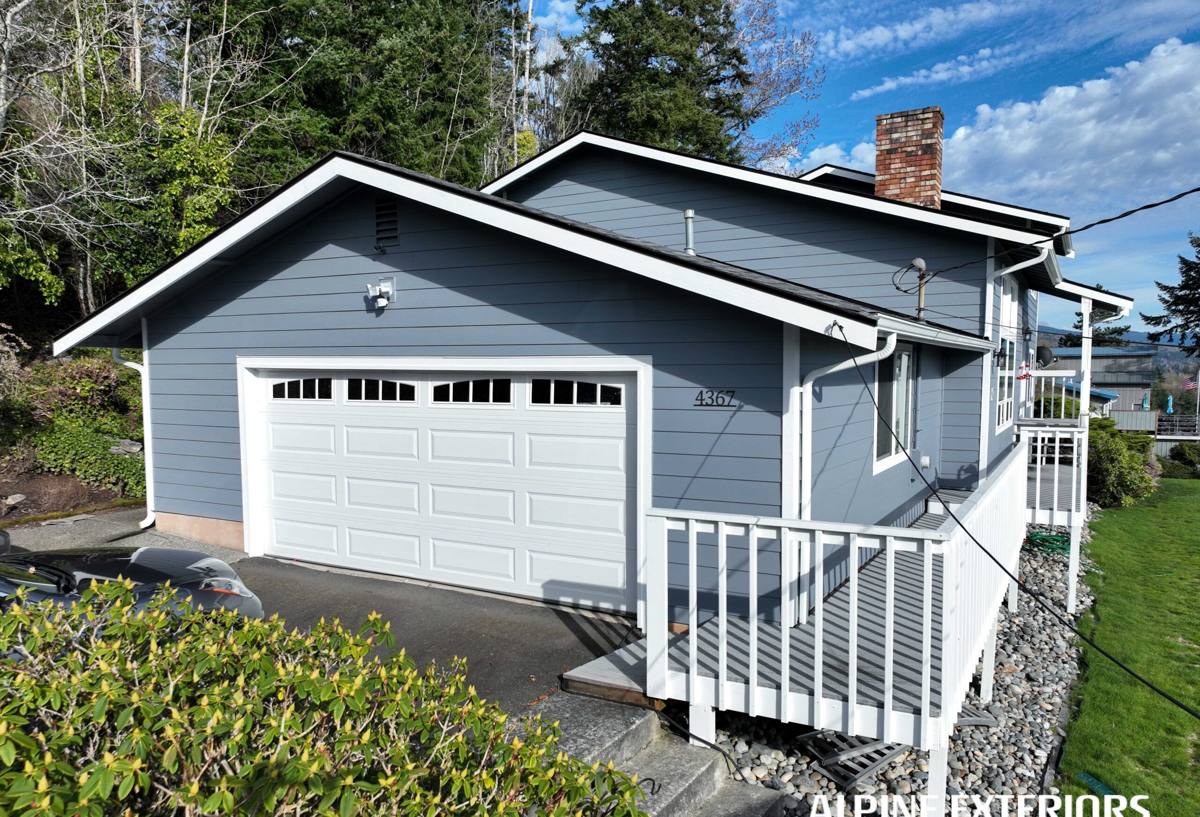
What This Climate Does to a Deck
Moisture That Doesn't Just Run Off
A wall sheds water down and away. A deck surface holds it. Rain, dew, and runoff sit on deck boards and drip through the gaps into the framing below, and on a shaded, tree-covered lot like much of Deming, that moisture doesn't burn off in direct sun the way it would on an open, south-facing property. The result is framing lumber, fasteners, and the underside of the decking that stay wet longer through the fall and winter months than most homeowners assume.
Moss and Algae on Horizontal Surfaces
Moss doesn't need much to establish itself: shade, moisture, and time are enough, and a deck surface offers all three for a good stretch of the year in this part of the county. Moss and algae on a walking surface aren't just a maintenance nuisance. A damp, moss-covered board gets slick fast, which is a real footing hazard on stairs and near entry doors.
Corrosion at Every Fastener
Salt-influenced air accelerates corrosion on exposed metal, and a deck carries more exposed hardware than almost any other structure on a house: joist hangers, structural screws, railing brackets, and the fasteners holding the decking itself down. Hardware that isn't rated for this kind of sustained, salt-influenced moisture exposure corrodes faster than the decking above it wears out, which is a common reason older decks develop soft spots and loose railings well before the boards themselves look bad.
Why Composite Decking Makes Sense in Deming's Conditions
Composite decking, boards made from a blend of wood fiber and plastic, with or without a protective cap, was developed specifically to solve the problem wood decking struggles with most: moisture absorption. Wood decking pulls in water through its grain and end grain, then dries out and re-wets over and over through a wet climate's storm cycle, and that repeated swelling and shrinking is what eventually causes splitting, cupping, and rot. Composite boards absorb far less moisture, which matters directly in an area where boards can stay damp for days at a stretch during the rainy season.
Capped vs. Uncapped Composite
Not all composite decking is built the same way, and this is where we're direct with Deming homeowners rather than letting "composite" stand in as one interchangeable category. Capped composite boards have a polymer shell wrapped around a wood-plastic core, sealing the core off from direct moisture and UV exposure. Uncapped composite exposes the wood-plastic blend directly to the weather, which means it can still take on some moisture at the surface and is more prone to fading and staining over time. We install capped composite products for that reason: the cap is what keeps this climate's moisture and moss exposure from working its way into the board itself.
What a Correct Composite Deck Install Actually Involves
Composite decking is only as good as the structure underneath it and the details of how it's fastened down. A capped composite board installed over an under-built frame, or fastened with the wrong hardware, will still develop problems in this climate. They'll just show up in the framing and connections instead of the boards.
Framing and Structure
Joist spacing for composite decking is typically tighter than what's standard for wood decking, since composite boards can flex differently across a span. We frame to the manufacturer's specified joist spacing rather than reusing an old wood-deck layout, and we use joist tape or another moisture barrier on top of the framing so the joists aren't sitting under bare, exposed contact points where water collects.
Fastening
Hidden-fastener clip systems are standard on most composite deck installs now, and they matter for more than appearance. Clips leave the board's top surface free of screw penetrations that would otherwise give water a direct path into the core. Where face-fastening is unavoidable, such as at picture-frame borders or stair treads, we use fasteners rated specifically for composite material and for the corrosion exposure this area sees.
Drainage and Airflow Underneath
A deck that traps standing water or stagnant, unmoving air underneath it stays wet longer and gives moss and mildew a place to establish, even on a composite surface that isn't itself absorbing that moisture. Proper board spacing, ledger flashing at the house connection, and clearance for airflow underneath the deck all matter as much as the decking material itself for keeping the whole structure dry between storms.
Composite Decking: Materials and Cost Factors Compared
How Composite Stacks Up Against Other Decking Materials
| Material | Moisture Behavior in Deming's Climate | Typical Long-Term Maintenance |
|---|---|---|
| Capped composite | Sealed core resists moisture absorption, moss staining, and swelling | Low — periodic washing, no staining or sealing required |
| Uncapped composite | More surface moisture absorption and fading than capped boards | Moderate — more prone to visible staining over time |
| Pressure-treated wood | Absorbs moisture readily; repeated wet-dry cycling drives splitting and rot | Highest — regular staining, sealing, and board replacement |
| Cedar | Naturally moisture-resistant heartwood, but still absorbs water and feeds moss over time | High — regular sealing and moss treatment needed |
What Actually Drives the Cost of a Deming Composite Deck
| Factor | What Drives It | Climate-Specific Consideration |
|---|---|---|
| Framing | Deck size, height, and structural code requirements | Tighter joist spacing and moisture barrier tape for composite boards |
| Decking material | Capped vs. uncapped composite, board profile and color | Capped boards cost more upfront but resist this climate's moisture and moss exposure better |
| Hardware | Fastener and connector type | Corrosion-resistant hardware rated for salt-influenced, high-moisture exposure |
| Site conditions | Grade, existing structure, access | Heavily wooded or sloped lots, common around Deming, may need extra drainage or footing work |
Exact numbers depend on the size and condition of the specific property, which is why we walk the site before giving a real number rather than quoting a flat per-square-foot price over the phone.
Our Process, Start to Finish
We start with an on-site walk of the deck area: checking existing framing if there's a deck to replace, grade and drainage around the footprint, and how much shade and tree cover the location gets, since that directly affects how we detail moisture management. From there we frame or reframe to the composite manufacturer's spec, install ledger flashing where the deck ties into the house, and lay decking with a hidden-fastener system and correct board spacing. Railings, stairs, and any picture-framing or border detail come last, finished to the same fastening and moisture standards as the field of the deck. We walk the finished deck with the homeowner before calling the job done, so there's no guessing about what's underneath the boards.
Living With a Composite Deck in This Climate
Composite decking cuts the maintenance load compared to wood, but low-maintenance isn't no-maintenance, especially with the moss and organic debris pressure Deming sees for much of the year.
Keeping a Composite Deck Performing Year-Round
- Sweep leaves, needles, and organic debris off the deck regularly, especially from between boards, so it doesn't hold moisture against the surface
- Wash the deck periodically with a soft-bristle brush and mild soap to keep moss and algae from establishing on the surface
- Check that gaps between boards stay clear so water keeps draining through rather than pooling
- Inspect railings and stair connections once a year for looseness, often the first sign of fastener corrosion underneath
- Confirm the area underneath the deck isn't trapping standing water or blocked airflow after storms
Signs an Existing Deming Deck Needs Attention
- Soft, spongy, or bouncy spots underfoot, especially near the house connection or stairs
- Persistent moss or algae that returns quickly after cleaning
- Rust staining around fasteners or visibly corroded hardware
- Gaps, warping, or separation at board ends and seams
- Standing water underneath the deck that doesn't drain within a day or two of a storm
Why a Crew That Already Works Deming Matters
Deming's mix of tree cover and distance from the open coastline means it doesn't behave exactly like the flatter, more open farmland closer to Lynden proper, even though both fall under the same Whatcom County weather pattern. A crew that already builds decks in this specific area has a feel for which lots hold moisture longest, where extra drainage or footing work tends to be worth it, and how much shade a given property's tree cover actually creates through the year, details that matter more here than a generic, one-size-fits-all deck spec would account for. That familiarity is what keeps a composite deck performing the way it's supposed to, storm season after storm season, instead of just looking right on install day.
Get a Free, No-Pressure Estimate
If you're planning a new composite deck in Deming or want an honest look at whether your current deck needs repair or replacement, we're happy to walk the property and give you a straightforward assessment, no pressure, no upsell. Reach out using the form below to schedule a free estimate.