 Lynden
 Deck Repair Built for Maple Falls Conditions
Maple Falls sits up the Mt. Baker Highway corridor in Whatcom County, tucked against forested foothills where tree cover, elevation, and near-constant fall-through-spring moisture put decks through a different kind of wear than a deck in an open, sunny yard closer to town. We've worked on enough decks in this part of the county to know the pattern: the boards look fine from the porch door, but the real damage is happening underneath, out of sight, where wood stays damp for days at a time.
This page is specifically about deck repair — not full replacement, not a new build — for homes in and around Maple Falls. If your deck has soft spots, a spongy stair stringer, a railing that's started to wiggle, or boards that stay dark and slick well into summer, this is the service that fixes it without tearing the whole structure out.
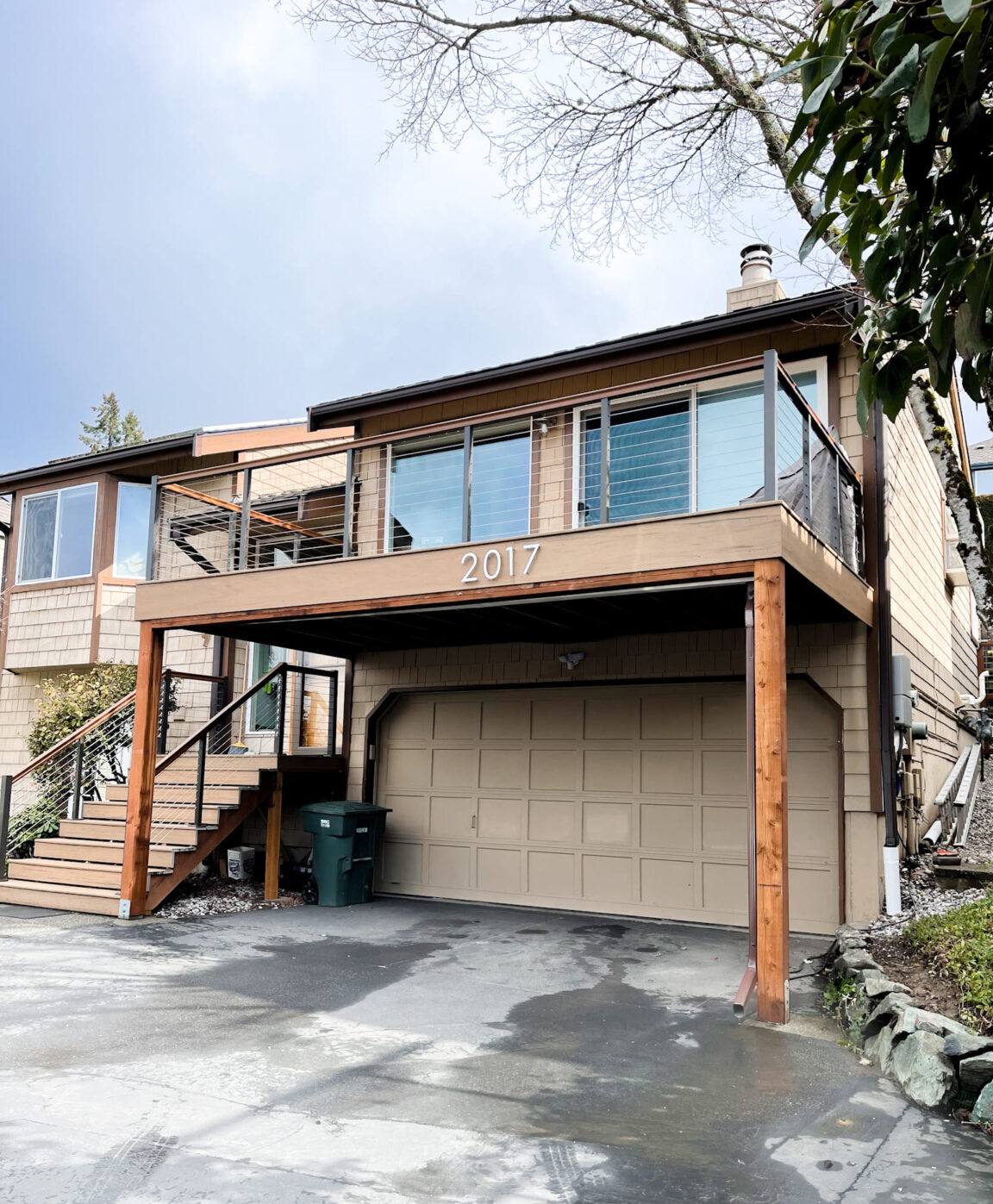
Why Decks Wear Differently Out Here
Whatcom County's marine-influenced climate means long stretches of low-intensity rain rather than short heavy downpours, and Maple Falls adds tree canopy and valley shade on top of that. The combination matters more than people expect:
- Slower drying time. A deck in full sun might dry out between rain events. A shaded deck under fir and cedar canopy often doesn't, especially October through April.
- Moss and algae get a head start. Constant dampness plus organic debris (needles, leaf litter) feeds moss growth on decking, and moss holds even more moisture against the wood — it's a cycle that gets worse each year if untouched.
- Driving rain finds gaps. Wind-driven rain off the foothills doesn't just fall straight down — it gets pushed sideways into ledger connections, stair stringers, and any place where flashing or caulking has failed.
- Freeze-thaw at elevation. Maple Falls sits higher and colder than the valley floor. Water that's soaked into a crack or a fastener hole can freeze, expand, and widen that damage over a winter.
None of this means a deck out here is doomed — it means the repair has to account for moisture that a drier climate wouldn't have to deal with.
The Ledger Board Is Usually Where We Start
The ledger board — where the deck attaches to the house — is the single most important structural connection on most decks, and it's also the one most exposed to splash-back and driving rain if flashing was skipped or installed poorly during the original build. On older Whatcom County homes, we regularly find ledger rot that isn't visible until you pull back a piece of decking or trim near the house wall. Checking this connection is one of the first things we do on every repair call, whether or not it's the reason you called.
Common Deck Problems We See Around Maple Falls
Some issues are cosmetic and can wait. Others are structural and shouldn't. Here's how to tell the difference before you call anyone:
- Decking boards that feel spongy or flex noticeably when you step on them
- Persistent moss, algae, or black staining that pressure washing doesn't fully remove
- Railings or posts that move side-to-side when pushed
- Stair stringers that creak, sag, or show cracking at the notch cuts
- Gaps opening up where the deck meets the house siding or the ledger board
- Fasteners (nails or screws) that have backed out, rusted, or left dark streaking down the board
- Support posts sitting on concrete footings that have shifted, cracked, or sunk
- Visible daylight or soft wood where a support post meets a beam
If you're seeing any combination of the structural items — spongy boards, moving railings, cracked stringers, shifted footings — get it looked at before using that section of the deck. Cosmetic issues like surface graying or moss are worth fixing for longevity and appearance, but they're not urgent in the same way.
What an Honest Repair Actually Involves
A proper deck repair isn't just swapping out the board that looks worst. It starts with figuring out why that board failed, because if the cause is still there — a clogged gap that never drains, a flashing gap at the ledger, ground contact on a post — a patch job just buys you a year or two before the same spot fails again.
Our diagnostic process on every repair
- Walk the full deck surface and check for soft spots, not just the obvious complaint area
- Inspect the ledger board connection and flashing where the deck meets the house
- Check every support post base and footing for rot, movement, or ground contact
- Test railings and stair stringers for structural movement, not just cosmetic wear
- Identify moisture sources — poor drainage, missing gaps between boards, blocked weep points, plant growth against the structure
- Separate what's cosmetic from what's structural, and price them as distinct line items
That last step matters. You should never get a repair quote that bundles "your railing post is rotted through" with "your boards have some algae staining" as if they're the same priority. We break it down so you know what's a safety issue and what's a maintenance item.
Repair vs. Replace: How We Make That Call
| Situation | Usually a Repair | Usually a Replacement |
|---|---|---|
| Framing condition | Joists and beams are solid; only a few boards or fasteners are bad | Multiple joists or the ledger board are rotted or compromised |
| Age of structure | Under 15-20 years, built to a reasonable original standard | Original build was undersized, poorly flashed, or nearing end of service life |
| Extent of damage | Localized to one area — a stair run, a corner, one railing section | Spread across the whole deck surface or affecting multiple structural members |
| Footings/posts | Footings are sound; posts are solid at the base | Footings have shifted, cracked, or posts show rot at ground contact |
| Cost comparison | Repair cost is a fraction of full rebuild cost | Repair cost starts approaching 50-60% of a full rebuild |
We'll always tell you honestly if a repair is the wrong call and a rebuild is the smarter long-term move — a patched-together deck that's structurally marginal isn't a good use of your money, and it's not something we're willing to put our name on.
Materials We Use for Repairs in This Climate
Given how much moisture Maple Falls decks deal with, material choice on a repair matters as much as workmanship. We match materials to what makes sense for the specific repair rather than defaulting to one product for everything.
| Material | Best Use in a Repair | Trade-off to Know |
|---|---|---|
| Pressure-treated lumber | Structural framing, ledger boards, posts, stringers — anything hidden or load-bearing | Needs to fully dry before staining or sealing; not typically used as a finish surface |
| Cedar decking | Matching an existing cedar deck surface, natural look, good rot resistance | Requires ongoing sealing/staining discipline in a wet climate to perform well |
| Composite decking | Replacing boards on a deck where low maintenance matters more than matching original wood | Higher upfront cost per board; won't visually match an existing wood deck |
| Stainless or coated fasteners | Any repair where the old fasteners show rust streaking or corrosion | Costs more than standard fasteners, but prevents repeat failures from corrosion |
We don't push composite as an automatic upgrade on every repair — if your deck is cedar and structurally sound, replacing a few boards in matching wood is usually the more honest and cost-effective answer than converting one section to composite. We'll walk you through the real trade-offs rather than defaulting to whatever's easiest to sell.
Our Repair Process, Start to Finish
- On-site inspection. We walk the deck with you, test suspect areas, and check the framing and connections you can't see from the surface.
- Written scope and estimate. You get a clear breakdown of what's structural, what's cosmetic, and what each costs — no vague lump-sum guessing.
- Address the moisture source first. If poor drainage or a flashing gap caused the failure, we fix that before replacing the damaged wood, or the repair won't hold.
- Repair the structure. Ledger, framing, posts, and footings get addressed before any surface work, since everything else depends on a sound frame.
- Replace decking, railings, or stair components as needed, matched to your existing material where that's the right call.
- Final check and cleanup. We confirm the repair is solid underfoot and railings pass a real push-test, not just a visual check.
What to Expect for Timeline
Most localized repairs — a stair stringer, a railing section, a handful of boards — are a one to two day job. Repairs involving ledger board work, multiple footings, or wider framing damage take longer, since that work often needs to be sequenced around drying time and, in some cases, a permit or inspection depending on the scope.
Why It Matters to Hire a Crew That Already Works This Area
Deck repair isn't just carpentry — it's carpentry that has to account for how a specific site drains, how much shade it gets, and how the local weather pattern actually behaves over a full year, not just on the day of the estimate. A crew that regularly works Maple Falls and the surrounding Whatcom County foothills already knows to check for the things that cause repeat failures here: shaded framing that never fully dries, moss buildup in board gaps, and ledger connections exposed to driving rain from storms that roll in off the mountains. That's the difference between a repair that lasts and one you're calling someone back for in two years.
We also know what's realistic for scheduling in this area given weather windows — trying to do structural repair work during the wettest stretch of the year isn't ideal, and a local crew can tell you honestly when to wait a few weeks versus when it's urgent enough to handle now.
Keeping a Repaired Deck in Good Shape
Once your deck is repaired, a little seasonal upkeep goes a long way in this climate:
- Sweep needles and leaf litter off the deck surface regularly, especially in fall
- Keep gaps between boards clear so water can drain instead of pooling
- Rinse off moss and algae before it builds up thick enough to hold moisture against the wood
- Reseal or restain wood decking on the schedule appropriate to the product — don't wait until it's visibly failing
- Trim back overhanging branches and vegetation that keep the deck shaded and slow to dry
- Check railings and stair connections once a year for movement before it becomes a bigger problem
A deck that gets this kind of basic attention in a wet, shaded climate will outlast one that's left to fend for itself by a wide margin.
Get an Honest Look at Your Deck
If your Maple Falls deck has soft spots, moss buildup that won't quit, a shaky railing, or you're just not sure whether it's a repair or a bigger problem, we're happy to come take an honest look. The estimate is free, there's no pressure, and we'll tell you straight whether it's a simple fix or something more — just use the form below to get started.