 Lynden
 Building Decks for Kendall's Climate, Not Just Its Views
Kendall sits out toward the eastern edge of Whatcom County, close enough to the foothills that homes here get a different mix of weather than town-center Lynden just a few miles away — more tree cover in a lot of yards, more shaded ground, and the same long stretch of wet Pacific Northwest weather that defines a deck's lifespan anywhere in this county. We're based in Lynden, and Kendall is regular territory for our crew, which matters because a deck built without accounting for salt air, driving rain, and a long moss season doesn't fail all at once. It fails slowly, one soft board and one loose fastener at a time, usually starting in the spots a homeowner never thinks to check.
A deck is one of the more exposed structures on a property. Unlike a wall, it takes weather from above and below, sun and shade in patches throughout the day, and foot traffic on top of all of it. In Kendall specifically, we see a fair number of decks built years ago with framing and fastener choices that made sense for a drier climate but were never right for Whatcom County to begin with. This page covers what a deck actually needs to hold up out here, what our process looks like, and why the details matter more than the design choices most homeowners start with.
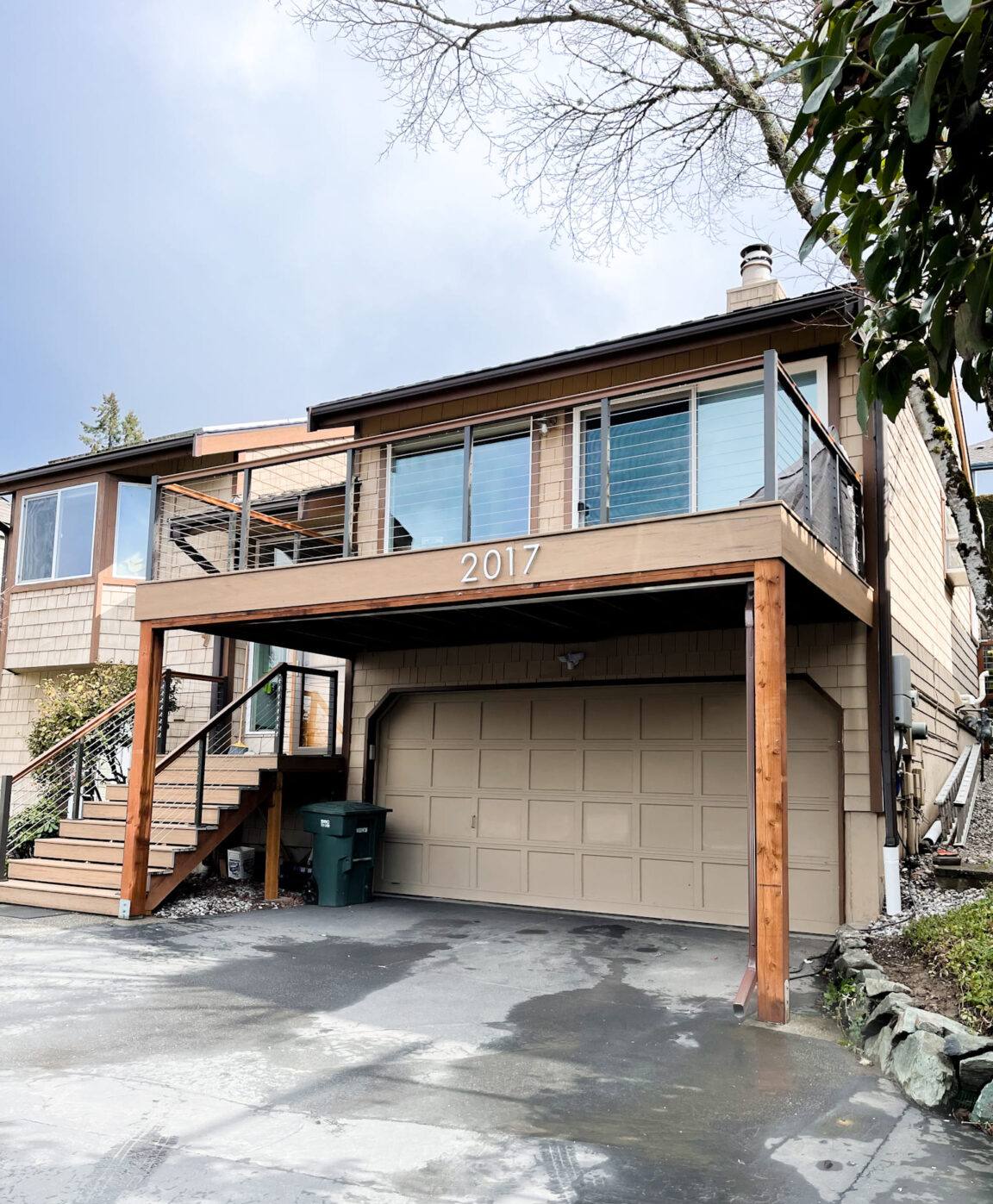
What Kendall's Weather Does to a Deck
Salt Air and Corrosion
Whatcom County as a whole sits close enough to the Salish Sea that salt-laden air reaches well inland, and Kendall isn't exempt just because it's set back from the water. Salt accelerates corrosion on fasteners, hardware, and any exposed metal connectors faster than a dry inland climate would. On a deck, that corrosion usually shows up first at the ledger board connection and the post bases — the two places holding the most structural load — long before it's visible anywhere else.
Driving Rain and Standing Moisture
A horizontal deck surface takes on rain differently than a vertical wall does. Rain doesn't just run off — it pools in low spots, sits in board gaps that are too tight, and soaks into end grain that isn't properly sealed or capped. Wind-driven rain off passing storm systems adds to that load, pushing moisture into joints and connections that a calmer climate wouldn't stress nearly as hard. Over years, that repeated wetting and drying cycle is what breaks down lesser lumber and undersized fasteners.
A Long Moss Season
Kendall's mix of tree-shaded lots and consistently damp air gives moss a long growing season, often running most of the year on decks that don't get much direct sun. Moss holds moisture against the board surface longer than the wood would dry on its own, and it turns a deck surface slick and genuinely hazardous underfoot — a real safety concern, not just an appearance issue. Decks built under mature trees or on the north side of a house are the ones we see it on earliest and heaviest.
What a Correctly Built Deck Involves
A deck that's going to hold up in Kendall's climate needs the right decisions made at the framing stage, not just the right decking board picked out at the end. A few of the details we won't skip:
- Proper footing depth and spacing: Footings need to reach below frost depth and be sized and spaced for the actual load the deck will carry, not the minimum a plan might allow.
- Corrosion-resistant fasteners and hardware: Given the salt exposure across Whatcom County, we use fasteners and structural connectors rated for the moisture and corrosion conditions here, not standard-grade hardware that starts rusting within a couple of wet seasons.
- Ledger board flashing done correctly: The ledger connection to the house is one of the most common failure points on decks generally, and it's where water intrusion into the house itself can start if flashing isn't installed and lapped correctly.
- Board spacing for drainage: Gaps between boards need to be wide enough to let water drain and the wood breathe, which matters more in a climate that stays damp for months at a stretch than it would somewhere drier.
- Joist tape or capping on framing: Protecting the tops of joists from standing moisture extends the life of the structural frame significantly, especially under a deck surface that's shaded most of the day.
- Railing and stair code compliance: Beyond looking right, railings and stairs need to meet current code for height, spacing, and load, which we build to regardless of what a prior structure on the property may have had.
None of this is unusual or upgraded work — it's the baseline for a deck that's actually built for this climate instead of one that happens to survive it for a few years.
Decking Material Options for a Kendall Property
There's no single right decking material for every Kendall home — it depends on budget, how much shade the deck sits in, and how much upkeep a homeowner actually wants to do. We'll talk through the honest trade-offs rather than push whatever has the best margin.
| Material | Upkeep | How It Handles This Climate |
|---|---|---|
| Pressure-treated wood | Regular staining/sealing needed | Affordable and workable, but needs consistent maintenance to resist moisture and moss in shaded spots |
| Cedar | Periodic sealing to hold appearance | Naturally moisture-resistant and a good look, but still requires upkeep to prevent graying and moss buildup |
| Composite decking | Low — occasional cleaning | Resists moisture absorption and rot well, though shaded boards still need periodic cleaning to keep moss from taking hold on the surface |
| PVC decking | Lowest — cleaning only | Fully moisture-resistant material, strong option for heavily shaded Kendall lots where wood-based products struggle most |
Whatever material a homeowner chooses, the framing and fastener decisions underneath matter just as much as the decking surface itself. A composite or PVC deck board built on undersized, poorly protected framing will still develop structural problems, even if the surface still looks fine.
Our Process for a Kendall Deck Project
1. On-Site Walkthrough
We start by walking the actual property — the slope of the yard, how much sun or shade the deck location gets through the day, proximity to trees, and the condition of the house wall where the deck will attach. Kendall lots vary quite a bit in tree cover and terrain, so a plan that works for one yard on a given road doesn't automatically work for the next one.
2. Design and Material Selection
We talk through layout, railing style, and decking material honestly, including the maintenance commitment each option carries. A homeowner who wants a low-upkeep deck and one who's fine with annual staining are going to end up with different recommendations, and we'd rather set that expectation up front than after the material's already ordered.
3. Permitting
Deck construction in Whatcom County typically requires a permit depending on size and height, and we handle that process as part of the project rather than leaving it to the homeowner to sort out separately.
4. Construction
Footings, framing, ledger attachment, decking, and railing go in following the details above — corrosion-resistant hardware, correct flashing, proper drainage spacing — the same standard regardless of the material chosen for the surface.
5. Final Walkthrough
We walk the finished deck with the homeowner, cover basic care for whichever material was installed, and make sure everything meets the standard we set at the start of the project.
Cost Factors for a Kendall Deck
Every deck project has its own scope once we've actually walked the site, but a few factors consistently drive cost more than others in this area:
| Factor | Why It Matters |
|---|---|
| Size and height off the ground | Taller decks need more substantial footings, framing, and often stairs and additional railing |
| Decking material | Pressure-treated, cedar, composite, and PVC carry different upfront costs and long-term maintenance costs |
| Site access and terrain | Sloped or wooded Kendall lots can add labor for footings and material access |
| Ledger vs. freestanding design | Freestanding decks avoid tying into the house structure but need their own independent footing system |
| Railing style and stairs | Custom railing designs and multi-level stair runs add both material and labor |
These are general cost drivers, not a quote — every Kendall property is different once we're standing on it, which is why we walk the site before putting a real number on a project.
Maintaining a Deck Through Kendall's Wet Seasons
A well-built deck still needs some ongoing attention in this climate, and the maintenance schedule differs by material choice:
- Clear leaves and debris from board gaps and along the house ledger regularly, especially through fall
- Rinse or lightly scrub shaded boards periodically to keep moss from establishing, particularly on north-facing or tree-covered decks
- Check railing and stair connections annually for looseness, which can be an early sign of fastener corrosion
- Reseal or restain wood decking on the manufacturer's recommended cycle rather than waiting until it visibly needs it
- Inspect under the deck periodically for standing moisture or soft framing, especially on older structures
Catching a small maintenance issue early is a lot less expensive than replacing a joist or ledger connection after a few seasons of unnoticed moisture damage.
Signs a Kendall Deck Needs Attention
- Soft, spongy, or springy boards underfoot
- Visible rust staining around fasteners or hardware
- Persistent moss or slick green buildup that returns quickly after cleaning
- Gaps or movement at the ledger board where the deck meets the house
- Loose or wobbly railing posts
- Standing water that doesn't drain within a few hours after rain
Why a Local Crew Matters for a Kendall Deck
A crew that works across Whatcom County regularly sees how salt air, driving rain, and a long moss season actually play out on real decks over years, not just how a material performs on paper. That shapes practical decisions on a Kendall project — how much shade a given yard actually gets through the seasons, which fastener and flashing choices are worth the extra time, and which decking material fits a homeowner's actual maintenance tolerance rather than just their initial budget. Kendall's mix of tree cover and terrain isn't identical to town-center Lynden or the more open, coastal parts of the county, and a crew that's worked the area knows the difference going in rather than learning it on the job.
Get a Free, No-Pressure Estimate
If you're planning a new deck in Kendall or want an honest look at whether an existing one needs repair or replacement, we're glad to walk the property and give you a straightforward assessment. Reach out using the form below to schedule a free estimate — no pressure, no upsell script.