 Lynden
 Siding Repair in Custer Isn't Generic Work
Custer sits in one of the tougher exposure zones in Whatcom County for exterior siding. It's close enough to the water that salt-laden air is a routine part of daily weathering, the wind pushes rain sideways into laps and trim for a large part of the year, and the mild, damp climate keeps moss and mildew active across most of the calendar. That combination doesn't cause dramatic, sudden failures. It causes slow ones — a soft spot behind a downspout, a stretch of lap siding that's been damp against the sheathing for two winters, trim that's swollen at a corner nobody noticed until the paint started bubbling. Repairing siding correctly out here means understanding that pattern, not just patching whatever's visibly broken.
We work Lynden and the surrounding Whatcom County communities regularly, and Custer is part of that regular route. That matters more than it sounds like it should, because siding repair is a trade where local pattern recognition genuinely changes the outcome. A crew that's opened up two dozen walls in this specific area knows which failure signs are cosmetic and which ones mean the sheathing behind the siding is already compromised — and that distinction is the difference between a repair that lasts and one that's a two-year patch.
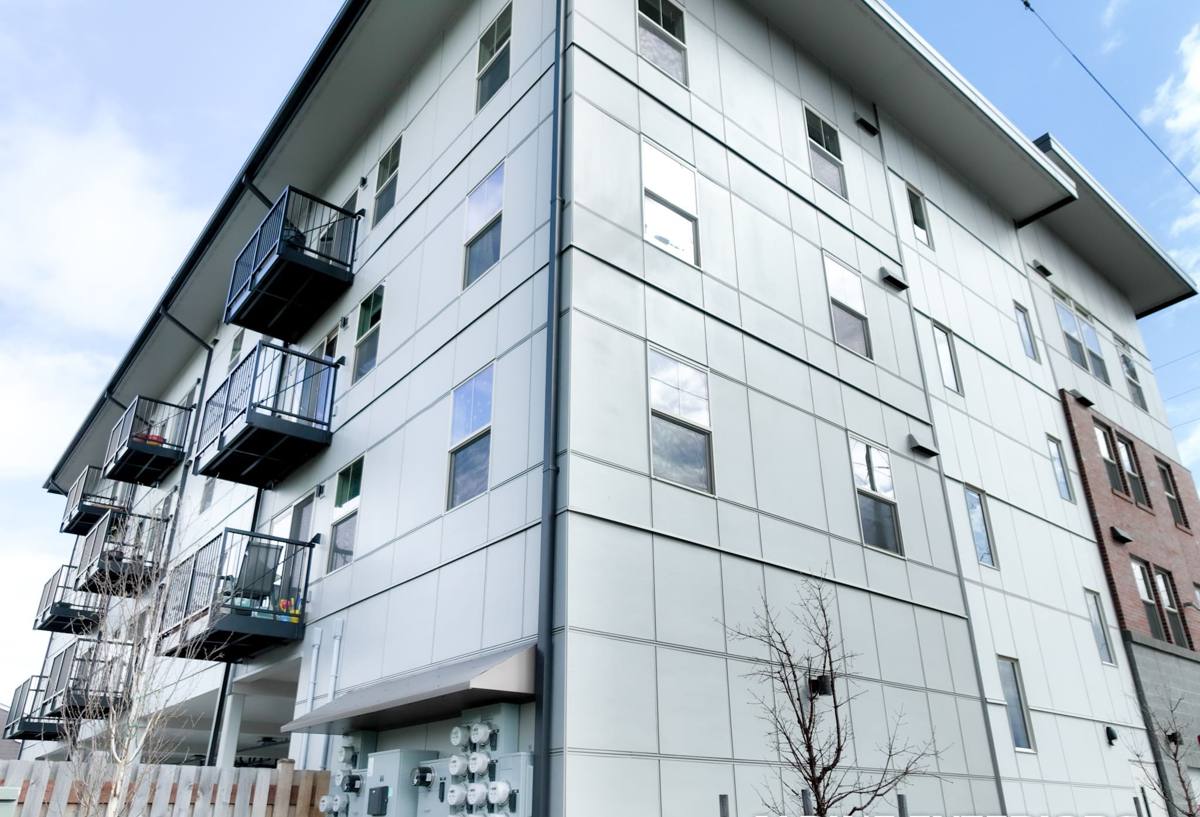
What Actually Damages Siding Here
Salt Air
Airborne salt accelerates the breakdown of factory finishes and speeds up corrosion on fasteners, flashing, and any exposed trim hardware. On homes without a factory-cured, climate-rated finish, that shows up as chalking, fading, and eventually surface breakdown well before the material's expected service life is up. Corroded fasteners are a common, quiet cause of loose or bowing panels that get misdiagnosed as an installation defect when the real cause is just years of salt exposure on the wrong hardware.
Wind-Driven Rain
Rain that comes in sideways instead of straight down finds its way into lap joints, under trim boards, and into any seam where the water management detailing was cut short during the original install. This is where caulked joints and any material relying on an unbroken surface coating are tested hardest. Once water gets behind a piece of siding and has nowhere to drain or dry out, the damage compounds fast — cupping, soft sheathing, and paint failure follow in that order.
A Long Moss and Mildew Season
Shaded, tree-lined lots — common around Custer — stay damp long enough for moss and mildew to establish and hold on for most of the year. Organic growth on a siding surface isn't just a cosmetic problem: it traps moisture against the wall assembly behind it, and that trapped moisture is where a lot of rot starts, quietly, on the back side of boards that still look fine from the driveway.
Repair or Replace: How We Actually Decide
Not every damaged section needs full replacement, and not every problem area can be safely patched. The honest answer depends on how far the damage has traveled and what's behind the siding once it's opened up.
| Situation | Typical approach | Why |
|---|---|---|
| Isolated impact damage, sheathing dry underneath | Spot repair — replace the damaged board or panel section | Sheathing integrity is intact; no reason to touch surrounding material |
| Localized water staining, sheathing still firm | Repair the section, correct the water intrusion source (flashing, caulk, grading) | Fixing the symptom without fixing the entry point just buys time |
| Soft or spongy sheathing behind siding | Open the wall further, replace sheathing, then re-side that section | Siding over compromised sheathing fails again on a short timeline |
| Damage spread across multiple elevations or a whole wall | Full-wall or full-house replacement discussion | Patchwork repair on widespread failure rarely holds up cost-effectively |
| Original material was vinyl, engineered wood, or bare cedar showing systemic wear | Repair short-term or plan a Hardie replacement | We can repair what's there, but we won't install those materials new |
We'll always tell you honestly which category your situation falls into before we quote anything. If a repair is the right call, we do the repair. We don't upsell a full re-side to a homeowner who just needs three boards replaced.
What a Correct Repair Actually Involves
A siding repair that lasts isn't just swapping a damaged board for a new one. It requires the same attention to water management that a full install does, just on a smaller scale.
- Find the real cause, not just the visible damage — a cracked board is often a symptom of a flashing or drainage problem upstream of it.
- Check the sheathing and house wrap behind the damaged area before closing anything back up. Covering wet or soft sheathing is the single most common way a "repair" turns into a callback.
- Match material and finish correctly so the repaired section weathers at the same rate as the surrounding siding instead of aging visibly differently.
- Restore proper flashing and drainage paths around windows, trim, and penetrations — this is the step that's most often skipped in a rushed patch job.
- Reseal and caulk to spec, not just cosmetically, so the repaired joint sheds wind-driven rain the way the rest of the wall is supposed to.
- Confirm fastener condition in the surrounding area, since corroded fasteners nearby are often the next failure point if left alone.
Our Process on a Repair Call
- On-site inspection of the damaged area and a check of adjacent sections for related or early-stage issues.
- Honest assessment of whether this is a spot repair, a sheathing issue, or a signal of broader wall problems.
- A written estimate that separates the repair scope from anything additional we find, so you're never surprised by scope creep after the wall is open.
- The repair itself, including any sheathing, flashing, or drainage correction needed — not just a cosmetic patch.
- A final walk-through so you can see what was found and what was done, in plain terms.
Why We Only Install James Hardie Fiber Cement
When a repair does turn into a replacement conversation — because the original material has reached the end of its useful life, or because it was a material that doesn't hold up well to this climate to begin with — we only put James Hardie fiber cement back on. We used to install other products. Years of repair calls in Whatcom County, seeing firsthand what salt air, wind-driven rain, and a long moss season do to different materials over time, is what moved us to a single product line.
Vinyl siding is affordable and low-maintenance in milder climates, but its lapped, non-sealed seams aren't built to shed wind-driven rain the way this area regularly delivers it, and it has no real fire resistance. Engineered wood products depend on an intact factory coating and fully sealed field cuts for the life of the product — in a climate where wet weather is the default rather than the exception, that's a lot of ongoing maintenance riding on a wood-fiber core. Cedar and primed spruce are organic, combustible, and dependent on a paint or stain schedule that has to be kept up consistently, and moss finds an organic surface especially easy to colonize in a climate that stays damp most of the year. Other fiber cement brands, like Cemplank and Allura, are in the right material category — we standardized on James Hardie specifically for its factory-applied ColorPlus finish, its climate-engineered HZ5 product line built for exactly this kind of marine, high-moisture exposure, and the strength of its transferable warranty.
None of that is a knock on every homeowner's current siding. It's the reason our repair recommendations sometimes come with an honest note that a full material is nearing the end of what it can reasonably do here, rather than us just patching the same failure point indefinitely.
Why a Local Crew Matters for Repair Work
Repair work rewards familiarity in a way new-construction siding doesn't. A crew that already works Custer and greater Lynden regularly has seen how this area's specific mix of salt exposure, wind-driven rain, and shaded, moss-prone lots plays out on real walls, not just in a training manual. That translates into faster, more accurate diagnosis on-site — recognizing which stain pattern means "surface only" and which one means "check the sheathing," without needing to guess or over-open a wall to find out.
It also means straightforward logistics. Being local to this part of Whatcom County means we can get eyes on a repair quickly, source matching material without a long lead time, and stand behind the work with a crew that's still in the area if a question comes up after the job is done.
Before You Call Anyone: A Quick Self-Check
- Look for discoloration, staining, or a visibly different texture on any section of siding, especially near downspouts, roof-wall intersections, and window trim.
- Press gently on any suspect area — soft or spongy give is a sign the problem has reached the sheathing.
- Check for gaps, cracks, or separated caulk lines at trim boards and corners.
- Note any areas with heavy moss or mildew buildup, especially on shaded sides of the house.
- Look for loose, bowed, or bulging panels, which often point to fastener corrosion or moisture trapped behind the board.
If any of that sounds familiar, it's worth having someone look before the next wet season adds to it. If you're in Custer or elsewhere around Lynden and want an honest read on what your siding actually needs, reach out for a free, no-pressure estimate — the form below gets you started.