 Lynden
 Decks Near Custer Take a Different Kind of Beating
Custer sits close enough to the water that homes here deal with a mix most inland Whatcom County properties don't have to think about as much: salt-laden air off the coast, long stretches of driving rain blowing in sideways, and a moss season that can run from late fall through spring. None of that is exotic — it's just persistent. And persistent moisture and salt exposure are exactly what wear down a deck's fasteners, ledger board, and structural framing years before the surface boards show obvious damage.
A deck that looks fine from the yard can still have soft framing underneath, rusted-out hardware holding the ledger to the house, or moss trapping moisture against boards where it never fully dries out. That's the gap we see most often on repair calls in and around Custer and Lynden: cosmetic wear is visible, but the structural wear is the part that actually matters.
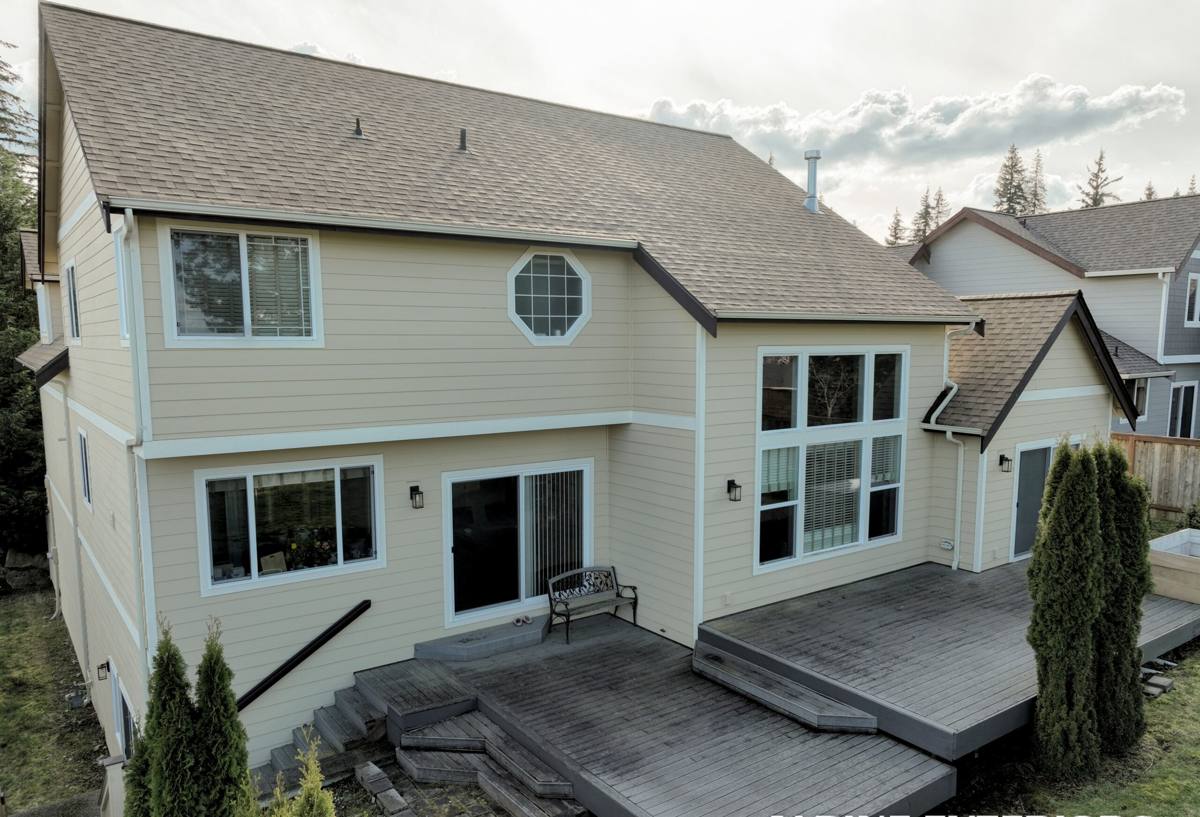
Signs a Deck Needs Repair — Not Just a Cleaning
Pressure washing and a fresh coat of stain can make a tired deck look better for a season, but they don't fix what's underneath. Before you decide whether your deck needs a repair or just maintenance, walk it and check for these:
- Boards that feel spongy, springy, or noticeably softer underfoot than the boards around them
- Visible gaps, cracking, or splintering concentrated near fasteners or board ends
- Rust streaks running down from screws, nails, or joist hangers
- Moss or dark staining that keeps coming back within weeks of cleaning, especially on north-facing or shaded sections
- Any movement, bounce, or sway when you walk near the rail or the outer edge of the deck
- A ledger board (where the deck attaches to the house) with gaps, water staining, or visible separation from the siding
- Posts or footings that look tilted, sunk, or cracked at the base
If you're seeing any of the structural signs — softness, movement, ledger separation, or footing issues — that's a repair conversation, not a cleaning one. Left alone through another wet season, small problems in this climate compound quickly.
What a Correct Deck Repair Actually Involves
It starts underneath, not on the surface
A repair that only replaces visibly bad boards but ignores the framing underneath is a repair that fails again in a year or two. Before we touch a single deck board, we check the joists, beams, posts, and — critically — the ledger board connection to the house. That connection is where a lot of long-term moisture damage hides, because it's the one spot on the deck that's tucked against the building and slow to dry.
Fasteners matter more than people think
In a coastal-influenced climate, standard fasteners corrode faster than most homeowners expect. Rusted screws and nails don't just look bad — they lose holding strength, which is how boards start to lift or rock even when the wood itself is still sound. A proper repair means replacing corroded hardware with fasteners rated for exterior and coastal exposure, not just re-driving what's already there.
Drainage and airflow, not just replacement boards
Moss and rot both need standing moisture to take hold. Part of doing a repair right is making sure water has somewhere to go — proper board spacing, clear gaps between boards, and no debris trapped in joist bays. A deck that drains and dries between rain events will hold up far longer than one that was simply patched with new boards laid the same way the old ones were.
Repair or Replace? What Actually Drives That Decision
Homeowners often ask whether it's worth repairing an older deck at all. The honest answer depends on where the damage is, not how old the deck is. A well-built frame with a few bad boards is almost always worth repairing. A deck with a compromised structure is a different conversation.
| Factor | Usually a Repair | Usually a Replacement |
|---|---|---|
| Framing & joists | Solid, no soft spots or rot | Widespread soft or rotted framing |
| Ledger board | Sound, properly flashed | Rotted, separating, or never flashed correctly |
| Surface boards | Isolated bad boards | Most boards cracked, cupped, or splintering |
| Footings & posts | Level, no cracking or heaving | Sunk, tilted, or undersized for current code |
| Age of structure | Framing under 20 years, well-maintained | Original construction with no maintenance history |
We'll tell you honestly which side of that table your deck falls on. A repair that only delays a full rebuild by a year isn't a good use of your money, and we won't sell it to you that way.
How We Approach a Deck Repair
- On-site inspection — we check framing, ledger, footings, fasteners, and surface boards, not just what's visible from the yard
- Honest scope — we tell you what's structural, what's cosmetic, and what can reasonably wait
- Written estimate — clear on materials, labor, and what's included, no vague allowances
- Repair work — structural fixes first (framing, ledger, footings), then board replacement and fastener upgrades
- Final check — we walk the deck with you before calling it done, checking for level, movement, and drainage
We don't start with the boards because the boards are rarely the whole problem. Skipping the structural check to get to a faster, cheaper-looking repair is how decks end up needing the same fix again in a couple of years.
Materials: What We Use and Why
For repair work, matching materials to what's already there — and to how the deck actually gets used — matters more than picking whatever looks nicest in a showroom.
Pressure-treated lumber
Still the most common repair material for framing and often for surface boards, because it's affordable and easy to match to existing structures. It does require ongoing maintenance — sealing or staining on a regular cycle — to hold up against the rain and humidity this area sees most of the year. We're upfront about that maintenance commitment rather than downplaying it.
Cedar
A natural fit for the Pacific Northwest and a common choice on older decks in this area. It resists decay reasonably well on its own but still benefits from periodic sealing, especially on horizontal surfaces that catch standing water.
Composite decking
A reasonable option when a homeowner wants to reduce the maintenance cycle going forward, particularly for boards that see heavy moss or shade exposure. It costs more upfront and isn't always the right call for a partial repair on an otherwise wood deck, since matching composite into an existing wood structure can look inconsistent and complicates future repairs. We'll walk you through that trade-off honestly rather than pushing whichever product carries a better margin — our job is to tell you what will actually hold up on your specific deck, in your specific spot.
Why a Crew That Already Works Custer and Lynden Matters
Deck problems in this area follow patterns — where moss builds up fastest, which ledger connections tend to trap water, which fastener types hold up and which don't. A crew that repairs decks across Whatcom County regularly, rather than occasionally, recognizes those patterns faster and doesn't have to relearn them on your job. That translates into a more accurate first inspection and fewer surprises once work starts.
It also means we're not guessing at what local permitting or inspection expects for structural repair work, and we're not a stranger showing up once and disappearing — we're based here, we work here regularly, and if something needs a follow-up look after a hard winter, we're not far away.
Keeping a Repaired Deck in Good Shape Afterward
A repair holds up longest when it's paired with a little regular upkeep, especially given how long moss season runs here. A few things worth doing on a regular basis:
- Sweep debris out of board gaps and off the deck surface before fall rains set in
- Treat or clean moss growth early — once it's established and holding moisture, it does more damage than the growth itself
- Check the ledger board area once a year for staining or gaps between the deck and the house siding
- Re-seal or re-stain wood surfaces on the manufacturer's recommended cycle, not just when it looks faded
- Look at fasteners periodically for early rust — replacing a handful of screws is cheap; replacing boards because of one that failed isn't
None of this requires a professional visit every time — it's mostly about not letting moisture and moss sit for months at a stretch.
Get an Honest Look at Your Deck
If your deck near Custer or Lynden has soft spots, moss that won't quit, or just feels less solid than it used to, it's worth having someone look at the framing before deciding what to do. We offer free, no-pressure estimates — we'll tell you straight whether you're looking at a repair, and what that repair should actually include. Fill out the form below to get started.